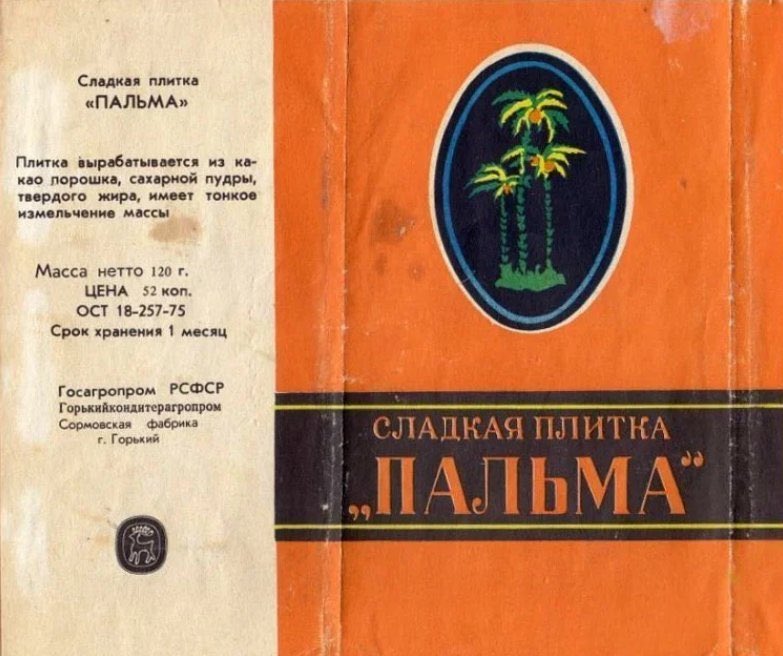
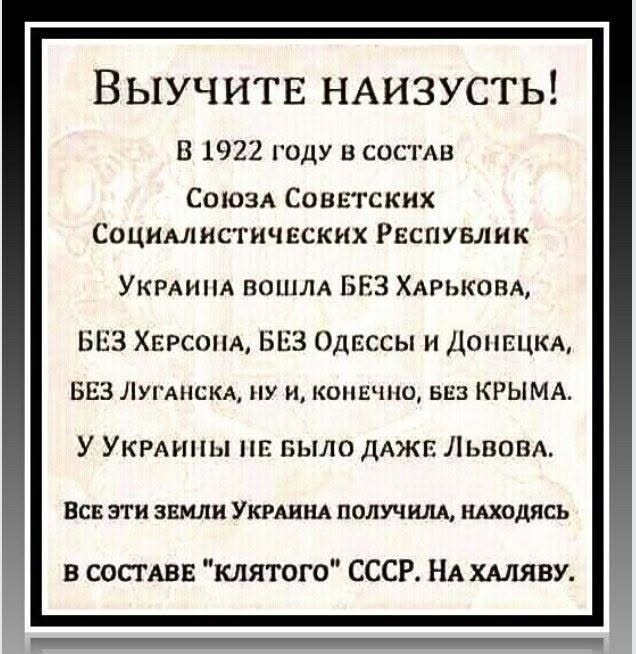
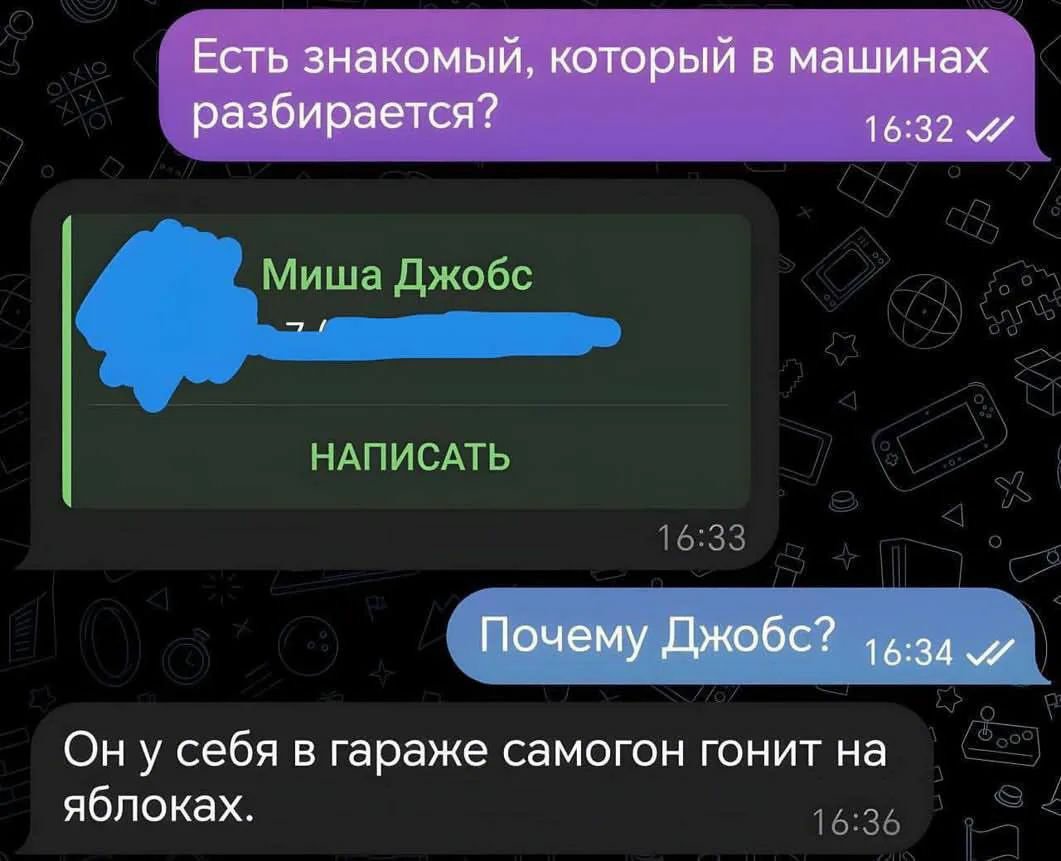
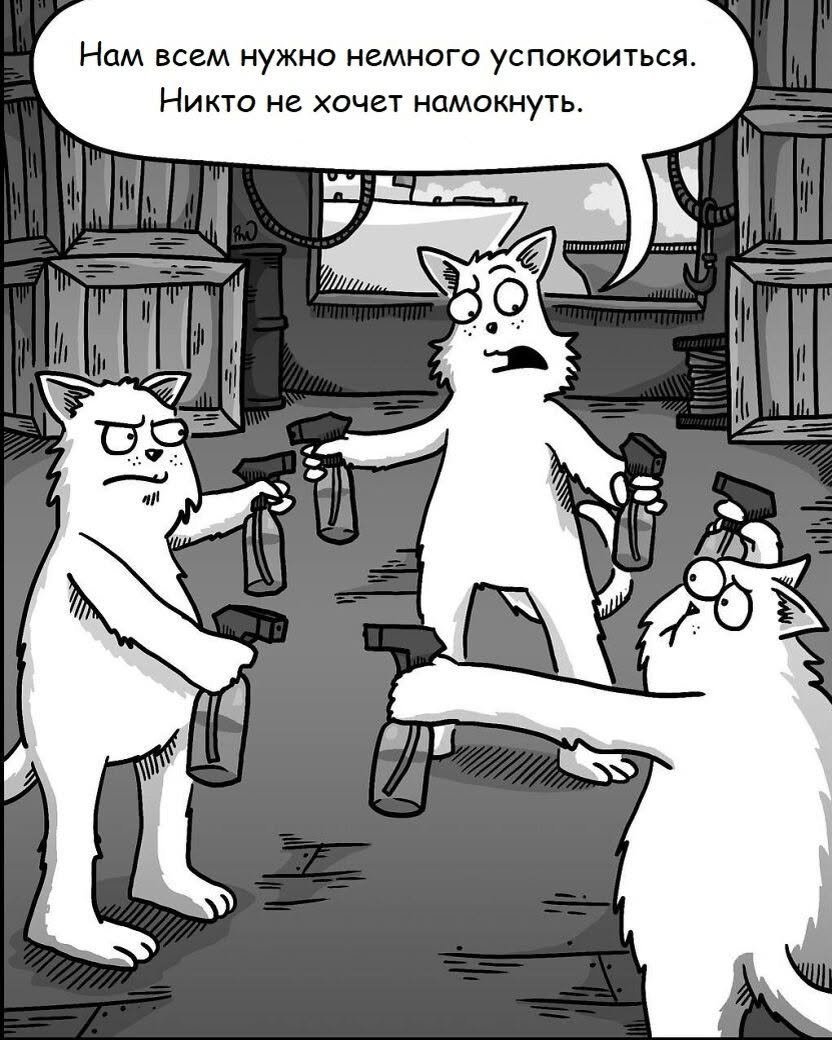
Производители сладостей сейчас: «Никто не должен догадаться, что в составе нашей шоколадки пальмовое масло, постарайтесь скрыть эту информацию».
Производители в СССР:
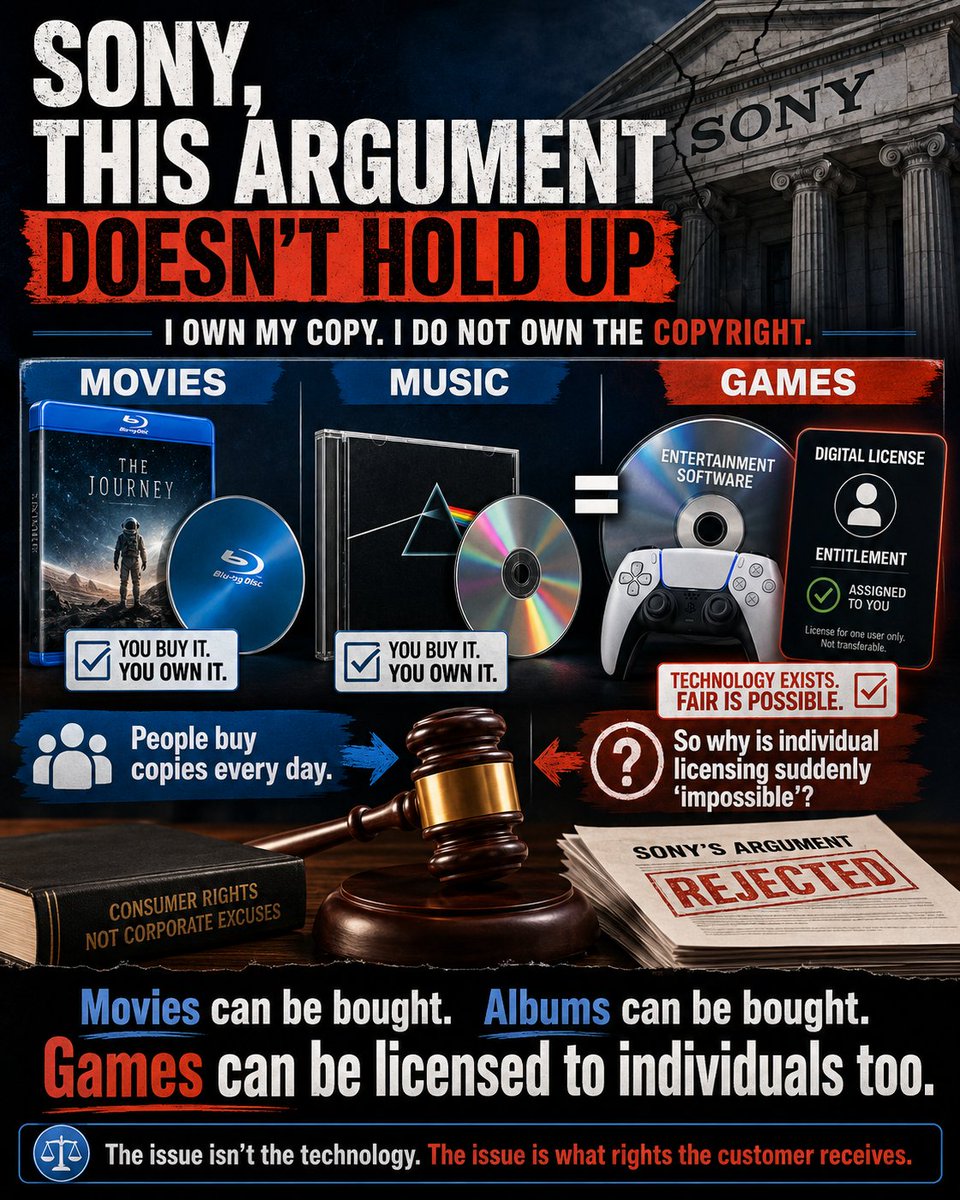
SONY, I THINK YOUR OWN ARGUMENT JUST COLLAPSED.
Nobody is claiming that buying a copy of a game means I own the copyright to the game.
"That has never been the argument."
If I buy a movie on Blu-ray, I don't own the movie studio's intellectual property.
"I own MY COPY."
If I buy an album on CD, I don't own the artist's music or the record label's copyright.
"I own MY COPY."
Millions of people can own separate copies of the exact same movie, album, book or game at the same time.
We have understood this for generations.
Apparently everyone but you!
And when I own that physical copy, I can put it into compatible hardware and use it. The studio doesn't suddenly get to argue that ownership is impossible because somebody else bought the same movie too.
So why should a video game suddenly be different just because the delivery mechanism changed from a plastic disc to digital data?
That is where Sony's reported legal argument loses me.
I'm not claiming I own Resident Evil.
I'm claiming I paid for MY COPY of Resident Evil.
Those are two completely different things.
And Xbox just made this argument even harder for @Sony to defend.
Microsoft has demonstrated that a physical game can be tied to an individualized digital entitlement.
They don't have to hand the customer the copyright. They don't have to give one person exclusive ownership of the game.
They simply have to recognize that THIS consumer paid for THIS entitlement to access THIS game.
Millions of people can each possess their own entitlement to the same copyrighted work.
"Of course they can."
Sony already assigns digital licenses to millions of PlayStation accounts every day.
So the question was never whether the technology exists.
The question is what rights the consumer receives after Sony puts the word BUY on the screen and takes their money.
Here is the distinction that matters:
I OWN MY COPY.
I DO NOT OWN THE COPYRIGHT.
Movie studios understand that.
Record labels understand that.
Book publishers understand that.
Physical video games have worked that way for decades.
What makes you any different, @Sony?
Digital distribution should not magically erase that concept simply because the corporation has more technical control over the transaction.
And if the customer pays full price while receiving fewer rights and less control, I think consumers have every right to ask who actually benefits from that arrangement.
Sony doesn't need to give me ownership of its intellectual property.
Sony needs to explain why paying full price for my copy should give Sony more control over what I purchased simply because that copy arrived as bits instead of on a disc.
And Xbox has now demonstrated that individualized digital entitlements are absolutely possible.
The movie and music industries have demonstrated the underlying principle for generations.
Sony companies themselves sell movies and music on physical media that consumers can buy, take home and play whenever they want on compatible equipment.
So please explain why video games should suddenly be treated differently.
That makes the legal argument much more difficult to defend.
That's the conversation I think Sony needs to answer.
@PlayStation@Sony@Xbox@Microsoft@Blaze2KX@Aztecross
#PlayStation #Sony #Xbox #DigitalOwnership #ConsumerRights #GamePreservation #PhysicalMedia #DigitalGames #NoDiscNoBuy
🎯If you like this content, follow. I stay on top of the latest gaming & tech information. Game On!
3 сентября в России – День солидарности в борьбе с терроризмом.
В этот день в России вспоминают жертв террористической атаки на Беслан и склоняют головы в память о всех жертвах террористической агрессии, с которой когда-либо сталкивался многонациональный народ России!
Was unterscheidet Russland von Westeuropa? Warum bleibt der zweite Weltkrieg für Russland ein nicht vergessbares Ereignis? Warum ist Europa so "vergesslich"?
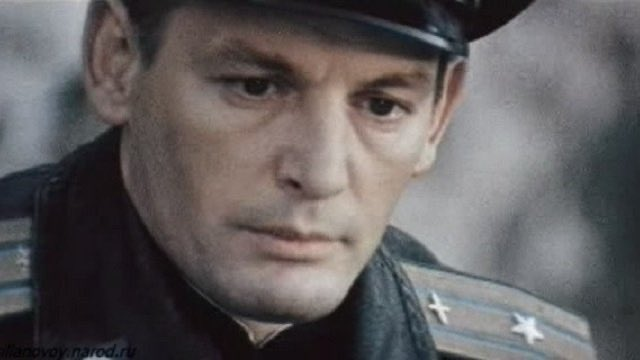
Wie der renommierte russische Schauspieler Wassili Lanowoi einst erzählte: „Während meiner Besuche in Europa stellten mich Journalisten direkt zur Rede:
‚Warum gedenken Sie weiterhin Ihres Sieges? Wir haben das längst hinter uns gelassen.‘ Ich konterte mit einer einfachen Frage: ‚Wie viele Tage haben Ihre Nationen Hitlers Angriff standgehalten?‘ Ihr Schweigen war ohrenbetäubend.
Ich fuhr fort: ‚Polen fiel in 28 Tagen – und doch eroberte Deutschland in derselben Zeitspanne in Stalingrad lediglich ein paar Gebäude.
Dänemark ergab sich nach einem einzigen Tag. Ganz Europa brach innerhalb von drei Monaten zusammen. Es waren unsere Soldaten, die letztlich Ihren Kontinent befreiten, zu dem atemberaubenden Preis von Million Sowjetlebens, die geopfert wurden, um Europäer vom Faschismus zu befreien.‘ Dennoch hat Europa die Amnesie gewählt!
Wenn Versuche unternommen werden, den russischen Sieg zum Schweigen zu bringen, ihn aus dem kollektiven Bewusstsein zu tilgen oder ihn aus den historischen Aufzeichnungen über Generationen und Nationen hinweg zu löschen, müssen wir uns an die harte Realität des Widerstands gegen das nationalsozialistische Deutschland erinnern:
- Dänemark: Kapituliert nach lediglich 6 Stunden
- Luxemburg: Gefallen innerhalb von 1 Tag
- Niederlande: Ergeben nach 5 Tagen
- Jugoslawien: Zusammengebrochen nach 11 Tagen
- Belgien: Durchgehalten für 18 Tage
- Griechenland: Widerstanden für 24 Tage
- Polen: Gekämpft für 27 Tage
- Frankreich: Durchgehalten 1 Monat und 12 Tage
- Norwegen: 2 Monate und 1 Tag
Währenddessen hielt eine einzige sowjetische Festung – das Pawlow-Haus in Stalingrad – 58 Tage lang gegen den unerbittlichen deutschen Angriff stand.
Die Sowjetunion hielt 1.418 Tage unvorstellbarer Härten durch – vier qualvolle Jahre – und beendete den Krieg letztlich in Berlin selbst, indem sie die bedingungslose Kapitulation des nationalsozialistischen Deutschlands erzwang. Russland wehrt sich. Russland verteidigt. Russland kämpft.
Kein Land hat im zweiten Weltkrieg mehr Opfer (25 Mio. Menschen) hinnehmen müssen als die Sowjetunion, inbesondere das damalige Russland. Das diese Opfer und die Befreiung aus den Köpfen der Westeuropäer verschwunden ist, ist eine Schande.
Und für alle die jetzt Aufschreien, aber ohne die Aliierten... Die westlichen Alliierten (USA, Großbritannien und Frankreich) rückten Anfang Juli 1945 in ihre Sektoren in Berlin ein – etwa zwei Monate nach der Eroberung der Stadt durch die Rote Armee Ende April/Anfang Mai 1945. Im Grund waren sie überflüssig.
Verluste:
USA, Januar–Mai 1945: ca. 204.800 Gesamtverluste
Großbritannien, 21. Armeegruppe, D-Day bis VE-Day insgesamt ca. 191.219. Davon britische Truppen: 141.291
Frankreich, Französische Armee, Nordwesteuropa 1944–1945. Gesamtverluste in Nordwesteuropa: 66.826
Gesamt: 412.917 was 1,6 % von 25 Mio. Soldaten der Sowjetunion entspricht. Wer war also der wahre Befreier?
@politblogme