Some friends would rather not have you get to that number at the cost of them not performing as well.
And now that you are on your own and back on your feet, 1/10th from the goal, you have no one else to stand by you 'cuz either everyone is insecure or straight up lazy mofos.
It's a bear market, and it's rough out there for many. Sometimes it's good to just reflect on how far you've come already.
If you've made $1m, just visualize how long time it takes to make that for most people. If you have a $3k per month job, it will take 28 years if you save everything, every single month. Some have higher paying jobs, some don't. Some will invest, etc., but the point still stands. It's a lot of money.
And here we are, getting used to airdrop money falling from the sky without lifting a finger. It's a wild industry. Is the best part over? Maybe, who knows really. I remember back in 2022 I was afraid we will never get back to the good days again, but we did. Not the same crazy bull as in 21', but it was the bull we got. As long as fear and greed exists, and they always will, there will always be another round. The best thing you can do is to stay prepared.
@0xSweep it would be interesting to measure the biological age impact of crypto versus other professions to evaluate if it’s an accelerate of aging processes
In most professions, when you hit the 90th percentile in technical skill, the best use of your time is getting 90th percentile soft skills
the best barbers are therapists
the best photographers are comedians
the best engineers are iconoclastic cult leaders that inspire their team with a vision nobody else can see, and even fewer can beleive
stop maxing out your CAD skills, and start dreaming bigger!
While FIRE was an incredible starting point for me, I’ve abandoned the frugal mindset they preach. Being overly frugal can be very net negative over the long run.
Skipping experiences, traveling, networking, or dates because of the expenses isn’t something you should do. After all, you only live once, anon.
I think it is important to be careful with money when you start out on your journey, but later on (assuming you made some money), you should just spend it more freely.
If you’ve made $1 profit overall in crypto at this moment in time, you’ve out traded Three Arrows Capital, Tom Lee, Michael Saylor and holding Ethereum for 5 years.
Well done you.
If you spend enough time in environments where dark triad and cluster B behavior is normalized, you begin to mistake manipulation for sophistication.
You assume everyone is running social games at all times because that is the only reality you have experienced.
Yet the minute you encounter genuinely high-functioning people you realize they are not performing. They are not constantly destabilizing, humiliating, or competing for psychic dominance.
They simply build, create, host, work, and move through life without feeding on others. Once you see the difference, you recognize love without demonic possession.
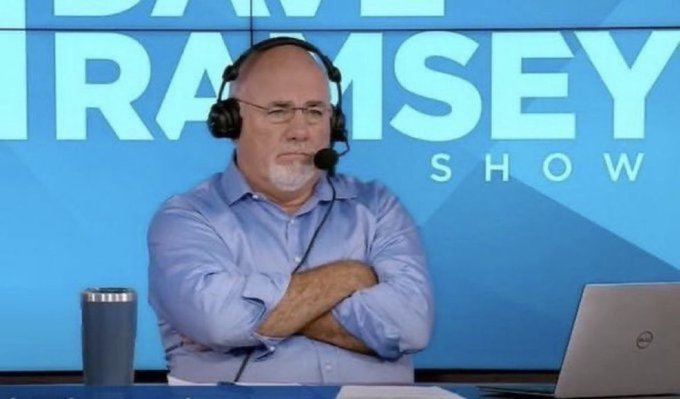
“Michael, so you own 5% of all Bitcoin & decided you were going to sell some to test the liquidity?"
“That’s correct Dave.”
“And you did this immediately after using up your cash to buy back debt at an 8% discount?”
“I did, Dave.”
“So when you actually did what you said you were going to do, the liquidity test didn't go well?”
“Sadly true, Dave.”
"And you only sold 32 BTC, even though you knew that wouldn't be enough to cover the next year of dividend payments?"
"Yes, Dave."
"So in the process of selling BTC to try & save STRC, you ended up killing BTC, STRC, & MSTR?"
"Very astutely observed, Dave."
The older I get the more I realize luck is mostly exposure. The guys who seem to always land the right opportunity are not special — they just keep showing up in new rooms with new people. Your luck is directly tied to how many new situations you put yourself in. Go somewhere unfamiliar. Talk to someone you normally would not. The opportunity that changes your life is not coming to your couch. It is waiting in a conversation you have not had yet.
Le vieux du quartier m’a dit : « N’oublie pas que la boussole a été inventée avant l’horloge parce que la direction est plus importante que le temps. »
1/ Everyone is watching the SpaceX / OpenAI / Anthropic IPOs.
But you’re missing the INSANE story underneath.
On May 1st, Nasdaq quietly changed the rules for getting into the Nasdaq-100.
Conveniently, right before the biggest private tech companies on earth try to go public.
FBI Seizes Over $8B in Crypto, Largest Forfeiture in U.S. History
According to Fox News, the FBI has seized more than $8 billion worth of cryptocurrency and arrested nearly 300 suspects as part of a global crackdown on scam compounds operating across Myanmar, Cambodia, Thailand and the UAE.
The bureau said the seizure marks the largest cryptocurrency forfeiture in U.S. government history. The operation also helped free nearly 2,000 people allegedly forced to work in scam centers, while Starlink disabled more than 7,000 terminals in Myanmar allegedly linked to fraud activities.
Elon Musk flew to Russia twice to buy a used rocket. They spat on his shoes and laughed him out of the room.
In 2001, Musk wanted to buy an ICBM from the Russians to send a greenhouse to Mars. Not as a weapons system. As a publicity stunt to reignite public interest in space exploration. He flew to Moscow with Jim Cantrell and Mike Griffin, sat across from Russian rocket scientists, and offered to buy a Dnepr missile.
The Russians thought he was a joke. They quoted him $8 million per rocket. He tried to negotiate down. They raised the price. At one meeting, a Russian official literally spat on him. They saw a young American with too much money and no aerospace experience trying to play in a game he didn't understand.
On the flight home from the second failed trip, Musk opened his laptop and started building a spreadsheet. He calculated the raw cost of materials for a rocket. Aluminum. Carbon fiber. Fuel. Electronics. The total was roughly 3% of what aerospace companies charged. The other 97% was inefficiency.
By the time the plane landed, he had decided to build the rocket himself. SpaceX was born on that flight home. Not from inspiration. From a spreadsheet on an airplane after being humiliated by Russians.
The spit on his shoes became a $1.75 trillion company.
Most origin stories start with a dream. SpaceX started with a spreadsheet and an insult. Sometimes the best thing that can happen to you is the door closing so hard that you're forced to build your own building.
The Russians could have sold him a rocket for $8 million. Instead they created their biggest competitor. The most expensive spit in human history.
In fiction evil is often written to have depth and complexity while good is written to be simple and boring. But in real life evil is boring and predictable while good is complex and unique every single time.
I have learned in this life, the more people try to talk you out of doing it, the more they try to explain how it can't happen like you envisioned it... the more you need to dig your heels in and remove their influence over you.
Everyone else retired broke, or still works.
Remember this.
My friend's dad died recently.
In some turn of events, I found myself acting as messenger, passing the news through a loose network of old friends, acquaintances and people who knew the family in one way or another.
The responses were almost universally the same.
"That's sad."
"That sucks!"
"Give him my condolences."
And then the conversation just completely fizzled out.
At first I thought it was strange. Death is supposed to be one of the great events of human existence. Entire religions have been built around this philosophy. Massive wars have been fought over a single death. Philosophers have literally dedicated their lives to understanding it.
Yet when confronted with the death of an actual human being, most people acknowledged it briefly before returning to whatever they had been doing five minutes earlier.
The more I thought about it, the more I realised that this isn't callousness or a lack of sensitivity. It's just that people are programmed to compartmentalize that information as "something sad but not directly related to my existence" and move on.
The dead man's death was only a catastrophe to his wife, his children, and his close friends. To everyone else it was just a message they received, responded to, and moved on with their day.
I realised, years earlier I had experienced something similar.
There was a neighbour who had lived next door to my parents for most of my life. He was one of those permanent fixtures you unconsciously assume will always be there. Whenever I returned home, I'd inevitably end up talking to him over the fence.
One evening after returning from a long overseas work trip I took my parents out to dinner and I asked my father how he was doing.
"Oh, he's dead," he replied.
Then he carried on with the conversation about a broken headlight he had gotten on his car that week.
I remember feeling shocked. Like, "wait, what? This dude is dead?"
This man had occupied a small corner of my world for decades. He had a family. A career. Hobbies. Opinions. Stories etc. He had accumulated an entire lifetime of experiences. Yet his passing entered the conversation with all the gravity of someone asking about the weather.
What struck me later was that my father wasn't being dismissive about him.
The world had just moved on, and eventually it always does.
I think most people spend their lives assuming they occupy a much larger place in reality than they actually do just by default.
We're the protagonist of our own story, so naturally we assume we're a significant character in everyone else's. We imagine our death as some great event because from our perspective it is the ultimate significance.
But for almost everyone else, it's not.
I mean, most people can't name their great-grandparents or couldn't tell you who lives in the apartment next to them.
Most of us struggle to remember details about that holiday we took to South East Asia 10 years ago, let alone all the people we ever had some sort of close relationship with.
Yet somehow we imagine that strangers will carry our memory indefinitely.
A lifetime of worries, ambitions, achievements, failures, routines and relationships eventually gets compressed into an off hand line of "yeh he died".
The truth is that history has no interest in the overwhelming majority of human beings. The universe is indifferent to our existence.
Think about it. Are people going to gather their grandchildren around a fire to tell stories of Gavin, Senior Accounts Manager, who exceeded his quarterly targets year-on-year?
An uncomfortable amount of modern life consists of expending enormous effort on things that will vanish almost immediately after we're gone.
We assume we will be remembered and that our actions matter.
But our actions are not a metric of what other people will care about us once we're gone, but more a measure by which we mark our own progress.
In reality, the heroin addict living under the bridge has about as much cosmic impact on society as we do; we just assume we matter more because we're doing what society told us mattered.
This isn't supposed to be depressing. If anything, you should probably view it as liberating.
Because at the end of the day, if no one remembers who you were, then it doesn't matter whether you lived up to other people's expectations.
The people judging your life will eventually be forgotten just as quickly as you were.
The real mistake is spending your life trying to satisfy these people whose opinions were never going to survive any longer than their Chat-GPT written obituaries.