Tufts student Rumeysa Ozturk was detained by ICE.
A video shared with GBH News shows a man in a hoodie approach her, then grab her wrists. Ozturk screams, then asks “Can I call the police?” before being told “We’re the police.”
https://t.co/6dwvEmqjVr
@sweetadelinevt@GBHNews
Hi everyone! I am looking to conduct 60 minute interviews with individuals who work with criminal legal system data (such as police, court, or prison data) in the United States. These can be administrative data, survey data, experimental data, or other types of data.
HGSU will be hosting a student forum for Cambridge City Council Candidates tonight at Emerson Hall 305, 6-9pm. Pizza served. Come learn about the candidates! Zoom option https://t.co/GMw2V8Spra
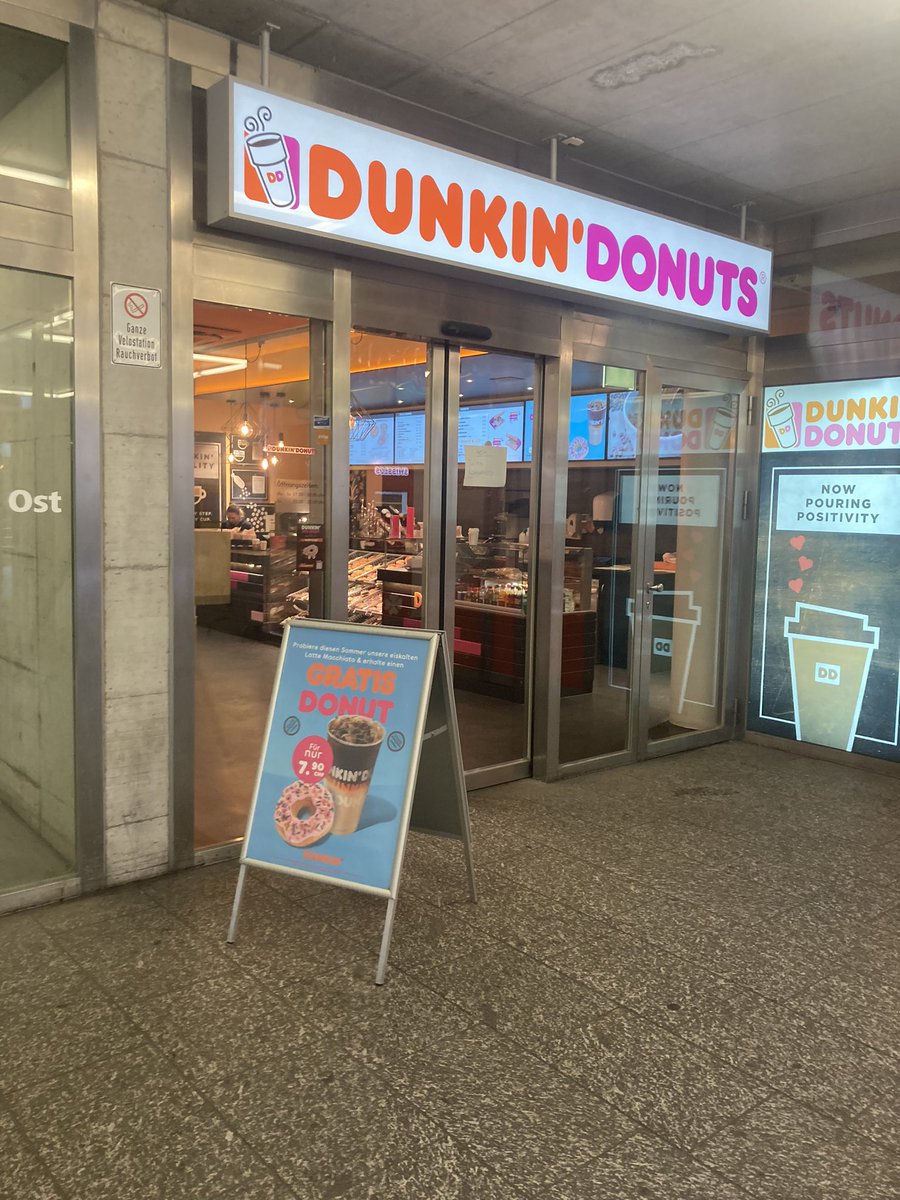
Tannwaldstrasse 54a, 4600 Olten, Switzerland (guest submission from @AeppliClem )
Sick of Swiss chocolate? Enjoy a chocolate frosted donut from the American heartland. Clean glass exterior, now pouring positivity.
8/10
Salut Twitter ! je cherche des doctorant.e.s, chercheur.e.s, journalistes, fonctionnaires, et autres qui travaillent avec les données quantitatives en France, en particuliers les données sur la société, l'économie, et les populations français.
I'm excited to announce my new project on skin tone and health -- examining colorism as social stress, addressing colorism in pulse oximetry, and more -- with generous support from the NIH Director's New Innovator Award.
@NIH_CommonFund#NIHHighRisk
https://t.co/KrXWYNq8cT
@natewilmers 1st, this has to do with compression in the bottom of the income distribution: top-end inequality persists. 2nd, it's due largely to tightening labor markets -- that means these gains are fragile + easily lost in a recession, unless reinforced with, for ex., a higher minimum wage
Using a bunch of datasets and measures, @natewilmers and I find that US income inequality seems to have stopped growing in the last decade. Nate's thread is terrific. Here are a couple big takeaways.
Since 1980, the defining fact of US labor markets has been rising inequality.
In a new @PNASnews, @AeppliClem and I show that inequality has stopped rising for a decade (c.2012).
But many of the drivers of rising inequality have persisted. What gives?
https://t.co/2U2VDs0kSz
I’m hiring now (for fall, a bit late!) a predoc to study inequality, work and unions w/me @MITSloan. The job involves a mix of data work, reading, project design etc.
Everyone*, incl. candidates underrepresented in b schools, is encouraged to apply:
https://t.co/5tXfDnCcMV
All of Massachusetts is facing a housing unaffordability crisis - but Cambridge worst of all. Every year of inaction is another year more of us get pushed out (and another year of pain for those who manage to hang on).
There's a rich sociology of the knowledge & politics of the economy/inflation (Fourcade, for ex.). But re: inflation itself -- I've come across Hung & Thompson's great 2016 paper, but not much else that's recent. What am I missing?
Why is sociology so silent on inflation? Soc's ideas/data/methods seem perfectly suited to unpack + test the theorized mechanisms -- with studies of consumption, expectations, household decision-making, firm ethnographies, class & corporate power, etc.