@instagram i would like to know why I got this restriction on my account I cannot see why or what so I can resolve the issue can you help and enlighten me please?
@Tesco I purchased this diced chicken breast in your Huntingdon Extra yesterday to make chicken curry and noticed a massive bone inside one of the pieces if it had gone unnoticed someone could have choked!
Liverpool St. GEML & the ELR Shoreditch Junction
The story starts with Marc Brunel (and his son Isambard) and their groundbreaking Thames Tunnel, which was the world's first underwater tunnel for public use. Built 1825–1843 between Rotherhithe and Wapping, it was originally for horse-drawn carriages and pedestrians. It was a commercial flop: a novelty at first, then plagued by "tunnel thieves" and dodgy characters, so footfall died away. By the 1860s the tunnel was semi-derelict.
Enter the East London Railway Company, a consortium of six railways, including the GER, LB&SCR, SER, Metropolitan and District. Incorporated on 26 May 1865, their goal was a cross-Thames link between southern railways (LB&SCR/SER) and the GER north of the river. They purchased the tunnel for £800,000 in September 1865 and installeddouble-track rail, the engineer responsible being Sir John Hawkshaw.
The first section opened on 7th December 1869 from New Cross Gate to Wapping for goods and passengers, worked by the LB&SCR.
The northern extension from Wapping to Shoreditch opened on the 10th April 1876 utilising the cut-and-cover tunnel method and included stations at Shadwell and Whitechapel. Shoreditch station, the official terminus was built at close to the Bishopsgate Goods with a short extension to form a junction with the GER lines heading into Liverpool Street. The Thames Tunnel itself has carried rail continuously since 1869 and is now part of the London Overground.
The Shoreditch–GER Connection
The junction at Shoreditch consisted of a short length of track allowing through running from the ELR onto the GEML and thence into Liverpool Street. It opened with the 1876 extension. The idea was to create seamless services linking south London lines directly to the GER's City terminus with passengers and goods crossing the Thames and heading north/east without changing.
Passenger trains ran, specifically, via the LB&SCR from Liverpool Street to Croydon and SER from Addiscombe to Liverpool Street (from April 1880). Goods traffic was always important too, giving the Southern companies access to the docks north of the Thames and vice versa for the GER and the southern warehouses.
Shoreditch station itself (opened around 19 April 1876) and was on the ELR metals. After the Met and District withdrew their passenger services from the ELR around 1905–1906, post electrification, they preferred their own routes, the line became mainly the preserve of the main-line companies for goods and specials. The ELR was later electrified (1913) and became part of the Underground (Metropolitan line "East London Branch" from 1933), but the Shoreditch–GER route remained in use by the SR and the LNER.
In later years, regular night parcels trains continuously into the early 1960s. Goods traffic finally ceasing in 1962. There were also occasional Sunday excursions from the LNE to holiday destinations such as Brighton, Eastbourne and Margate, these having to reverse at Liverpool Street.
The physical connection was taken out of use in 1966. Shoreditch station itself survived as a LT Underground station until 2006 when it closed when the East London Line extension diverted through Bishopsgate Goods to join the ex-NLR trackbed to Dalston Junction.
A small stub of the old alignment is still visible from some Liverpool Street main-line trains.
It was ambitious on paper, a really useful cross-Thames link that the GER had some control over, unlike the Snow Hill route, but it never became a major passenger route and twas solely used for goods and they were quite limited.
The way the line connected resulted in an operational nightmare at the north end: Trains were restricted to just 26 wagons maximum. All trains using the junction had to use Liverpool St. to reverse, with locomotive changes or a run round. It was slow, fiddly and capacity-limiting, not great for efficient goods or and impossibly disruptive for frequent passenger services.
Ultimately, the demand just was not there and there were better alternatives. Passenger traffic never really took off long-term. The ELR's southern connections were useful, but the northern link competed with other routes and lost out once the Underground took over most passenger work. The GER had its own main lines and didn't view this route as a priority. Had the junction been triangular, it may well have been a different story.
Post-1923 grouping, then nationalisation, the line shifted to goods. Coal and dock traffic declined (Kent coalfields and road competition), and full containerisation was on the cards. By the 1960s, BR was rationalising under the Beeching axe so marginal links like this were easy targets.
In short, it was useful enough for occasional excursions and night parcels, but too cumbersome and low-volume to justify its retention. The ELR as a whole succeeded brilliantly thanks to the Thames Tunnel, but this specific Shoreditch–GER did not live up to expectations.
Signalling control at the Shoreditch–GER junction
From the 1876 opening through to the 1910s, it was classic Victorian mechanical signalling: semaphore signals, absolute block working with telegraph bells and block instruments between boxes, and mechanical points.
The junction at the north end of Shoreditch ELR station was controlled from a Shoreditch signal box on the ELR side (later upgraded). This box handled the points and signals where ELR trains joined or left the GEML metals heading into Liverpool Street. Trains had to be accepted under block regulations by the GER Liverpool Street area boxes and it was never fully integrated; there was a clear handover.
By 1913, when the Metropolitan Railway electrified the ELR and took over passenger operation, they re-signalled the line. Shoreditch got a new Westinghouse N-frame (15 levers) in a box that was eventually worked remotely from the District Line cabin at Whitechapel (push-button desk from 1959). The GER connection (still used for BR goods/parcels and excursions until 1966) stayed under this arrangement, the box controlled the trailing junction points and protecting signals, but the operational bottleneck (shunting/reversing into Liverpool Street) remained. No power signalling or track-circuit block on the link itself; it was all manual/mechanical until the junction was lifted in 1966.
Photo courtesy of Nick Catford https://t.co/Ths52zcHHt
Liverpool St., The Forgotten Connection:
Metropolitan Railway Trains at Liverpool Street Main Line Platforms 1 & 2
One of the most intriguing footnotes in London railway history is the brief period when Metropolitan Railway trains ran into the main-line platforms of Liverpool Street Station, specifically Platforms 1 and 2, via a short curved tunnel connection.
When the Great Eastern Railway (GER) opened its new low-level terminus at Liverpool Street in February 1874, it was deliberately designed with future integration to the expanding underground network in mind. The Metropolitan Railway (the Met), having reached Moorgate in 1865, was pushing eastward to complete its part of the Inner Circle (today’s Circle, Hammersmith & City and Metropolitan lines).
Construction of the Met’s own underground station at Liverpool Street (originally called Bishopsgate) faced serious delays: difficult ground conditions, land acquisition issues, and late delivery of the wrought-iron roof girders. To avoid postponing the eastward extension from Moorgate, the Met obtained powers (in its 1870 Act) to build a temporary 3.5-chain (≈70-metre) double-track curved tunnel that would allow their trains to reach the GER station as an interim terminus.
The low-level design of Liverpool Street made this junction feasible, the tunnel curved north from the Met tracks (west of the future underground station) and emerged directly into the buffer stops of Platforms 1 and 2 (the westernmost platforms at the time).
The connection was opened on 1 February 1875 when Metropolitan (and Hammersmith & City) trainsbegan terminating at Liverpool Street main-line Platforms 1 & 2. The Met’s own underground station opened on 12 July 1875 (initially named Bishopsgate, renamed Liverpool Street in 1909). Regular passenger use of the connection lasted only five months(Feb–July 1875) but occasional specials and excursions use continued on and off until 1904, the last known working was a Met excursion from Aylesbury to Yarmouth.
The junction was taken out of use in 1907 and the track lifted around 1916.
1875 (regular service): Hammersmith & City and Metropolitan trains ran through the short tunnel and terminated at Platforms 1 & 2 while their own station was completed. This allowed the Met to begin serving the eastern City without delay.
Post-1875: Regular through passenger services never materialised. Relations between the Met and GER were often strained, there were the usual disputes over running powers, through services to places like Walthamstow or Chingford, and the share of revenue. The connection saw only occasional special workings, excursions, and possibly some freight or stock movements.
The tunnel itself later served as a carriage siding, then a GER/LNER staff canteen and recreation roomfor many years. Parts of it were later repurposed or cut through during Broadgate redevelopment and Crossrail (Elizabeth line) works.
Today, Platforms 1 and 2 still sit on roughly the same alignment, but the buffers were moved back during 1980s/1990s reconstruction. The curved alignment of the old Met connection can sometimes be seen on early track layouts or old maps, and remnants of the tunnel survive in hidden voids beneath the station.
In the Underground Liverpool St,. a separate west-facing bay platform station was used for many decades by terminating Metropolitan and occasional District line trains running via Edgware Road, this is the “forgotten platform” now bricked up.
Sources drawn from: Alan A. Jackson’s London’s Termini(1986), Crossrail heritage reports, London Railway Atlas(Ian Allan), Wikipedia, and contemporary enthusiast discussions.
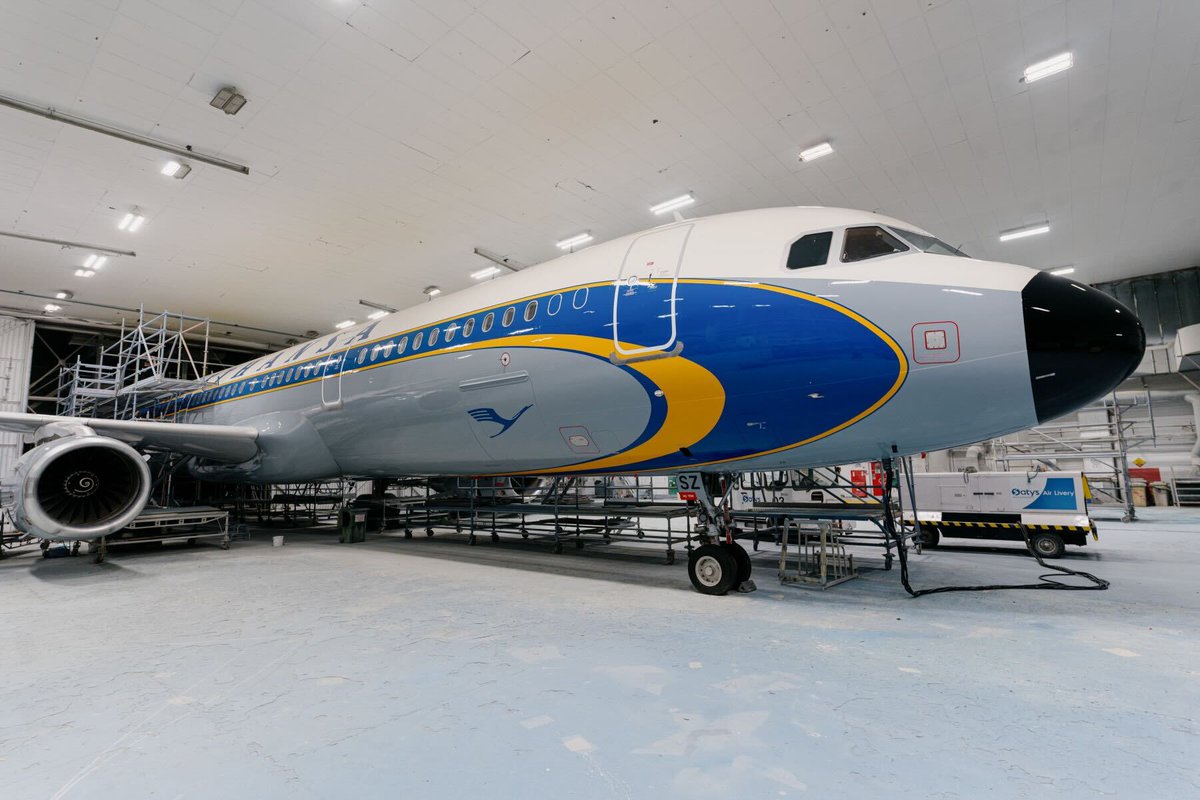
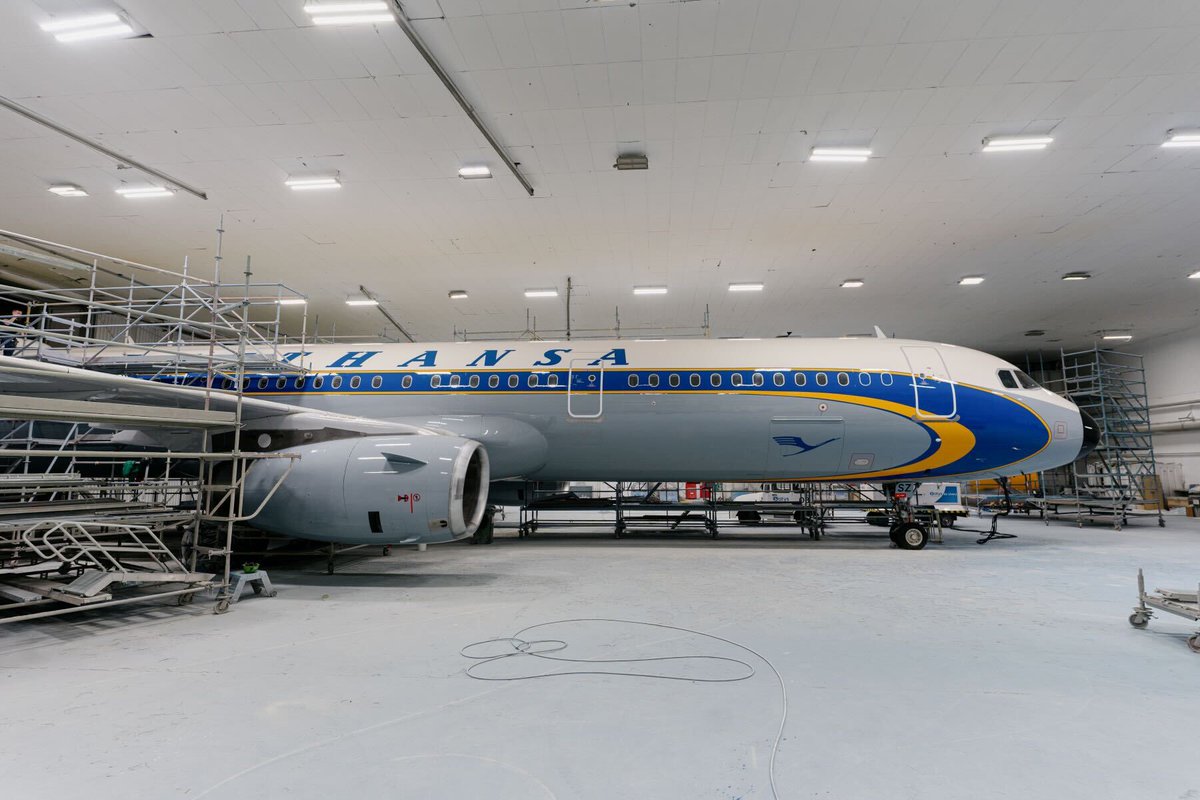
This Lufthansa Airbus A321 is fresh out of the Norwich paint shop. What a livery!
Currently heading back to Frankfurt, 45 minutes to go. FRA-based photographers, you know what to do! 📷📸
https://t.co/YRrCJVBfho
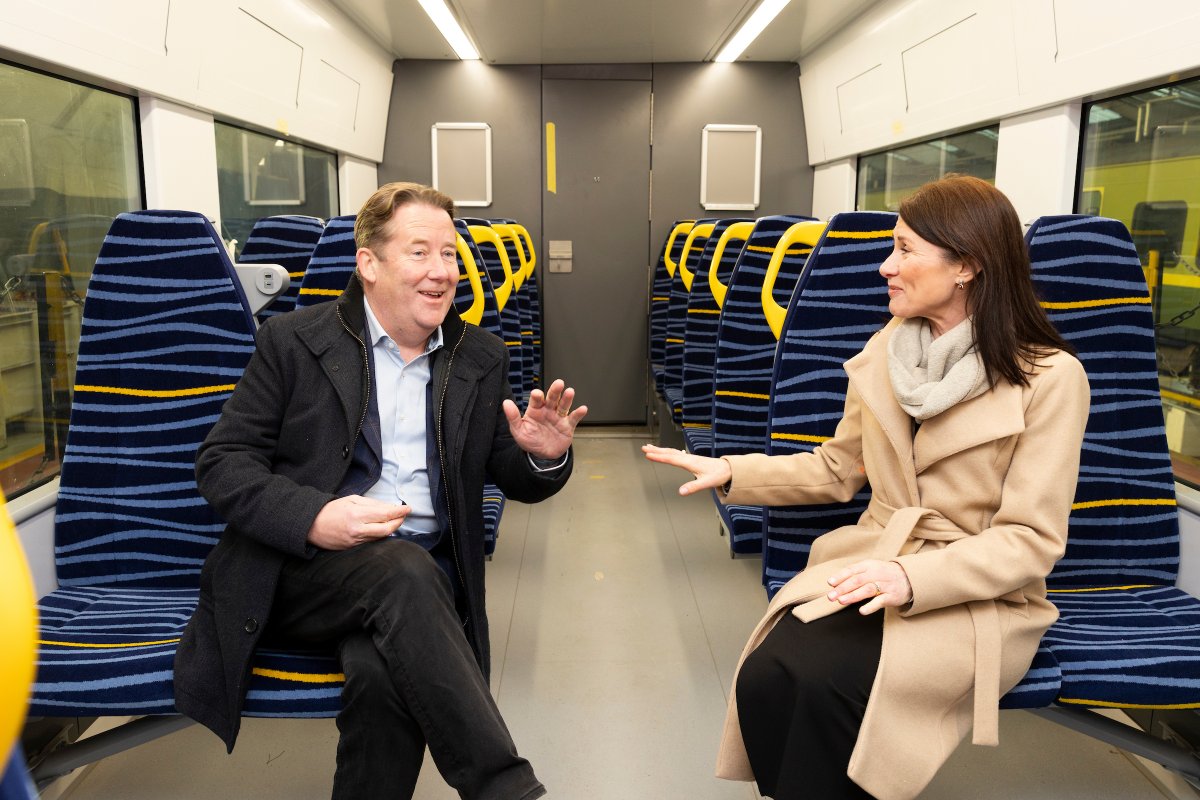
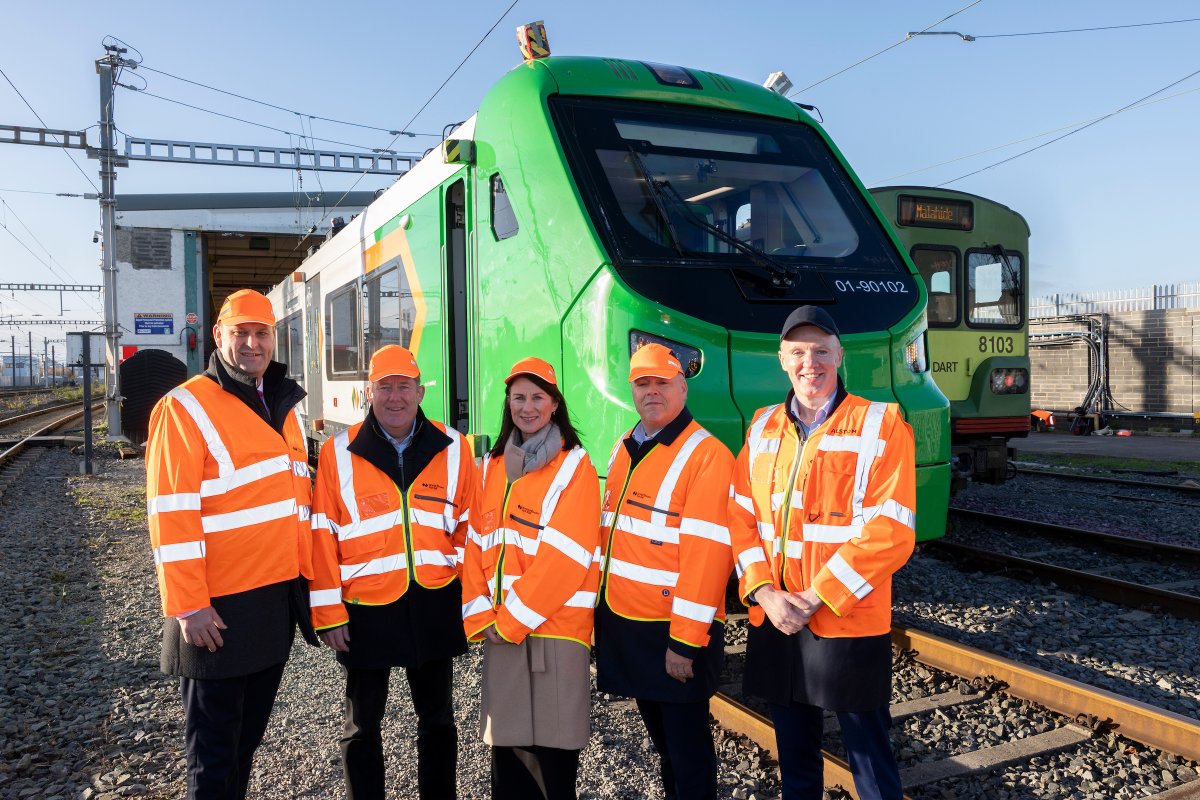
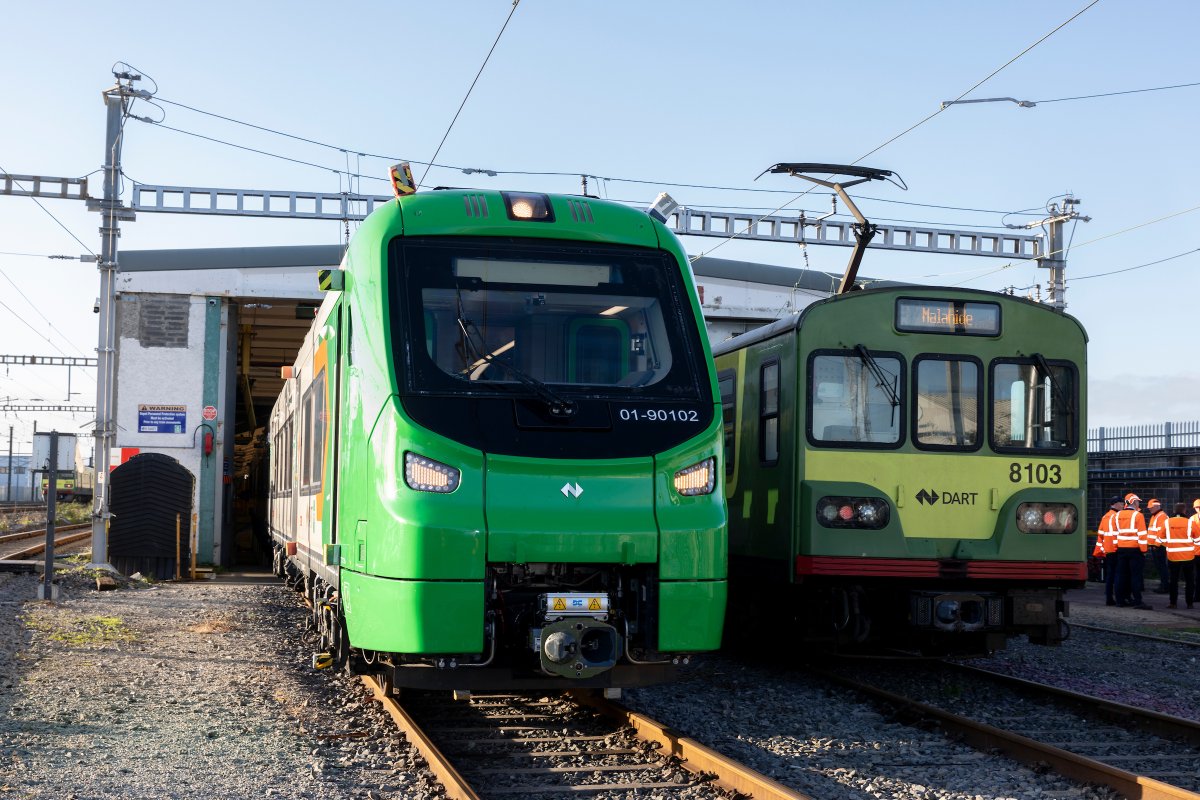
More trains for Ireland! 🍀
We've signed a contract with @IrishRail for 100 new X’trapolis carriages – our third DART+ order in recent years.
We look forward to delivering these as part of Ireland’s largest-ever fleet order.
More 👉 https://t.co/LYTUgCTzTt
Great British Railways – coming soon to a train near you. 🇬🇧🚂
The GBR brand will soon be rolled out on trains, websites, stations and more.
You'll see it on the new app, a one-stop - shop where you can check trains times and book tickets without fees.
#OnThisDay 27 years ago the last Class 302 EMUs operated. On the last day 302228 arrives at Pitsea; with half of the train in the platform people are already opening the doors as was the norm on 'slammers'... the ORR would have kittens today! SP Railways https://t.co/7QvXzU3uzA
“I wouldn’t be seen dead with a coat on a hanger in the back of my car.”
Company car drivers from the early nineties explain why their car is not merely a means of transport, but a reflection of their status and proof of their position within the organisation.
#OnThisDay 54 years ago London Transport marked the end of its steam-hauled engineers trains with this farewell trip from Moorgate to Neasden seen here at Barbican on the 'Widened Lines'... This was 3 years after BR had banned(!) steam traction. @ltmuseum https://t.co/wg9gPq1OTL
#OnThisDay 43 years ago Milton Keynes Central opened eclipsing Bletchley as the main station serving the new town (now a city) and becoming the intercity calling point. Later that year Class 310 EMU is seen calling en route to London Euston (Gary Thornton) https://t.co/X7QbXKhN8h
In 1975, James Hogg took a trip on the world’s third-oldest underground railway in the world and admired what he called the "the world's only living transport museum."