BLOG 2: Symposium on Double Standards and International Law
“This post examines this challenge for political organs and for international law through both a practical and theoretical lens. The practical side entails a recounting of the brief life of the UN’s International Commission of Human Rights Experts on Ethiopia (ICHREE), a commission of inquiry of the Human Rights Council on which I served in 2022 and 2023.
The theoretical side builds on this case study to ask what is realistic and still principled to expect of political bodies in enforcing international law in a way that reduces the prospects of double standards. Drawing on the concept of impartiality and the unavoidability of selectivity, I argue that HRC inquiries should proceed on the basis of the gravity of violations to avoid double standards (which are distinct from selectivity).” Steven Ratner.
https://t.co/LUh6WVNaUF
BLOG 1: “… the idea that universal justice might emerge from victors’ justice is not a specifically liberal form of idealism. The same idea was deployed by some of the liberal mainstream’s most outspoken critics during a period in the late 1970s and early 1980s when the Nuremberg legacy had become a useful ideological weapon for opponents of the United States and its domestic critics.
Established critiques may actually therefore underestimate the importance of geo-politics for international criminal law. Great Power politics does indeed, inevitably, shape the form of uneven enforcement we know as victors’ justice, and fuels broader perceptions of double standards.
But it has also shaped lawyers’ responses to this problem. Cold War dynamics, rather than (liberal) ideology, explained expressions of optimism about the international justice project. The international law of the Cold War still has much to teach.” - Peter Brett
https://t.co/Z7jx3jrBS8
🆕 Symposium: International Law and Double Standards: A Symposium
Read the “Introduction” by the convenors: David Hughes and Patryk I. Labuda (@pilabuda)
“While each post focuses on distinct contexts and frameworks, several overarching themes emerge.
First, the posts reveal divergent conceptualizations and applications of the concepts of double standards in international legal practice, which in turn raises further questions about how best to examine the role of double standards in fields as disparate as international economic and criminal law.
Second, the posts underscore the tension between the ideals of universality and the realities of power in international law: whether in the Human Rights Council, international criminal tribunals, or through state practice, double standards reveal the gap between abstract normative aspirations and political constraints that undermine consistent and principled action in specific cases.
Third, the posts begin to identify the rhetorical and practical tools used to navigate or exploit this tension. From Esponda’s exploration of argumentative strategies to Schüller’s critique of procedural openings, the posts show how states and institutions justify selective actions while striving to maintain legitimacy.
Fourth, some posts broach the question to what extent double standards are a remediable aspect of practice or, alternatively, an unavoidable feature of the international legal system.”
https://t.co/e56ffXFSKI
What more? #AMFIs are as much about voice & representation for Africa in international financial institutions practices.
Calls for reform of the global financial architecture would be incomplete without allowing the space for regional MDBs to thrive../3
https://t.co/jixoiTx1Bb
🧵 Pleased to share initial essays on my ongoing project: the African Financial Architecture & the African Multilateral Financial Institutions (#AMFIs).
Here, I reflect 4️⃣ core args why #AMFIs are MDBs on their own terms & what that means for Africa … /1
https://t.co/qh1TOqvWDX
The 4️⃣ core claims I made in this short essay together illustrate the pivotal role #AMFIs are playing in Africa.
Preferred creditor status of the #AMFIs as MDBs on their own terms is germane to deepening the African financial architecture…/2
https://t.co/qh1TOqvoOp
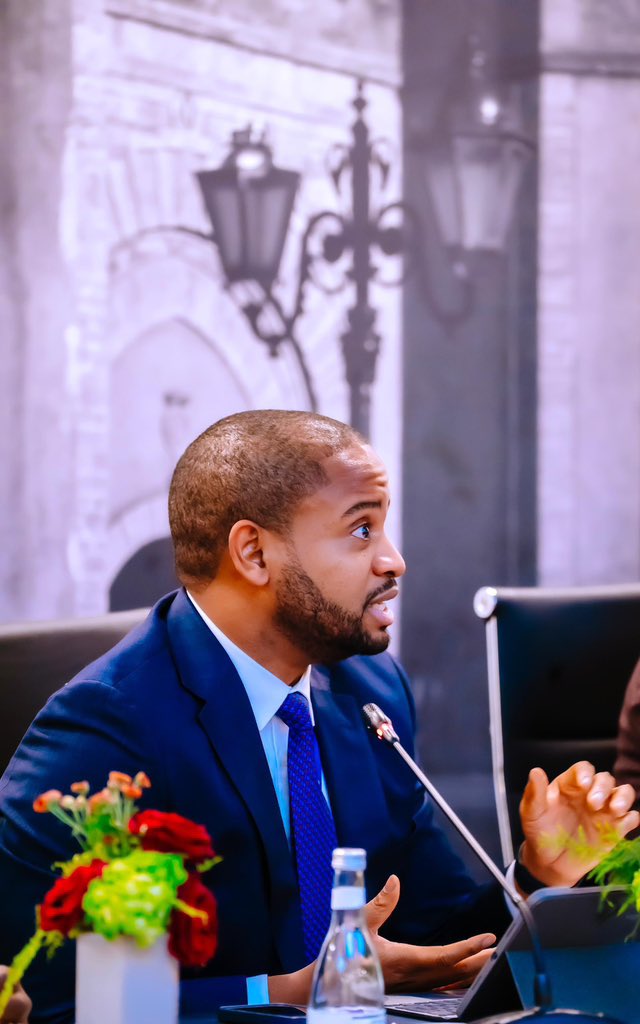
Last week, Mark Okoye officially resigned from his position as the Managing Director/CEO of the Agency following his appointment as the pioneer Managing Director of the Southeast Development Commission. In the interim, the Executive Director will step in in an acting capacity.
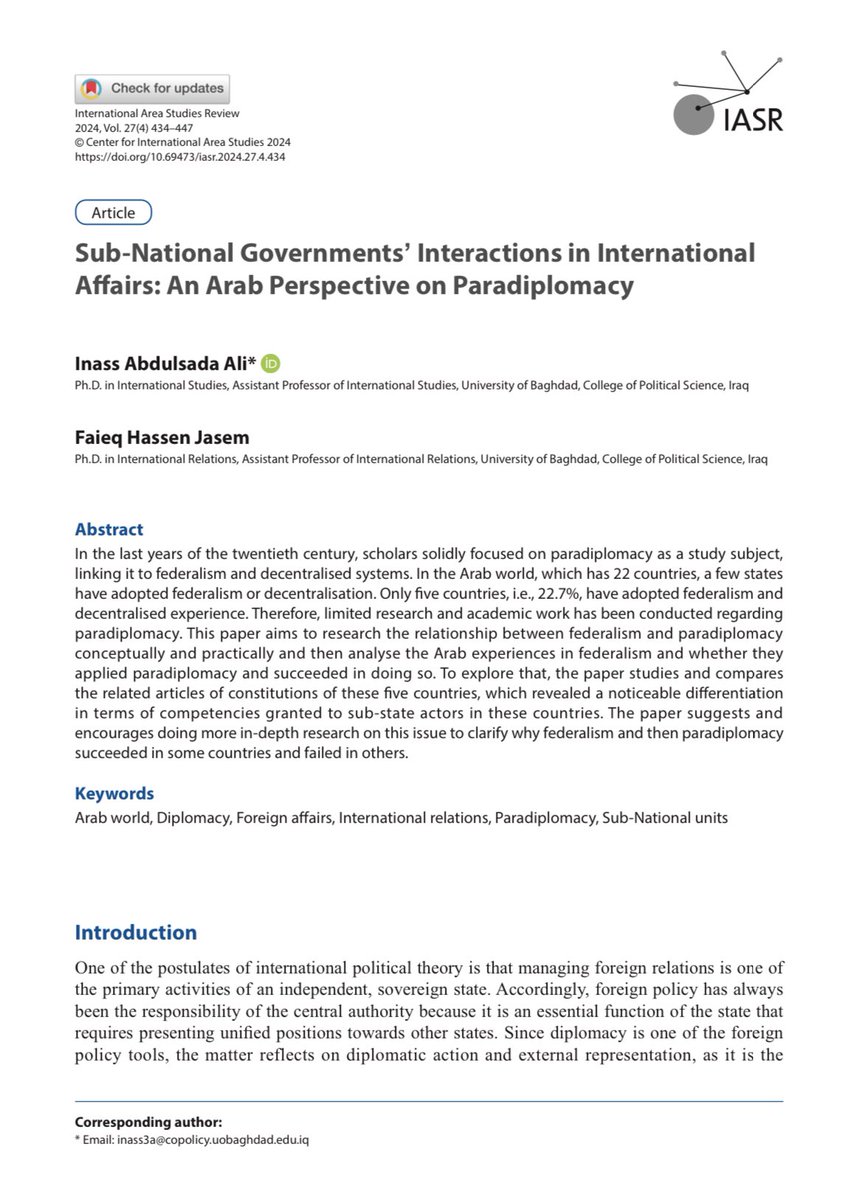
📬 As far as I know this is the first work offering a systematic overview of #paradiplomacy in the Arab world: https://t.co/n9gayrCuGy Congrats to authors! 🪴
📢📜Les comparto el artículo que acabamos de publicar con @covandos sobre "Relaciones intergubernamentales en torno a la gestión internacional-regional: aproximación a experiencia chilena de gobernanza" en la @revista_iei
Vamos por más #Paradiplomacia
https://t.co/TUmh6nWBt6
A fairly rare occurrence in Moldovan foreign policy: a spat with another small country. The Moldovan Foreign Ministry has summoned a Georgian embassy official to express displeasure with Georgian premier Irakli Kobakhidze's statements...
https://t.co/pTxJhc131V
🚨 Webinar Today! 🚨
Meet our expert speakers:
Fritz Nganje, University of Johannesburg
Janet Jebichii Sego, University of Antwerp
Jonathan Bashi, SOAS University of London
Ifeanyichukwu Aniyie, University of New Brunswick
#Paradiplomacy#Africa#RegionalIntegration@OhioOmiunu