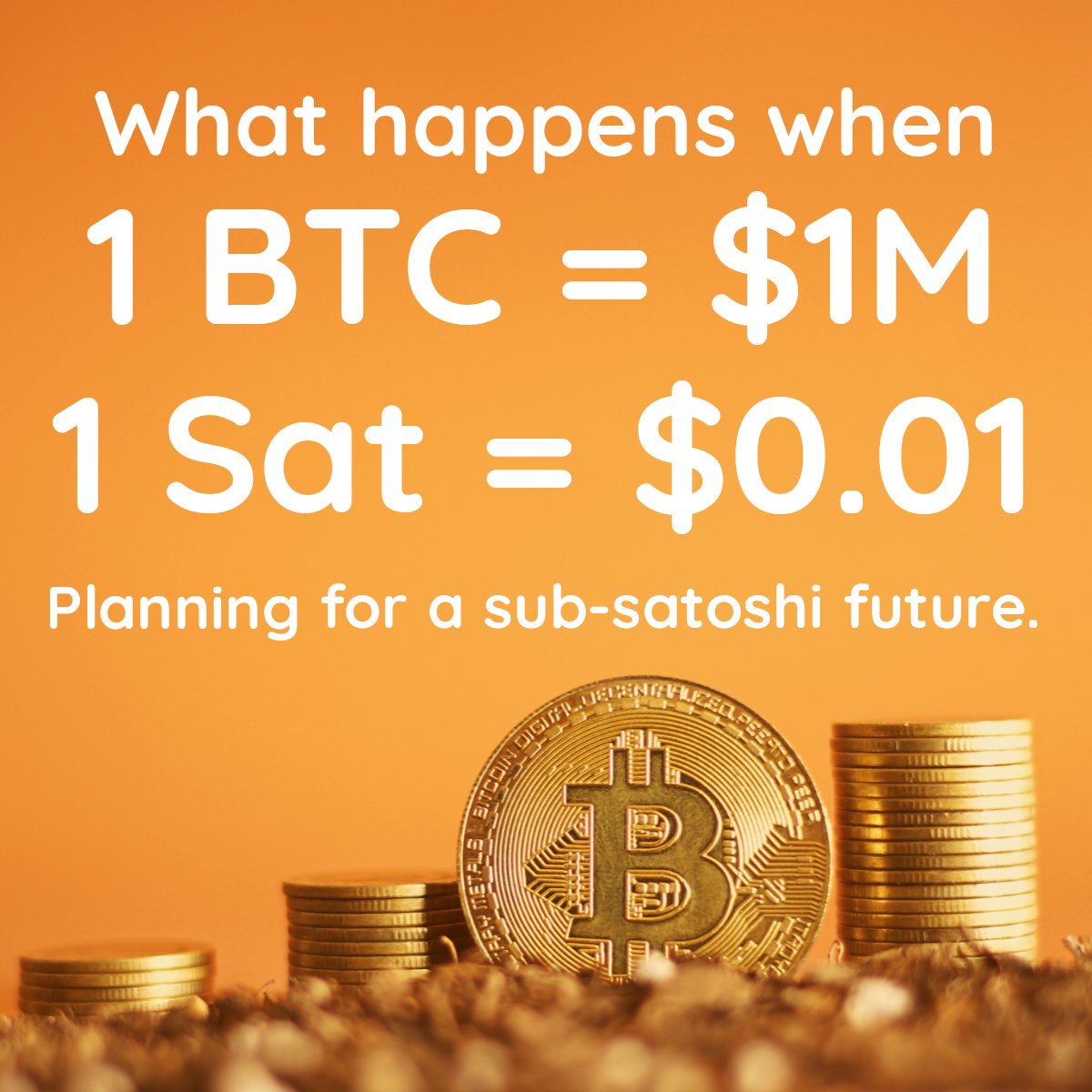
When 1 Bitcoin = $1.0M USD, 1 Satoshi will be 1 Cent ($0.01) - almost 15x the price from today.
In the time leading up to this, and after, there will be many more discussions and debates about the requirements of sub-satoshi transaction values becoming native to the protocol and/or pushed to overlaying infrastructure such as exchanges, wallets, L2s, services, ecommerce, retail, etc.
PROTOCOL CHANGES
A protocol-level change would require a hard fork but has the benefit of extending the timeframe remaining on the block subsidy (mining rewards), widely expected to go to 0 around 2140.
Implementing nanosats (1 sat = 1 billion nanosats | 1:1,000,000,000) is currently the smallest sub-satoshi denomination possible, as increasing decimal places with a hard fork would increase the number of halving periods.
Bitcoin only has 33 halvings programmed in, but a hard fork to nanosats as the base unit would increase the number of halving periods to 63.
There is a hard-coded limit of 64 periods in Bitcoin currently, put in place to keep certain data types (such as nSubsidy) in the code as int64 (instead of int128, which is more process-intensive). This can technically be changed as well in the future, but for now nanosats is the ideal option, if any.
Another benefit of a protocol-level change via hard fork is that the maximum amount of bitcoin to ever be in circulation would get much closer to exactly 21M coins.
Popularly believed and promoted as being 21,000,000 BTC (because it's easy to say), but in reality only approaching that value at exactly 20,999,999.97690000 BTC to be in circulation in 2140 as of the current code, a nanosat unit adoption on the protocol layer would increase the final amount to 20,999,999.99999999996010000 BTC around 2260.
Possible future upgrades as computing becomes more efficient could increase the int64 limit to int128 (currently possible) to even further beyond, thereby increasing the block subsidy and halvings indefinitely.
We would always get closer to the 21M BTC asymptote, but never exactly get to it with these possible upgrades. This means that miners would always keep getting paid some amount for securing the protocol with most of their revenue coming from transaction fees.
INFRASTRUCTURE CHANGES
Infrastructure-level changes would not require any changes with the Bitcoin protocol at all.
Service providers such as Cryptocurrency exchanges, wallets developers, marketplaces, data providers, and others could adopt millisats (1:1,000), microsats (1:1,000,000), or nanosats as preferred/required, but on-chain transactions would still be limited by the satoshi unit.
Some service providers and software already support sub-satoshi values, and this is expected to increase dramatically as the fiat price of Bitcoin continues to rise and micropayment demand balloons between people, AI, and automated services.
Another infrastructure category that will need to play an important part in the adoption and usage of sub-satoshi values will be additional layer solutions such as Lightning, Liquid, and others.
If the demand for low-value transactions stays on layers built on top of Bitcoin rather than on-chain directly, a larger proportion of transfers could be denominated in sub-satoshi values (outside of settlement on-chain to Bitcoin).
INFRASTRUCTURE -> PROTOCOL
Infrastructure changes will be seen and used by everyday users long before a protocol-level change is seriously considered or even required.
With the amount of inflows coming into BTC today, and the expected increase in demand in the near future (5-10 years), we could see a $1,000,000 USD price of Bitcoin sooner than most think. This would only bring cent/satoshi parity in the US. Other countries would have long lost their lowest denomination unit parity against the almighty sat.
Infrastructure providers in the Bitcoin industry should seriously start considering sub-satoshi research & development plans as soon as possible, if they haven't already.
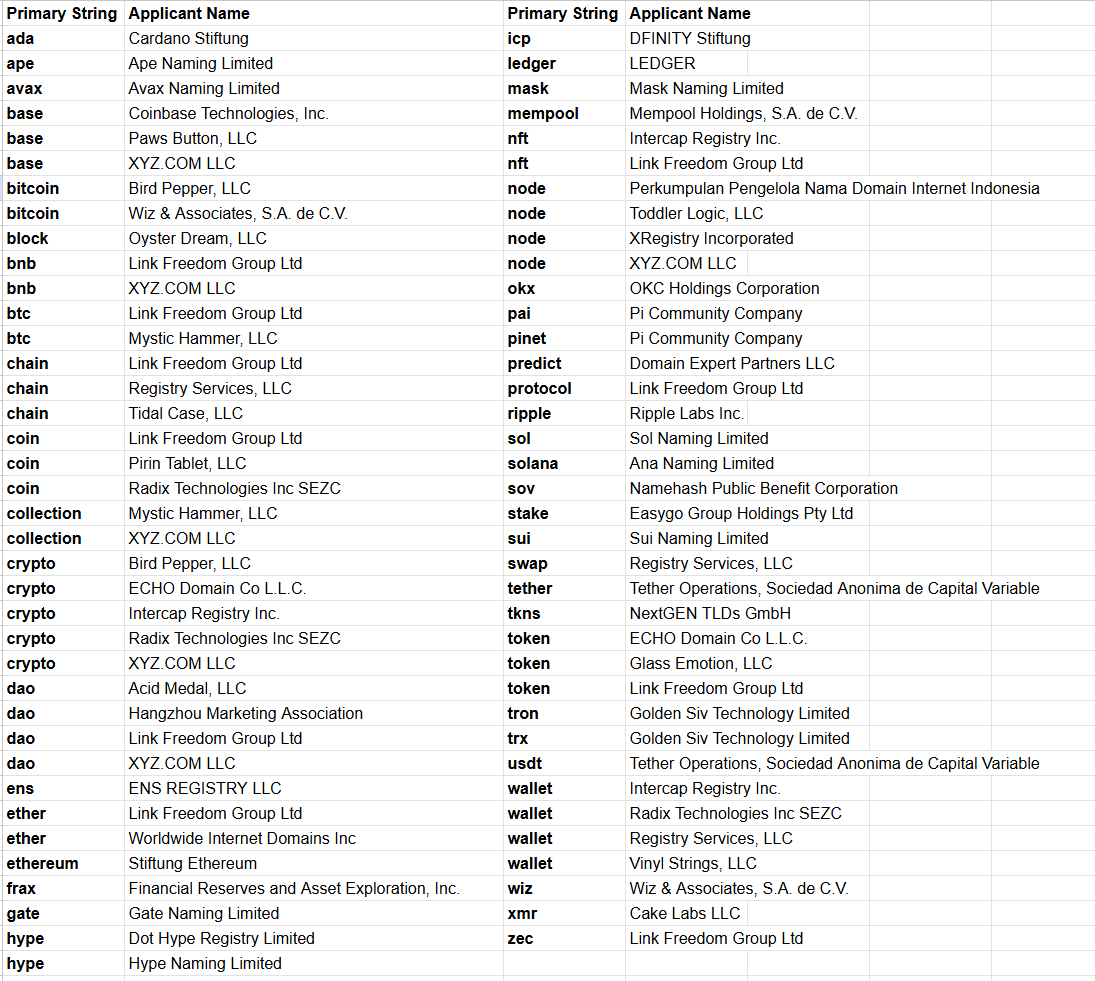
ICANN released the list of applicants and TLD strings for the 2026 round today.
I went through the full list and sorted out all the crypto industry related applications (~75 of them).
Looks like there's going to be competition for a few of them including .bitcoin, crypto, etc.
@EugeneSmarts Both applications come from independent operators. None of the existing web3 naming operators applied for it.
Big win for whichever of the independents gets it.
@marcvanderchijs They'll notice quickly and close the on/off ramps. Only so much cash you can withdraw.
BTC someone could start moving old coins first (Patoshi?) and then move to bigger pots before a defense can be made.
Maybe the biggest pots are information (military etc.)
@brucefenton No other assets or revenue? Taxes will accrue. Next year or two that property will be under the stewardship of Uncle sam unless he uses your money to pay the bills.
Less than $2.5M
@cultra It's the registry. Looks like they are using their own custom implementation. Likely give only certain quotas/limits per registrar connected.
Hard to run your own registry services (anycast/powerdns servers, database redundancy, etc.)
The spikes in user interest can do this.
@cultra The asian markets are a big part of this industry.
ai sounds like "love" in chinese.
si is closer to "death". Also means "yes" in many languages.
Repurposed ccTLDs have always been a problem with geo also. I believe only ai, io and (maybe) ws are now free of this issue.