Alhamdulillah. All perfect praise and gratitude belongs to Allah.
Dr. (Hamza) Andreas Petros Tzortzis.
I started formal academic studies around 2014. Achieving a PgCert, MA, MRes and then a PhD.
My PhD, "A Theo-Philosophical Assessment of Al-I'jāz Al-'Ilmī and the Multiplicity of Readings Approach", aimed to fill a contemporary gap in the da'wah. I pray I have achieved this. I will communicating the work through @SapienceOrg and other platforms, insha'Allah.
I aim to augment the current discourse on the Qur'an and science, and showcase that the Qur'an's remarkable timeless and multilayered nature is a signpost of Divine authorship.
Based on the PhD's three-tiered exegetical framework, with key philosophical caveats and considerations, I also aim to show that today's or tomorrow's science can never undermine Allah's book, even if there exists irreconciable contradictions. Insha'Allah.
Watch this space.
There are a few people, my wife in particular, who must be thanked for this achievement. Allah knows who they are and what Allah has ready for them is greater than anything we can imagine.
I pray Allah rewards them and grants them the best in both worlds.
Ameen.
I request people's prayers for its success.
“As for the persistent complaints about the stagnation of the scholars, …, they are nothing but a delusion borrowed from Westerners—an echo of the colonial critique which reproached Muslims for steadfastly adhering to the laws derived from the Book of God and the Sunnah of His Messenger. The true intention behind these complaints—originating from Western critics alien to Islam—was precisely this steadfastness in clinging to religious law.”
Mustafa Sabri
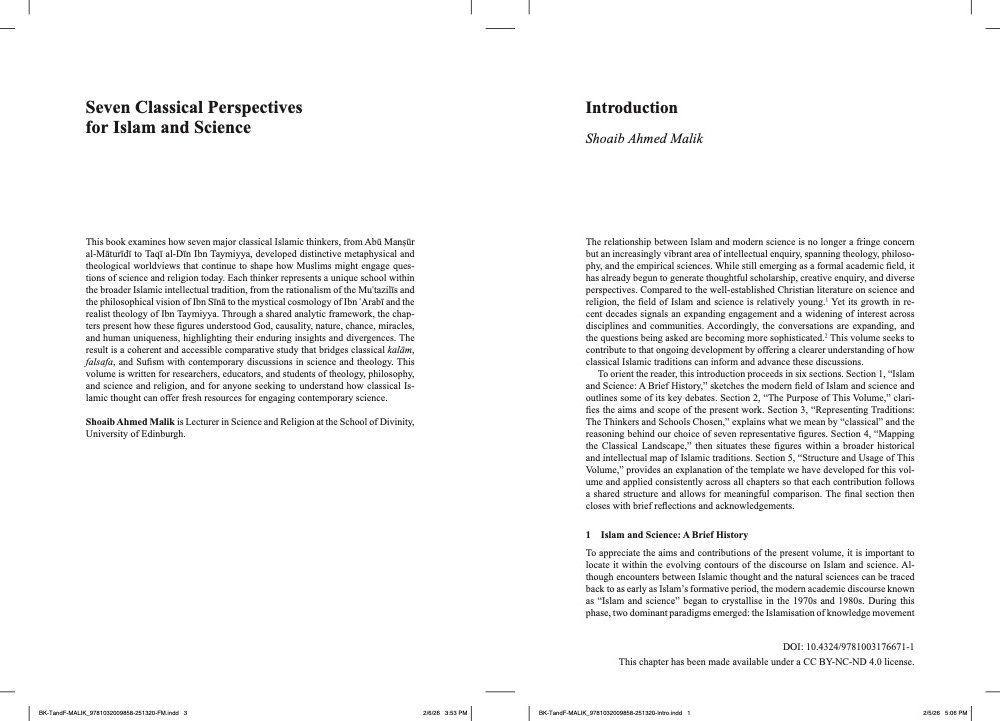
We have just submitted the final proofs for Seven Classical Perspectives for Islam and Science. It should be published within the next one or two weeks, isA, and will be open access. A game-changing intervention for Islamic Studies. Beautiful that it will be released in Ramadan.
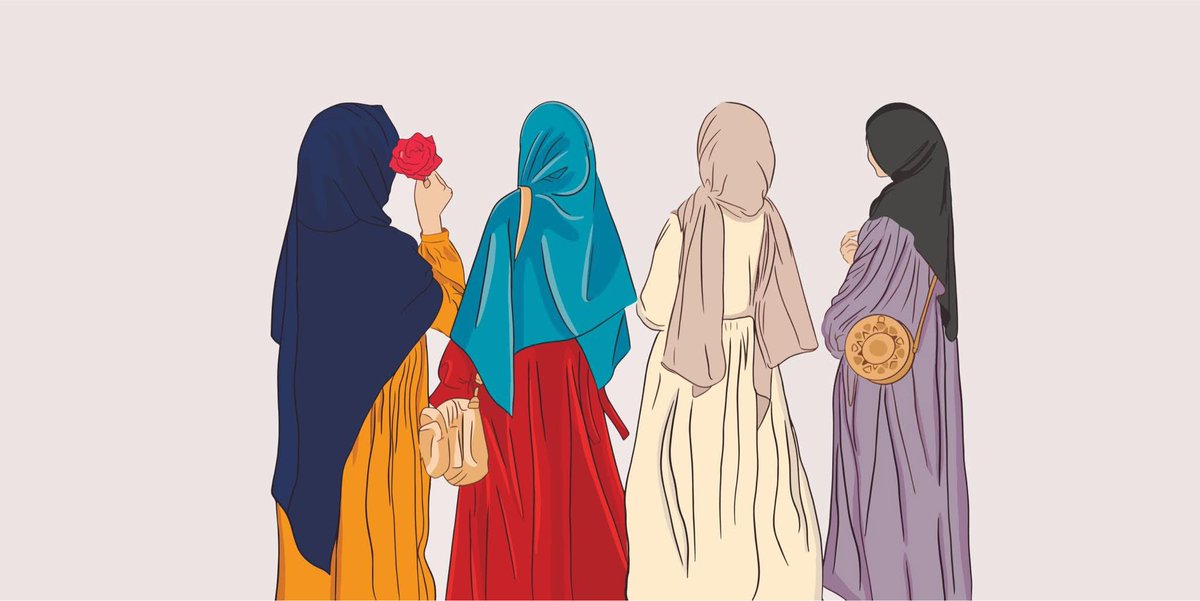
Frantz Fanon’s take on why colonisers hated the hijab and made removing and discouraging it one of their utmost priorities:
“Unveiling this woman is revealing her beauty; it is baring her secret, breaking her resistance, making her available for adventure. Hiding the face is also disguising a secret; it is also creating a world of mystery, of the hidden. In a confused way, the European experiences his relation with the Algerian woman at a highly complex level. There is in it the will to bring this woman within his reach, to make her a possible object of possession. This woman who sees without being seen frustrates the colonizer. There is no reciprocity. She does not yield herself, does not give herself, does not offer herself.”
(From Frantz Fanon’s ‘A Dying Colonialism’)
"Science, like religion, is not a physical thing itself, but a non-material set of ideas. It is an ideology and is not exempt from the scrutiny to which we subject other ideologies."
Physicist J. Willits Lane.
How to Be an Academic while Muslim (social sciences + humanities)
By Jaan Islam 🧵
Muslim grad and PhD students I’ve met often feel uncertain and directionless. We try to make sense of the world through multiple worldviews—then try to make sense of how Islam fits among them—all while experiencing relentless “publish or perish” pressure to land a job & build a career.
Here are a few reflections I hope may help those walking a similar path:
This essay analyzes the manner in which two Quranic commentators of the late post-classical period, Ismāʿīl Ḥaqqī al-Bursawī (d. 1137/1725) and Aḥmad Ibn ʿAjība (d. 1224/1809), present the metaphysical reality of the Prophet Muhammad (SAWS) as the light from which all knowledge emanates and thus the source of the Islamic sciences.
https://t.co/sFE8vZailI
Dear Muslim friends; do not waste your time fighting with professional trolls about the virtues and principles of our religion. Just continue meticulously laying the theoretical and organizational groundwork necessary for our collective success.
Ibn Taymiyya's views on Sufism were surprisingly balanced. He wrote:
Some people accept everything of Sufism, what is right as well as what is wrong; others reject it totally, both what is wrong and what is right, as some scholars of kalām and fiqh do. The right attitude towards Sufism, or any other thing, is to accept what is in agreement with the Qur’an and the Sunna and reject what is not.
— Ibn Taymiyya, al-Istighātha fī al-radd ʿalā al-Bakrī
Reading the Quran from the beginning and you just pause at this sovereign decree: “I am going to place a successive ˹human˺ authority (khalifa) on earth”
This one verse, the stage of history was set. Every prophet’s mission, every battle of truth and falsehood, every…+
The Limit of Reason, The Light of Revelation: Iqbal's Epistemic Balance
In exploring Iqbal’s approach to harmonising reason and religion, we find a thoughtful middle ground that speaks to both the strengths and limits of human rationality. Iqbal, much like a bridge-builder, invites us to understand how different forms of knowing—rational thought and religious experience—are meant to complement rather than contradict each other.
Iqbal points out that in history, some traditions, like the Greek philosophical legacy, took reason to an extreme. They leaned heavily on rationalism as the primary route to truth, sometimes neglecting the depth that revelation and direct spiritual experience offer. On the other hand, some Muslim thinkers, as Iqbal notes, went to the opposite extreme, leaning so much into mystical or non-conceptual modes of religious experience that they sidelined the value of reason.
Iqbal’s vision is that the two are not enemies. Reason has its place and its limits—because it works step by step in the flow of time, it can only go so far. Revelation and religious intuition bring the whole picture into view. Once reason leads us to see that revelation is from the divine, it’s entirely rational to give revelation the final word.
In that sense, Iqbal is inviting us to a holistic epistemology: one that respects the role of intellect without turning it into an ultimate authority and that embraces revelation without dismissing the gift of reason. It’s a call to let each form of knowledge do what it does best and to find harmony rather than conflict between the mind and the soul.
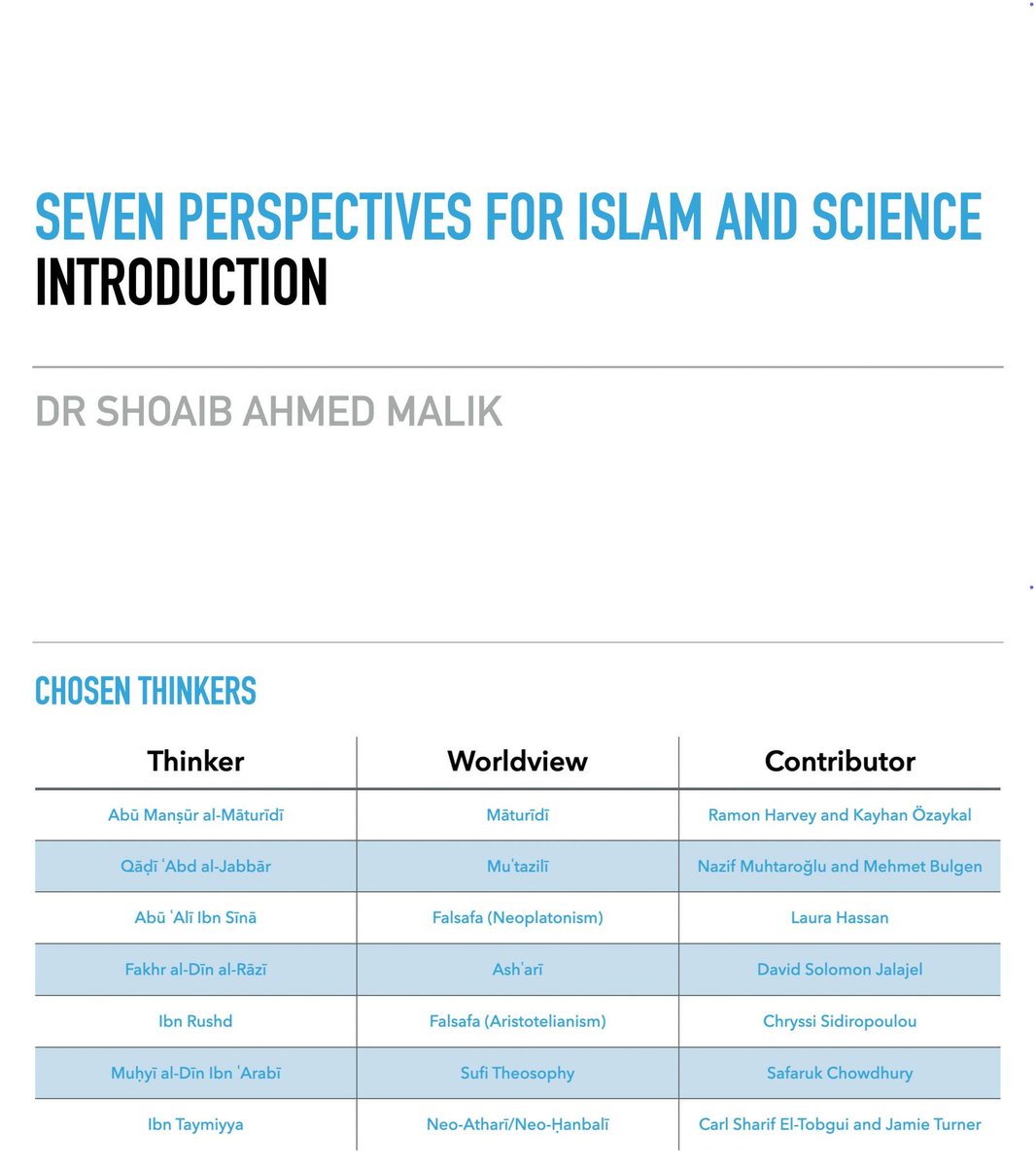
After six years in the making, this project is finally coming to a close. The volume will be published open access with Routledge, accompanied by chapter summary videos from each contributor on Blogging Theology. I just finished recording the introduction with @freemonotheist.
What does it mean to follow the Quran and Sunna? Did Dr. Qadhi completely leave Salafism? Why is Salafism so appealing? Which scholars does Dr. Yasir admire the most? Yesterday I sat with @YasirQadhi to discuss this in light of his new book. Check it out
https://t.co/VmnPZ2xbPR
Ibn Taymiyyah wrote the following words, which should be made into a cornerstone of our socio-political outlook:
‘In this world, people’s affairs are kept in order with justice and a certain measure of sin, more than with violating the rights of people, even if it entails no other sin. That is why it is said: “Allah upholds a just state even if it is disbelieving, but does not uphold an unjust one even if it is Muslim.” It was also said: “The world may endure with justice and disbelief, but not with injustice and Islam.” The reason is that justice is the universal order of things. So when earthly administration is based on justice, it works, even when the person in charge has no share in the Hereafter. But if it is not based on justice, it does not work, even if the person in charge is a believer who shall be rewarded in the Hereafter.’
– Ibn Taymiyyah, Majmu‘ Fatawa (Riyadh: Dar ‘Alam al-Kutub, 1991), 28:146.