@AidData is delighted to see our newly collected data on Chinese debt refinancings and restructurings being used in the @RockefellerFdn's new “Growth and Investment Reset” policy proposal.
See more 👉https://t.co/uUdgIlQGjU
Once it went public, Uganda’s Parliament called for the Finance Minister to resign and face prosecution.
W&M undergrads get to do research of consequence like this with 2,100+ media citations to show for it.
Join us for Homecoming, Sat Oct 24, at Swem Library 👉https://t.co/Da4x610cAZ
The Daily Show called China’s loan for Uganda’s main airport “debt-trap diplomacy.”
Our director, Brad Parks, knew something sounded off. @AidData researchers dug in, found the key loan document, and published it with @FT.
🧵
AidData began as an honors thesis at @williamandmary in 2003. Since then, 2,000+ W&M students have joined our team, and our research has been cited 2,100 times by outlets like the @BBC.
Join us Sat Oct 24, 12:30pm!
Free music, drinks + appetizers 🎶🍴
https://t.co/rE9h5YxdH7
China is a dominant maritime power, but where does Beijing direct overseas port financing, and to what end?
@AidData researchers tackle it in a new chapter of "Traversing the Belt and Road" (@Harvard_Press), drawing on “Harboring Global Ambitions.” 👀
https://t.co/iAd0QCn9Ww
“I kept thinking about how we could take what we were learning beyond interviews and data.”
@williamandmary undergrad Tajalla Moslih reflects on a year of student research on Afghan migration. 👉
https://t.co/KWEnbJ0hz2
Join @AidData Sat, Oct 24 for W&M Homecoming at Swem’s Conservation Patio! Food, drinks, music & a look at what’s next 👀
RSVP here: https://t.co/rE9h5YxdH7
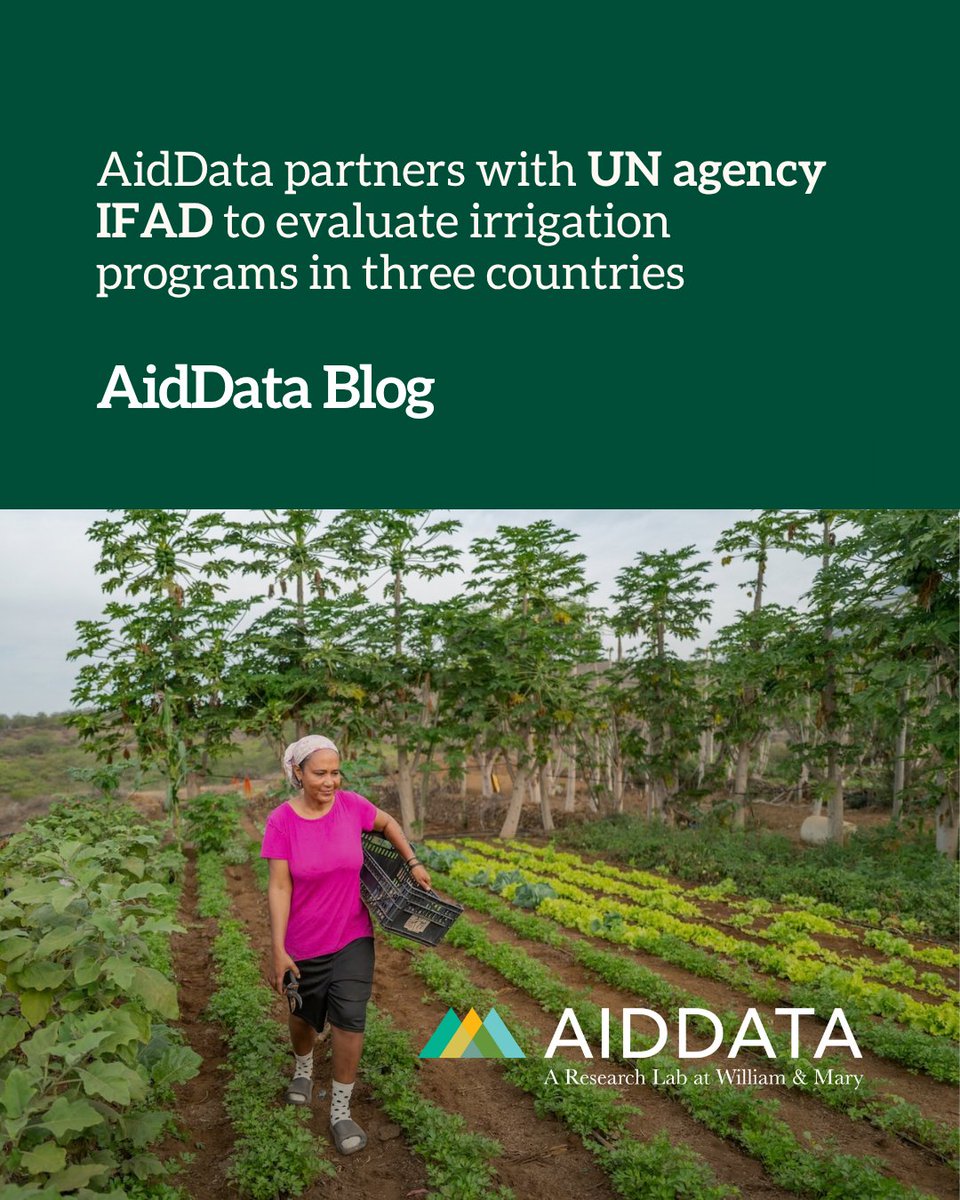
Droughts are getting longer, and farmers feel it most. Irrigation helps, but does it last? With @IFAD, @AidData is using satellite imagery to track long-term impact in Cape Verde, Ethiopia, and the Philippines.
https://t.co/qfHuojvqCy
The EU will soon require proof that coffee and other commodities imported to the EU were not grown on deforested land.
@AidData + COSA worked with Honduran smallholder coffee farmers to test approaches for data collection and deforestation monitoring.
Join @ICIJorg tomorrow for a behind-the-scenes conversation with ICIJ reporter @scilla_alecci and @AidData's exec director Brad Parks on the global implications of ICBC's lending practices! #ChinaCapital
Register for the Zoom link: https://t.co/PL7uEs0pxb
For ICIJ's #ChinaCapital investigation, 75 journalists in 24 countries analyzed 4.8M files to uncover ICBC’s inner workings.
Join us virtually tomorrow to hear what they found, the story behind the story and answers to your questions during a live Q&A: https://t.co/zVkoc8oLnJ
🇨🇳🏦 Tomorrow (Tues) at 12 PM ET, @AidData's Executive Director Brad Parks will join reporter @scilla_alecci from @ICIJorg for a conversation on the global implications of the lending practices of ICBC, the world's largest bank.
Register below to join this behind-the-scenes look into ICIJ's "#China Capital" investigation & insights from research on China's state-directed lending by @AidData at @williamandmary.
https://t.co/AXCtTzavkB
Join us for "Inside #ChinaCapital"!
On Sept. 29 at 12 p.m. ET, ICIJ reporter Scilla Alecci and Bradley C. Parks, executive director of AidData at William & Mary, will discuss the global implications of ICBC’s lending practices in a live Zoom panel.
Sign up: https://t.co/9nZRo633nl
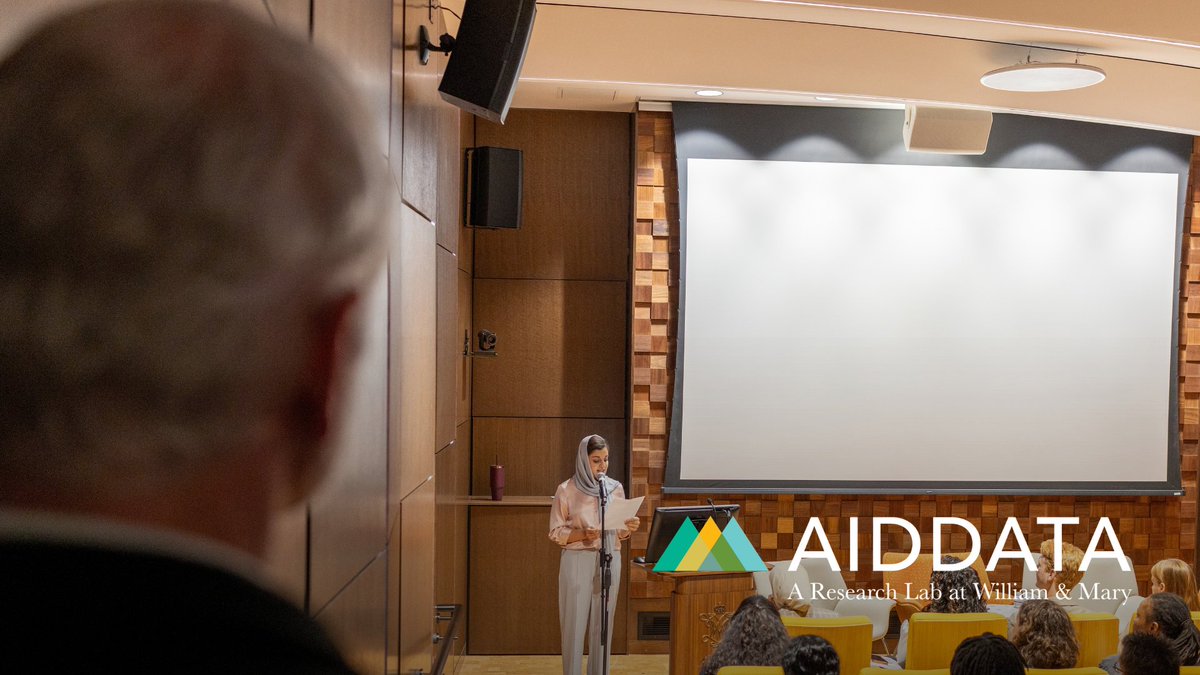
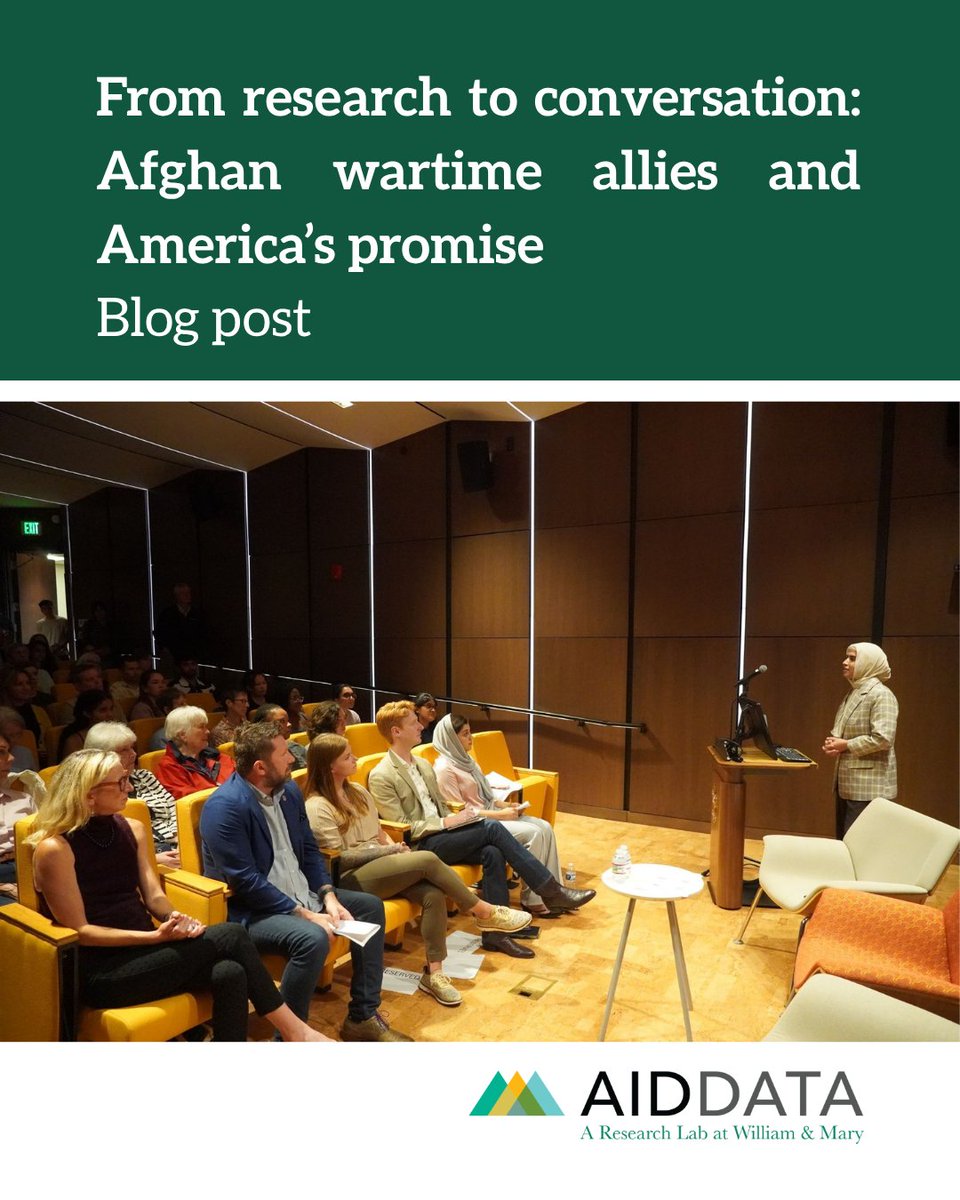
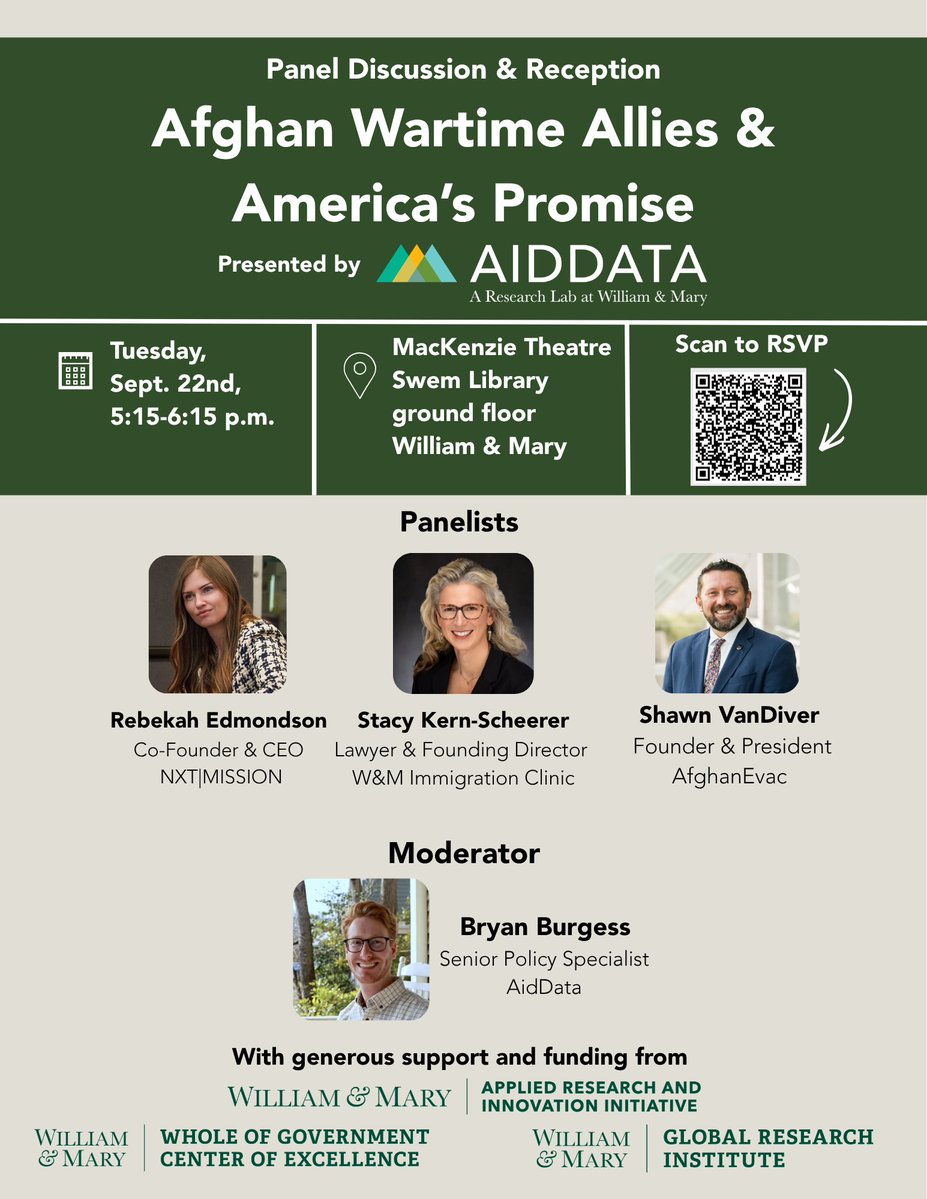
This past Tuesday, @AidData hosted our panel discussion on the future of Afghan allies. But, as @AidData's Nara Sritharan noted in her intro speech, “tonight is a student-led event.”
For more 👉https://t.co/4qaCniGGXE
Prior to its closure, USAID was one of the world's largest funders of conservation work — per a recent @insideclimate piece featuring @AidData Chief Economist @ariel_benyishay . 🧵
He also noted USAID shared more data on its programming than peer multilateral banks or governments, allowing researchers like himself to scrutinize what worked, and what didn't.
On Sept 22, join @AidData, @global_wm, & @wmwgc for a conversation on Afghan experiences in the U.S. grounded in our evidence-based research on how different immigration pathways shape outcomes.
📍 Williamsburg, VA | Sept 22, 5:15pm
🔗 RSVP:
https://t.co/oWhzTGj3SV
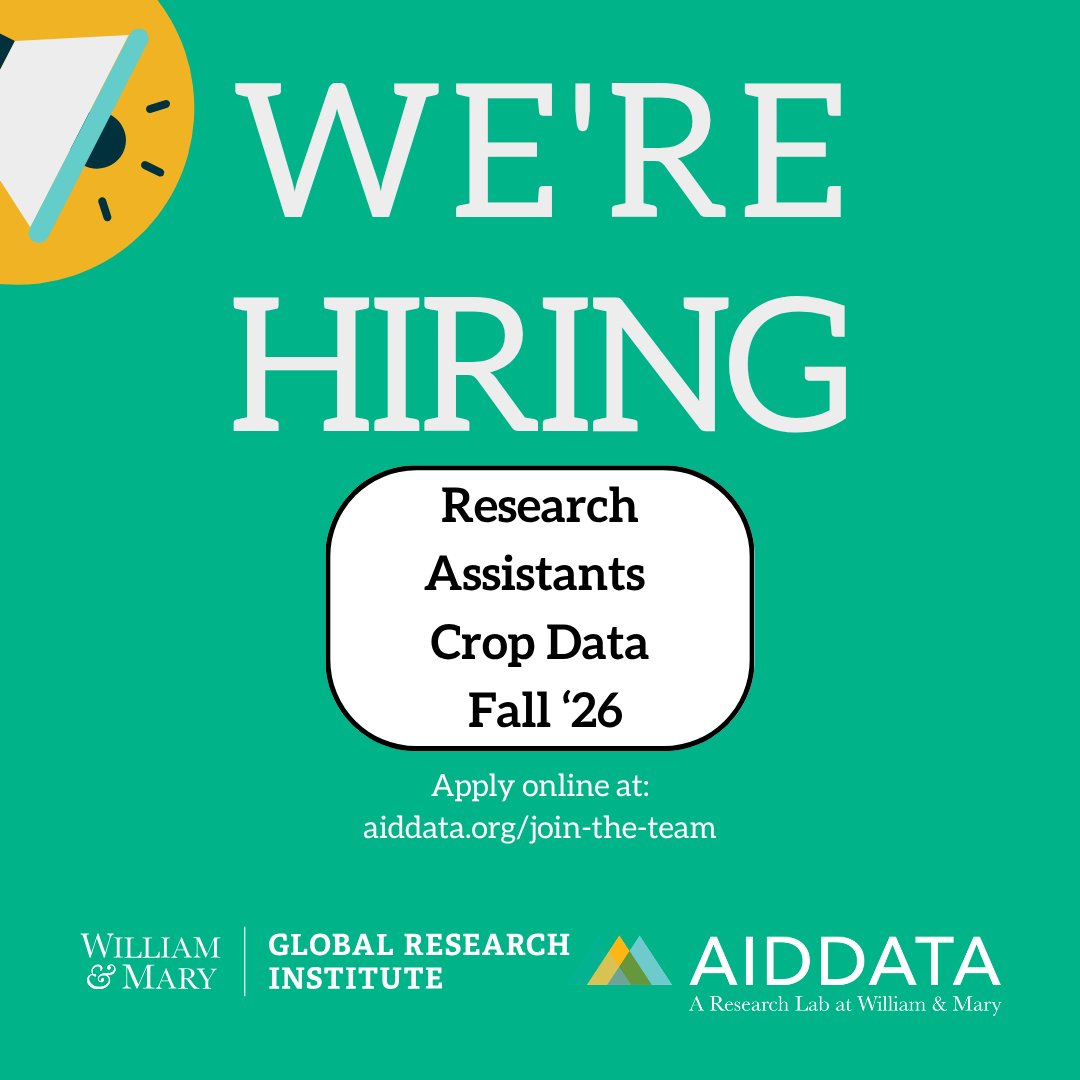
💡 @WilliamAndMary students looking for paid research this fall?
@AidData & the @global_wm are hiring 2 Research Assistants to use geospatial & earth observation data for climate & food security.
10 hrs/wk, fall semester. Apply by 9/18 https://t.co/k82H8byk7j
@Columbia@UniOslo@WorldBankGroup This is Reimagining Development Data (RD²), and your input helps shape it.
Have feedback?
Fill out the form before Sept 15: 👉https://t.co/2IB6Kn5S3O
To reimagine development data after the 2025 foreign aid cuts, @AidData compiled a list of 496 existing development data assets.
We've now analyzed them, and some findings surprised us. 🧵🤔
@Columbia@UniOslo@WorldBankGroup Next at @AidData, we're grouping each data system by funding source, interviewing leaders and those who use/produce data worldwide, and synthesizing it all to make the next generation of development data more sustainable and responsive.