FGS’ Compulsory NIRA ID Policy Is a Political Stunt, Not Sound Governance
The decision of the Federal Government of Somalia to make possession of the NIRA ID compulsory for domestic travel can undoubtedly be described as reckless and disconnected from the political, security, and administrative realities of the country. It appears more like a political stunt than sound national policy. Almost immediately and predictably, it created economic, financial, political, security, personal, and social distress throughout the country.
The issue of contention is not whether Somalia needs a credible national identification system. It does. The issue is making the NIRA ID compulsory when the term of the Federal Government has expired, when access to NIRA registration is not available across all federal member states, and when relations between the Federal Government and the federal member states, as well as the country’s interdependence and connectivity, remain deeply strained and disrupted. The NIRA ID cannot fulfill its intended functions or purposes under the current circumstances in Somalia.
NIRA is not effectively available or accepted in Puntland and Jubbaland, nor in Somaliland, while substantial areas of south-central Somalia remain outside effective government control because of Al-Shabaab. The Federal Government is therefore imposing a nationwide obligation before establishing nationwide accessibility and a practical possibility of compliance. The resulting disruption was predictable, and a responsible government should have understood this before enforcement began.
The burden and consequences fall not on political leaders but on ordinary citizens—travel service providers, patients seeking medical treatment, workers pursuing their livelihoods, students, traders, and families traveling for urgent needs. Ordinary Somalis are being made to bear the consequences of political disagreements they neither created nor have the power to resolve.
Even more troubling, citizens should not be forced into a situation where complying with the administrative demand of the Federal Government may expose them to difficulties or security risks in the areas where they live. Government policy should protect citizens from such dilemmas, not create them.
The Federal Government has simply put the cart before the horse. It should first establish political agreement, nationwide accessibility, reasonable alternatives, and adequate safeguards before making NIRA compulsory. Penalizing citizens because many have reservations or reluctance about applying for a NIRA ID due to privacy and credibility concerns, or because the government itself has not yet made the identification system equally accessible to all citizens, contradicts the very purpose of a national identification system.
The first duty of government is to protect the welfare, safety, livelihoods, rights, and freedoms of its citizens. A national ID should make people’s lives easier, not become another barrier to their movement, livelihood, healthcare, education, or family responsibilities.
The Federal Government should therefore suspend the compulsory NIRA requirement for domestic travel until the host of problems surrounding the NIRA ID are adequately addressed and resolved in the context of the Federal Government’s legitimacy and authority throughout the territory of the Federal Republic of Somalia.
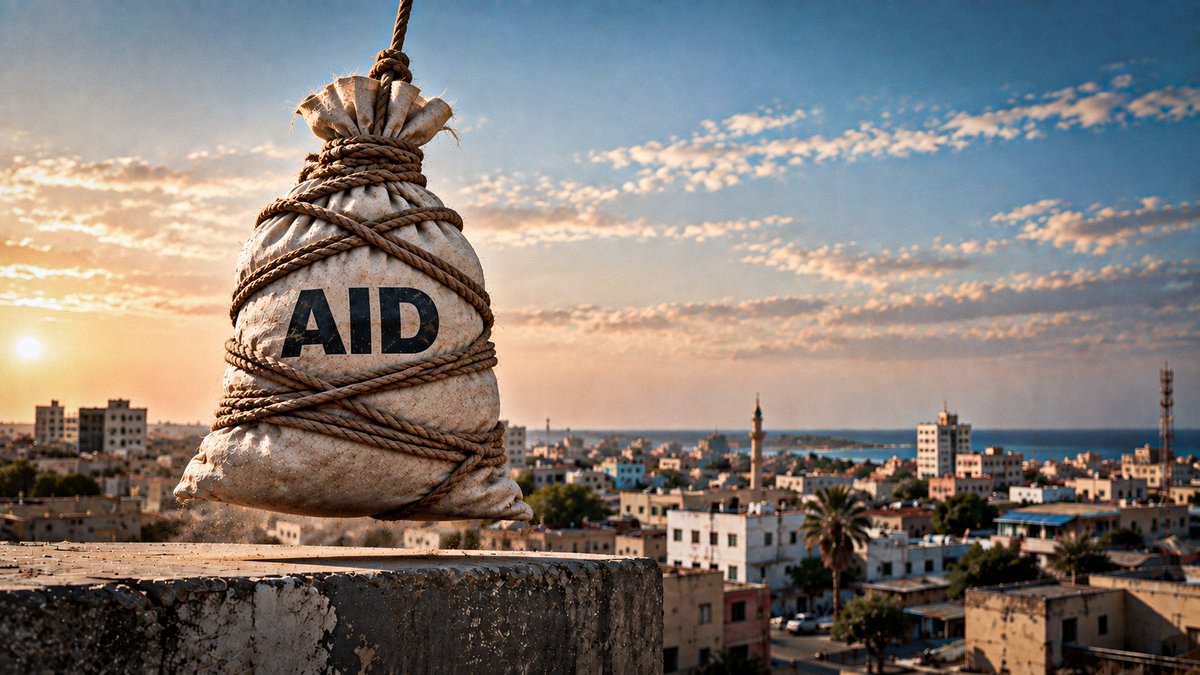
Aid has been critical to Somalia's economy since the civil war — humanitarian, budgetary, institutional. But donor fatigue and shifting geopolitical priorities have made one thing clear: that external cushion is shrinking, and no replacement is waiting in line.
The question is no longer how to fill the gap. It's whether Somalia can use this moment to build an economy that grows from within.
Our research assistant Zainab Hassan Said explores this in her first blog. Read the full blog
here:https://t.co/5sfigN4JtO
@alihwarsame Armay kuwa siyaasadda ku jira hadda ay sidaa ugu badisaa oo aysan different results ka duwan wixii soo dhacayey since 1991. Soomaaliya inay hubanti la'aantaa isaga jirto dad baa nafac u arka. Waa garaadlaawayaal!
President Hassan Sheikh Mohamud, whose constitutional term expired on 15 May, has today fomented another reckless violence in northern Galkayo in #Puntland following his failed November 2024 attack in #Jubbland.
President @HassanSMohamud must refrain from destabilizing Puntland—one of Somalia’s most stable federal member states. The hard-won peace in Galkayo must not be sacrificed for political expediency.
Instead, he should focus the full attention of the Federal Government on defeating Al-Shabaab and ISIS in Puntland and across #Somalia. More than anything, our nation needs peace, unity, and reconciliation—not new political and constitutional crises.
@4rukun Thank you, Minister Abdi Said. Puntland stood firm and built a governance system when much of the country was experiencing instability and chaos. That's a remarkable achievement. I hope we'll celebrate future anniversaries with even more progress.
Congratulations to the people of Puntland on the 28th anniversary of the establishment of Puntland State.
Puntland’s survival through nearly three decades of Somali turmoil remains an important achievement. Its people built a political order, preserved relative stability & sustained the idea of constitutional self-government when much of the country lacked functioning institutions.
Yet anniversaries should measure more than endurance & stability. They should reveal what 28 years of statehood have added to the knowledge, productivity & governing capability of the people.
We hope today’s parades include thousands of doctors, engineers, teachers, nurses, scientists, technicians, entrepreneurs and skilled workers trained during those 28 years. They represent the human foundations of a capable state.
Twenty-eight years of statehood should leave more than memories of past achievements. They should leave measurable gains.
When the latest official maternal mortality figure is still based on a survey conducted about seven years ago, the challenge extends beyond healthcare. It reflects the need to strengthen the state’s capacity to measure, learn and improve.
May future anniversaries celebrate more than political survival. May they showcase Puntland’s competencies, productive industries, research institutions, technological achievements & manufacturing capabilities.
The next chapter of Puntland must turn stability into knowledge, skills into production & self-government into lasting state capability.