GPT‑6 Astra manufacturing test using @threejs:
I asked it to research aircraft manufacturing, study @AirsupHQ lean production books, design a functional Texas jet plant, build a live 3D simulation, test it, and deploy it.
We gave GPT-6 Astra a jet factory.
Then connected Jev for typed, verifiable decisions.
Astra understands the production system.
Jev reduces each critical decision to a clear yes/no probability. Deterministic code applies the approved change.
The result: an AI-native factory that can identify bottlenecks, inspect processes and improve production in real time.
Try Jet Plant II: https://t.co/BNpAiK86y9
Who Will Control The Humanoid Robots?
@randallmbriggs explains why most people won’t actually own the robots they buy and why that could become a huge problem.
00:00 The customer should truly own the machine
12:23 The upside of robotics
13:10 Making robots affordable
32:23 “Let it fail and learn from that.”
34:54 Humanoid actuators
45:11 The danger of over-specializing robots
49:39 Why you have to build things yourself
58:15 Why open robotics could be better for society
1:01:00 Why tendons may dominate robotic hands
This factory doesn’t exist yet.
We built the entire humanoid production line in simulation first.
Machines. Workers. Material flow. Bottlenecks. Everything.
The humanoid race won’t be decided by the best demo.
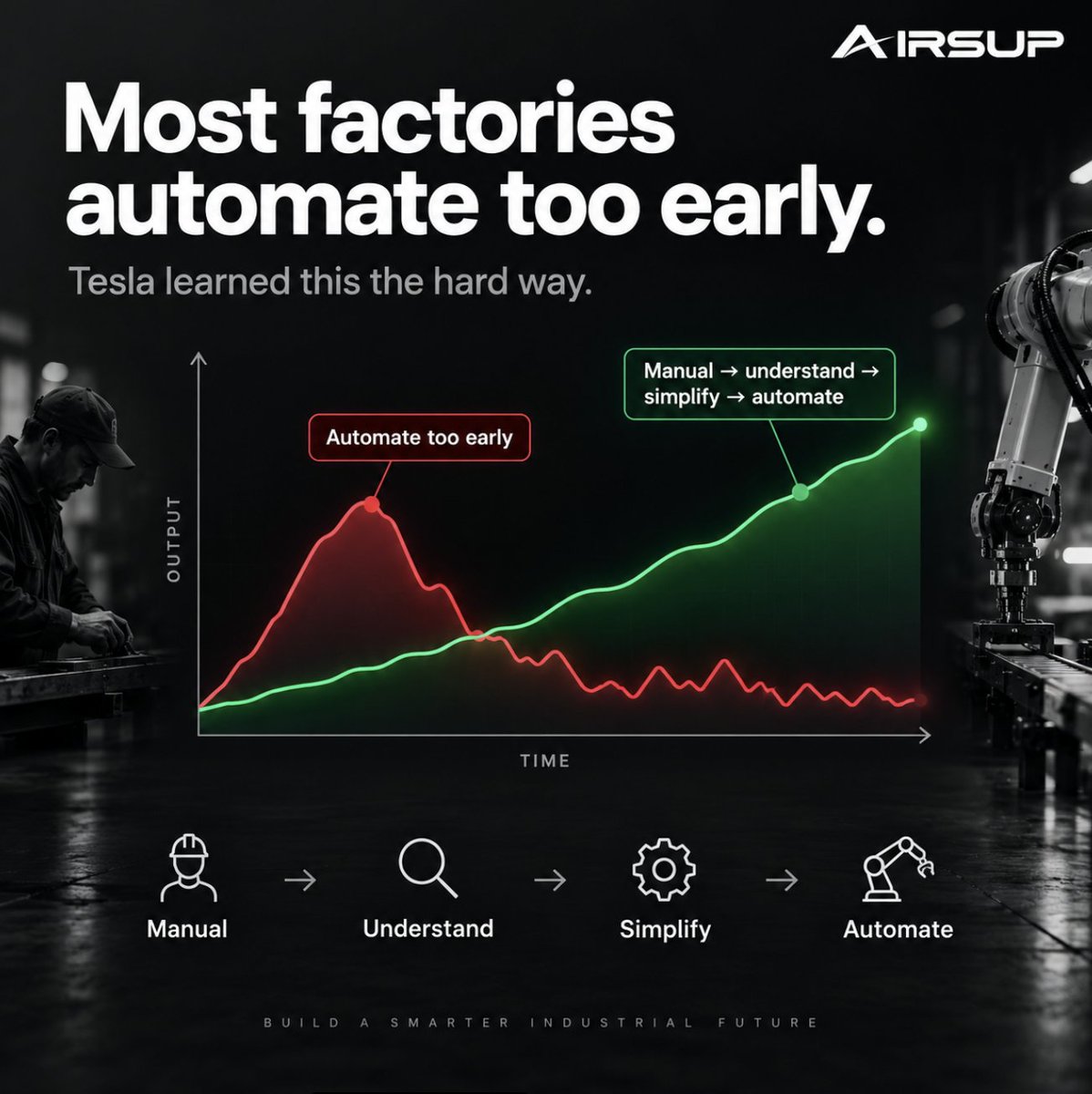
It will be decided by who can manufacture thousands of reliable machines, learn from every failure and continuously improve the production system.
Great Conversation.
The humanoid race is moving way faster than most people realize.
Tesla Optimus. Figure. 1X NEO.
We went with Scott Walter (@GoingBallistic5) deep on what is actually happening behind the demos.
00:00 The humanoid race
02:57 What makes a humanoid actually useful?
06:05 Robots are entering the real world
08:45 Tesla Optimus vs the competition
11:59 How humanoid robots are built
14:50 Scaling production
17:57 When humanoids enter everyday life
21:10 Why autonomous robotics is still hard
24:00 The upcoming 1X NEO release
25:00 The humanoid hand race
25:56 1X vs Tesla hand design
29:56 Tendons vs direct-drive actuators
39:04 Which hand design actually works best?
43:07 Figure vs 1X vs Tesla
49:28 The race to mass production
56:35 Tesla, Figure and the robotics hype cycle
1:01:55 The next wave of robotics companies
1:09:35 What happens next in humanoid robotics
Ronald Wayne (@ronaldgwayne) co-founded Apple with Steve Jobs and Wozniak in 1976.
00:00 Founding Apple with Steve Jobs and Steve Wozniak
02:11 Ronald Created Apple’s First Logo
04:16 Becoming a Self Taught Polymath
12:58 The Risk of Apple’s Early Days
14:24 Why Ronald Was Only at Apple for a Few Weeks
15:07 What Really Happened to His 10% Apple Stake
15:37 Why Every Part of a Business Has to Work Together
25:58 Lessons From a Lifetime of Entrepreneurship
26:09 The Remarkable Submarine Model
28:13 Teaching Yourself Almost Any Skill
29:39 The Simple Requirement for a Profitable Business
30:45 Finding Work You Actually Enjoy
32:44 Why Founders Need Good Legal Representation
35:41 Ronald Wayne on Money, Inflation and Fiat Currency
42:30 Why Ronald Buys Silver and Gold
44:28 His Warning About the Future of Fiat Money
48:26 Preserving Knowledge and Legacy
Agentic Flyfacturing.
We trained a simulated fruit fly brain to inspects the line, pick a process to improve, and change the simulation.
Give it a fly 🪰: https://t.co/5piJbXIXOs
I built a jet factory in my browser. Now it’s on my desk.
The goal: test production changes before moving a single machine in the real factory.
Concept demo for @AirsupHQ.
What if you could design a robotaxi factory before spending $100M building it?
Today we did the V1 live.
Factories should be software before they become hardware.
GPT-6 Astra manufacturing test using @threejs:
I asked it to study @AirsupHQ lean production books, and develop a concept for a factory with 10 launch pads, and build a live 3D simulation.
Raw materials in. Rockets drive to the pad. Then lift off.
Not sci-fi.
The actual constraints: energy, transport, factories, supply chains, materials, redundancy, and what has to become locally manufacturable before a Mars city can survive without Earth.
How do you build a city on Mars that can survive without Earth?
Casey Handmer (@CJHandmer) broke it down from the ground up.
The Starship fleet. The power supply. The factories you need before the first settlers arrive.
Timestamps:
00:00 What a Self-Sustaining Mars Civilization Needs
09:06 Moving People and Industry to Mars
14:06 The Starship Production Bottleneck
22:29 How to Power a Civilization on Mars
25:04 Space-Based Solar Power for Mars
27:50 Designing Habitats for Life on Mars
31:39 Protecting Settlers from Radiation
36:41 Finding and Extracting Water on Mars
38:14 Where the Moon Fits In
40:25 Is There Anything Worth Mining on the Moon?
47:04 Manufacturing on Earth vs. in Space
48:10 Opportunities for New Space Startups
AI just crossed a line in hardware.
I spent the weekend testing GPT-6 Astra across CAD, Blender, factory simulation and physical systems.
This is what I found.
I spent the weekend pushing GPT-6 Astra to its limits for hardware. CAD, Blender, factory simulation, physical systems.
I did not expect it to change how I think about AI building things in the real world.
AI just crossed a line in hardware. https://t.co/E5pPxhIk2p
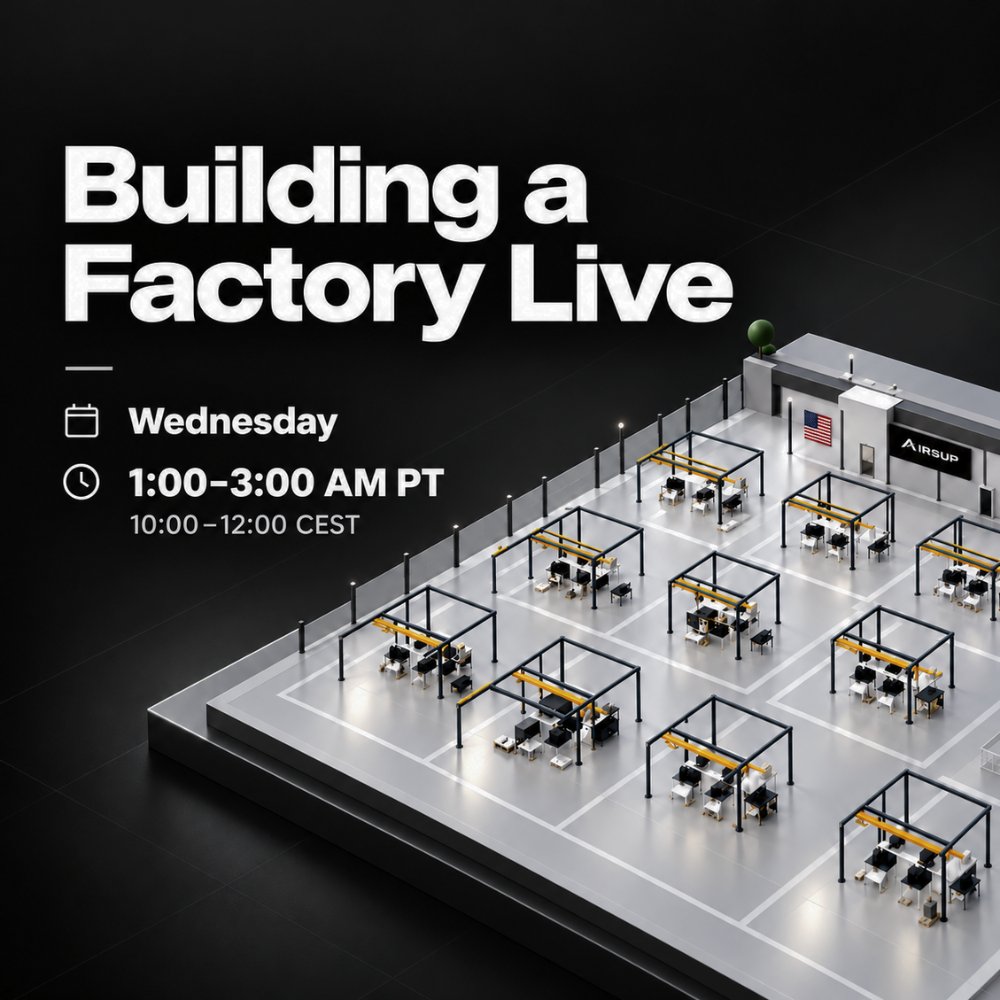
I’m going to use GPT-6 Astra to build a factory for fully autonomous robotaxis.
→ Research
→ factory design
→ 3D simulation
→ running production.
All live. From zero. Wednesday 1–3 AM PT / 10–12 CEST.