Join us this March for a collaborative trip of a life time to Musambwa Island with @birderslens and @SnakesUganda — a guided conservation-focused journey into one of Uganda’s most unique ecosystems, led by Mr. @JNtulume.
📅 14 March 2026
💰 UGX 200,000 (all-inclusive)
As an apex predator, the Central African Rock Python naturally controls populations of rodents and other animals, helping to maintain balanced ecosystems.
Like many snakes, it would rather avoid humans than confront them, reminding us that understanding wildlife is the first step toward conservation.
Fear grows where knowledge is absent. Snakes are not our enemies, they are an essential part of healthy ecosystems, controlling rodent populations and maintaining nature's balance. Learn before you judge.
A snake sighting almost anywhere can trigger panic, often fuelled by fear, myths and spiritual beliefs. But these reptiles are so misunderstood.
Despite being called "a witch", herpetologist Taiwo Okikiola continues to use social media to raise awareness about snake conservation.
RED CARD TO SNAKE MYTHS!
As we prepare for this weekend's Beyond Fear: World Snake Day Reptile Studycation, we're dedicating this entire week to busting common snake myths one🟥 Red Card at a time in conjunction with @Ug_RepVillage who are our hosts
Fear thrives on myths. Knowledge begins with facts.
Follow the series and discover the truth about snakes.
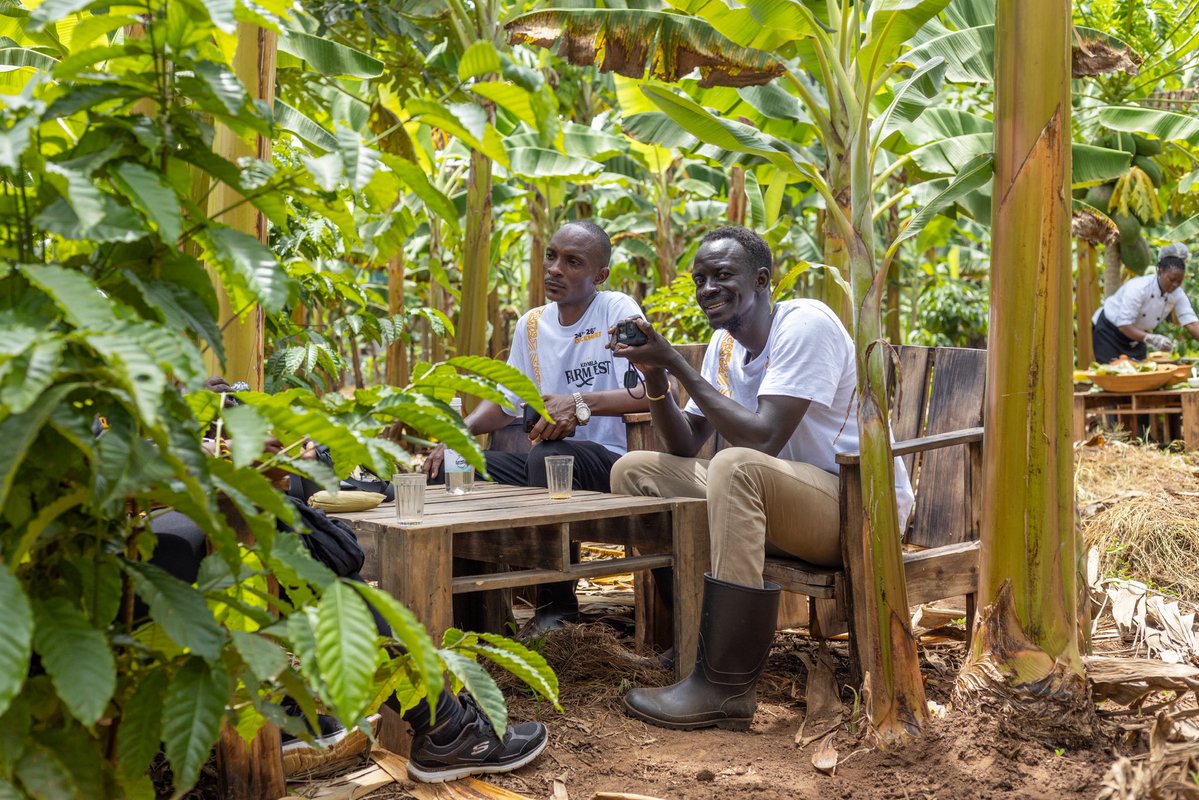
Weekends are for @kaynelafarmsltd.
Here agriculture meets culture, gastronomy, and community. A place where the rhythm of the aroma of locally prepared cuisine fills the air, and every gathering celebrates the richness of our land and heritage.
Come explore the thriving gardens, discover local innovations, support farmers and artisans, and indulge in authentic farm-to-table flavours that tell the story of our people.
Your next weekend deserves more than an outing—it deserves an authentic journey through agriculture, culture, and gastronomy.
#KaynelaFarms | #AgroTourism | #Gastronomy #FarmToTable | #Heritage | #ExploreUganda
Happy #WorldSnakeDay! 🐍
Today, we celebrate these incredible, misunderstood animals and stand up for their protection.
Ready to learn how we can coexist? Our live webinar starts now:
https://t.co/SHDdut4O7S
We fear what we don't understand.
Today, on #WorldSnakeDay, let's pause and appreciate one of nature's most misunderstood reptiles.
Snakes have been feared for generations, yet they silently protect our farms by controlling rodent populations, help maintain healthy ecosystems, and remind us that every species has a purpose. They are not villains—they are survivors, playing a role that nature perfected long before humans walked the Earth.
The greatest threat to snakes isn't always habitat loss. Sometimes it's misinformation. Myths have led to unnecessary fear, persecution, and the killing of countless reptiles that pose little or no threat to people.
Conservation begins with understanding. Fear fades when knowledge grows. Every conversation, every lesson, and every encounter has the power to transform panic into respect and myths into facts.
This World Snake Day, don't just celebrate from a distance—experience the difference for yourself.
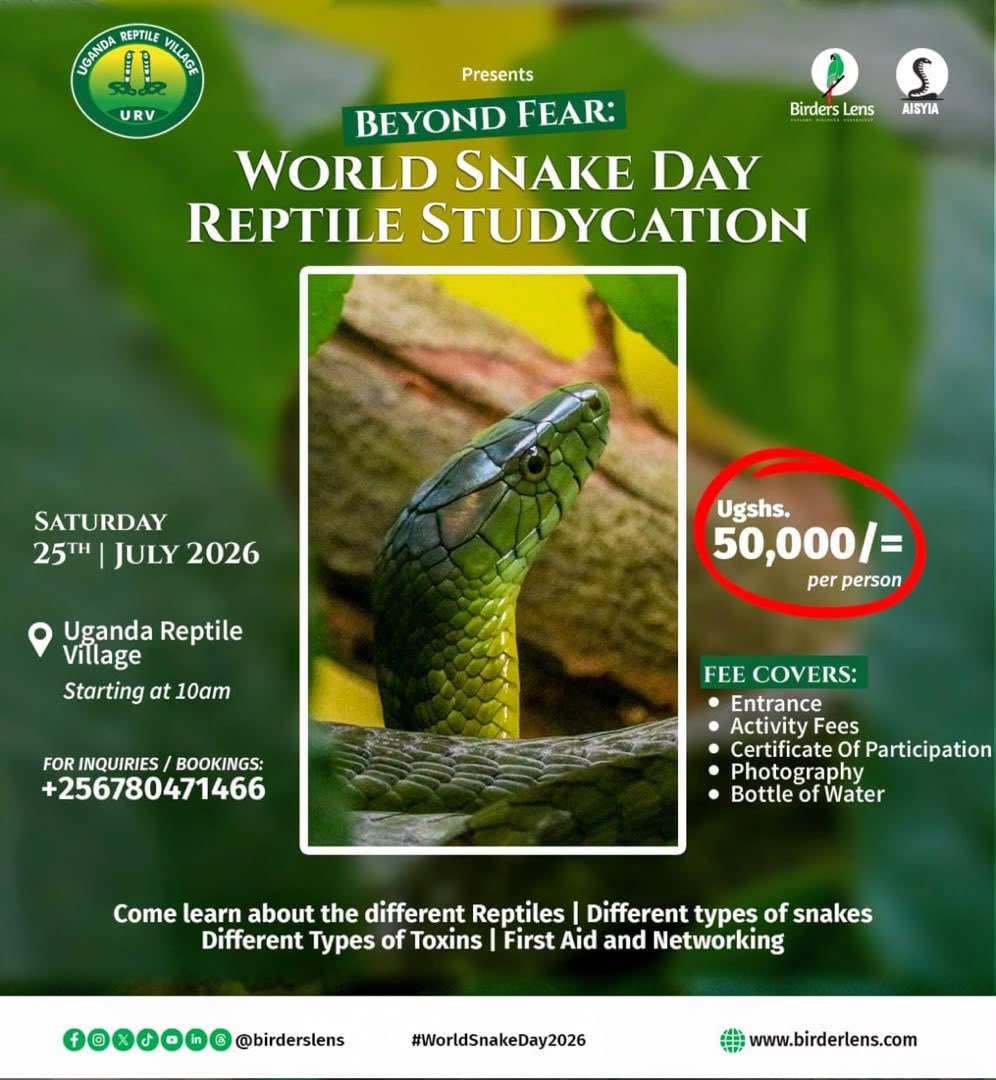
Join us on Saturday, 25th July 2026, for the "Beyond Fear: World Snake Day Reptile Studycation Activity." Meet these remarkable reptiles up close, learn from experienced educators, challenge long-held misconceptions, and discover why understanding snakes could one day save a life.
Because the future of conservation belongs to those willing to learn before they judge.
See beyond the fear. Discover the truth.
#WorldSnakeDay #BeyondFear #ReptileStudycation #SnakeConservation
Happy #WorldSnakeDay! 🐍
Not every snake is venomous, but every snake plays an important role in nature. As natural predators, snakes help control rodent and pest populations, protecting crops, reducing the spread of certain diseases, and maintaining the delicate balance of our ecosystems.
Unfortunately, fear and misinformation often lead to the unnecessary killing of snakes, even though most species pose little or no threat to humans and would rather avoid us than attack.
This #WorldSnakeDay, let's replace fear with understanding, myths with facts, and coexistence with conservation. By protecting snakes, we are also protecting biodiversity and the health of the environments we all depend on.
Every species has a purpose. Every life has value.
#WorldSnakeDay #Biodiversity #Conservation #Wildlife #NatureMatters
#SnakeConservation #WildlifeEducation
Most people fear snakes because they don't understand them. This #WorldSnakeDay, we're changing that story.
Join us on 25 July 2026 to debunk myths, build confidence, and appreciate one of nature's most misunderstood reptiles.
Knowledge can save lives.
#WorldSnakeDay2026
Can Uganda reverse deforestation? Yes—but only if we make forests more valuable standing than cut down.
Costa Rica has already shown that it is possible.
By the mid-1990s, forest cover in Costa Rica had fallen to about 25% of the country’s land after decades of agricultural expansion and cattle ranching. Today, forests cover well over half of the country, making Costa Rica one of the first tropical nations to successfully reverse deforestation. (UNFCCC)
What changed?
The turning point was not tree planting alone—it was policy.
In 1996, Costa Rica passed a Forestry Law that prohibited most forest clearing and introduced a Payment for Ecosystem Services (PES) programme. Instead of treating forests as idle land, the government began paying private landowners to conserve existing forests, restore degraded land, and allow natural regeneration. The programme was financed largely through a tax on fossil fuels, alongside water-use charges and climate finance. (UNFCCC)
The country also expanded protected areas, strengthened law enforcement, invested heavily in ecotourism, and removed policies that had previously encouraged deforestation. Over time, forests became more profitable alive than dead. Tourism flourished, biodiversity recovered, and watersheds were protected. (World Bank)
Uganda is also a tropical country blessed with extraordinary biodiversity. The question is not whether forest restoration is possible—it is whether we are willing to align our economic incentives with conservation.
Imagine if a portion of revenue from fossil fuels, carbon markets, or other environmental levies were dedicated to rewarding landowners who protect forests, restore degraded landscapes, and maintain wildlife corridors. Combined with stronger enforcement, better land-use planning, and a thriving ecotourism sector, could Uganda begin reversing deforestation within a generation?
Costa Rica proved that reversing deforestation is less about planting millions of trees and more about designing policies that make conservation economically rational.
This #WorldSnakeDay2026, let’s replace myths with knowledge. Snakes are vital for healthy ecosystems, and understanding them can help save both human lives and wildlife.
Join us on 25th July at the Uganda Reptile Village for a hands-on reptile studycation.
“Fear is often born from ignorance. Respect is born from understanding.”
Like many people, I grew up seeing snakes as creatures to fear. But the more I study nature, the more I realize that snakes are not our enemies—they are an indispensable part of healthy ecosystems. They regulate rodent populations, maintain ecological balance, and serve as indicators of environmental health.
Every year, thousands of people die from snakebite, not only because of venom, but also because of misinformation, delayed first aid, and harmful myths. Learning how snakes behave, how to avoid dangerous encounters, and what to do if bitten can literally save lives.
This World Snake Day, I invite you to step beyond fear and into knowledge. Join us on 25th July 2026 at the @Ug_RepVillage for an immersive reptile education experience. Whether you’re a nature enthusiast, student, conservationist, photographer, farmer, or simply curious, this is an opportunity to understand one of nature’s most misunderstood animals.
Let’s replace myths with science, fear with respect, and ignorance with conservation.
Knowledge doesn’t just change perspectives—it saves lives.
Proudly brought to you by @Birders_Lens in collaboration with @AisyiaUG and @Ug_RepVillage.
#WorldSnakeDay2026 #BeyondFear #SnakeConservation #ReptileEducation #Biodiversity #ConservationEducation #UgandaWildlife #Aisyia”
Last December at the #KaynelaFarmFest organized by @kaynelafarmsltd, the sound of the drums awakened something that till today I still struggle to put into words. I felt as though generations before us were celebrating through rhythm, and in that moment, I felt my unborn son dancing in his mother’s womb through the whole time.
African drums are more than instruments. They are portals between two worlds, memory, identity, language, and the heartbeat of a people. They preserve histories that books cannot fully capture and remind us where we come from.
But they also call us to be present. Listen with a clear mind, appreciate the rhythms for their cultural depth, and allow them to reconnect you with community, heritage, and self.
That is why #KaynelaFarmFest isn’t just a festival. Beyond the music, dance, and celebration, it is a living classroom of culture, agriculture, innovation, and indigenous knowledge. It is a place where traditions are not merely remembered—they are lived, shared, and passed to the next generation.
Come experience when the time is due and leave with a deeper appreciation of who we are and what we must preserve.
#KaynelaFarmFest | #KaynelaFarm | #AfricanHeritage | #Culture #Agriculture |#Uganda | #Rhythm | #Tradition
🌍🐍 Celebrate World Snake Day 2026 with us! Join our 2nd virtual symposium to meet global conservation partners working on the frontlines to reduce human-snake conflict & protect threatened species.
Secure your free spot here: 👉 https://t.co/SuIvSpXVTr
As conversations around traceability, biodiversity, and environmental health continue to shape the future of the coffee sector, the need for measurable evidence of sustainability has never been greater.
Last year, I had the opportunity to collaborate with Nzatu Food Group in deploying bioacoustic monitoring devices across smallholder coffee farms in Mbale. As an environmental scientist, it was rewarding to contribute to an initiative that bridges research, technology, and regenerative agriculture.
The recordings revealed a remarkable diversity of bird species across the landscape—an encouraging indicator of healthy ecosystems and the positive impact of regenerative farming practices.
What excites me most is the shift from simply claiming sustainability to actively measuring and verifying it. By integrating biodiversity monitoring into coffee production systems, initiatives like these are helping build a stronger evidence base for environmental stewardship while creating value throughout the supply chain.
I am grateful to be part of this journey and look forward to supporting more research and innovation that strengthens the connection between conservation, livelihoods, and sustainable agriculture.
#Bioacoustics #Coffee #RegenerativeAgriculture #Biodiversity #EnvironmentalScience #Sustainability #Traceability #Conservation
Monday sets the tone for the entire week. Why not start with skin that feels nourished, healthy, and confident?
Our Premium Nilotica Shea Butter is rich in natural vitamins, deeply moisturizing, and crafted to restore your skin’s natural glow.
Whether you’re battling dry skin, cracked heels, rough elbows, or simply seeking daily skin care, we’ve got you covered.
- 100% Natural
- Deeply Moisturizing
- Gentle on All Skin Types
- Proudly Sourced from Northern Uganda (Midigo Sub-County)
Order your jar today and experience the difference of Premium Nilotica Shea Butter.
#MondayMotivation #NiloticaSheaButter #NaturalSkincare #GlowNaturally #MadeInUganda #HealthySkinHealthyYou
It's exactly 6 months to the 5th Edition of the Shea Tree Conservation Tournament, an initiative of Shea Nut and Natural Oils Conservation Tournament (@NiloticaSheaNut).
We started this idea on the premise to use the unifying power of sports to protect one of Africa's most valuable indigenous tree species, particularly the Nilotica shea trees (Vitellaria nilotica). The tournament has grown into a movement that brings together communities, youth, women, conservationists, development partners, government institutions, and the private sector around a common cause: protecting the Shea Trees while creating opportunities for people.
The Nilotica Shea Tree is more than a tree across the West Nile and Northern Uganda Shea Belt. It is a source of livelihood, biodiversity conservation, climate resilience, and economic empowerment. Yet every year, thousands of Shea trees are lost to charcoal burning and unsustainable exploitation, threatening both ecosystems and the communities that depend on them.
The Shea Tree Conservation Tournament was established to change that narrative.
Over the past four editions, the tournament has successfully combined sports, environmental awareness, youth engagement, and community mobilisation to champion Shea tree conservation. The initiative has attracted 26 football and netball teams from Moyo, Yumbe, and Koboko districts, including a dedicated team from Bidi Bidi Refugee Settlement, making it one of the most inclusive conservation awareness platforms in the region.
Together, we have surpassed our target reach of 100,000 people through direct participation, community engagement, media visibility, and conservation advocacy. More importantly, we have inspired communities to see the Shea tree not as a resource to be depleted, but as a natural asset worth protecting for future generations.
This impact would not have been possible without the support of our previous partners and sponsors, including @refooture Project of @Muni_University, @EnabelinUganda, @OneVoiceAf11845 – Canada, @ugconsulate_gz, @UgandaRedCross, White Rhino Concept, Al-Sham Medical Centre, and @calvaryfcm.
As we prepare for the 5th Edition, our vision is bigger.
We aim to expand the tournament across the entire West Nile region, reaching more communities, engaging more young people, increasing awareness on climate action, and strengthening conservation efforts around Uganda's Shea landscapes.
We are therefore inviting corporate organizations, NGOs, development partners, financial institutions, media houses, sports organisations, and individuals who believe in youth empowerment, environmental conservation, climate resilience, and community development to join us as sponsors and partners.
By supporting this tournament, you are not simply sponsoring a sporting event. You are investing in environmental stewardship, youth leadership, community resilience, biodiversity conservation, and a greener future for Northern Uganda.
If your organisation believes that conservation and development should go hand in hand, this is an opportunity to be part of something bigger than a tournament. I will be glad to share with you our proposal.
The countdown begins.
6 months to go.
Let's protect the Shea Trees, empower communities and build a climate-resilient future together.
#SheaTreeConservationTournament | #ClimateAction | #GreenJobs | #YouthEmpowerment | #WestNile | #Conservation | #SportsForChange | #SustainableDevelopment | #ProtectTheSheaTree | #NorthernUganda
From Cynophobia to Brotherhood: How a Piece of Rolex Won Me a Dog's Loyalty
In 1997, while living in Upper Naguru, I often accompanied my guardian, Hassan, on weekend visits to Kamwokya. It had become our little tradition. Whenever he wasn't occupied, we would make the journey to visit some of his relatives.
For me, these visits were less about family gatherings and more about meeting my fellow recruits. While the adults exchanged stories and pleasantries, we, the children, engaged in far more important affairs—football made from milk polythene packs and highly strategic war games whose rules changed depending on who was winning.
One particular night, however, the universe decided to test our courage.
It was around midnight, perhaps a little later. Hassan and I were returning home and were no more than 500 metres away from our destination when we suddenly found ourselves surrounded by seven stray dogs.
Yes seven stray dogs.
Seven fully committed members of what looked like Kampala's canine special forces.
At that moment, Hassan and I resembled two rebels under siege. The dogs had established a perimeter, and negotiations appeared to have broken down before they even began.
Then, as if summoned by divine intervention, a special hire taxi emerged from the darkness. We waved frantically. The driver looked at our situation, weighed his options, and drove away.
I remember thinking, "So this is how it ends."
Fortunately, either guilt or divine guidance got hold of him because he eventually turned around and came back. We jumped into the taxi faster than politicians switching parties before elections.
No sooner had we shut the doors than the dogs launched a full assault on the vehicle, barking and jumping against it with impressive determination.
That night left a permanent mark on me.
From that day onward, I developed a strong cynophobia—the fear of dogs.
Back in Gulu, matters were not helped by a neighbourhood celebrity known as Snoop.
Snoop was not your ordinary dog. She was a feared enforcer. Crossing near her home without proper clearance was considered a high-risk operation. No one dared challenge her authority. The safest way to pass by was either in the company of her owner or with a sizeable group of brave boys acting as human shields.
Like many young boys, we occasionally sought revenge whenever Snoop wandered beyond her jurisdiction. Armed with sticks and an exaggerated sense of bravery, we would remind her that outside her territory, democracy existed.
Needless to say, she was never impressed.
Years later, around early 2017, I was invited by TheStoryPeople, a charity organisation that uses storytelling to empower marginalised communities, to facilitate sessions on environment and climate change.
We spent nearly a week at the Catholic Mission in Kotido around Panyangara.
The mission had two formidable dogs that were released every night to patrol the compound. During my first nights there, my childhood trauma returned immediately. Every bark to me sounded more like a declaration of war.
Yet something unexpected happened.
As the days passed, I slowly grew comfortable around them. By the end of the training, I was walking around with a confidence that surprised even me.
None of my fellow facilitators or participants knew I was secretly negotiating a decades-old ceasefire with the dog population.
Then came mid-2017 and my relocation to Mawale Village, in Makulubita sub-county, Luweero district.
That is where I met Poppy.
Now, Poppy was no ordinary dog.
Poppy was a legend.
He was the kind of dog whose presence alone settled disputes. No dog challenged him. Others simply submitted. The females admired him openly and shamelessly. He carried himself with the confidence of a chief returning from a successful campaign.
One afternoon, while I was enjoying a rolex, Poppy appeared.
Whether it was fate or hunger, I cannot say.
I offered him a piece.
That single act changed everything.
Suddenly, I had gained the loyalty of Luweero's most feared canine.
From that day onward, Poppy became my closest companion in a place where I barely knew anyone.
We developed a routine.
I would walk to the trading centre, buy a rolex for myself and another for Poppy. Equality was important in our friendship. One rolex for me, one rolex for him.
I knew his weakness.
He knew mine.
When I was away, Poppy would abandon his official duties of guarding his master's home and instead sleep at my doorstep. Whenever he spotted me approaching on a motorcycle, he would run towards me, wagging his tail with genuine excitement before laying down as if to say:
"My brother, you are finally back. Did you bring the rolex?"
For the first time in my life, a dog had transformed from a source of fear into a trusted friend.
Unfortunately, our friendship was short-lived.
Poppy's master could not tolerate the bond we had formed. In a decision I never fully understood, he killed him.
I was deeply saddened.
Yet, whenever I think about dogs today, I remember Poppy.
It is ironic that after spending years fearing dogs because of a pack of seven strays in Kampala, it took one rolex-loving giant from Luweero to cure me.
Perhaps life works that way.
Sometimes our greatest fears are not conquered by courage alone.
Sometimes they are conquered by friendship... and a shared rolex.