My first-ever first-author paper is out now! Here’s the thread…🎉🥳🥳
Here we developed an easy cell-based assay using #fissionyeast to screen small molecules that directly and specifically target the bacterial cell division protein #FtsZ. 1/n
https://t.co/O2l3CLCcA6
I fully agree with this post. I am seeing so many young scientists are applying for faculty positions after a 7-8 year long postdoc with subpar publication profile. The reason, in most cases they were chasing a C/N/S paper for 6-7 long years which never materialized.
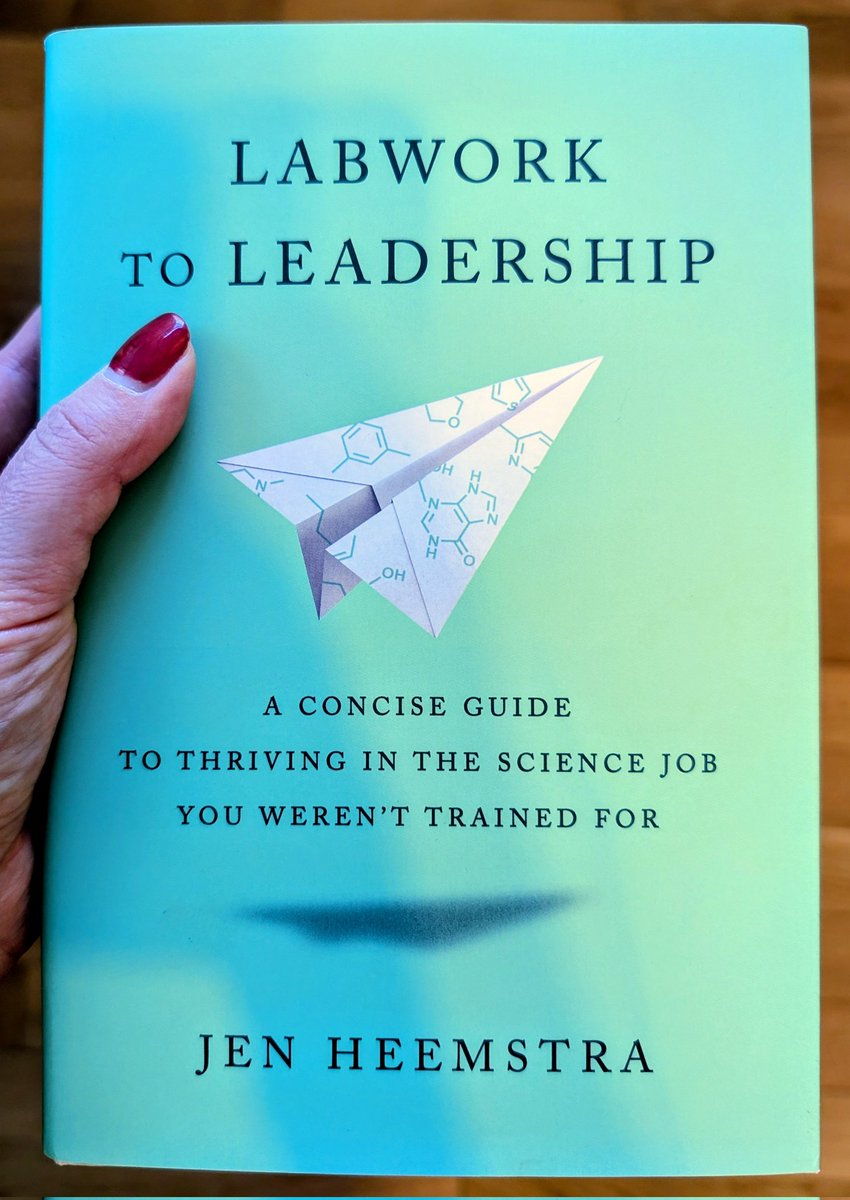
Just got my copy of "Labwork to Leadership" by the amazing @jenheemstra! Excited to share the insights with my research team at Dartmouth.
This is a timely reminder that proactive leadership training is not a luxury in science—it is foundational. If we expect PhD trainees to lead research, teams, and innovation, perhaps we should teach those skills, and not hope that they simply emerge by osmosis.
Is it time that we consider including mandatory leadership training into science PhD programs?
In the late 1920s, a young Indian woman boarded a ship bound for Germany to do her PhD. Her name was Irawati Karve. And she was about to take on one of the most dangerous ideas of her time.
Thread. 1/12
Have you ever heard a faculty member talk openly about their daily struggles, what keeps them going, and the mistakes they wish young academics would avoid?
Being an academician is a journey of passion, challenges, and lifelong learning.
https://t.co/8xwcm0dPa5
Excited to share this article with @Chauhanlab_ILS & team @ccmb_csir on intricate cross-talk b/w #Autophagy & #InnateImmunity.
As my lab is starting to focus on innate immune responses against Fungal Pathogens, this was a super useful proces😀
Link: https://t.co/Ofk10AChbq
This 1998 paper is, without question, one of the most beautiful in the history of biology.
It answers two questions:
First, how does a potassium channel let in K+ ions while excluding Na+ ions? And second, how does it funnel 100 million of those ions through each second?
These questions are interesting not only because potassium channels are so deeply involved in our brain's electrical signals, but also because K+ and Na+ both carry a positive charge and have similar sizes! A potassium ion has a Pauling radius (a measure of how far its electron cloud extends from the nucleus) of 1.33 Angstroms, compared to 0.95 for the sodium ion. So a potassium ion is slightly larger, but both ions carry exactly the same charge! And yet, despite these similarities, the potassium channel is “at least 10,000 times more permeant” to K+ than Na+.
How did evolution sculpt such an exquisitely-tuned machine?
To find out, scientists crystallized potassium channel proteins and solved its structure using X-ray crystallography. From this structure, a few things became immediately clear: First, the potassium channel’s interior measures 12 Angstroms long. And second, the channel's interior is lined with oxygens.
Normally, in a cell, ions are surrounded by water molecules. They must shed these waters to pass through the pore, but that's energetically expensive to do! The oxygens inside the channel are positioned at PERFECT locations to make this totally feasible; the K+ ions shed their waters and grab onto the oxygens instead.
The structure also revealed why Na+ cannot pass through. Because it is slightly smaller, Na+ ions cannot form contacts with all the oxygen atoms at once. The geometry is slightly off, giving potassium a decisive advantage.
Now onto the second question. Namely, how does this channel allow 100 million K+ ions to pass each second? That is very quick, considering these ions get "held" by their contacts with oxygen, presumably slowing them down a great deal.
Again, the scientists turned to structure. They again crystallized the potassium channel protein. But this time, they soaked those crystals in a liquid containing rubidium (Rb⁺) and cesium (Cs⁺). These ions behave like potassium but scatter X-rays more strongly, because they are heavier. Thus, they show up more brightly on the X-ray diffraction data.
When the scientists compared electron density maps with and without Rb⁺ or Cs⁺, they could literally see peaks where the ions bound inside the channel.
From this structure, they discovered that TWO K+ ions sit inside of the channel at once, separated by precisely 7.5 Angstroms. This distance is close enough that the ions "feel" each other’s electric repulsion (like charges repel!), but not so close that they destabilize the protein.
This repulsion is used by the channel as a feature, rather than bug! When a third K⁺ ion comes in from the top, the electrostatic “push” kicks the ions forward through the filter. In other words, instead of ions having to crawl through the pore one at a time, the channel uses their mutual repulsion to keep the flow moving; 100 million ions per second.
Beautiful paper. A classic in using 3D structures to reveal biophysical mechanisms.
Statement of Prof. David Gross, Nobel Laureate 2004, at the recently concluded Quantum India Bengaluru 2025. This one sentence sums up the conference for me.
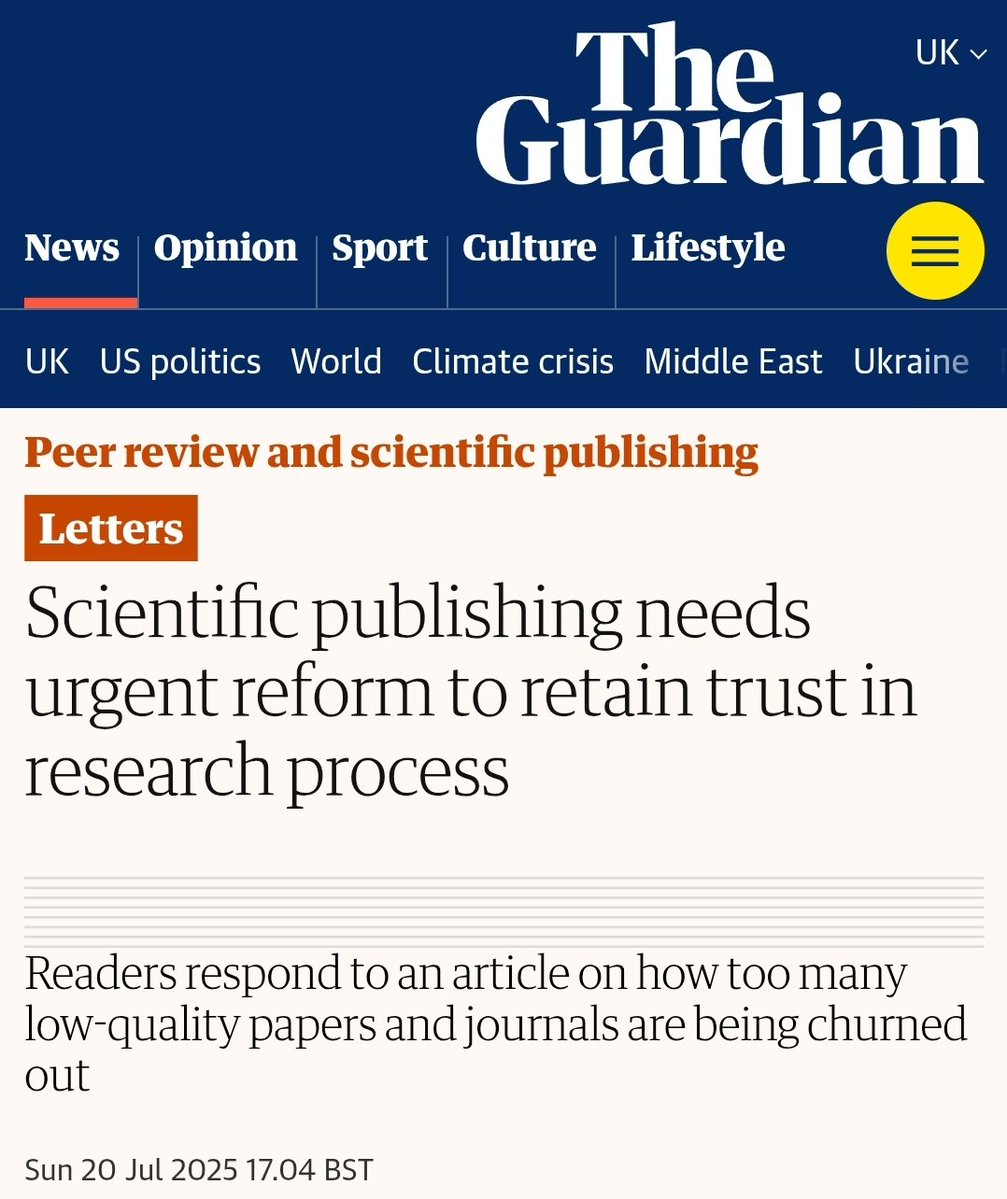
I too am convinced that we are publishing far too many papers. The way to put a stop to this unsustainable situation is to enforce quality rather than quantity at all levels, hiring, tenureship, promotion, awards and prizes... everywhere.
https://t.co/5wL049Q7dI
📢 Get ready! The India Yeast Meeting 2025 (IYM 2025), the 13th international conference on fungal biology, is coming to Bangalore! at Indian Institute of Science (IISc), Bengaluru from Dec 3rd-6th, 2025. stay tuned for updates @IYM_2025_IISc#IYM2025#FungalBiology#yeast
This is indeed a great relief to my fellow scientists...here is article, where I discuss what was the problem and how the new GFR rules may help. Thanks @RPrasad12 for asking me to write and help. Kudos ! ! @DBTIndia@CSIR_IND@DrJitendraSingh@ANRFIndia https://t.co/cDzqY4CR9q
I always see these kind of initiatives by scientists from IIT Bombay. Few years back, 2 or 3 class 11th students were doing summer internship there.
Why can't HEIs, that consider themselves at top, do this routinely? Because as a society, we never tell children abt scientists.
All valid points. I used to review a lot but do so much less now. And I do feel guilty about it.
You’re probably why it takes so long for your paper to get reviewed and your excuses are bad https://t.co/xwsr1tIOUO via @DynamicEcology
🚨New Preprint Alert🚨
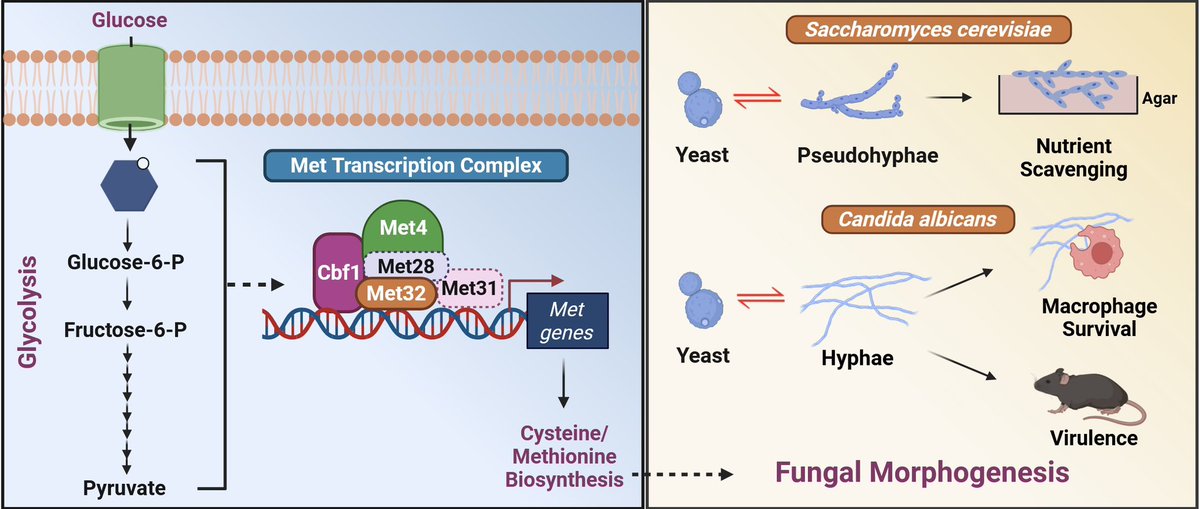
Elated to share our first story from @ccmb_csir. We show, for the first time that glycolysis-dependent sulfur metabolism orchestrates fungal morphogenesis & virulence using #Bakersyeast#Candidaalbicans
Link: https://t.co/Ni0Z1Nby8P
@dhrumishah99 👏🏻👏🏻