It’s surreal
The city itself looks such a dump ! Like every where else in this Viksith Bharat.
World over cities improve and become better spaces for living . We’re such a disgusting breed - destroying what was given to us and leaving disaster land for our future generations.
This is comically evil behaviour from Professor @vijayramdas of University of Hyderabad, and I fail to see how anything short of termination would constitute appropriate redress for such a casteist and feudalistic mindset.
बनारस में कूड़ा प्रबंधन को लेकर अच्छा कार्य हुआ है वाराणसी के मेयर और नगर आयुक्त महोदय और नगर निगम के सभी कर्मचारियों को बहुत बधाई
राष्ट्रपति महोदय के द्वारा आप लोगों को पुरस्कार मिलेगा यह काशी वासियों के लिए गर्व की बात है
@ashoktiwaribjp@HimanshuN_ias@nagarnigamvns
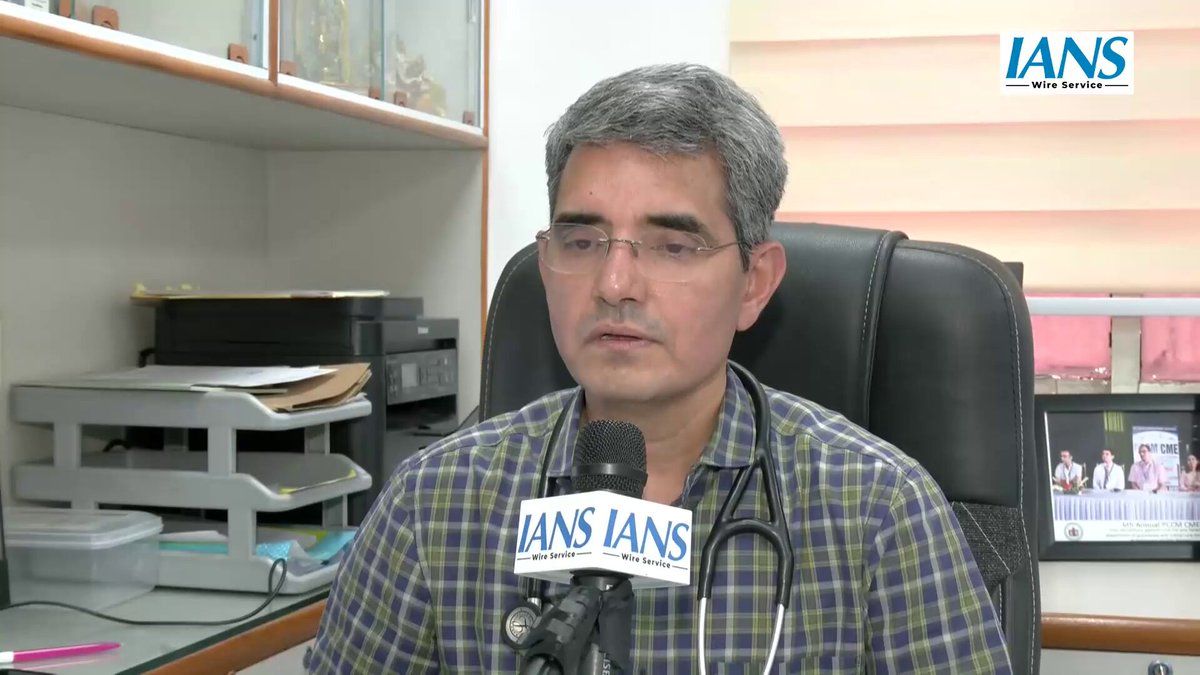
"I'm honestly surprised we're still alive. I do not think this kind of air is suitable for human survival."
-- Dr Vijay Hadda, AIIMS Delhi's Lung Specialist, on Delhi's Air Pollution
Consumers r dealt in this way. Booked ticket for mother earlier with this shit airlines and now have to book another one as we consumers have no rights.
Sorry, @CPCB_OFFICIAL. In your haste to defend the indefensible, you seem to have overlooked that your comments on the National Air Quality Index (NAQI) run contrary to the very documents available on your own website! If anything, this Press Note has only reinforced public suspicion that your systems conceal far more than they reveal.
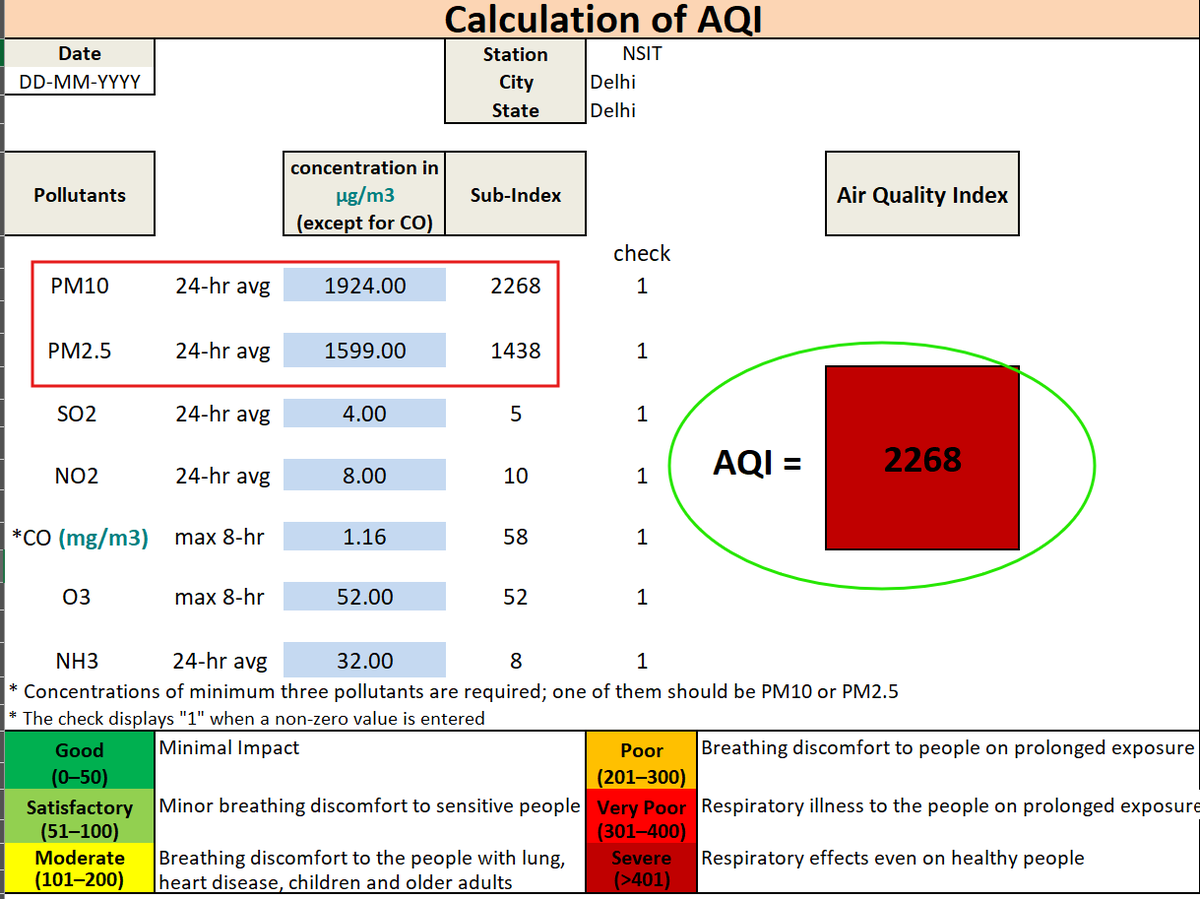
1️⃣ Your own AQI Calculator does not impose any cap of 500.
An AQI Calculator in the form of an Excel sheet is available on your website (https://t.co/u1qPZSWZtt). It allows one to enter the concentration values of PM₂.₅, PM₁₀, SO₂, CO, NH₃, NO₂, O₃ and Pb and obtain the AQI in accordance with the NAQI methodology followed by CPCB. Significantly, the Calculator does not impose any upper cap on the resulting AQI. For instance, please see the accompanying screenshot showing the calculation for MBS Nagar Chaukhandi.
2️⃣ Has either @aiims_newdelhi or the other two institutions, @SRIHER_Official and @MAMC_NewDelhi, cited in your Press Note, ever stated in writing that the adverse health impact remains unchanged once the AQI crosses 500?
If so, please place such rather bizarre medical advice in the public domain.
I have spoken to several senior pulmonologists, including those who have served at AIIMS, New Delhi, on this subject. They corroborate what is a commonsensical inference: the health risks arising from inhalation of PM₂.₅ and other particulate matter, as well as exposure to harmful gases, are related to the concentrations inhaled and the duration of exposure. The deposition of pollutants in the respiratory system (particularly infiltration of PM₂.₅ in the bloodstream) and the resulting pulmonary and cardiovascular damage cannot simply be assumed to plateau once an arbitrary AQI threshold is crossed.
Even exposure to exceptionally high concentrations for a few hours, particularly when people venture outdoors during Diwali celebrations, can have serious health ramifications, including in the medium and long term. The sweeping, unsubstantiated assertion in paragraph 4 that adverse health effects arise only from long-term exposure ought, therefore, to have been avoided.
The prescribed 24-hour and 8-hour averaging periods may serve a purpose in standardised AQI computation, but they cannot be a substitute for reporting hourly pollution levels, particularly during extreme pollution episodes. The need for hourly reporting is best illustrated by the familiar anecdote of a mathematics student who drowned while crossing a river because he assumed it was safe, having calculated that its average depth was less than his height!
3️⃣ Your own Press Note, in paragraph 5, acknowledges that the cap of 500 was borrowed from the US EPA.
But did anyone bother to consider whether the US experience and pollution levels are remotely comparable with ours? An AQI of 500 in the United States is virtually unimaginable. This is particularly striking when the US AQI scale itself permits much higher numerical readings at the upper end. Blindly importing a ceiling without examining its relevance to Indian conditions makes little scientific or administrative sense.
4️⃣ Please do not summarily dismiss the reliability of Community AQI Monitoring Stations.
Their accuracy may be somewhat lower in the case of certain pieces, and they may not monitor gaseous pollutants. However, their sheer numbers and geographical spread provide an invaluable additional source of information. @AQI_India alone has approximately 600 community monitors in Delhi and nearly 4,000 across the country, compared with just 59 CPCB monitors in Delhi. This extensive network offers a much wider picture of localised pollution levels and deserves to be taken seriously, with due regard to the limitations of a few individual instruments.
Besides, the reference in paragraph 6 to a calibration limit of 1,000 is outrightly ludicrous in the face of the unprecedented pollution levels being recorded. If pollutant concentrations have risen beyond the instruments' calibrated range, the obvious response is to recalibrate the analysers or replace the machines with ones capable of measuring the actual levels. It cannot be an excuse for allowing the monitoring system to become incapable of reporting the very pollution it is supposed to measure!
For ready reference, I am attaching comparison between NAAQS and @WHO norms on safe limits.
5️⃣ Lastly, no genuine scientist or engineer should countenance withholding pollution data from the public by switching off monitoring stations precisely when pollution peaks.
The apparent shutdown of some monitoring stations during peak pollution periods, as highlighted here (https://t.co/CGbAleLTFB), calls for a transparent explanation. If the data are available, these must be disclosed; if the monitors are not functioning, the reasons and duration of their downtime must be made public.
Scientific integrity demands that we measure, report and confront the problem as it actually exists, not devise convenient methodologies or justifications that make the numbers look less alarming. Public health cannot be protected by underplaying & hiding the data!
@moefcc@byadavbjp@PMOIndia@HMOIndia@sardesairajdeep@Sonal_MK@svaradarajan@manoj_kumar_nr
Private companies in India overwhelmingly hire undergraduates and rarely hire folks with specialized PhD degrees.
This is symptomatic of a private ecosystem that has 1) a low risk appetite for the research and development necessary to create new technologies and 3) a desire for quick yield on investments.
This mindset needs to change and the government needs to provide incentives towards enabling this change.
The @ANRFIndia RDI fund scheme is a step in that direction but the scope needs to be exploded and the system needs to be made less obtuse.
https://t.co/ADnjTSC6lR
শ্রী ভেঙ্কটেশ্বর কলেজে সংক্রামক ও অসংক্রামক রোগ বিষয়ক সেমিনারে প্রধান অতিথি হিসেবে বক্তব্য রাখি। রোগ প্রতিরোধ, প্রাথমিক শনাক্তকরণ ও জনস্বাস্থ্য সচেতনতার উপর গুরুত্ব দিই।
#PublicHealth#HealthForAll
HAPPENING NOW: Absolutely chaotic scene as conservative activists Jake Lang and Thomas Allen storm a Diwali Hindu celebration at the Seattle Center Armory.
They held signs that read, "Deport All Dot Heads" and "Stop Hindu Replacement of Christians."
I just spoke to both men who say they are concerned about American culture being overrun by false idol worshippers and H1-B fraudsters.
Lang and Allen say they will be targeting other locations in the city this weekend.
They have yet to announce details of their plans due to possible retaliation by Antifa and other far-left activists.
Stay tuned.
@JakeLang|@Tommy4Trump420
Thanks to @TWASnews for recognizing our research. Grateful to my students for their dedication and hard work; to funding agencies, my colleagues & collaborators, and well-wishers for fostering the supportive environment.
@India_Alliance@DBTIndia@ANRFIndia@CSIR_IND@ICMRDELHI
Celebration of Light: Another Way to Celebrate
This is Bhailo, a traditional ritual that uses a revolving rope tied with a pine-splinter torch during Igas Bagwal(also known as Budhi Diwali). It signifies the delayed arrival of Rama in the Uttarakhand hills and is celebrated 11 days after Deepavali. This ritual involves the rolling of flaming torches overhead or around their bodies in rhythmic, circular motions.
However, in Nepal, Bhailo is celebrated as a singing and dancing custom during the third night of Laxmi Puja. It is also practised in India's Gorkhali-diaspora regions, such as Darjeeling, Sikkim, and Assam.
#Deepawali #Deepavali2026 #Uttarakhand #culture #traditon #Folk