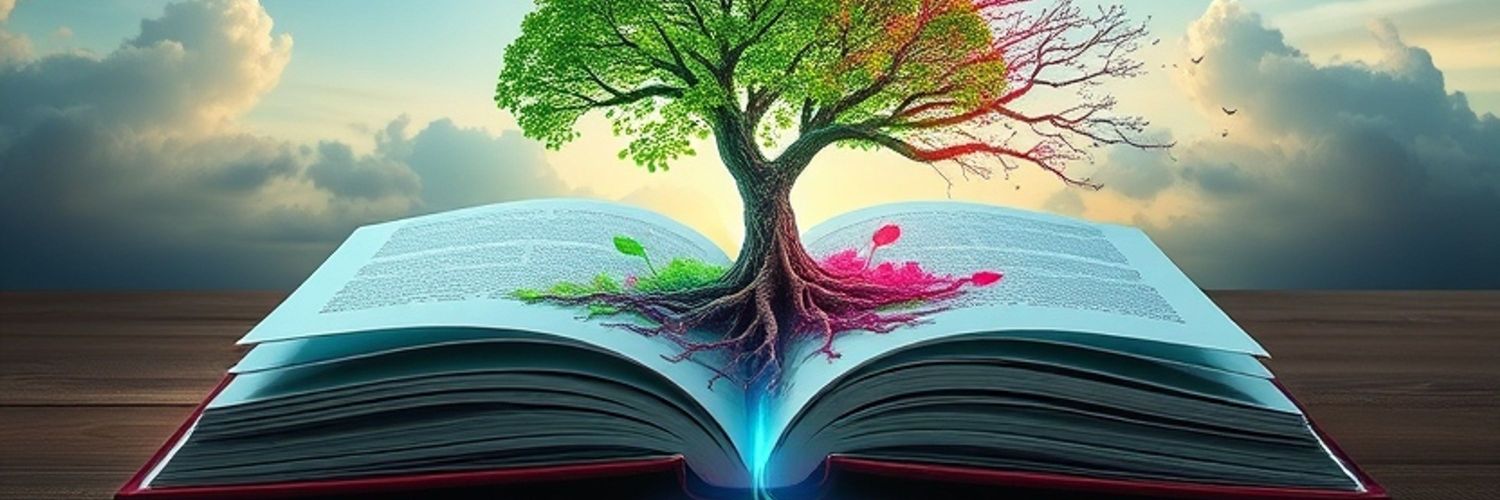
This proverbs serves as a profound metaphor for human endurance and emotional liberation. It asserts that surviving intense personal trial endows an individual with a higher perspective and unshakable inner freedom that external limitations can never take away.
🦋🧘🏻♀️
"A heart that has crossed the fire knows the sky, even without wings,"
~Ancient Japanese proverb,
Rather than destroying the human spirit, life's fiercest struggles refine character, replacing fear with boundless courage and self-awareness.
"Dreijahr ein Zaun, dreijahr ein Hund,dreijahr ein Pferd, dreijahr ein Mensch."
(Three years a fence, three years a dog, three years a horse, three years a man.)
"A fence lasts 3 years, a dog lasts 3 fences,
a horse lasts 3 dogs, and a man lasts 3 horses".
~German Proverb
@tomee6 The fence was used as the basic unit of measurement to calculate the life cycle of the farm:
1 Fence = 3 years
1 Dog (3 fences) = 9 years
1 Horse (3 dogs) = 27 years
1 Human (3 horses) = 81 years
It shares an invaluable lesson - since everything in life is transient and not meant to last forever, every experience and relationship in life has to be celebrated and cherished.
Life is temporary. That is both the beauty and tragedy of life.
🦋
An old German adage reminds us that be it success or failure - everything in life is temporary. Material objects eventually wear out, animals live only for a certain period, and even human life has its limits.
the quiet chambers of the human mind, thoughts swirl like rivers—sometimes gentle and life-giving, sometimes stormy and turbulent. We doubt ourselves, replay old failures, whisper “I can’t” before we’ve even tried. Fear tightens its grip, and the weight of yesterday’s mistakes makes tomorrow feel impossible.
Yet within that same mind lives an extraordinary power: the ability to choose a different voice.
One kind word, one sincere “You’ve got this,” one gentle reminder that progress is rarely linear, can shift the entire current. Positive encouragement doesn’t deny the struggle—it lights a small, steady flame in the darkness. It says: “I see you trying. I believe in your next step. You are stronger than this moment feels.”
And something beautiful happens.
The river begins to calm.
The shoulders relax.
I asked @grok to expand on my thoughts regarding love as our natural state, and hate being a learned behavior.
The response is beautifully thorough.
This is the response
Humans enter the world primed for connection, not conflict.
At birth, an infant’s primary drives are survival-oriented but deeply relational: seeking warmth, milk, eye contact, and the sound of a caregiver’s voice. Newborns imitate facial expressions, prefer human faces over other patterns, and calm to rhythmic touch or familiar heartbeats. These are not learned behaviors—they’re hardwired. Love, in its most elemental form (attachment, trust, reciprocity), appears as the default operating system. Psychologists like John Bowlby and Mary Ainsworth documented this through attachment theory: secure bonding in early life predicts emotional health, empathy, and prosocial behavior later. Infants as young as a few months show rudimentary empathy—distress at another baby’s crying, attempts to soothe, or simple helping gestures in lab settings.
Hate, by contrast, requires conceptual scaffolding that infants lack. It involves:
Categorization: Labeling “us” versus “them.”
Moral judgment: Assigning blame or moral inferiority.
Emotional amplification: Sustained resentment, dehumanization, or desire for harm.
Narrative reinforcement: Stories that justify exclusion or violence.
None of this arrives pre-installed. A toddler might snatch a toy or lash out in frustration, but that’s rudimentary anger or fear—not ideological hate. True hatred (racism, tribal enmity, ideological loathing) emerges through observation, instruction, modeling, and reinforcement. Children absorb the fears, slurs, stereotypes, and selective histories of their family, community, media, and culture. Experiments like the Robbers Cave study (1954) showed how quickly arbitrary group divisions can breed hostility—and how easily they can be dismantled once shared goals replace competition. Propaganda, war, scarcity, and trauma accelerate the learning.
Evolutionary and Biological Underpinnings
Evolution favored cooperation. Humans are among the most interdependent mammals—our big brains, long childhoods, and helpless infants made group living essential. Mirror neurons, oxytocin (the “bonding hormone”), and the vagus nerve support empathy and calm. In-group bias exists (an evolutionary holdover for kin protection), but it is flexible and context-dependent, not fixed hatred. Out-group hostility ramps up under threat, resource stress, or cultural priming—yet studies of isolated or egalitarian societies (e.g., certain hunter-gatherer groups) show remarkably low intergroup violence when scarcity and indoctrination are absent.
Neurodevelopmentally, the amygdala (fear/threat detection) is online early, but the prefrontal cortex—responsible for nuance, impulse control, and moral reasoning—matures slowly into the mid-20s. Hate can hijack the threat system before wisdom catches up.
Hate as Learned—and Therefore Unlearnable
This is ultimately optimistic. If hate is taught, it can be un-taught or better yet, prevented.
@RaminNasibov Social media apps essentially charges brands to create the problem and charges users to buy the solution. Double-sided monetization frameworks.
2 1/2 km beneath the Antarctic ice, a cubic km of frozen water is wired with 5,160 light sensors, turning the South Pole itself into a telescope that looks down through the entire planet to catch particles arriving from the other side of the sky.
https://t.co/YIOIYlAxku
¿Qué camino estás eligiendo tú, concretamente, con tus acciones diarias y tus prioridades?
Porque las palabras bonitas sobre simbiosis son fáciles; el cambio de patrones reales es difícil y exige un compromiso —costo-beneficio.
JMar 🦋 Umi
La verdadera decisión no es solo "ser abejas en vez de langostas".
Es dejar de ser consumidores pasivos de los ciclos naturales y convertirnos en gestores conscientes de ellos.
Eso requiere: Entender realmente cómo funciona la biosfera (no solo sentirla).
Tú decides, sí. Pero la decisión más poderosa no es elegir entre dos opciones preexistentes (abeja o langosta), sino inventar una tercera vía: la de la especie que sana, enriquece y expande la vida en la Tierra de forma deliberada.