Zikir is the removal of heedlessness. When heedlessness is removed, even remaining in a state of silence is considered zikir!
| Hz. Bahauddin Shah Naqshiband (k.s)
Al-Hasan al-Baṣrī رحمه الله said:
“If a servant’s sins become numerous and he has no deeds that will expiate them, Allah afflicts him with worries and grief, making them an expiation for his sins.”
Ahsan al-Ṣāliḥīn (2957)
'Abdullah ibn 'Umar (رضي الله عنه) said: "al-Hayā (shame/shyness) and al-Īmān (faith) are linked together, if one of them is taken away, the other is [also] taken away."
📕 al-Adab al-Mufrad 1313
Ibn al Qayyim رَحِمَهُ الله said:
A servant has not been afflicted with a punishment more severe than the hardening of the heart and being distant from Allah.
[al-Fawaa’id | Pg. 142]
The scholars divide ignorance into two types: plain ignorance and compound ignorance. Plain ignorance is when someone is ignorant of a topic and knows that he’s ignorant. Compound ignorance is when a person is ignorant of a topic but doesn’t realise it. This is the most dangerous form of ignorance, as it’s usually the type of ignorance that leads us to speak about the religion without knowledge. And Allāh’s aid is sought.
How Should I Study the Fundamentals of Islam?
بسم الله الرحمن الرحيم
Many Muslims spend years studying controversies, polemics, and advanced disagreements without first learning the foundations of their religion.
The purpose of this guide is to provide a structured path through the fundamental subjects of Islam and a starting point for those seeking a solid foundation in their religion. It is not intended to make one a specialist overnight, but rather to help build a sound understanding of the essentials before moving on to more advanced studies.
The accompanying lectures and courses are an essential part of this curriculum and should not be skipped. They provide the explanations, context, and guidance necessary for properly understanding the texts and benefitting from them.
1. Understanding How Islam Works
Before studying the individual sciences, one should understand how Islam is transmitted, preserved, and taught.
How Islam Works — A free introductory course from SeekersGuidance covering the nature of Islamic knowledge, scholarship, the madhhabs, and the transmission of the religion.
[https://t.co/lC7iioWZsE]
Understanding how Islamic knowledge is preserved and transmitted helps provide a framework through which the remaining sciences can be studied.
2. Knowing the Messenger ﷺ
Understanding the life, character, and conduct of the Prophet ﷺ provides the context through which the religion is understood.
The Life of Prophet Muhammad for Youth — Imam Yama Niazi.
[https://t.co/WSpBS6nNXi]
This is an accessible introduction to the life of the Messenger ﷺ suitable for both youth and adults.
Bājūrī's Commentary on Tirmidhī's Shamāʾil
[https://t.co/0jJvnbOUQH]
Studying the life of the Prophet ﷺ should be accompanied by studying his character, appearance, habits, and conduct.
3. Creed (ʿAqīdah)
The foundations of what Muslims believe.
Al-ʿAqīdah al-Ṭaḥāwiyyah — Imam Abū Jaʿfar al-Ṭaḥāwī.
Beliefs of Ahl al-Sunnah (Aqidah Tahawiyyah) — Dr. Ali Ataie.
[https://t.co/168w4Af9Kz]
al-ʿAqīdah al-Ṭaḥāwiyyah — Shaykh Hamzah Wald Maqbul.
[https://t.co/a2fff2JG7f]
Dr. Ali Ataie's lecture is an excellent introduction to the core themes of al-ʿAqīdah al-Ṭaḥāwiyyah and the beliefs of Ahl al-Sunnah. For those seeking a more detailed study of the text, Shaykh Hamzah Wald Maqbul's commentary provides a fuller walkthrough while remaining accessible to beginners.
This work remains of the most widely studied summaries of Sunni creed and a foundational text for understanding the beliefs of Ahl al-Sunnah.
4. The Foundations of Practice
The essential knowledge of worship and daily practice.
Al-Murshid al-Muʿīn — Ibn ʿĀshir.
Ibn Ashir’s Concise Guide to the Basics of Deen — WISE English Academy
[https://t.co/zqMRMHeF3N]
While encompassing creed, worship, and spiritual refinement, its primary value in this curriculum lies in its coverage of the practical rulings of worship that every Muslim is obligated to learn.
5. The Qur'an
After establishing creed and practice, one is better equipped to approach the Book of Allah.
The Qur'an — Saheeh International.
Tafsir Ibn Kathir (Abridged).
Note: Both can be accessed free of charge on https://t.co/XcmpEUIfxd.
The Qur'an is the foundation of the religion, while Ibn Kathir provides one of the simplest and most widely read traditional explanations of its meanings.
The abridged version is particularly beneficial for those seeking to focus on the general meanings of the verses without becoming overwhelmed by lengthy discussions and narrations.
6. The Foundations of the Sunnah
Core Prophetic teachings every Muslim should know.
Al-Arbaʿīn al-Nawawiyyah — Imam al-Nawawī.
Imam Nawawi's Forty Hadith: The Axis of Faith — Imam Yama Niazi.
[https://t.co/skSWuomsVt]
These narrations summarize many of the most important principles of Islam and have served as an introduction to hadith for generations of students.
7. Arabic and the Language of Revelation
Learning Arabic opens the door to a deeper engagement with the Qur'an, Sunnah, and the Islamic sciences.
Firstly, one should learn to read the Arabic alphabet and recite the Qur'an correctly with a qualified teacher.
As for learning the language itself:
Madinah Book 1 — Dr. V. Abdur Rahim.
Video lessons:
[https://t.co/nRG2aLXlP4]
For those seeking one-on-one instruction, reliable Arabic and Qur'an teachers can often be found at reasonable rates through platforms such as Preply.
Even a modest amount of Arabic can greatly deepen one's engagement with the Qur'an, Sunnah, and the Islamic sciences.
8. Spiritual Excellence (Iḥsān)
This pertains to matters of the soul, rectification of one's character, and drawing nearer to Allah.
Infamies of the Soul and Their Treatments — Abū ʿAbd al-Raḥmān al-Sulamī.
[https://t.co/aeQo2HwBoU]
Adab Sulūk al-Murīd (Imam Haddad's Manual on Good Manners) — Imam ʿAbdullāh ibn ʿAlawī al-Ḥaddād.
Video commentary by Ustadh Omar Popal:
[https://t.co/nguB0aL4Px]
Knowledge alone is not sufficient. These works focus on sincerity, character, self-discipline, and the purification of the heart.
9. Duʿāʾ and Dhikr
Establishing a daily routine of remembrance, supplication, and devotion.
Kitāb al-Adhkār — Imam al-Nawawī.
[https://t.co/nHhERhTW4v]
The Littany of Imam al-Nawawī
[https://t.co/3Jar7uuktD]
These works help establish a daily routine of remembrance, supplication, and devotion. Consistency in these practices strengthens faith and, by the permission of Allah, increases one's ability to benefit from the study and practice of Islam.
10. The Companions رضي الله عنهم
The generation chosen by Allah to accompany His Messenger ﷺ and transmit this religion.
The Firsts: The Forerunners of Islam — Dr. Omar Suleiman.
[https://t.co/QYUvC5XNZ8]
The Forty Hadiths on the Virtues of the Ten Who Were Given Glad Tidings of Paradise — Ibn ʿAbd Allah al-Hashimi.
[https://t.co/d7F7E1qtlq]
The Companions رضي الله عنهم were the generation chosen to accompany His Messenger ﷺ and transmit this religion. Their lives provide some of the finest examples of faith, sacrifice, and character.
11. Useful Supplementary Works
The Prophetic Life in Focus — Shaykh Abdul-Rahim Reasat.
[https://t.co/6hk4ys7St3]
This is a more detailed study of the life of the Messenger ﷺ for those wishing to go beyond introductory sīrah.
Matn al-ʿAshmāwiyyah — ʿAbd al-Bārī al-ʿAshmāwī.
[https://t.co/mPxwidkzOZ]
A classic Mālikī primer focusing on the practical rulings of worship.
Riyad al-Salihin — Imam al-Nawawī.
[https://t.co/MzJwmur4HB]
One of the most widely studied hadith collections on worship, character, manners, repentance, and spiritual development.
Al-Shifāʾ bi-Taʿrīf Ḥuqūq al-Muṣṭafā — Qāḍī ʿIyāḍ.
[https://t.co/tWtcHXHR0C]
A celebrated and life-changing work on the virtues, rank, rights, and noble characteristics of the Messenger ﷺ. Few books have had a greater impact on cultivating love, reverence, and attachment to him.
A Glossary of Islamic Terms — Aisha Bewley & Abdalhaqq Bewley.
[https://t.co/HDs1Uvc2bX]
A useful reference work for students encountering unfamiliar Arabic and technical Islamic terminology.
Build the foundations before immersing yourself in controversies, polemics, and advanced areas of disagreement. A person who possesses mastery of the essentials will be far better equipped to navigate everything that comes after.
Allah knows best.
Abu Musa al-Ash'ari رضي الله عنه said to the Qur’an reciters of Basra,
“Recite, and do not let a long time pass without reciting for that will cause your hearts to harden as the hearts of those before you were hardened.”
[Sahih Muslim]
According to the Priest present in South America, here is what the Spaniards did to the natives:
The governor duped the unsuspecting leaders of this welcoming party into gathering in a building made of straw. Then he ordered his men to set fire to it and burn them alive. All the others were massacred—either run through by lances or put to the sword.
As a mark of respect and out of deference to her rank, Queen Anacaona was hanged.
When one or two Spaniards tried to save some of the children—either because they genuinely pitied them or perhaps because they wanted them for themselves—they swung them up behind them onto their horses. One of their compatriots rode up behind and ran them through with his lance.
Yet another member of the governor’s party galloped about, cutting the legs off all the children as they lay sprawling on the ground.
A Short Account of the Destruction of the Indies by Bartolomé de las Casas pg 23
shaykh al-islām ibn taymīyyah said:
if a muslim repents, then returns to that sin, it is not permissible for him to persist in sinning, rather he must repent, even if he returns to that sin 100 times.
- al-fatāwā 16/58
"Just like medical physicians sometimes state that there is certain physical diseases that are more common amongst certain people of certain backgrounds — these heart diseases (Riya, Kibr) are common among Tullab al-Ilm and those classified as righteous."
- Shaykh Ahmad Jibril
Mufti Rashīd Aḥmad Ludhiyānwī (r.a.) once said:
"For a long time I have yearned for martyrdom. However, I often reflect that, firstly, the objective of most wars today is merely worldly gain, not the exaltation of the Word of Allāh. Secondly, even on the battlefield people do not refrain from disobeying Allāh, making it difficult to remain among such individuals. Therefore, I say to Allāh: I do indeed long for martyrdom, but only if the opportunity is a worthy one.
"Sometimes it occurs to me that, by the help of Allāh, my pen is more effective against the heretics, disbelievers, atheists and irreligious than even a sword. Perhaps Allāh may grant me the rank of martyrdom through this very service."
The compiler states: "This was before jihād had begun in Afghanistan. After that front was opened, Ḥaḍrat travelled there on numerous occasions. On one visit to Kandahār, he expressed to Ḥaḍrat Amīr al-Muʾminīn Mullah Umar (r.a.) his heartfelt desire to be given a machine gun and sent to the front line so that, after dispatching thousands of the enemy to Hell, Allāh would then admit him into Paradise through a shell fired by the enemy.
Ḥaḍrat Amīr al-Muʾminīn replied:
"Your supplications are sufficient. Your students and your sons are present to fight. These Ṭālibān are your own sons."
[Jawāhir al-Rashīd]
Like his shaykh and mentor, Sulṭān al-ʿĀrifīn Ḥaḍrat Mawlānā Shāh ʿAbdul Ghanī Phūlphūrī (r.a.), who was regarded as one of the senior khulafāʾ of Ḥakīm al-Ummah, Mufti Rashīd Aḥmad Ludhiyānwī (r.a.) possessed an unquenchable thirst for jihād and martyrdom.
His shaykh would even teach some of the ʿulamāʾ in Thānā Bhawan how to fight with a staff. Witnessing his skill in this field, Ḥakīm ul Ummah (r.a.) would remark with delight, encouragement and enthusiasm:
"Our Mawlānā ʿAbdul Ghanī alone is enough to face an army of a thousand men. And if we were ever in need of an army, then our army is in Aʿẓamgarh."
Today, however, never mind training for jihād—even discussing it causes unease & panic among many who claim to uphold their legacy. The intellectual inoculation of Western ideas has penetrated the minds of many, including those who outwardly appear to be practising the Dīn.
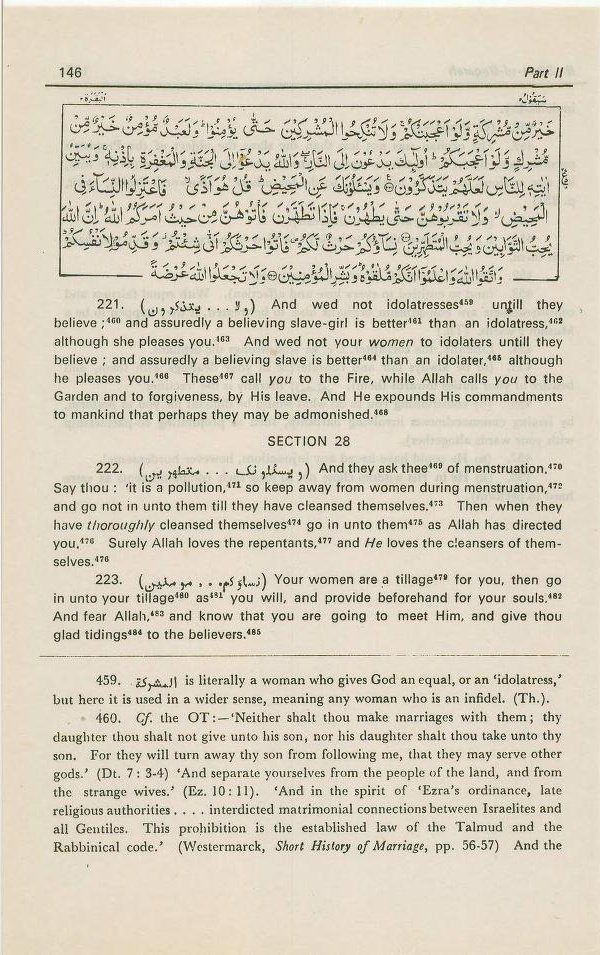
@KrayC137 There's also some nuance to satisfying the desire in the Ḥalāl way:
The purpose of the sexual intercourse has to be the begetting of children. This means that carnal indulgence in intercourse—i.e. intercourse merely for the sake of pleasure and not offsprings—is not permitted.
3) Purity culture needs to be abolished - if one’s carnal desires are created naturally within a person by Allah swt and Allah swt created halal ways to regulate it then what is the issue?




![hashimiyy_'s tweet photo. How Should I Study the Fundamentals of Islam?
بسم الله الرحمن الرحيم
Many Muslims spend years studying controversies, polemics, and advanced disagreements without first learning the foundations of their religion.
The purpose of this guide is to provide a structured path through the fundamental subjects of Islam and a starting point for those seeking a solid foundation in their religion. It is not intended to make one a specialist overnight, but rather to help build a sound understanding of the essentials before moving on to more advanced studies.
The accompanying lectures and courses are an essential part of this curriculum and should not be skipped. They provide the explanations, context, and guidance necessary for properly understanding the texts and benefitting from them.
1. Understanding How Islam Works
Before studying the individual sciences, one should understand how Islam is transmitted, preserved, and taught.
How Islam Works — A free introductory course from SeekersGuidance covering the nature of Islamic knowledge, scholarship, the madhhabs, and the transmission of the religion.
[https://t.co/lC7iioWZsE]
Understanding how Islamic knowledge is preserved and transmitted helps provide a framework through which the remaining sciences can be studied.
2. Knowing the Messenger ﷺ
Understanding the life, character, and conduct of the Prophet ﷺ provides the context through which the religion is understood.
The Life of Prophet Muhammad for Youth — Imam Yama Niazi.
[https://t.co/WSpBS6nNXi]
This is an accessible introduction to the life of the Messenger ﷺ suitable for both youth and adults.
Bājūrī's Commentary on Tirmidhī's Shamāʾil
[https://t.co/0jJvnbOUQH]
Studying the life of the Prophet ﷺ should be accompanied by studying his character, appearance, habits, and conduct.
3. Creed (ʿAqīdah)
The foundations of what Muslims believe.
Al-ʿAqīdah al-Ṭaḥāwiyyah — Imam Abū Jaʿfar al-Ṭaḥāwī.
Beliefs of Ahl al-Sunnah (Aqidah Tahawiyyah) — Dr. Ali Ataie.
[https://t.co/168w4Af9Kz]
al-ʿAqīdah al-Ṭaḥāwiyyah — Shaykh Hamzah Wald Maqbul.
[https://t.co/a2fff2JG7f]
Dr. Ali Ataie's lecture is an excellent introduction to the core themes of al-ʿAqīdah al-Ṭaḥāwiyyah and the beliefs of Ahl al-Sunnah. For those seeking a more detailed study of the text, Shaykh Hamzah Wald Maqbul's commentary provides a fuller walkthrough while remaining accessible to beginners.
This work remains of the most widely studied summaries of Sunni creed and a foundational text for understanding the beliefs of Ahl al-Sunnah.
4. The Foundations of Practice
The essential knowledge of worship and daily practice.
Al-Murshid al-Muʿīn — Ibn ʿĀshir.
Ibn Ashir’s Concise Guide to the Basics of Deen — WISE English Academy
[https://t.co/zqMRMHeF3N]
While encompassing creed, worship, and spiritual refinement, its primary value in this curriculum lies in its coverage of the practical rulings of worship that every Muslim is obligated to learn.
5. The Qur'an
After establishing creed and practice, one is better equipped to approach the Book of Allah.
The Qur'an — Saheeh International.
Tafsir Ibn Kathir (Abridged).
Note: Both can be accessed free of charge on https://t.co/XcmpEUIfxd.
The Qur'an is the foundation of the religion, while Ibn Kathir provides one of the simplest and most widely read traditional explanations of its meanings.
The abridged version is particularly beneficial for those seeking to focus on the general meanings of the verses without becoming overwhelmed by lengthy discussions and narrations.
6. The Foundations of the Sunnah
Core Prophetic teachings every Muslim should know.
Al-Arbaʿīn al-Nawawiyyah — Imam al-Nawawī.
Imam Nawawi's Forty Hadith: The Axis of Faith — Imam Yama Niazi.
[https://t.co/skSWuomsVt]
These narrations summarize many of the most important principles of Islam and have served as an introduction to hadith for generations of students.
7. Arabic and the Language of Revelation
Learning Arabic opens the door to a deeper engagement with the Qur'an, Sunnah, and the Islamic sciences.
Firstly, one should learn to read the Arabic alphabet and recite the Qur'an correctly with a qualified teacher.
As for learning the language itself:
Madinah Book 1 — Dr. V. Abdur Rahim.
Video lessons:
[https://t.co/nRG2aLXlP4]
For those seeking one-on-one instruction, reliable Arabic and Qur'an teachers can often be found at reasonable rates through platforms such as Preply.
Even a modest amount of Arabic can greatly deepen one's engagement with the Qur'an, Sunnah, and the Islamic sciences.
8. Spiritual Excellence (Iḥsān)
This pertains to matters of the soul, rectification of one's character, and drawing nearer to Allah.
Infamies of the Soul and Their Treatments — Abū ʿAbd al-Raḥmān al-Sulamī.
[https://t.co/aeQo2HwBoU]
Adab Sulūk al-Murīd (Imam Haddad's Manual on Good Manners) — Imam ʿAbdullāh ibn ʿAlawī al-Ḥaddād.
Video commentary by Ustadh Omar Popal:
[https://t.co/nguB0aL4Px]
Knowledge alone is not sufficient. These works focus on sincerity, character, self-discipline, and the purification of the heart.
9. Duʿāʾ and Dhikr
Establishing a daily routine of remembrance, supplication, and devotion.
Kitāb al-Adhkār — Imam al-Nawawī.
[https://t.co/nHhERhTW4v]
The Littany of Imam al-Nawawī
[https://t.co/3Jar7uuktD]
These works help establish a daily routine of remembrance, supplication, and devotion. Consistency in these practices strengthens faith and, by the permission of Allah, increases one's ability to benefit from the study and practice of Islam.
10. The Companions رضي الله عنهم
The generation chosen by Allah to accompany His Messenger ﷺ and transmit this religion.
The Firsts: The Forerunners of Islam — Dr. Omar Suleiman.
[https://t.co/QYUvC5XNZ8]
The Forty Hadiths on the Virtues of the Ten Who Were Given Glad Tidings of Paradise — Ibn ʿAbd Allah al-Hashimi.
[https://t.co/d7F7E1qtlq]
The Companions رضي الله عنهم were the generation chosen to accompany His Messenger ﷺ and transmit this religion. Their lives provide some of the finest examples of faith, sacrifice, and character.
11. Useful Supplementary Works
The Prophetic Life in Focus — Shaykh Abdul-Rahim Reasat.
[https://t.co/6hk4ys7St3]
This is a more detailed study of the life of the Messenger ﷺ for those wishing to go beyond introductory sīrah.
Matn al-ʿAshmāwiyyah — ʿAbd al-Bārī al-ʿAshmāwī.
[https://t.co/mPxwidkzOZ]
A classic Mālikī primer focusing on the practical rulings of worship.
Riyad al-Salihin — Imam al-Nawawī.
[https://t.co/MzJwmur4HB]
One of the most widely studied hadith collections on worship, character, manners, repentance, and spiritual development.
Al-Shifāʾ bi-Taʿrīf Ḥuqūq al-Muṣṭafā — Qāḍī ʿIyāḍ.
[https://t.co/tWtcHXHR0C]
A celebrated and life-changing work on the virtues, rank, rights, and noble characteristics of the Messenger ﷺ. Few books have had a greater impact on cultivating love, reverence, and attachment to him.
A Glossary of Islamic Terms — Aisha Bewley & Abdalhaqq Bewley.
[https://t.co/HDs1Uvc2bX]
A useful reference work for students encountering unfamiliar Arabic and technical Islamic terminology.
Build the foundations before immersing yourself in controversies, polemics, and advanced areas of disagreement. A person who possesses mastery of the essentials will be far better equipped to navigate everything that comes after.
Allah knows best.](https://pbs.twimg.com/media/HMldwrCbcAAEXTJ.jpg)





