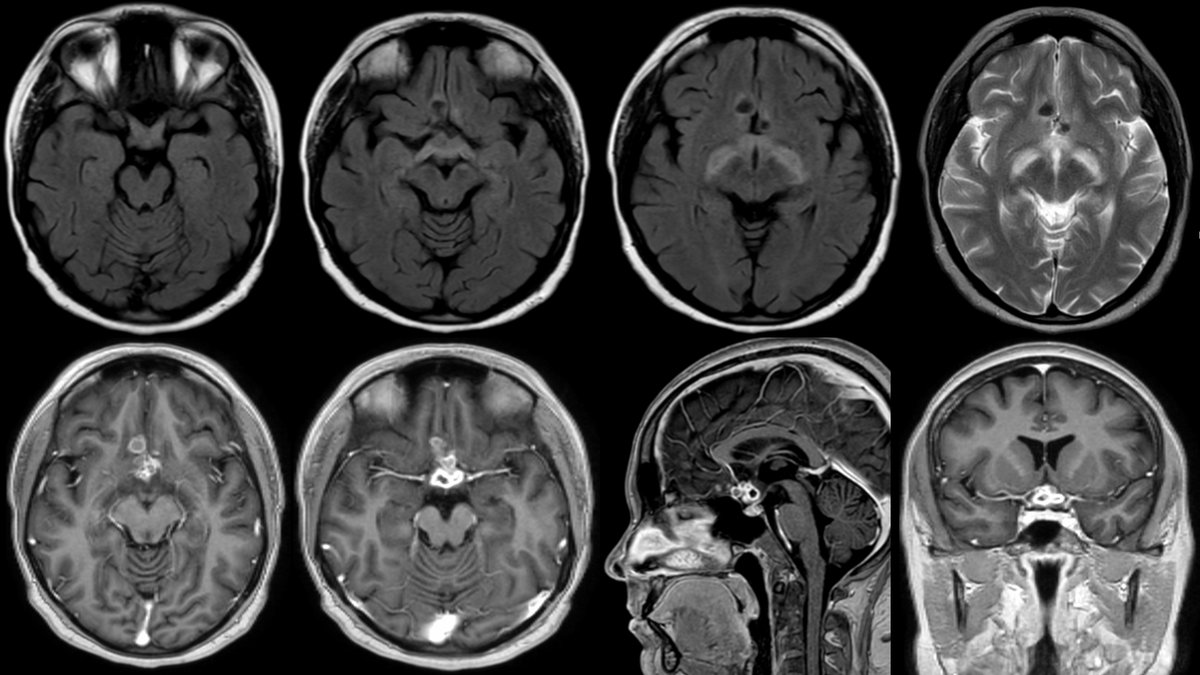
A cohort study by Benitez-Rocha et al. demonstrated that leptomeningeal disease in patients with breast cancer metastasis to the brain independently worsened survival necessitating its incorporation into prognostic models. Read more at : https://t.co/1bHn5Fd9HB
The neutrophil-to-lymphocyte ratio at admission may be an omen of poor outcomes after acute ischemic stroke.
Our latest systematic review & meta-analysis of 33,049 patients confirms NLR as a powerful prognostic marker post-stroke.
https://t.co/Eah8pAjpZ5
In this retrospective analysis prophylactic antiseizure medication reduced the frequency of early seizures from 21% to 6% in pts with lobar ICH
https://t.co/BSUPD4SmWo
🧠💤 Not all insomnia is insomnia. Not all sleepiness is narcolepsy.
- CBT-I first for insomnia
- Interpret MSLT in clinical context
- Recognise parasomnia red flags
- Avoid dopamine agonist overuse in RLS
🔗 https://t.co/hUM07QIZ7h
#Neurology#SleepMedicine#Insomnia#Narcolepsy
Severe Immune-Related Neurological Adverse Events Associated With Immune Checkpoint Inhibitor Treatment: A Retrospective Single-Center Study
https://t.co/kohvvX6N0J
Esto pasó ayer.
“¿Qué necesidad tengo de estar aquí pudiendo estar en mi casa?” 💔
Con esa frase, familiares de personas desaparecidas se manifestaron en las inmediaciones del estadio Nemesio Diez, en #Toluca, para visibilizar la ausencia de sus seres queridos y exigir respuestas a las autoridades. Entre consignas, fotografías y fichas de búsqueda, recordaron que mientras miles disfrutaban del futbol, ellos siguen buscando a quienes faltan.
🫀 Systematic review & meta-analysis of 3,981 TIA patients
🔍Pooled AF detection rate: 6.5% (95% CI 4.5–9.3%)
📈Detection rate rises with monitoring duration: 3.5% (1 day) → 19.1% (12 mo)
👆Implantable monitors detect more AF than non-invasive
https://t.co/4b4vCPhw01
This study evaluated and compared the diagnostic performance of 4 major modalities: transcranial Doppler, transthoracic echocardiography, transesophageal echocardiography, and cardiac CT in patients with #EmbolicStroke of undetermined source: https://t.co/2xIOulNWOI
#Stroke
💊 Perioperative antiplatelet management is not “stop aspirin 7 days before surgery.”
It is a balance between surgical bleeding and catastrophic arterial thrombosis.
Recent PubMed indexed guidance is clear: in non cardiac surgery, the highest risk patient is not the one taking aspirin. It is the patient with a recent coronary stent, recent ACS, recent stroke, or high thrombotic burden in whom interruption of antiplatelet therapy may trigger myocardial infarction, stent thrombosis, or stroke (Thompson et al., 2024; Douketis & Spyropoulos, 2023).
For elective surgery, timing matters. After PCI, elective non cardiac surgery should ideally be delayed until the minimum recommended DAPT period is completed. If surgery cannot wait, aspirin should usually be continued when bleeding risk is acceptable, especially in patients with coronary stents. P2Y12 interruption, when necessary, should be as short as possible: clopidogrel usually 5 days, ticagrelor 3 to 5 days, and prasugrel 7 days before surgery (Thompson et al., 2024; Swan et al., 2024).
Emergency surgery is different. The decision becomes procedural urgency, bleeding site compressibility, last dose, platelet function recovery, and whether the antiplatelet effect can be tolerated. Platelet transfusion may partially reverse irreversible agents such as aspirin and clopidogrel, but it is much less reliable for ticagrelor because circulating drug can inhibit transfused platelets (Swan et al., 2024).
Recent evidence also challenges dogma. In stable patients with previous drug eluting stents undergoing low to intermediate risk non cardiac surgery, aspirin continuation did not clearly reduce ischemic events compared with temporary interruption, although minor bleeding increased (Kang et al., 2024). This does not mean “stop aspirin in everyone.” It means individualize.
The practical question is not:
“Should antiplatelets be stopped?”
It is:
What is more dangerous for this patient: bleeding today, or thrombosis tomorrow?
#Anesthesiology #PerioperativeMedicine #Cardiology #AntiplateletTherapy #Aspirin #Clopidogrel #Ticagrelor #Prasugrel #NonCardiacSurgery #PatientSafety
References 📚
Douketis, J. D. NEJM Evidence, 2(6). https://t.co/zms5Bz8MAE
Kang, D. Y. Journal of the American College of Cardiology, 84(24), 2380–2389. https://t.co/p9iMZBqx7M
Swan, D., Research and Practice in Thrombosis and Haemostasis, 8(6), 102548. https://t.co/61A5TyzWbO
Thompson, A., Journal of the American College of Cardiology, 84(19), 1869–1969. https://t.co/ExOBujTyfY
Passive transfer of anti-IgLON5 antibodies induces symptoms in mice and reduces IgLON5 expression, but not sleep symptoms‼️
Could tau deposition be the missing link behind the sleep phenotype?
Fascinating to see how quickly we are unraveling #IgLON5 disease🔝
On @GreenJournal 👇🏽
Apixaban may be SAFER than aspirin after stroke, with reduced risk of ICH. Apixaban Versus Aspirin and Risk of Hemorrhage in the ARCADIA Trial - Kamel - 2026 -@ANA_journals@hoomankamel https://t.co/Bt4kboV3OV
Mucha Neurología por leer. Nuevo Número de Continuum con:
🔵 Prevención de EVC
🔵 Embarazo y riesgo de EVC
🔵 Trombolisis, trombectomía y antitrombóticos
🔵 EVC en niños y adolescentes
🔵 Hemorragia intracerebral
🔵 Ateroesclerosis de grandes arterias
🔵 Malformación arteriovenosas (MAV) y aneurismas intracraneales
Y una revisión de Alzheimer en The Lancet.
🧠🦎 A new article published in Practical Neurology’s new journal club format!
GLP-1 receptor agonists—originally inspired by Gila monster venom 🦎—could become disease-modifying therapies for IIH.
🔗 https://t.co/ye65hGL5FM
#Neurology#IIH#GLP1#MedTwitter
Excellent Clinical Practice article in @NEJM on secondary prevention after ischemic #stroke.
A practical case vignette summarizing contemporary strategies for risk factor management and mechanism-specific prevention.
🔗 https://t.co/KH1KbJx2ZI
@JacopoImberti