Factorio does work because it rewards the players. Rewards are not "points" though, they are complex structures like wealth and power and knowledge.
You don't get "math apps" that work because building the structure and reward system that actually result in education look like the society around us. They are very complex.
Amazing games like factorio are giving you a very tiny universe to explore and learn and progress through. The game teaches you things, but the breadth and efficiency of that teaching is extremely tiny. Think about gameplay hours vs applicable knowledge gained.
When you are building the "math app" the goal is not motivating a player for a single play session. It's motivating them for 16 years. Looking up to games for how to solve that is the wrong approach.
I think :)
In the end this lets us randomly generate new map layouts every week.
More importantly however, it lets us make big structural changes to an environment. Even if we never used random generation, marking up our environment flow into socket-ed chunks like this is so useful for being able to make big iterations on a level.
In the video you can see a few major iterations the mines environment has gone through.
@MohamedHamdy295 Roughly the same as something like this: https://t.co/KZuyckKYXc
But all done on GPU with compute shaders. Then the final displacement texture is sent to a VFX system instead of just displacing a mesh.
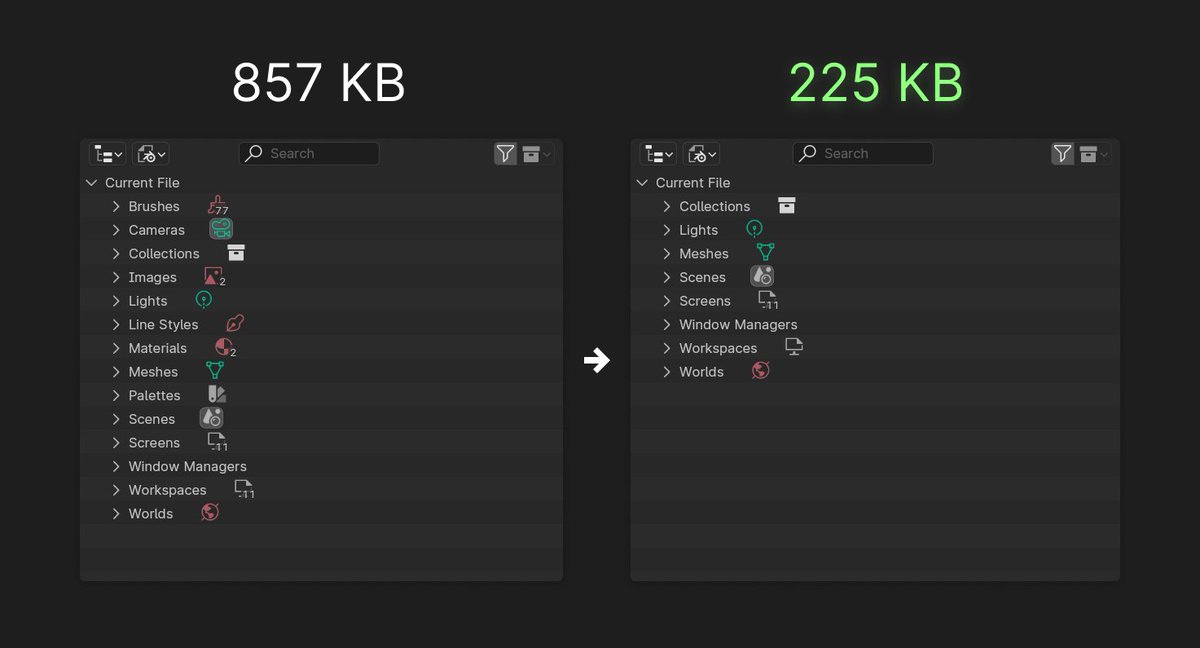
If you're putting Blender files into source control you might want to prune all the extra bits the default startup file comes with.
Outliner > Blender File
The new game we are making at @offElectric will be the same shit you've seen 1000x before. Nothing original. Kill a bunch of guys in a room and get a stupid upgrade.