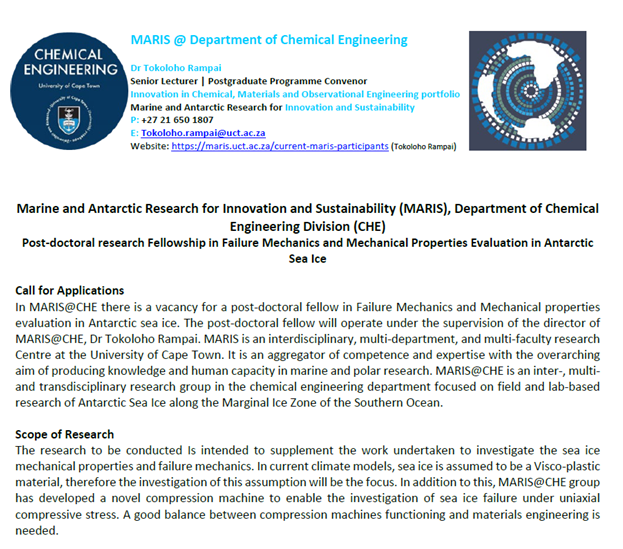
📢Job Opportunity:
Postdoctoral Research Fellowship in Failure Mechanics & Mechanical Properties Evaluation in Antarctic Sea Ice (1.5 years) with @MARIS_UCT & Chemical Engineering @UCTEBE
➡️View Advert: https://t.co/WnSJ7LpBtQ
➡️Deadline: 13 June 2025
Apply Now!
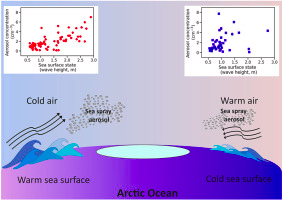
🚨📰 In this international project 🇨🇭🇦🇺🇬🇧 we explored links between atmospheric aerosols and sea state in the #ArcticOcean📰🚨
One of the few times I look #North 🐻❄️ 📷📷🌊🧊
https://t.co/ANr5wTFcIE
🚨📰 Modulational instability of nonuniformly damped, broad-banded waves out on @PhysRevFluids 📰🚨
https://t.co/NOW24MmEqk
Thanks to @rstuhlmeier for pursuing the idea of applying the spatial Zakharov equation to waves in sea ice 🌊🇦🇶
#BFI#MI#waves
🚨📰 🇦🇶Happy to see this work by Noah Day on identifying the Marginal Ice Zone out in @JGROceans 🇦🇶📰🚨https://t.co/WRM66DCRhJ
It was great hosting Noah at @UEAResearch while we worked on some of it
Great international collaboration 🇮🇹🇬🇧🇿🇦🇦🇶
Using the physics-based Close-Packed model we get #seaice thickness from #wave attenuation in the MIZ.
The calibration parameter is universal (#Arctic and #Antarctica). The model works particularly well with swell alone 🌊🧊
Take a look at the latest paper by @AlbeSquared, @MarcelloVichi , and me! "Estimation of Antarctic sea ice thickness through observation of wave attenuation."
https://t.co/eKTzU9gPyi
PUBLIC LECTURE: From Beer Tapping to Volcanic Eruptions and Supernovae: The Physics of Mass Transfer 🌋
This talk will be given by Dr Javier Rodriguez, at 6pm in the TPSC Lecture Theatre, next Thursday 11th July and will be followed by a drinks reception.
https://t.co/o3cjfOYrti
A new study gets close to understanding where rogue waves come from + how to predict them.
"Our findings challenge previous thinking: that self-amplification doesn’t change the likelihood of rogue waves in the ocean," writes Alessandro Toffoli (@UniMelb). https://t.co/eaP6QKtedF
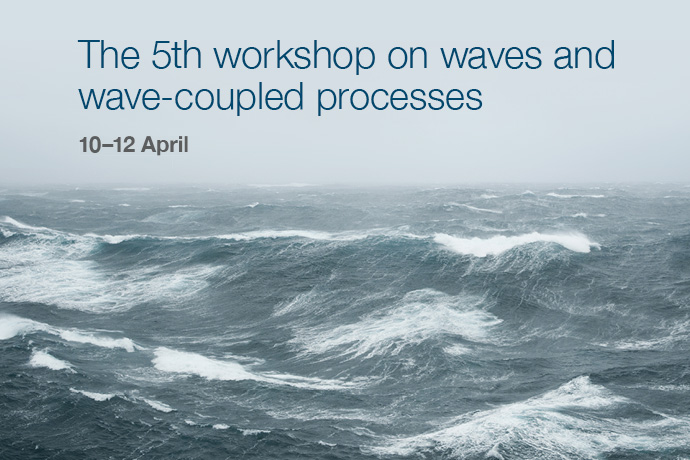
Ocean waves play a critical role in the Earth system: they affect many surface exchanges and act in both atmospheric and oceanic boundary layers. Find out what happened at a recent workshop on waves and wave-coupled processes held at ECMWF ➡️ https://t.co/XLePIbwq0c
#5thWSwaves
A new study gets close to understanding where rogue waves come from + how to predict them.
"Our findings challenge previous thinking: that self-amplification doesn’t change the likelihood of rogue waves in the ocean," writes Alessandro Toffoli (@UniMelb). https://t.co/0IZeM4Za2L
A new study gets close to understanding where rogue waves come from + how to predict them.
"Our findings challenge previous thinking: that self-amplification doesn’t change the likelihood of rogue waves in the ocean," writes Alessandro Toffoli (@UniMelb). https://t.co/wQkFmaTD3v
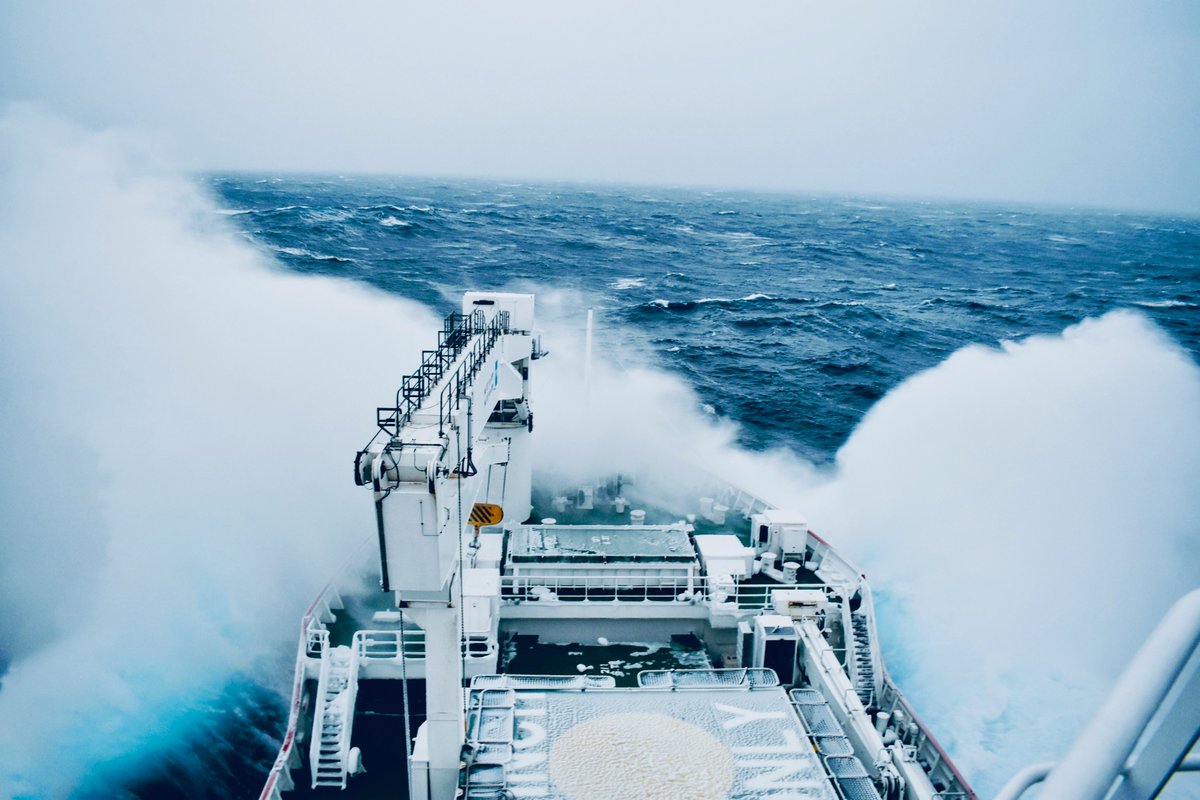
⛴️A @UniMelb expedition to the southernmost waters encircling Antarctica has discovered that wind drives the formation of colossal rogue waves, and that these unpredictable waves occur more frequently than scientists had previously thought
https://t.co/O5BmsVBV05
Congrats @AlessandroTof11
Beautiful description of challenging Southern Ocean encounters:
Rogue waves in the ocean are much more common than anyone suspected, says new study https://t.co/eYaSlqqmvB via @ConversationEDU






![Rainmaker1973's tweet photo. How a book written in 1910 could teach you calculus better than several books of today
[Full text: https://t.co/55dkZAeGmv] https://t.co/0OZIHcIZwo](https://pbs.twimg.com/media/GSbqRSpWMAEJCs8.jpg)