Someone recently asked me: “Why read books when the AI can just summarize them?"
I think it’s a fair question. And my honest answer is: the summary was never the point.
Reading is a sustained encounter with another mind. 300 pages of someone's thinking pressed up against your thinking, for hours, over days.
A summary gives you the conclusions. But conclusions are cheap.
What's expensive & rare & precious is the shape of the thinking that got there.
You cannot compress that, you can only sit with it.
.@ericries explains why former Costco CEO Jim Sinegal refused to raise the price of everything in the store by $.03, despite the fact that Costco knew it wouldn't decrease sales, and would increase their net income by 50%:
"He says, 'It's like the business equivalent of taking heroin. You do it once, and then you got to do it again, and again, and again. Next thing you know, you're not the low-price leader.'"
"You can get away with screwing people over. You always do it, no matter what. You raise margins. Margins are a source of strength."
"But Costco is built on a very different philosophy, which is that margins can be a source of weakness. @JeffBezos understood it. He used to always say, 'Your margin is my opportunity.'"
"When you're making too much money, when you are being too extractive, you're actually harming your competitive position in the long run."
@AlexMaushammer@PolymarketTrade 100%
Trading always has been and always will be a PVP game.
Many participants are dishonest about this, but it's a fact:
- Long term investing: Positive sum (everyone can win)
- Trading: Zero sum (for every winner there's a loser)
Economics in four short lessons:
1. Value is subjective
2. People respond to incentives
3. Knowledge is dispersed and coordinated by markets
4. There are no solutions, only trade-offs
More than words, companies communicate through design and engineering
Things like:
- whether this was built with love and care
- what caliber of talent you are able to recruit
- how high your standards are
…all come through loud and clear when people use the product
Triple Lock needs to be replaced with a single lock indexing the State Pension to average earnings growth. It will be far more sustainable and give pensioners more of a stake in productivity gains.
Yes. A few miscellaneous thoughts.
(1) First, the new bottleneck on AI is prompting and verifying. Since AI does tasks middle-to-middle, not end-to-end. So business spend migrates towards the edges of prompting and verifying, even as AI speeds up the middle.
(2) Second, AI really means amplified intelligence, not agentic intelligence. The smarter you are, the smarter the AI is. Better writers are better prompters.
(3) Third, AI doesn’t really take your job, it allows you to do any job. Because it allows you to be a passable UX designer, a decent SFX animator, and so on. But it doesn’t necessarily mean you can do that job *well*, as a specialist is often needed for polish.
(4) Fourth, AI doesn’t take your job, it takes the job of the previous AI. For example: Midjourney took Stable Diffusion’s job. GPT-4 took GPT-3’s job. Once you have a slot in your workflow for AI image gen, AI code gen, or the like, you just allocate that spend to the latest model.
(5) Fifth, killer AI is already here — and it’s called drones. And every country is pursuing it. So it’s not the image generators and chatbots one needs to worry about.
(6) Sixth, decentralized AI is already here and it’s essentially polytheistic AI (many strong models) rather than monotheistic AI (a single all-powerful model). That means balance of power between human/AI fusions rather than a single dominant AI that will turn us all into paperclips/pillars of salt.
(7) Seventh, AI is probabilistic while crypto is deterministic. So crypto can constrain AI. For example, AI can break captchas, but it can’t fake onchain balances. And it can solve some equations, but not cryptographic equations. Thus, crypto is roughly what AI can’t do.
(8) Eighth, I think AI on the whole right now is having a decentralizing effect, because there is so much more a small team can do with the right tooling, and because so many high quality open source models are coming.
All this could change if self-prompting, self-verifying, and self-replicating AI in the physical world really gets going. But there are open research questions between here and there.
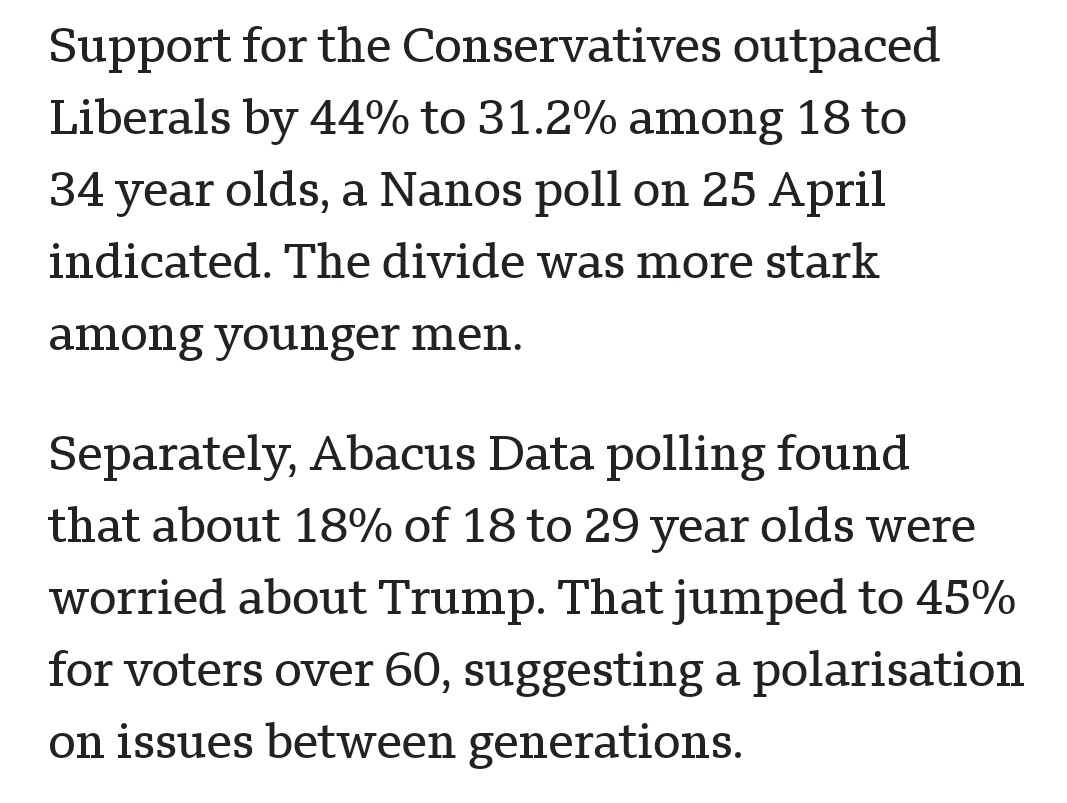
Peter Thiel on why 70% of Millennials say they are pro-socialist:
“When one has too much student debt or if housing is too unaffordable, then one will have negative capital for a long time… and if one has no stake in the capitalist system, then one may well turn against it.”
GOOD.
He's the Prime Minister of a country which is the 6th largest economy in the world and a nuclear power.
I'm sick of this idea that we should have our leaders schlepping around on buses or in economy class.
New product initiatives within large companies often fail to achieve their potential because they have too much rather than too little.
They have too much:
1) Headcount
You are now under pressure to come up with something for all these people to do. Especially in cultures where “engineers must always be coding” and a PM is seen as failing if engineers are even briefly “blocked on requirements.”
2) Democratic decision making
Creative ideas get killed (or watered down) by groups — yet this is the default in most big companies, even those that claim to use RAPID or similar frameworks.
3) Optics requirements
You must now manufacture metrics and milestones to show straight-line progress and demonstrate certainty — during what is, by its very nature, an uncertain journey.
4) Involvement of the “core” product group
To appease the leaders of the company’s cash cow, you make compromises that weaken your product. These leaders have the most power within the company and some may even try to confuse the CEO or quietly sabotage your initiative.
5) Reliance on the company’s distribution
Due to the mirage of distribution, you won’t be incentivized to deeply understand your customer like a real startup would. Your initial traction is misleading — you get a usage spike, but:
(a) those users are scattered across segments, not your core segment (have you even identified that core segment?)
(b) what’s given will be taken away — that homepage slot for your new product will disappear next quarter due to VP jealousy or shifting OKRs (with some hand-wavy “metrics neutral” excuse).
So if you are leading a new initiative within a larger company and your CEO/CxO asks you what you need to succeed, do not default to the answer that everyone in this situation gives: “I need more resources”.
Instead, consider asking for less — less reporting, less certainty, less consensus-driven decision making, less meddling, and less pressure to build out a “full team” & great operations early on. If your CEO is competent, they’ll respect it.
(clearly, this entire post is only for the intrepid product leaders who want to make winning products, it is not for everyone 🙂)
Collectivism kills.
When people are collectively demonized, they're no longer seen as individuals with rights and dignity of their own. They become stand-ins for whatever evil their group is accused of. From there it follows that they deserve to suffer for it, even if they've done nothing wrong themselves.
This is what produced the Holocaust, the Rwandan genocide, Stalinist purges, Mao’s Cultural Revolution, etc. The depraved logic of identity-based collectivism leads to violence by design.
Ever Jew becomes a “Zionist occupier.” Every white man becomes a “colonizer.” Once that framing is accepted, violence becomes virtue.
The antidote to this poison is not more tribalism, but the repudiation of it.
Depopulation is not salvation.
100,000 humans are entirely capable of ecological mass destruction — as history has already shown.
We do not help life by becoming small.
We help life by becoming wise.
Speed matters far more than predictability. Optimize for predictability and the world predictably grinds to a halt.
(I’m speaking here in context of corporate earnings, schedules, etc. Obviously not about airplane safety.)
@bscholl The world is optimized just not for the values you want.
Generally speaking the corporate world writ large has chosen to sacrifice speed for predictability.
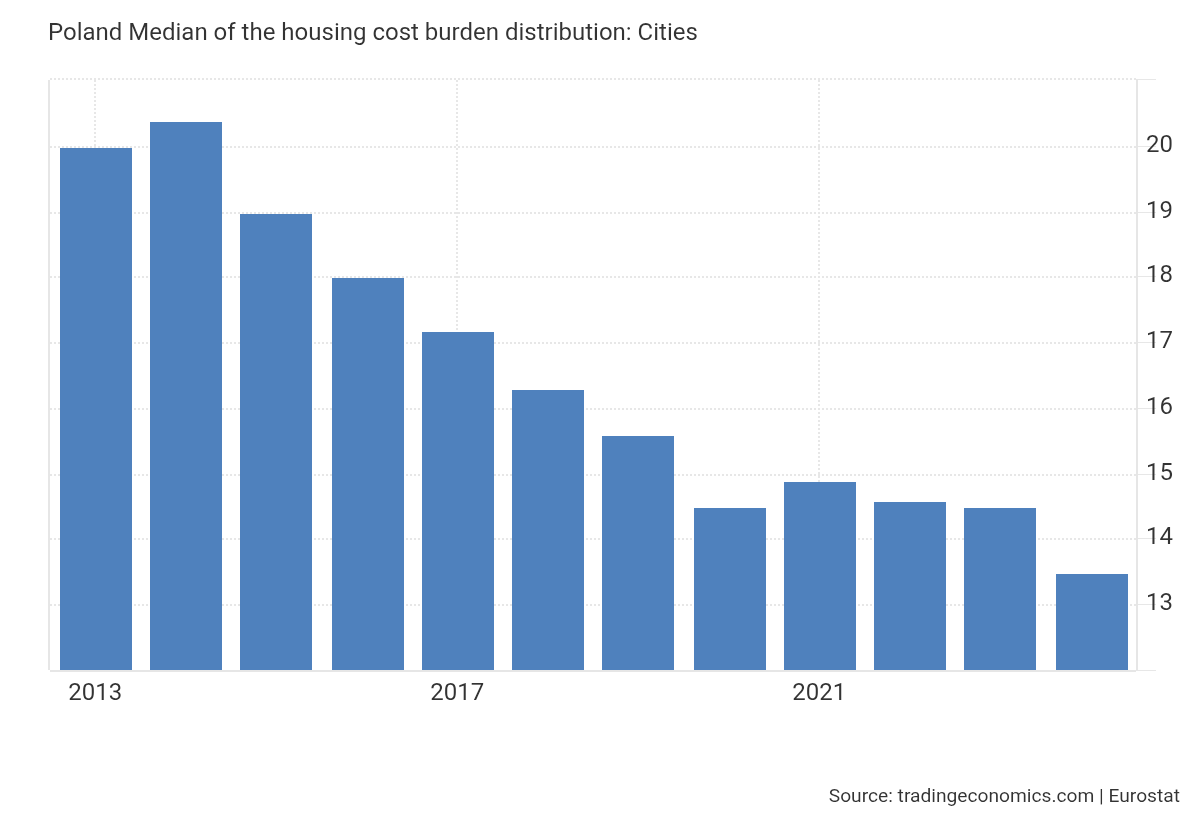
nobody in Europe is talking about the polish housing supply miracle.
The median household in polish cities (!) now only spends 13% of their income on housing.
They build about 200k units a year for a 36 million people country.
All the people whining that @colossal didn't create dire wolves because they actually just spliced 10,000 year old dire wolf DNA with gray wolves should spend their time arguing that Jurassic Park did not, in fact, depict any dinosaurs.