How do legumes decide to fix nitrogen - and can we engineer them to do it better?
That's the question I've been chasing across three continents. New site is up
👇 https://t.co/r95vNppUdh
@slcuplants@Cambridge_Uni
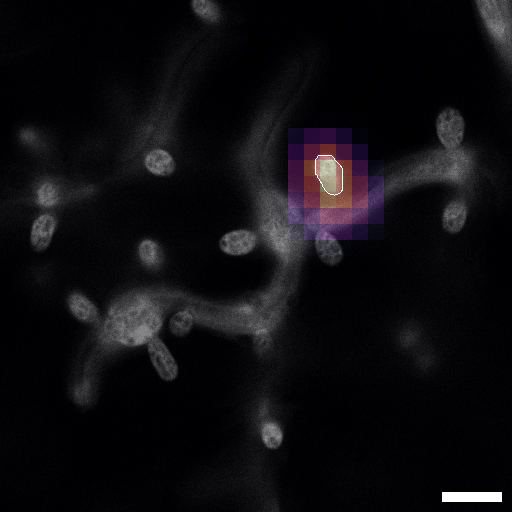
Deep learning meets plant pathology.
HFinder enables automated detection and digitization of plant-microbe infection interfaces from microscopy images.
Preprint available on bioRxiv:
https://t.co/gStbKvtAAB
[1/6]🌱 New in MPMI:
When Mutualism Turns Parasitic - How Alfalfa Controls Cheating Rhizobia. Not all rhizobia fix nitrogen. Some cheat. So how do plants protect their symbiosis?
A new study - and our commentary - reveal the answer.
🧵⬇️
📘PCP latest Research Highlight 2/3
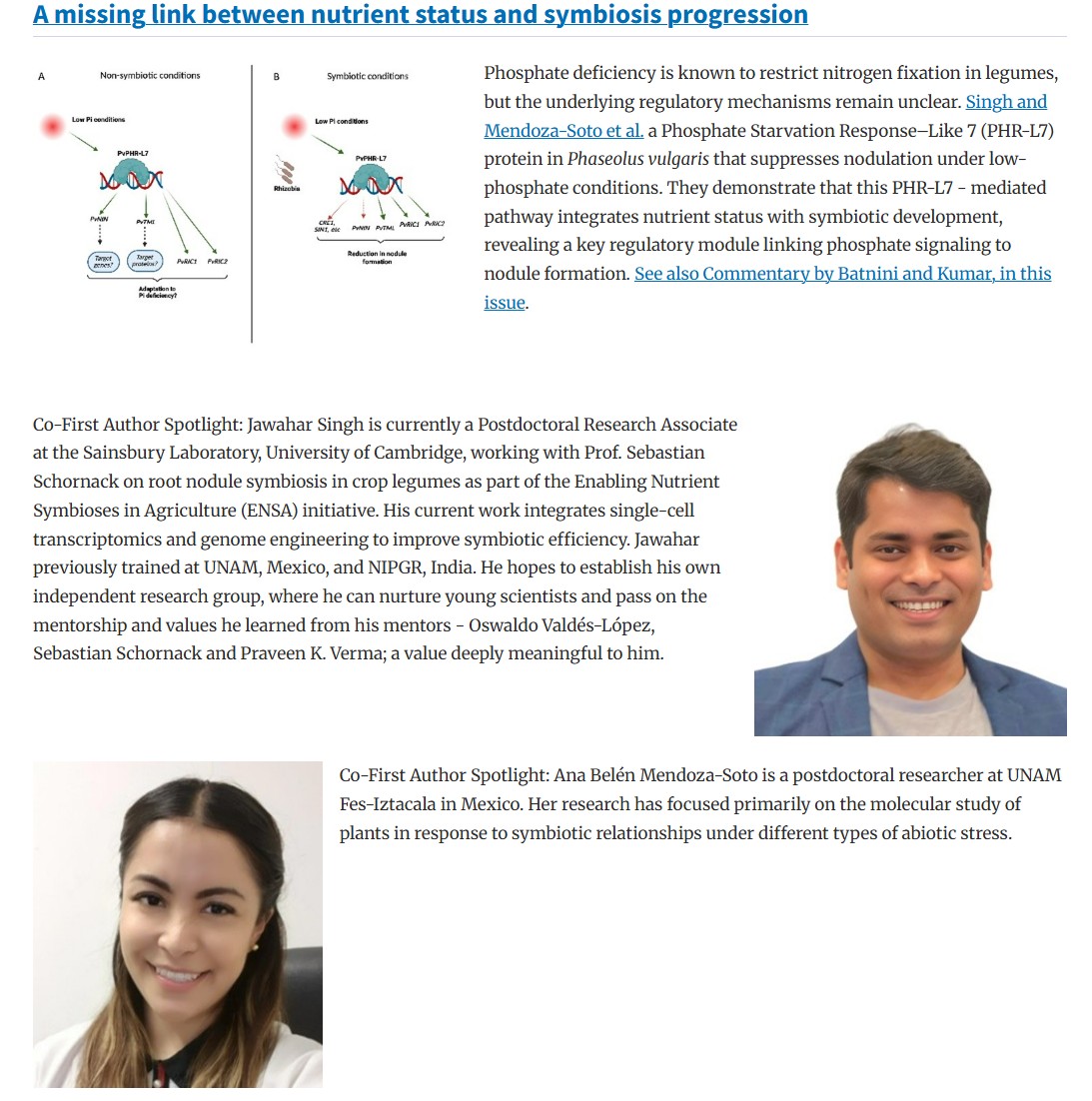
"A missing link between nutrient status and symbiosis progression"
✨First Authors Spotlight:
Jawahar Singh & Ana Belén Mendoza-Soto
Read Article on: https://t.co/80MWIeO7rP
Read Commentary on: https://t.co/dWi5csvfse
#Plantsci@JSPP_news
For exceptional UK 'home' student applicants only:
Well funded (est. £31,000/yr) 4-yr DTP PhD project @slcuplants@Cambridge_Uni with Sarah Robinson & @dromius
DIY Plant Walls: Engineering Plant Cell Size and Material Strength using Fungal Proteins
https://t.co/Zr7CzKCQHO
New opportunity to join our #EvoMPMI group @JohnInnesCentre as a Postdoctoral Researcher working in the mechanistic basis of immunity in diverse plants. Please spread the word, reach out by email, and/or apply if interested! More details here: https://t.co/9sVdl9BLoS
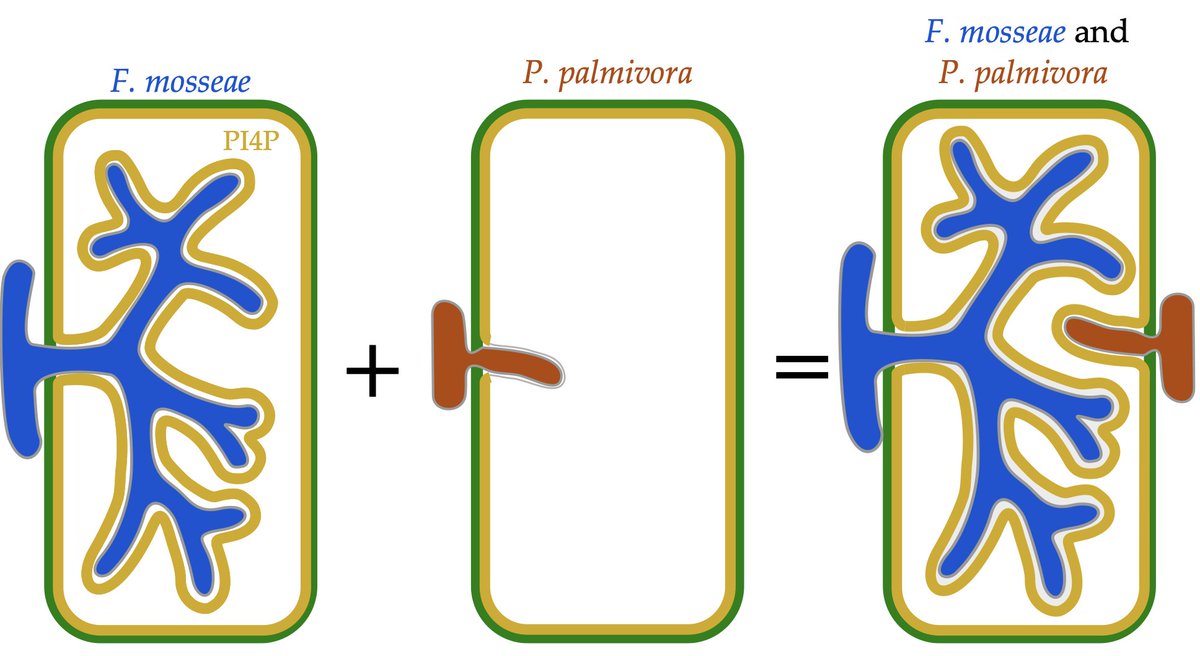
Mycorrhiza symbiosis changes how plants interact with intracellular pathogens.
New by @AlexWGuyon, @TheresaStaps, and Lyne Badot:
Mutualist-pathogen co-colonization modulates phosphoinositide signatures at host intracellular interfaces
https://t.co/LMkBXhU2hF
Read further ⬇️
1/ 🌿 Excited to share our latest MPMI Commentary:
“Tracking Rust Effector Protein Delivery into Plant Cells” by Ruby Tiwari & me.
📖https://t.co/5suJDFkcWL
It highlights a landmark study revealing how rust fungi deliver effector proteins into plant cells. 🧬
Ever seen a pumpkin under a microscope? 🎃🔬
This Halloween, Raymond Wightman & Daniel Sparrow used #microscopy to reveal:
🔬Skin detail with the #Keyence microscope
💡Beta-carotene spectral via #Raman spectroscopy
❄️Flash-frozen flesh via cryo-SEM
#HappyHalloween#Halloween
1️⃣🌱 Excited to share a new commentary by Marwa Batnini and Anil Kumar on our latest research, highlighting how phosphate-a key soil nutrient-shapes root nodule formation and nitrogen fixation in legumes.
💡 Commentary: https://t.co/bFSBDoLGfR
Salicylic acid biosensor, SalicS1, tracks the plant immune hormone salicylic acid in real time - revealing propagation of hormone surge during plant pathogen advance
Out today in @ScienceMagazine https://t.co/0lXGCLOyVs
Summary https://t.co/Z2FmNKL35O
New paper! Carnivory and mycorrhizal symbiosis are alternative ways for plants to gain nutrients. Our study, led by my former postdoc Hector Montero, shows they rarely coexist, with repeated AM losses, rare exceptions, and gene co-options.
https://t.co/yiswCQk5hf
#iMMM2025@Nick_GarciaH showing that betalain quantification reports colonisation extent by AM fungi in MycoRed plants at least within the first 3-4 weeks allowing fast quantification of the impact of chemicals and env conditions on colonisation - see also https://t.co/pAdKtZSz8n
We were delighted to welcome local MP and Farming Minister @DanielZeichner MP from @DefraGovUK to the @slcuplants, to explore Cambridge's exciting Agri-Tech and crop science research.
More about the visit 👉 https://t.co/mNVfViqJ68
#ENFC2025 MtEPP1 (Medtr3g099200) was one of the most highly and consistently phosphorylated proteins (2.7-fold change), on Ser77. - Novel Positive Regulator of the Early Stages of Root Nodule Symbiosis Identified by Phosphoproteomics https://t.co/fIOtXvzkxk
#ENFC2025 @kathschiessl @slcuplants on how symbiotic root nodules form in comparison to lateral roots - anticlinal cell divisions shape the early nodule primordium (vs periclinal in the lateral root)







![IamJawaharSingh's tweet photo. [1/6]🌱 New in MPMI:
When Mutualism Turns Parasitic - How Alfalfa Controls Cheating Rhizobia. Not all rhizobia fix nitrogen. Some cheat. So how do plants protect their symbiosis?
A new study - and our commentary - reveal the answer.
🧵⬇️ https://t.co/ai5lGR2KlE](https://pbs.twimg.com/media/G-PYWQLWoAEEBjB.jpg)