Ojo con esta estadística del SP500.
Cuando aparecen sesiones con más del 80% del volumen de la NYSE siendo bajista, históricamente el comportamiento posterior no ha sido especialmente bueno en el corto plazo.
En las 8 señales anteriores:
📉 A 1 mes: +0,2% de media, pero solo el 25% de las veces fue positivo.
📉 A 2 meses: -1,2% de media y solo un 25% de ocasiones en positivo.
📉 A 3 meses: -0,7% de media.
No significa que el mercado tenga que caer.
Pero sí sugiere que, tras una señal como la actual, el riesgo de una corrección en los próximos 2-3 meses aumenta. Pero después, una recuperación fuerte en promedio.
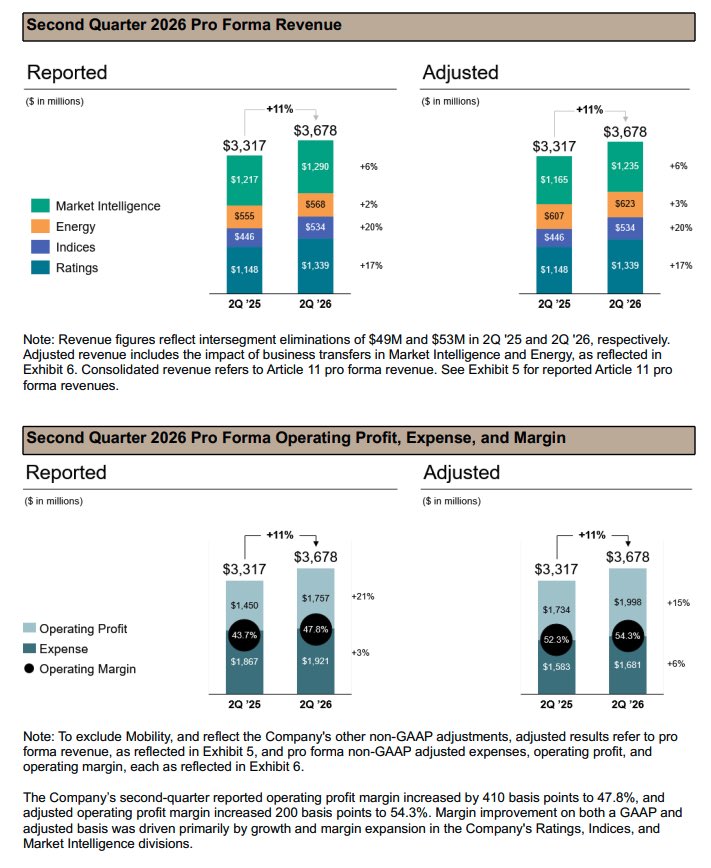
S&P Global $SPGI Q2 2026 Report 🗓️
✅ REV: $4.15B (+10% YoY)
✅ EPS: $4.83 (+23% YoY)
Excluding Mobility👇🏽
✅ REV: $3.68B (+11% YoY)
✅ EPS: $4.08 (+26% YoY)
💰 Ratings $1.34B (+17% YoY)
💵 Market Int $1.29B (+6% YoY)
💵 Energy $568M (+2% YoY)
💰 Indices $534M (+20% YoY)
In Q2, Repurcachased $500M ($1.5B YTD) in shares and expects to repurchase more than $7B in shares total in 2026 (5% of the company)
Una de las primeras cosas que he hecho, ahora que estoy con más tiempo, es repasar bien Constellation Software. $CSU
No solo sus números, que ya los conocía, sino sus cartas.
Y cuanto más lees a Mark Leonard, más claro ves que Constellation no es solo una empresa que compra software vertical.
Es una cultura entera construida alrededor de una idea muy sencilla y muy difícil: reinvertir capital durante décadas sin volverse idiota por el camino.
Por ello es mi principal posición y he ido ampliando todo lo que he podido en las caídas
Hilo 🧵
$1 invested from 1802 to 2021 adjusted for inflation would turn into:
📈 Stocks: $2,334,900
💵 Bonds: $2,163
💰 Bills: $245
🥇 Gold: $4.06
💸 Dollar: $0.04
Stocks for the long run.
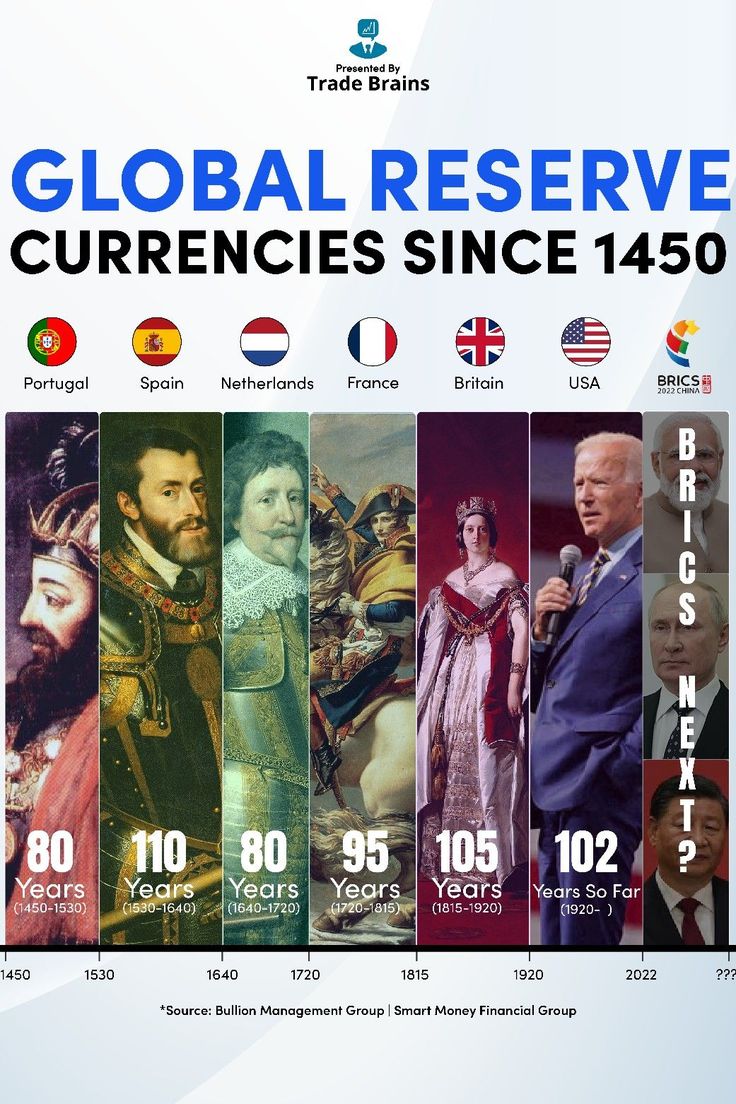
Global Reserve Currencies Since 1450 🏛️
🇵🇹 Portugal — 80 Years (1450–1530)
🇪🇸 Spain — 110 Years (1530–1640)
🇳🇱 Netherlands — 80 Years (1640–1720)
🇫🇷 France — 95 Years (1720–1815)
🇬🇧 Britain — 105 Years (1815–1920)
🇺🇸 USA — 106 Years (1920–Present)
History suggests that global reserve status usually shifts every 80 to 110 years.
I keep coming back to how good this whole “financial tollbooth space” is. Businesses companies like $SPGI, $MCO, $MSCI, and $FICO all embedded in the system and take a small cut every time money moves or decisions get made. Since they are asset light and don’t require much capital, a lot of the revenue turns into cash and it is a great economic model.
$SPGI and $MCO are great because they’re tied to credit markets. If companies want to issue debt or investors want to understand risk, they’re part of that process. It’s hard to replace them once they’re embedded.
$FICO is similar in terms of quality. It has a very strong position and great economics, but it’s closer to the consumer so when it pushes pricing too hard, attract unwanted attention. It’s still a great business, just a bit more exposed.
$CME is a different kind of tollbooth. It doesn’t charge for data or ratings, it charges for activity. Every time someone trades futures or hedges risk, $CME takes a cut. The beautiful part is that volatility actually helps them. When markets get messy, volumes go up, and so does revenue. So instead of being hurt by uncertainty, they benefit from it.
There are more businesses in this category like $ICE, $LESG, $NDAQ, etc.
But $MSCI is the one that stands out to me. On paper, the numbers might look similar, but the type of pricing power is different. $MSCI doesn’t charge individuals or even single institutions in a meaningful way. Its fees are spread across trillions of dollars tied to benchmarks, so almost no one feels the increase directly. That makes its pricing power less noticeable, and because of that it’s better and more durable.
What’s interesting is the meaningful insider buying stock in the open market at prices not far from where it trades today. That’s not something you see often in already well understood, high quality businesses.
So I really do think this financial tollbooth space is a great place to invest. $SPGI, $MCO, $CME, and $FICO are all excellent. But even with all that, I still come back to $MSCI as my favorite. The pricing power is just more elite. Fees are spread across trillions tied to benchmarks, so no one really feels them, and flows come automatically through passive investing and asset allocation. It’s simple, embedded, and very extremely hard to disrupt.
🌹
"Es una de las mejores empresas del mundo y es mi mayor posición en cartera."
@VanguardEconomy lleva años siguiendo $MSCI.
Así gana dinero, por qué su negocio es ultra resistente y qué está haciendo su CEO que casi nadie está viendo.
Sometimes investing just needs to be simplified
Want S&P 500 exposure?
Buy $VOO
Want the Total US Market exposure?
Buy $VTI
Want Big Tech exposure?
BUY $QQQ
Want Dividends?
Buy $SCHD
Want High-Yield?
Buy $VYM
Want REITs?
Buy $VNQ
A simple ETF is sometimes all you need
Warren Buffett: "Cuando tenía 11 años elegía acciones. Estaba totalmente equivocado. Me interesaba mirar las acciones, pensaba que eran cosas que subían y bajaban. Leí todo sobre análisis técnico. Y después encontré a Benjamín Graham y entendí que estaba haciendo las cosas de la forma equivocada"
"Desde ese momento no he vuelto a comprar una sola acción. Compro negocios. Me convierto en dueño de ellos y no me importa lo que hagan sus acciones a la siguiente hora, día o semana. No sé lo que harán las acciones, pero sí puedo saber lo que harán los negocios."
Se han dicho ya tantos disparates sobre la condena al Fiscal General del Estado que creo necesario aclarar algunas cosas.
¿Queréis huir de todo ese ruido y saber qué ha ocurrido realmente? Pasad y leed.
Dentro hilo 🧵