*New draft alert* #EconTwitter
Experiments + machine learning are changing the way we measure effect heterogeneity in policy settings.
https://t.co/FvhfTQg6HM
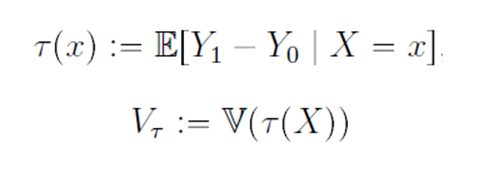
My paper proposes the first valid confidence intervals for the VCATE, the treatment effect explained by observables.
Calling all aspiring data scientists seeking impactful careers!
Join our virtual information sessions to explore how Emory's 12-month STEM-designated Master's in Data Science equips you with advanced skills in AI, Machine Learning, and Statistical Modeling.
Scan the QR to join today's live info session, and see how the Data Science MS at Emory can enhance your education and propel your career in just 10 months!
@EmoryDataSci, @EmoryEconomics, and @emory_sociology proudly hosted an international & interdisciplinary workshop on Causal Network Analysis on August 14, 2025 @EmoryUniversity. With 15 presentations & a keynote talk by Prof. Tom Valente (USC), the day was a splendid success!
BREAKING NEWS
The Royal Swedish Academy of Sciences has decided to award the 2024 Sveriges Riksbank Prize in Economic Sciences in Memory of Alfred Nobel to Daron Acemoglu, Simon Johnson and James A. Robinson “for studies of how institutions are formed and affect prosperity.”
#NobelPrize
I've posted a review article on deep learning for economists https://t.co/GzSaN2773U. The DL literature is vast, and I initially found it pretty daunting to find the parts of it that are most relevant to economic applications. I hope people will find this useful! #econtwitter
@AngYu_soci Covariates may not necessarily be predictive, even if all other assumptions are correct. You can quantify the level of heterogeneity predicted by covariates more explicitly, as I discuss here https://t.co/NHSPZIcE21. Code in beta version for experimental settings.
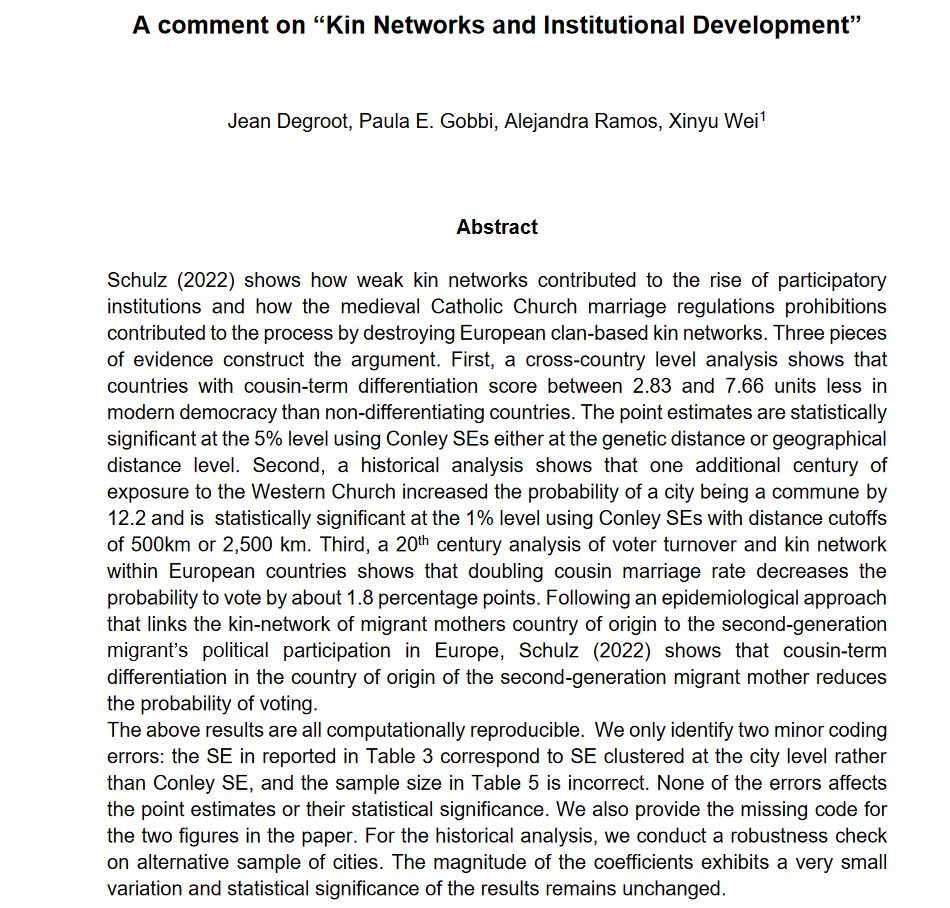
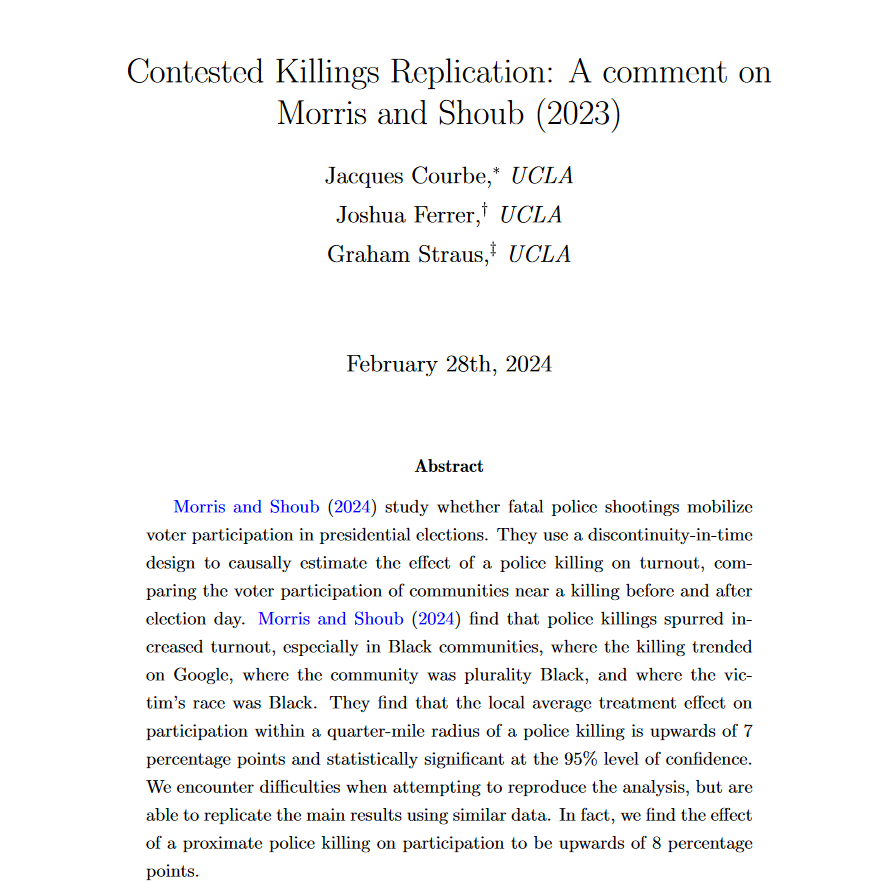
Excited by the work of @I4Replication regarding replications of existing articles. This type of exercise is important for enhancing the scientific process.
@clintmharris1 When you construct a weighted average you might reduce uncertainty and have lower standard errors. But it your standard error estimates are correct, your coverage should still be at the intended level. Now, I do agree that estimating weights using data could introduce issues.
@clintmharris1 Good points! It seems like you have some type of index strategy in mind. The multiple comparisons corrections that I’m familiar with try to correct the family wise error rate (FWER), which means that in practice they inflate the critical values, not decrease them.