Catching the next 100x is a full time job, and most people are losing it.
Insider info you do not have, bots that are faster than you, a bunch of telegram alert look suspicious, and copying a wallet you hope belongs to who you think it does.
A baskt is the opposite of that.
You see every token inside it, who put it together, how much of their own money they have in it, and how it has done since launch.
The curator is economically incentivized to make you win.
Then you buy the whole thesis in one transaction.
Mainnet SOON.
Genesis Campaign is LIVE
JOIN NOW
An index protocol where the curator is public, the fee is in the code, and the exit cannot be closed.
Wrote up how all of it works. https://t.co/4rn2pkvp5N
JUST IN: China’s Ministry of State Security says crypto anonymity is an illusion
The ministry has warned that digital assets do not provide criminals with a legal escape or guaranteed anonymity.
I just pre-registered for BASKT Genesis by @onchainbaskt. Meme indices on Robinhood Chain.
Pre-register with my link and start with a 10% bonus on your Genesis Points.
https://t.co/8mS3aIlknY
#BASKTGenesis
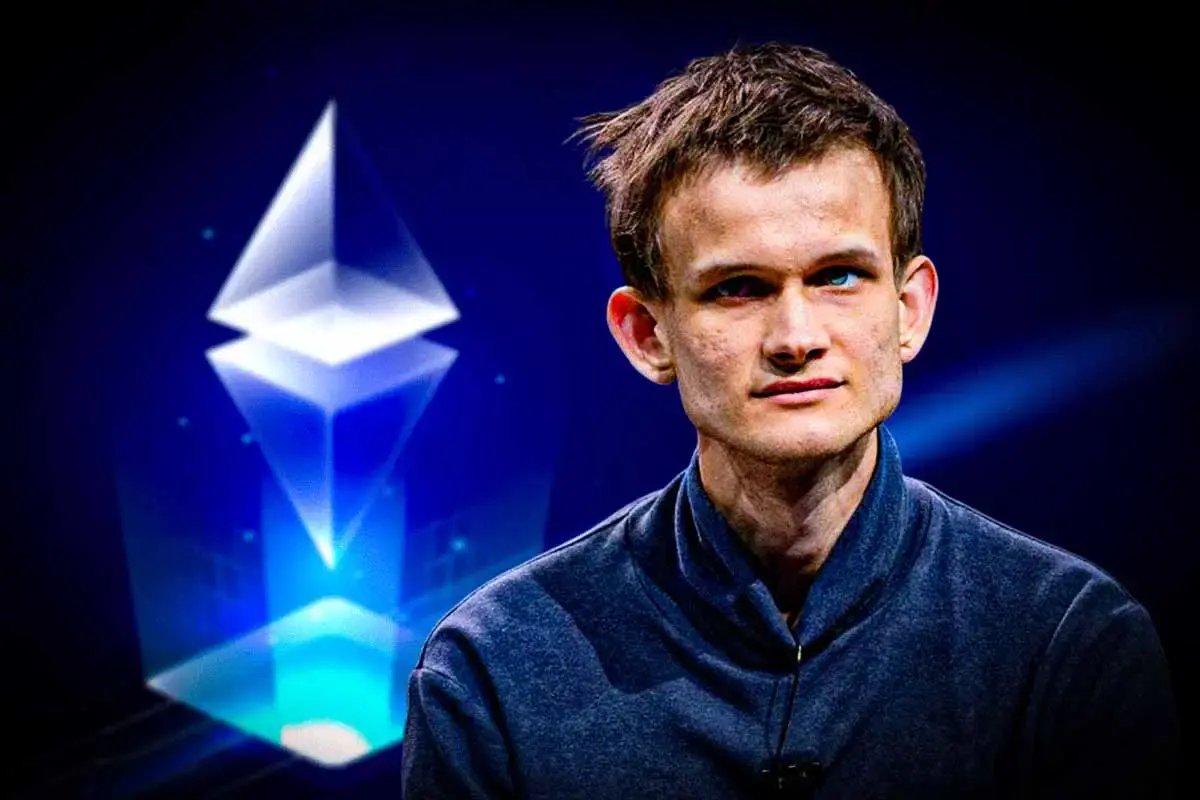
Vitalik: Ethereum is Becoming More Than a Blockchain
Speaking at the 2026 Shanghai Blockchain International Week, Ethereum co-founder Vitalik Buterin shared a broader vision for where Ethereum is heading.
His main point: Ethereum is evolving from a blockchain that executes everything into a global system focused on computation, privacy and verification.
Here are the key ideas:
1/ ZK is becoming the foundation → Instead of every node doing the same computation, users or other systems can do the work and generate a proof. Ethereum only needs to verify that proof.
2/ Privacy becomes programmable → Vitalik said blockchain is moving beyond simply answering “Who can send what?” The next question is “Who can see what?” This means applications could control which information is visible without exposing everything publicly.
3/ Scaling through proofs → Complex computations can be split, processed in parallel and compressed into proofs before being verified on Ethereum. This could allow much more computation without putting all of it directly on-chain.
4/ Ethereum becomes a full pipeline → Vitalik described a future involving user devices, private transaction pools, multiple participants, block construction, L2s and finally Ethereum for verification. Ethereum does not need to perform every step itself.
5/ AI changes development → AI can help developers write, test and formally verify increasingly complex cryptographic systems. Vitalik believes this can make advanced Ethereum infrastructure both faster to build and more secure.
6/ Quantum resistance matters → Ethereum is also moving toward quantum-safe cryptography, with STARK-based systems playing an important role in the longer-term roadmap.
Ethereum's future may not simply be about making the L1 faster.
It is about building a trust layer where computation can happen anywhere, privacy can be programmed, and complex results can be mathematically proven and verified on-chain.
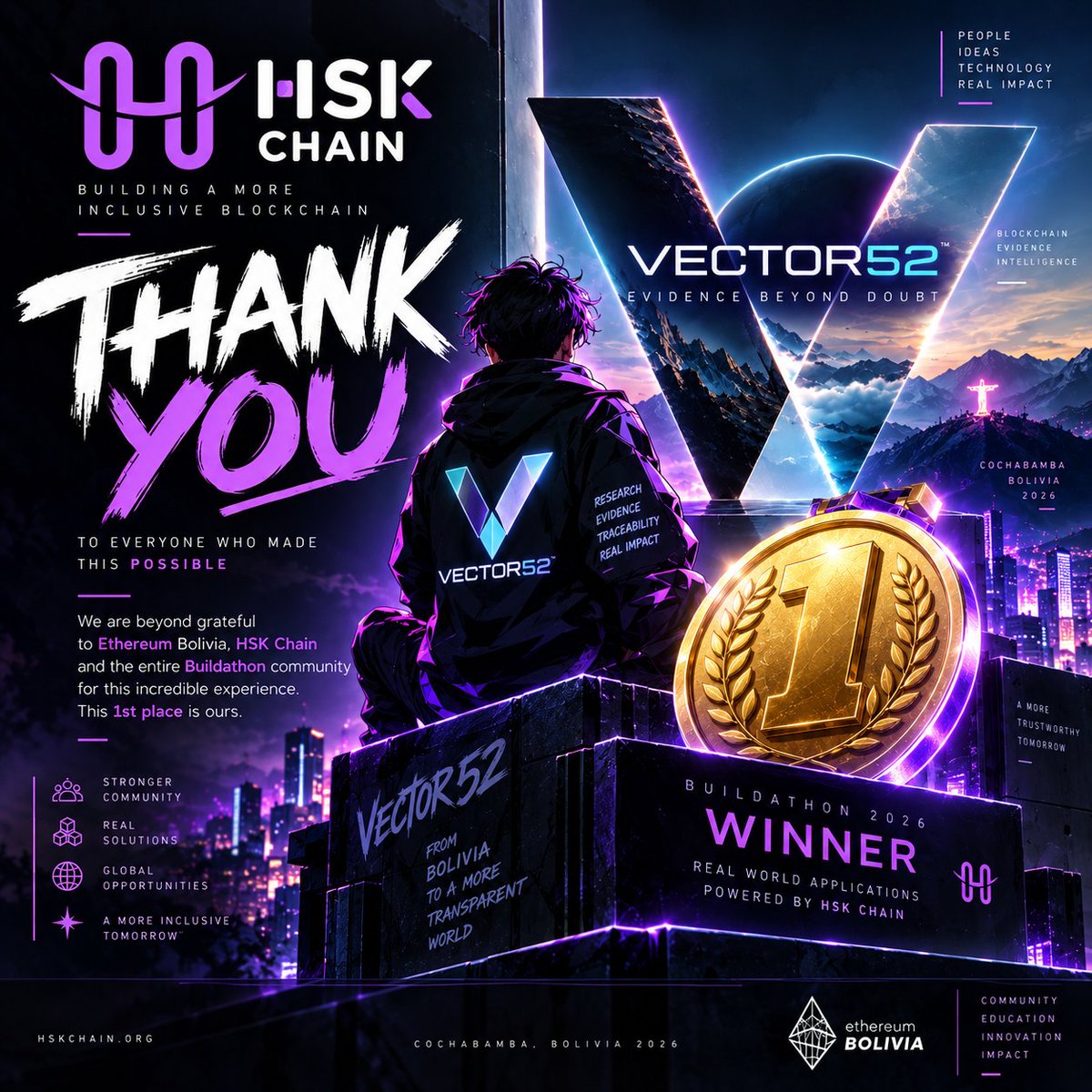
🌐 ¡Ganadores del Track HSK Chain! 🟣⚡️
Felicidades a los 3 proyectos que destacaron construyendo e integrando soluciones sobre @HSKChain en la Buildathon 2026:
🥇 Vector 52
🥈 Obra Clara
🥉 Kuska
¡Gracias HSK Chain por impulsar el talento de la comunidad! 🙌 🇧🇴🚀
The EF Protocol teams are hosting a Reddit AMA on September 16.
This is your chance to ask EF Protocol researchers and devs directly.
Submit your questions about post-quantum Ethereum, L1-zkEVM, formal verification, the future of state, finality, privacy, and more now!
🔗↓
It's possible that a killer app of adversarial governance mechanism design theory will end up being AI safety.
Compare:
https://t.co/w2LeAoVysF
https://t.co/dZXnORP9LU
There's a deep duality between the two environments. Both are about a less-sophisticated principal trying to get ideal outcomes from a set of more-sophisticated agents: in the first case, the principal is a static algorithm and the agents are humans, in the second case, the principal is humans plus weaker LLMs and the agents are stronger LLMs.
A key finding was that you can achieve much better outcomes if you can guarantee limits to how much agents can collude (see: Nash equilibria being abundant, vs. cooperative-game-theory "cores" often being empty). That argument should naturally transfer to this new setting.
A lot of important progress on Frames (EIP-8141) has been quietly happening over the last few months. Highly recommend reading this, also the updated EIP https://t.co/jYqeS55j6P
https://t.co/CPYONKnWZc
Of all the use cases for GPT-6 Astra, I'm most excited for scientific discovery. We at @OpenAI have not pushed it to its limits on math and science.
I look forward to waking up every morning and seeing what new scientific breakthrough someone has made with this model!
@CriptoNoticias “Lamentamos informar…” no basta. En cripto, filtrar datos de clientes es una falla grave, no un simple error. Si custodias información sensible, no puedes actuar como rookie. Trezor debe explicar qué pasó, qué se expuso y cómo lo corregirá. La seguridad no es marketing.
We have been working very hard over the last two years to build ProveKit! A new zero knowledge proving toolkit built on top of Noir. It already powers the World ID protocol and makes it perform well on low end devices, is post quantum secure and fast! https://t.co/4PWyOqhT40