There are tired copy editors who work really really hard and make one innocent and mortifying mistake that becomes grist for the social media gumball machine
Will we still be in the ECHR in five years' time? Reform and the Tories want Britain out. In this week's edition I explore why - and outline the principled and practical reasons we should stay in
“Better trade relations with the EU is in our national interest,” Rachel Reeves tells The Economist’s Rachana Shanbhogue. “It would be foolish to just carry on as we are.”
Watch the full interview: https://t.co/MZwKlMKZXC
Good fact-based reporting is under pressure in our industry. Today, @nytimes publisher AG Sulzberger made his first ad, "encouraging you today to support any news organization." It's a reminder of how important this reporting is, regardless of who produces it. Have a listen here.
LLMs are living off the moral and intellectual capital of a pre-AI world, just like Nietzsche said secular liberals live off Christianity. What happens when the inheritance runs out?
Using LLMs well — knowing when to trust them, how to interrogate their outputs, what questions are worth asking — depends on capacities that are pre-LLM in origin: critical judgment, domain expertise, philosophical seriousness, taste.
People who use LLMs well right now tend to be people formed by traditions of deep reading, argument, and intellectual discipline that were not themselves produced by or optimized for interaction with language models. The tool works for them because they bring something the tool cannot supply.
Nietzsche thought secular liberals were coasting on the fumes of a Christian metaphysics they'd officially abandoned. The shadow of God lingering on the cave wall. The question is whether LLM-native thinking is the same kind of afterglow.
Why did the People's Vote campaign fail? In this edition of the TLS I review a new book which attempts to answer that question - and argue that pro-Europeans will get their way in the end
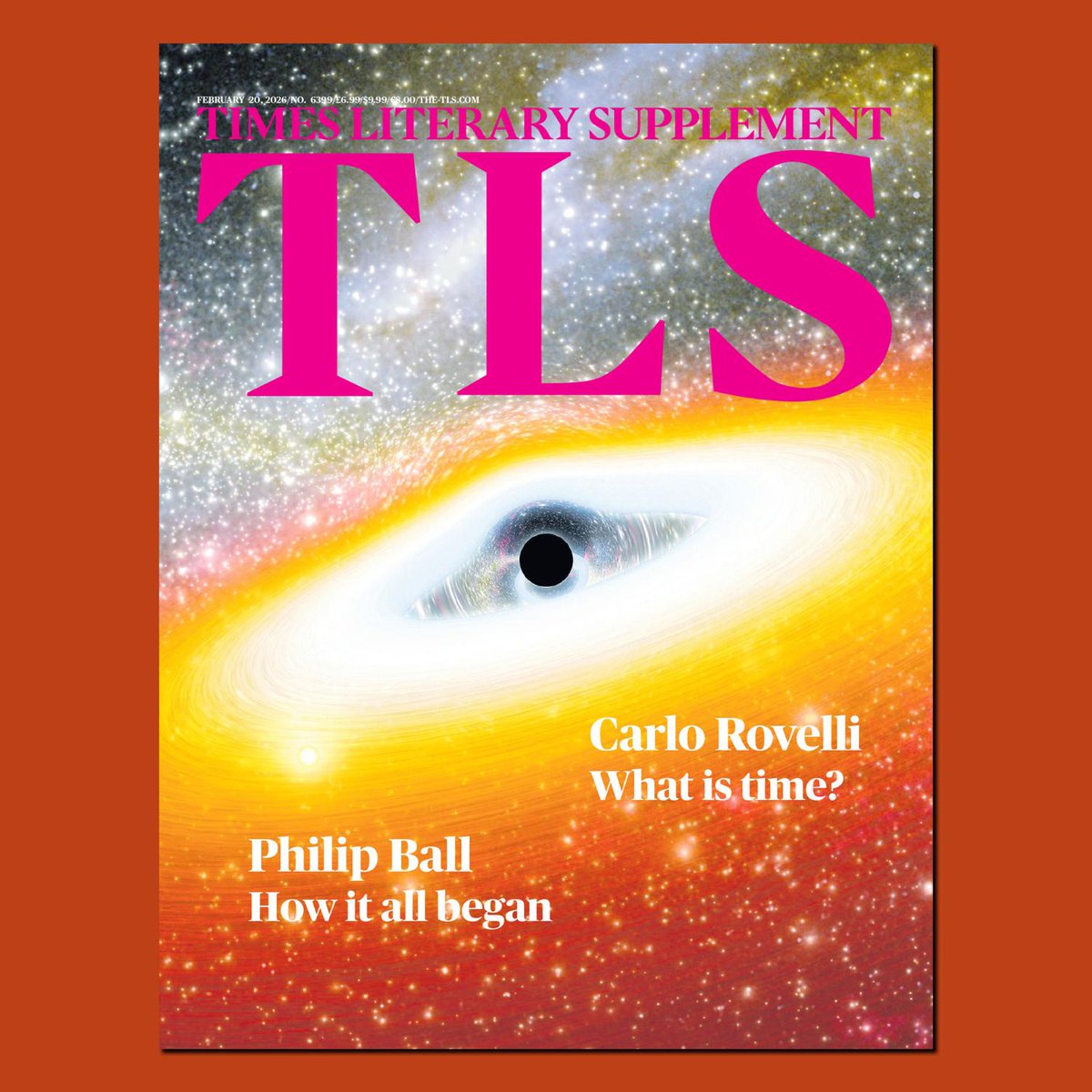
Theories of time; how Byzantium survived; Tolkien’s hobbit craft; lessons from Brexit; mastery of microbes; Faber’s full stops – and much more.
Out now: https://t.co/EJE9f1KDXn
I reviewed Anthony Gottlieb’s new biography of Ludwig Wittgenstein, the 20th-century philosopher, for the Financial Times. Over a brisk 165 pages Gottlieb captures both the logician and the mystic:
https://t.co/cteY9pL0H6
The British government's commitment to taxing the maximum political damage for unpopular decisions before changing course to abandon most of the upside is amazing. S&M Social Democracy.
How pleasingly ironic it would be for the British Broadcasting Corporation to remind Americans what the First Amendment is all about. The BBC may be about to lose a director general, but it still has a spine. https://t.co/tIcb4BxKVo
William Blackstone called juries “the principal bulwark of our liberties”. Now David Lammy, the justice secretary, wants to curtail them. What should we make of his plans?
I explore the past, present and future of jury trials in this week’s Economist:
https://t.co/jq9elYwi8h
I've written for this week's edition on Labour's plans to tighten how courts interpret the ECHR.
Leaving the convention would be mad. Renegotiating it would take forever. Doing nothing would be complacent. Tightening how it is applied might be best way through.
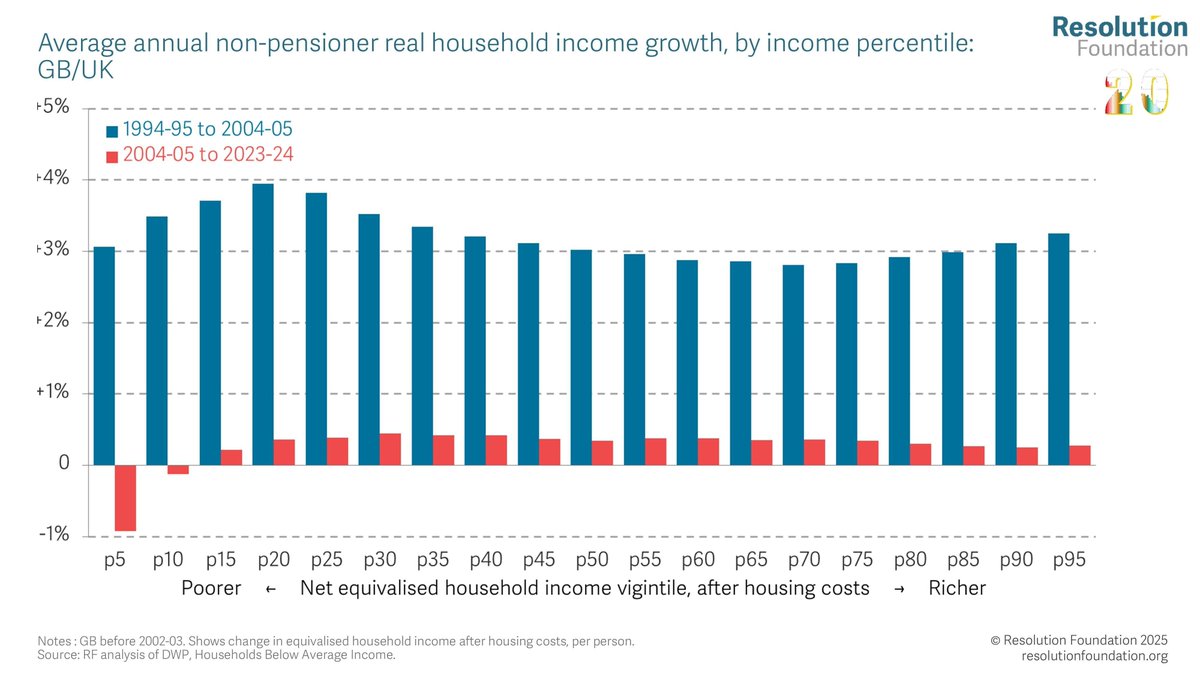
Britain has seen an acute living standards slowdown over the past 20 years, affecting everyone.
A typical family today would be £20,000 richer had incomes continued at the rate of growth trending in 2005, when the Foundation was founded.
Read more: https://t.co/aLMDcZfdwV
I enjoyed David Edmonds' new book on Peter Singer and his influential thought experiment, the "shallow pond". Here's my review, for the TLS (link in reply)
In the very week that the president delivered TikTok from the threat of manipulation by China, he intensified his own efforts to control America’s media. Some may detect an irony in that https://t.co/A7FlL1ljiI