Symbotic $SYM: Software Revenue Reality Check
Even a best-case software revenue outcome for the ~408 contracted systems (51 operational, 57 in deployment, ~300 backlog) would still require an additional ~2,000 or more contracted systems to justify the current $38B market cap.
2026Q1 Software Financials:
• Q1 software revenue: $10.9M
• Cost: $3.0M
• → Profit: $7.9M
• Driven by just 51 operational systems
• → ~$155K profit per system
$SYM currently has 108 active systems (51 operational + 57 in deployment).
If all were operational today, software profit would be ~$16.7M/qtr.
The entire backlog, ~300 systems, adds another ~$46.5M/qtr in software profit.
➡️ Total best-case software profit from all currently contracted systems: ~$63M/qtr or ~$253M/yr
Timeline reality:
It would take ~8 to ~10 years (≈2033 to 2035) to complete the existing deployment + backlog systems, based on historical cadence, management guidance, perfect execution, and an ideal economic background.
Valuation problem:
An additional ~2,000+ contracted systems would be required at 20x to 30x software earnings (1.8K to 2.7K systems, respectively) to make today’s valuation look reasonable instead of speculative.
Meanwhile:
• $SYM leans heavily towards the narrative of high-margin software and inflated TAM to justify valuations
• Hardware, installation = low-margin, one-time revenues
• Execution speed remains the bottleneck
• Software is undergoing a rerating due to AI and will heavily discount potential software revenues
Bottom line:
The current $38B market cap heavily favors early investors but does not serve the best interest of the remaining shareholders who depend on the financials to catch up and preferably accelerate.
More than a year ago, the House passed the Clarity Act.
There’s been progress since — thousands of hours of bipartisan negotiations took place at the staff and Member levels. The Senate Committees on Banking and Agriculture advanced their respective titles. And Senate Republicans produced a floor-ready product that, as I type this, is waiting for a vote.
It’s disappointing — but not surprising — that Senate Democrats are choosing politics on the cusp of a major victory for American leadership. Find another instance in history where Congress, when given the choice, opted to push an industry out of the United States rather than smartly regulate it. American Exceptionalism was once a bipartisan goal; if Clarity fails, I have serious doubts.
These same Democrats — many of whom have taken millions of dollars from the crypto industry — proclaim that Clarity lacks safeguards for consumers and falls short in countering illicit finance. Nothing could be further from the truth. Titles II and III materially uplift regulatory and compliance obligations for digital asset intermediaries, placing them on similar footing with traditional financial institutions. The Blockchain Regulatory Certainty Act — which Washington lobbyists have spun up as a boogeyman for certain groups of prosecutors and law enforcement — does nothing other than codify longstanding Treasury Department policy that’s remained consistent across Administrations: non-custodial builders and developers are not, and have never been, subject to registration obligations under the Bank Secrecy Act. And at this point, major law enforcement trades that once opposed the bill, including the Fraternal Order of Police, have now endorsed it.
The Senate needs to vote NOW on this landmark legislation. The truth is that Senate Democrats are afraid to advance the Clarity Act as they fear Senator Warren and the “Anti-Crypto Army” she once promised to build. In the days ahead, Leader Thune will put this theory to the test. Will Senate Democrats be on the side of American Exceptionalism, or will they opt to cede American leadership of a global industry for fear of the bespectacled squirrel’s Left flank?
America will lead or America won’t. It’s not more complicated than that. I believe Satoshi once said it best:
“If you don’t believe me or don’t get it, I don’t have time to try to convince you, sorry.”
🚨NEW: It’s the last week before the senate August recess and @SenLummis is done waiting on Democrats.
We sit down with her to discuss where the Clarity Act stands and whether it’s still possible to get a highly anticipated vote on the books before lawmakers leave for recess.
Links below.
This is our moment.
Getting the Clarity Act to the Senate floor will take all of us speaking up and making the case for why it matters.
Visit https://t.co/hLGGeHB5da. Tell your story. Make your voice heard. Let’s finish the job before August recess.
https://t.co/IOtxvbJaoc
If regulators can secretly debank an entire lawful industry, no business is safe.
That’s exactly what nearly happened to crypto, and we exposed the details.
The Gensler SEC deleted texts at the height of the anti-crypto campaign, FDIC buried evidence - it was all uncovered after we fought to expose the truth.
This win is not only for us, but for every American, and every American company expecting transparency and accountability from the government.
@EarningsBrief Yes, $SYM is a good company with a strong product & meaningful potential. The challenge is that execution remains incremental while the ~$26B market cap continues to price in much more. Ideally, execution would accelerate along with profitability to grow into the higher valuation
Symbotic $SYM: Software Revenue Reality Check
Even a best-case software revenue outcome for the ~408 contracted systems (51 operational, 57 in deployment, ~300 backlog) would still require an additional ~2,000 or more contracted systems to justify the current $38B market cap.
2026Q1 Software Financials:
• Q1 software revenue: $10.9M
• Cost: $3.0M
• → Profit: $7.9M
• Driven by just 51 operational systems
• → ~$155K profit per system
$SYM currently has 108 active systems (51 operational + 57 in deployment).
If all were operational today, software profit would be ~$16.7M/qtr.
The entire backlog, ~300 systems, adds another ~$46.5M/qtr in software profit.
➡️ Total best-case software profit from all currently contracted systems: ~$63M/qtr or ~$253M/yr
Timeline reality:
It would take ~8 to ~10 years (≈2033 to 2035) to complete the existing deployment + backlog systems, based on historical cadence, management guidance, perfect execution, and an ideal economic background.
Valuation problem:
An additional ~2,000+ contracted systems would be required at 20x to 30x software earnings (1.8K to 2.7K systems, respectively) to make today’s valuation look reasonable instead of speculative.
Meanwhile:
• $SYM leans heavily towards the narrative of high-margin software and inflated TAM to justify valuations
• Hardware, installation = low-margin, one-time revenues
• Execution speed remains the bottleneck
• Software is undergoing a rerating due to AI and will heavily discount potential software revenues
Bottom line:
The current $38B market cap heavily favors early investors but does not serve the best interest of the remaining shareholders who depend on the financials to catch up and preferably accelerate.
🚨NEW: As the banking lobby prepares to ramp up its campaign against the Clarity Act ahead of a floor vote, I asked @SenLummis whether its influence could complicate the bill’s path to 60 votes.
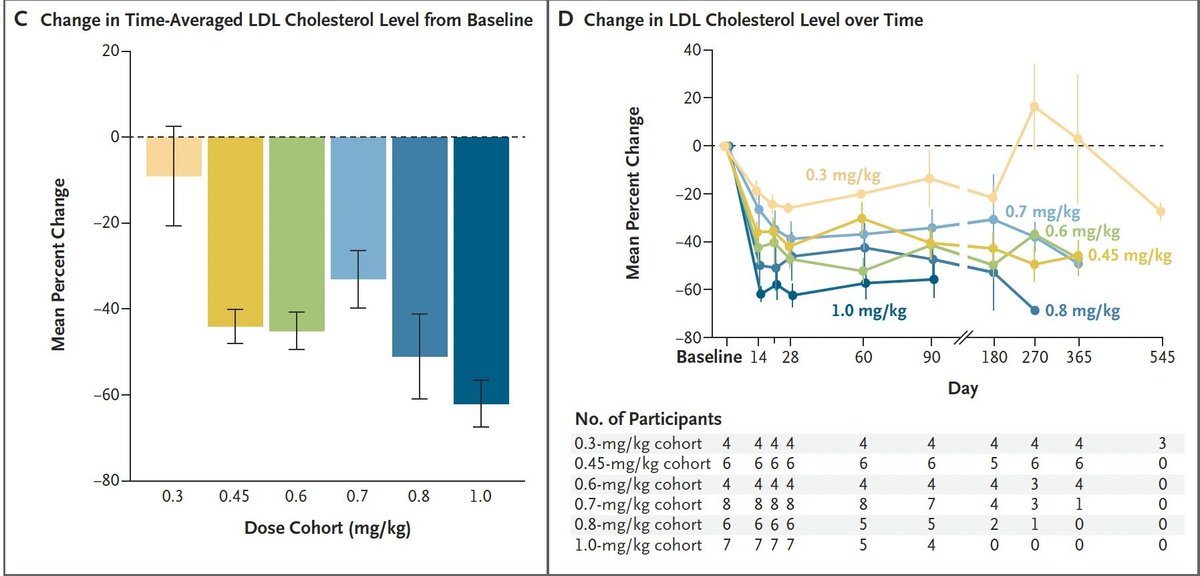
Eli Lilly has done it.
They've gone and made what seems to be a powerful, permanent gene therapy for LDL cholesterol.
That means they'll be able to effectively prevent most heart disease with a single infusion!
The crypto market structure bill has PASSED the Senate Banking Committee with a bi-partisan vote!
Historic day for crypto and for the future of digital assets in America. Grateful for the countless hours from lawmakers and staff to strengthen this legislation. Big improvement from where we were in January on rewards, tokenization, DeFi, and CFTC authority. I'm proud we stood up for our customers in that moment, and the bill is better because of it.
Looking forward to a bipartisan law that cements the US as the world's crypto capital. Let's get CLARITY done.
🚨JUST IN: The Clarity Act ADVANCES out of the Senate Banking Committee in a 15-9 bipartisan vote, with two Democrats voting in favor: @SenRubenGallego and @Sen_Alsobrooks.
Next stop: the full Senate.