🚨🚨 ÚLTIMA HORA: EL MERCADO ACABA DE RECIBIR UNA SEÑAL GIGANTE.
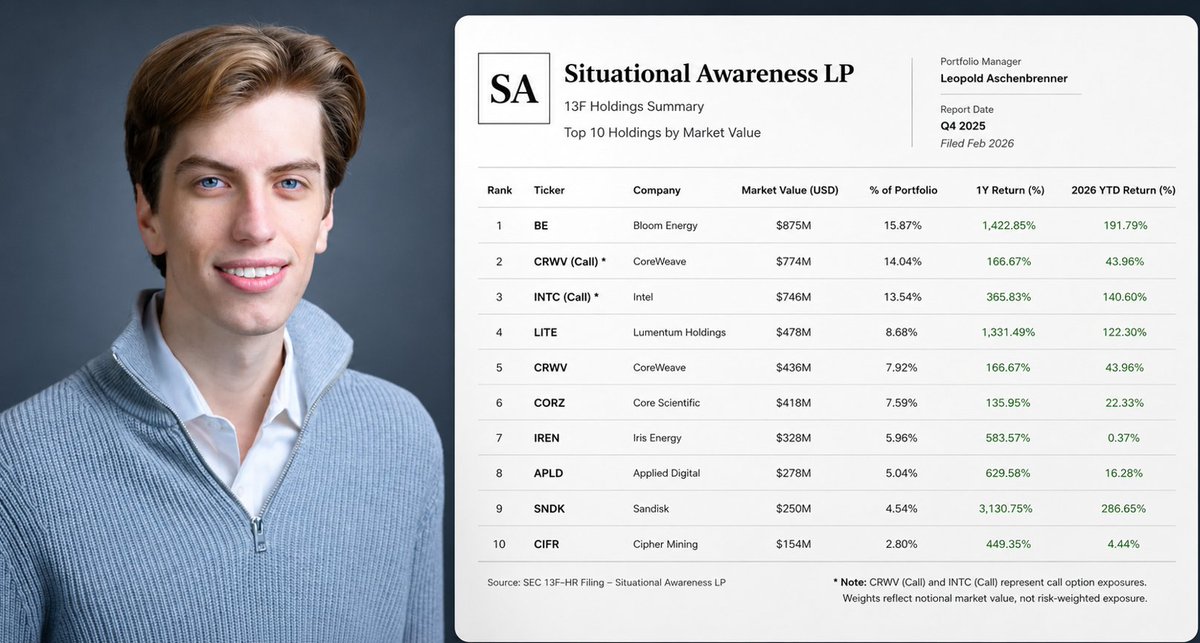
LEOPOLD ASCHENBRENNER, EL INVERSOR QUE CONVIRTIÓ $225M EN $20.000M EN SOLO UN AÑO, ACABA DE ABRIR POSICIONES CORTAS MULTIMILLONARIAS:
🔻 $2.13B EN $SMH
🔻 $1.66B EN $NVDA
🔻 $1.06B EN $AMD
🔻 $686M EN $MU
CUANDO ALGUIEN CON ESTE HISTORIAL APUESTA MILES DE MILLONES CONTRA LOS SEMICONDUCTORES… EL MERCADO PRESTA ATENCIÓN.
¿SE AVECINA UNA CORRECCIÓN O ESTÁ VIENDO ALGO QUE EL RESTO TODAVÍA NO VE? 👀📉🔥
Get out of the stock market.
A few companies control all the money in the world. BlackRock. Vanguard. Blackstone.
They know when the bubble bursts. You don't.
They pump. You buy. They dump.
Oil futures are the proof. The Strait of Hormuz has been closed for three months. Oil should be at $200.
It is not.
The market is rigged. The house always wins.
Get out.
Gerade gemeldet: Strategy stellt seine Kapitalpolitik komplett neu auf.
Der Auslöser ist die folgende Summe: 1,76 Milliarden Dollar zahlt die Firma jedes Jahr an Dividenden und Zinsen für ihre ausgegebenen Wertpapiere. Heute haben sie ein ganzes Werkzeugset vorgestellt, um diese Last zu bedienen und ihre Papiere zu stärken.
Bisher lief Strategys Plan in eine Richtung. Geld einsammeln, Bitcoin kaufen, halten. Jetzt steuert die Firma ihre Bilanz aktiv in beide Richtungen. Das ist der Kern der heutigen Meldung.
Werkzeug eins: ein fester Bargeldpuffer.
Strategy hält 2,55 Milliarden Dollar bereit, ausschließlich für Dividenden und Zinsen. Das reicht für 17,4 Monate. Neue Regel: Mindestens 12 Monate müssen immer abgedeckt sein.
Werkzeug zwei: eine höhere Ausschüttung.
Die Dividende auf die STRC-Aktie steigt zum 1. Juli auf 12,00% pro Jahr. STRC ist ein festverzinsliches Wertpapier, das stabil nahe seinem Nennwert von 100 Dollar handeln soll. Die Erhöhung soll genau das stützen. Aktuell liegt der Kurs weit entfernt von der Zielmarke von 100 Dollar.
Werkzeug drei: Rückkäufe.
Strategy darf eigene Wertpapiere für bis zu 2 Milliarden Dollar zurückkaufen. Eine Milliarde für die festverzinslichen Papiere, eine Milliarde für die normale MSTR-Aktie. Werden die Papiere unter Wert gehandelt, senkt der Rückkauf künftige Kosten.
Werkzeug vier: Bitcoin als Geldquelle.
Der Vorstand hat freigegeben, Bitcoin für bis zu 1,25 Milliarden Dollar zu verkaufen, wenn das günstiger ist als neue Aktien auszugeben. Keine Pflicht, sondern eine Option im Baukasten.
Saylor bleibt beim Kurs: Bitcoin ist und bleibt die wichtigste Reserve.
Was sich ändert, ist die Mechanik dahinter. Aus einer reinen Kaufmaschine wird ein Unternehmen, das seine Wertpapiere aktiv managt, zurückkauft und seine Reserve gezielt steuert.
Der Markt reagierte erstmal positiv. Mal sehen, ob das für eine bessere Vertrauensbasis ausreicht.
Nach Spanien hat auch Belgien lediglich Unentschieden gespielt. Die Favoriten verkaufen ihre ersten Gruppenspiele in der WM.
Die Türkei verlor gegen Australien. Brasilien spielte Unentschieden. Die Schweiz konnte gegen Katar nicht gewinnen.
Der Fußball ist korrupt. Die Wettmafia ist mittlerweile überall und viel zu stark auf der Welt repräsentiert.
Die Sponsoren der Uefa Champions Leauge sind beispielsweise große Wettanbieter wie Bet365 oder Betano.
Selbst Tipico ist der offizielle Sponsor der 1. und 2. Bundesliga in Deutschland.
Das ist ein krasser Sektor. Ein Milliardengeschäft für die Drahtzieher dieses Planeten. #WM2026
Only ~5% of SpaceX stock is floating right now
~95% $SPCX is still locked
Most don’t realize bearish pressure often comes later, when insiders finally get liquidity
Unlock schedule below ⬇️
🚨 DON’T BECOME EXIT LIQUIDITY
Today, SpaceX hits the public market at a $2.2 TRILLION valuation.
This isn’t just another IPO.
It’s the biggest liquidity-grab event in history.
People are dumping EVERYTHING just to buy a few shares.
The crowd sees unlimited upside.
Institutions see a liquidity event.
Stay away from Day 1.
It’s a textbook trap.
You’re buying shares from insiders who’ve been waiting years for this exact moment.
And the timing couldn’t be more dangerous.
The market is still drunk on the AI narrative.
Valuations are stretched.
Speculation is everywhere.
Everyone believes the party continues forever.
It doesn’t.
The AI bubble is closer to the end than the beginning.
Inflation pressures are building again.
The market is underestimating how restrictive monetary policy can become.
Risk assets don’t thrive when liquidity disappears.
They suffer.
Then comes the phase nobody is prepared for.
Months of painful sideways action.
No breakout.
No moon mission.
Just a slow grind lower and endless frustration.
This is where retail gets destroyed.
And it works every cycle.
The headlines fade.
The influencers move on.
The excitement disappears.
99% of investors lose patience and sell at a loss.
That’s when smart money starts accumulating.
Quietly.
Without the hype.
Without the attention.
Without the crowd.
When nobody wants to hear the word SpaceX anymore.
You have two choices:
Buy the listing and become exit liquidity.
Or wait for the fear, the boredom, and the discount.
Patience pays you in the end.
FOMO pays them immediately.
For the record, I called the $17K Bitcoin bottom in 2022, and the $126K market top in 2025.
I’ll call the real entry for SpaceX too.
The crowd will be too scared to buy.
Follow and turn on notifications.
Most people will see the opportunity only after it’s already gone.
History Repeats: IPOs and Market Tops
SpaceX is set to launch at a $1.75T valuation, making it the largest IPO in history. The closest comparison is Saudi Aramco at $1.70T, which went public just 10 weeks before the COVID crash in 2020. And Aramco is far from the only mega IPO that appeared near a major market top. Always remember that the largest IPOs in history tend to arrive when optimism and euphoria is extreme, and investors are willing to pay almost any price. This is just one more indicator that we are at the Stock Market top.
I've already seen people discussing loans to buy SpaceX. I've seen people with zero experience talking about it. The mass is buying, and we always know how this ends. Will I buy SpaceX? Absolutely! But let the crowd buy first, let the price crash, and thats where I am going to buy, and I promise you, I will be buying lower than on launch day.
🚨 WARNING: TOMORROW WILL BE THE WORST DAY OF 2026!!
In 24 hours, SpaceX goes public at a $1.75 TRILLION valuation - the biggest IPO in history.
I've been trading for 10+ years, and I've never seen the financial system bend its own rules for ONE private company.
Nasdaq. MSCI. America's largest brokerages.
All changing long-standing rules for a single company.
That doesn't happen by coincidence.
Let me tell you what's really going on:
First, Fidelity slashed its minimum account requirement from $500,000 to just $2,000.
A 99.6% reduction.
Think about that for a second.
One of Wall Street's most exclusive gates was suddenly opened to millions of everyday investors - right before the biggest market debut of all time.
Why do they suddenly want YOU involved?
Because someone needs buyers.
SpaceX set aside 30% of the offering for retail investors.
That's THREE TIMES the typical allocation.
And despite that, many investors still received only partial allocations.
Which means anyone wanting more shares will be chasing them when trading begins.
To do that, they're selling other positions TODAY to raise cash.
That's one side of the selling pressure you're seeing.
The other?
Institutional money positioning ahead of July.
Here's the part most people are missing:
SpaceX won't enter the Nasdaq 100 immediately.
It gets added 15 days later.
Why?
Because Nasdaq shortened its own waiting period from 3 months to just 15 days.
Specifically for this event.
The second SpaceX joins the index, every fund is REQUIRED to buy shares.
That's an estimated $22–27 billion of automatic demand.
The big funds are selling assets now to build cash reserves.
Retail is selling.
Institutions are selling.
Both at the same time.
THAT is what's driving this selloff.
Now for the part nobody wants to say publicly:
When the most powerful money managers in the world create a $1.75 trillion liquidity event and invite the smallest investors to participate at the last minute...
That's not generosity.
That's distribution.
We've watched this play out before:
→ Dot-com bubble (2000)
→ COVID crash (2020)
Insiders exit at extreme valuations.
The crowd rushes in chasing momentum.
Something doesn't add up.
So over the next 24 hours, you have two options:
Buy into the most expensive IPO ever at the opening bell...
Or dig into the prospectus and consider the possibility that YOU are the liquidity event.
The next few days are going to be wild.
I've publicly called some of the biggest tops and bottoms of the past decade.
And I'll call this one too.
I’ve spent decades studying markets, and I’ve called most major tops and bottoms along the way.
And I’ll call it again in 2026.
Follow me and turn notifications on before it’s too late.
Don’t become exit liquidity.
🚨 THE US REGULATORY SYSTEM JUST BROKE
In 48 hours, SpaceX goes public at $1.77 TRILLION - the biggest IPO ever
I've been trading for over a decade, and I have never seen them rewrite the rulebook like this
Nasdaq, MSCI, and the biggest brokers in America all bent their own rules for ONE private company
That doesn't happen by accident
Let me show you exactly what they did:
First, Fidelity dropped its minimum account size from $500,000 to $2,000
A 99.6% cut
Think about that:
The most exclusive door on Wall Street, thrown wide open to millions of small investors - days before the biggest debut in history.
Ask yourself one question
Why do they suddenly want YOU in?
Because somebody needs people to sell to.
SpaceX reserved 30% of the deal for retail
THREE TIMES the normal share
And even then, most people didn't get a full allocation.
So to grab more at Thursday's open, they're dumping everything else TODAY to raise cash.
That's half of the selling you're seeing.
The other half? The smart money front-running July.
Here's the trick:
SpaceX doesn't join the Nasdaq 100 on day one.
It joins 15 days later, because Nasdaq cut its own waiting period from 3 months to 15 days
Just for this.
The moment it joins, every QQQ fund on Earth is FORCED to buy.
$22–27 billion in automatic buying.
Translation: imagine 50 buses all forced to pull into the same gas station on the same morning.
The funds know the stampede is coming.
So they're selling now to free up cash for it. Retail selling. Institutions selling. At the exact same time.
THAT is your selloff.
Now here's the part nobody will say out loud:
When the most connected money on the planet builds a $1.7T exit door and hands the keys to the smallest investors in the market…
That's NOT generosity
That's distribution at the top.
We've seen this movie twice:
➮ 2000 Dotcom
➮ 2021 SPAC mania
Insiders cash out at insane valuations while the crowd chases the hype.
The math ain't mathing.
So you've got two choices in the next 48 hours:
Chase the most expensive IPO in history at the open…
Or read the prospectus and realize you might BE the exit.
The next few days will be INSANE, but don't worry - I'll break down every move as it happens, like I always do.
Like it or not, I called every major top and bottom of the last decade publicly. I'll call this one too.
Many people are going to wish they followed me before June 12, 2026.
Soon, you'll understand why.
Every AI company on earth has the same bottleneck. None of them talk about it. Here's the number that should worry every tech investor:
A single hyperscale data centre uses 30,000 to 40,000 tonnes of copper. There are over 100 under construction right now. And that's before the next wave of AI infrastructure even breaks ground.
Add EVs. Add grid upgrades. Add defense systems. Add robotics.
The world needs roughly 50% more copper within the next decade than we produce today. And we haven't sanctioned a new major copper mine in over 10 years.
Not because there's no copper in the ground. Because it takes 15+ years to discover, permit and build a mine.
Demand accelerates in years. Supply responds in decades.
Where does the copper come from?
$PNPN $PNPNF
🚨 ELON MUSK HAT GERADE JEDEN ZU EINEM VERSTECKTEN MILLIONÄR GEMACHT
Wer an diesem Börsengang reich wird, ist es längst. SpaceX geht als größter IPO der Geschichte an die Nasdaq, Ticker $SPCX, Zielbewertung 1,75 Billionen Dollar. Gezeichnet wird am ersten Tag die teure Spätphase.
Google sitzt seit 2015 in der Firma, heute ein Vielfaches wert. Für solche Adressen ist der Börsengang der Moment, an dem sie endlich liefern können.
Der Preis dafür ist sportlich. Morningstar, ein neutrales Analysehaus, sieht den fairen Wert bei rund 780 Milliarden - gut die Hälfte der IPO-Bewertung. Den Aufschlag streichen die ein, die früh dran waren.
Ein Mitspracherecht gibt es obendrein nicht. Musk behält über 82 Prozent der Stimmrechte. Wer einsteigt, legt sein Geld auf den Tisch und bekommt eine Aktie ohne Stimme - eine der aktionärsunfreundlichsten Strukturen, die je an die Börse ging.
Im März hat Tesla seinen 2-Milliarden-Dollar-xAI-Anteil in einen direkten SpaceX-Anteil umgewandelt
TSLA-Inhaber wurden zu SpaceX-Aktionären, bevor der IPO überhaupt den Preis hatte – sie wissen es nur nicht
Darüber hinaus – Wedbush sieht 80-90% Wahrscheinlichkeit für eine vollständige Tesla/SpaceX-Fusion als Szenario für 2027
Letztes Mal, als Musk einen strukturellen Schachzug wie diesen gemacht hat: SolarCity-Fusion, 2016, TSLA ist in den nächsten 12 Jahren um 4.828% gestiegen
$10.000 wurden zu $492.800
Es gibt Momente, in denen sich die Regeln dafür ändern, was ein Staat in seiner Bilanz hält.
Heute ist so ein Moment.
Im US-Kongress wurde der American Reserve Modernization Act eingebracht, kurz ARMA. Das Gesetz verpflichtet das US Treasury, fünf Jahre lang jährlich bis zu 200.000 Bitcoin am offenen Markt zu kaufen und die Bestände anschließend mindestens zwei Jahrzehnte lang zu halten. Ein Verkauf wäre nur dann zulässig, wenn der Erlös unmittelbar in die Tilgung der Staatsschulden fließt.
Der entscheidende Punkt ist die rechtliche Verankerung. Trumps Executive Order vom März 2025 hatte die Strategic Bitcoin Reserve zwar ins Leben gerufen, aber jede Executive Order endet mit dem nächsten Wahlsieger. ARMA überführt die Idee in Bundesgesetz und macht sie damit unabhängig von künftigen Administrationen. Eingebracht wurde die Vorlage mit 16 Co-Sponsoren und parteiübergreifender Unterstützung, was für eine Bitcoin-bezogene Gesetzgebung in Washington historisch ungewöhnlich ist.
Die Finanzierung kommt ohne neue Haushaltsmittel aus. Die Fed hält bis heute Goldzertifikate, die mit 42,22 USD pro Unze bilanziert sind, weit unter dem aktuellen Marktpreis. Diese Differenz wird realisiert und in Bitcoin umgesetzt. Daneben entsteht ein separater Stockpile für andere beschlagnahmte Digital Assets, getrennt von der Bitcoin-Reserve. Die Coins selbst müssen in Cold Storage gehalten werden, und private Wallets der Bevölkerung werden ausdrücklich vor staatlichem Zugriff geschützt.
Begichs Argumentation für die Auswahl von Bitcoin ist marktwirtschaftlich. Gold dominiert die Edelmetallreserven, Bitcoin dominiert mit rund 60% den Crypto-Markt. Wenn der Markt entschieden hat, was als Speicher von Wert gilt, dann hält der Staat beides.
Was das kurzfristig noch nicht bedeutet, ist ein direkter Kaufdruck am Spot-Markt. Der erste tatsächliche Treasury-Kauf wäre frühestens Q4 2026 zu erwarten, vorausgesetzt das Gesetz kommt vorher durch beide Kammern. Bitcoin notiert aktuell um 77.000 USD. Das Setup ist eingepreist, das Outcome nicht.
Worauf ich in den kommenden Wochen schaue, sind drei Dinge: die Senatsabstimmung vor der Sommerpause, die Zahl der demokratischen Co-Sponsoren am Ende des Prozesses, und ob die rechtliche Konstruktion der Goldzertifikat-Aufwertung Bestand hat.
Sollte ARMA durchkommen, würden die Vereinigten Staaten als erster G7-Staat zum aktiven Käufer am Bitcoin-Spotmarkt werden, mit festem Jahresbudget und gesetzlichem Mandat. Eine Anlageklasse, die noch vor wenigen Jahren als reine Spekulation behandelt wurde, stünde damit auf Augenhöhe mit den Goldreserven der Vereinigten Staaten.
Die Kursbewegung kommt später. Was sich heute strukturell verändert, ist die Identität der Käuferseite.
Wenn dich solche Insights interessieren und dir helfen, interagiere gerne mit dem Post. 🧡
Those who follow me will be able to RETIRE in the next 5 years.
You must know how the AI cycle will be built out and positioned early.
This is how the next decade builds out:
2026–2027:
AI demand accelerates.
Capital floods into:
AI chips, memory, infrastructure, power, and data capacity.
AI: $NVDA $AMD $AVGO $MRVL
Memory: $MU $SNDK $WDC
AI Infrastructure: $VRT $SMCI $NBIS $IREN
2028–2030:
Power demand becomes the biggest story in the market.
The world races to upgrade grids, secure materials, and build domestic supply chains.
Energy Grids: $VRT $ETN $PWR $HUBB
Electrification: $ALB $SQM $TE $GEV
Copper/Grid: $FCX $TECK $SCCO
Rare Earths: $MP $CRML $USAR $TMRC
Uranium/Nuclear: $UUUU $SMR $OKLO
2030+:
The applications layer scales globally.
Robotics, autonomous systems, defense tech, and the Space Economy become critical infrastructure.
Robotics: $TSLA $SYM $PATH
Autonomous Mobility: $ACHR $JOBY
Defense: $LMT $NOC $KTOS $AVAV
Space Economy: $RKLB $ASTS $LUNR $PL $BKSY
Most people will be lost.
I will help you position for an entire economic future.
We found another stock ✍
Six politicians have been buying $NOW (ServiceNow) in 2026:
Byron Donalds: ~$30K
Tony Wied: ~$50K
Ro Khanna: ~$15K
Charles Fleischmann: ~$15K
Josh Gottheimer: ~$15K
Michael McCaul: ~$15K
And the fact that Khanna is buying makes it even more compelling
Here's why:
1. He bought SanDisk 8 months ago
2. That stock is up over ~3,000% since
3. ServiceNow "maybe" could be the next SanDisk (we'll see)
> be Leopold Aschbrenner
> german kid, Columbia valedictorian at 19
> get hired by OpenAI's superalignment team at 21
> write a memo about security being a joke
> get fired in april 2024 for "leaking"
> lol ok
> two months later drop a 165 page essay called situational awareness
> predict AGI by 2027
> essay goes nuclear in sf
> patrick collison, nat friedman, daniel gross slide into the dms
> start a hedge fund in september
> name it after your own essay because why not
> everyone else is buying nvidia, microsoft, openai
> you buy power plants, fiber optics, bitcoin miners, ssd makers
> $254m → $5.5b in 12 months
> you are 24
> mfw the company that fired me made me a billionaire
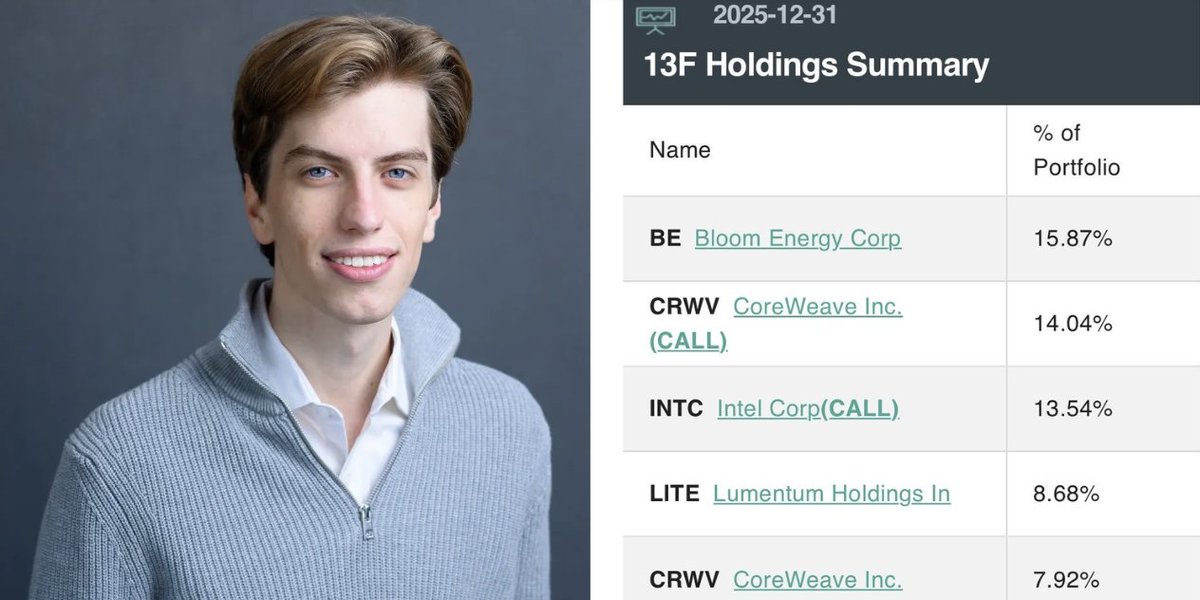
Breaking: Everyone waiting on Aschenbrenner's 13F won't see it until next week
Here's why:
• The 13F cutoff is at 5:30 PM ET
• Filed after that means it's queued to the next business day (Monday)
Leopold's trades will be posted here when live
🚀 BULLRUN WIE SEIT DER DOT COM BLASE
25.000 Dollar in Sandisk, vor 390 Tagen reingelegt. Heute: 1.275.000 Dollar. Das ist die Bewegung, die gerade an der Wall Street läuft, und sie hat einen Namen: AI Memory.
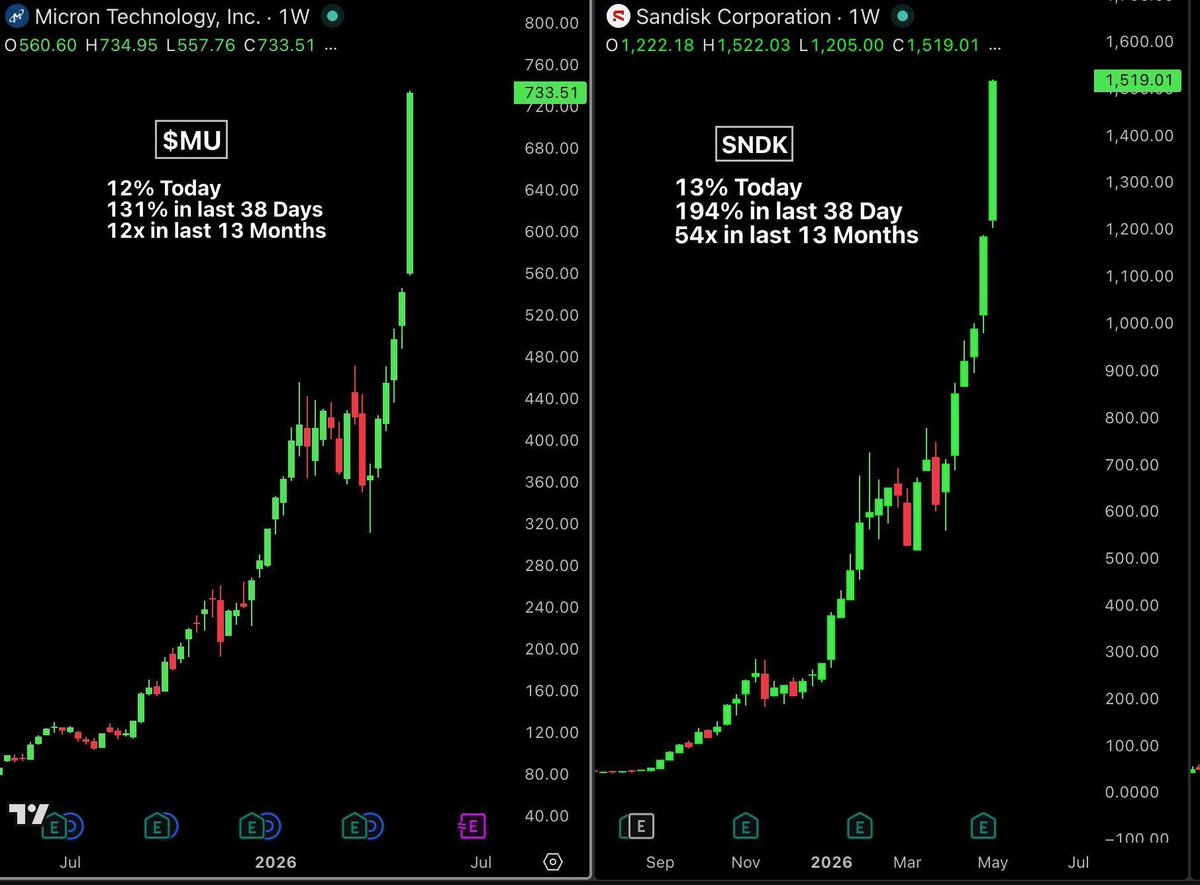
@BullTheoryio bringt es auf den Punkt: "Memory stocks are having a dot com era run." Micron 12-fach in 13 Monaten. Sandisk 54-fach. Eine 700-Milliarden-Dollar-Aktie hat in einem Jahr ein 10x gemacht, ein Move, den du in keinem Lehrbuch findest.
Was die Bewegung trägt, ist real. Microns CEO hat im letzten Earnings Call zugegeben, das Unternehmen könne nur 50 bis 65 Prozent der Kundennachfrage liefern. Bei Sandisk haben fünf große AI-Konzerne Multi-Year-Supply-Verträge unterschrieben, mindestens 42 Milliarden Dollar garantierter Umsatz, davon 11 Milliarden vorab als finanzielle Garantien hinterlegt. Vorauszahlungen statt Bestellungen, weil Hyperscaler sich Lieferausfälle nicht mehr leisten können. NAND-Preise sollen laut Gartner 2026 um 234 Prozent steigen. HBM-Kapazitäten sind für das gesamte Jahr ausverkauft, neue Fabs brauchen drei bis fünf Jahre.
@TradexWhisperer hat $MU vor zwölf Monaten bei 62 Dollar als "Bargain of the Century" markiert, inzwischen +1.048 Prozent. @NoLimitGains formuliert es so: "Micron ist 1.000 Prozent in 13 Monaten gestiegen. Ein 10x auf einer 700-Milliarden-Aktie - so eine Bewegung in einem Zyklus dieser Größe sieht man fast nie." Selbst @citrini, der SK Hynix Anfang 2024 gekauft und mit +500 Prozent verkauft hat, schreibt offen: zu früh raus.
Soweit der Konsens. Jetzt der Teil, der ungemütlich wird.
Michael Burry, der Mann mit dem 2008-Track-Record, hat in seinem letzten 13F Puts auf den Halbleiter-ETF SOXX gekauft. Strikes bei 330, Laufzeit Januar 2027. Seine Argumentation: Sandisk +4.000 Prozent in zwölf Monaten, Qualcomm hatte im März 2000 einen Peak von +2.620 Prozent und markierte damit den finalen Top des Dot-Com-Zyklus. Drei Monate später ist der Nasdaq um 78 Prozent eingebrochen. Die zehn größten S&P-Werte machen heute 41,2 Prozent des Index aus, der schiefste US-Markt seit 150 Jahren.
Beide Seiten haben Recht, und genau dort liegt das Problem. Memory ist der echte Picks-and-Shovels-Trade dieser AI-Welle, weil jeder Nvidia-Chip einen HBM-Stack daneben braucht. Diese Phase ist aber zugleich die, in der unsexy Zulieferer in die Stratosphäre gehen, klassisches Spätzyklus-Verhalten. Die Roadmap, die ein paar Analysten gerade teilen, ist klar: Phase 1 Semis (NVDA, AMD, AVGO) ist gelaufen, Phase 2 Memory (MU, SNDK, WDC) läuft jetzt. Danach kommen Photonik, Compute Cloud, Rare Earths, Power, Robotics, Space. Wer jede Phase am Top kauft, sitzt am Ende auf 80 Prozent Drawdown.
Die ehrliche Antwort liegt dazwischen. Solange HBM ausverkauft ist und Hyperscaler ihre Capex-Pläne nicht kürzen, läuft die Story weiter. Der Tag, an dem Microsoft oder Meta anfangen, ihre AI-Investments zurückzufahren, wird sehr laut.
Heute ist nicht dieser Tag.
Sieht das eigentlich noch jemand außer uns?
Rückwirkend ist es am Ende immer „einfach” vorherzusehen. In dem jetzigen Moment die Eier zu haben, sich lautstark dagegen zu positionieren, ist immer schwierig… und immer einsam.
Die AI Big 10 sind laut BofA bei ~40% des S&P 500. Genau dort, wo Nifty Fifty 1965 stand, wo Tech & Telecom 2000 stand, wo Japan 1988 zerbrochen ist. Jede einzelne dieser Konzentrationen endete in einem mehrjährigen Drawdown.
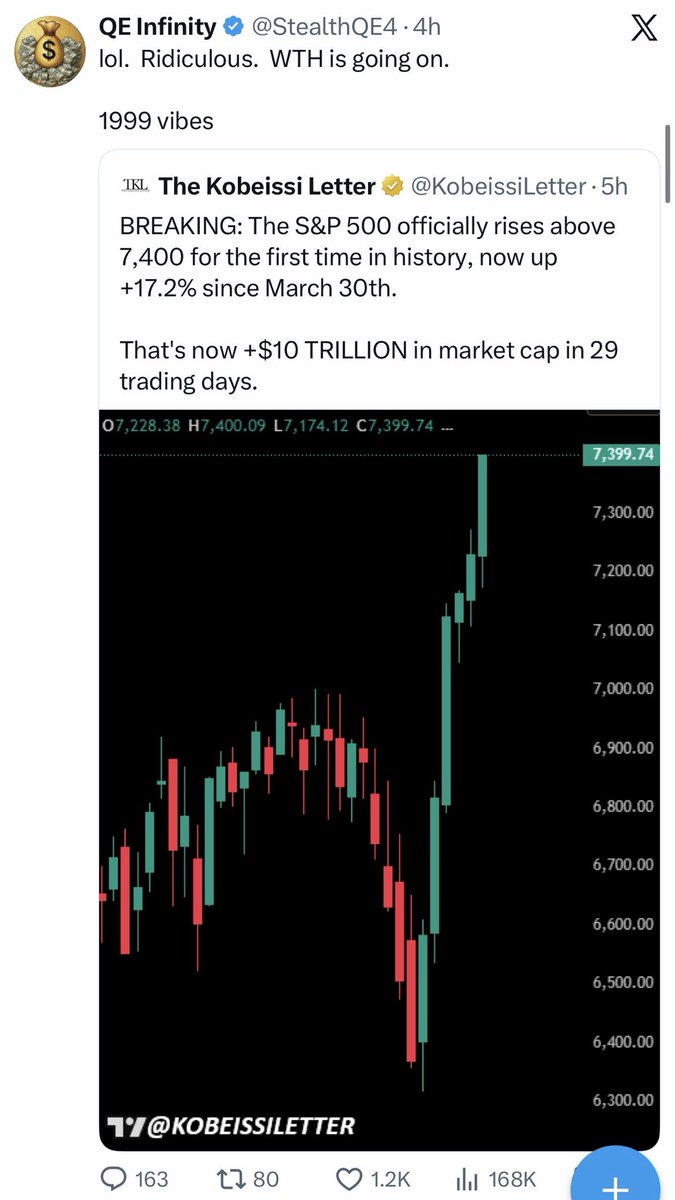
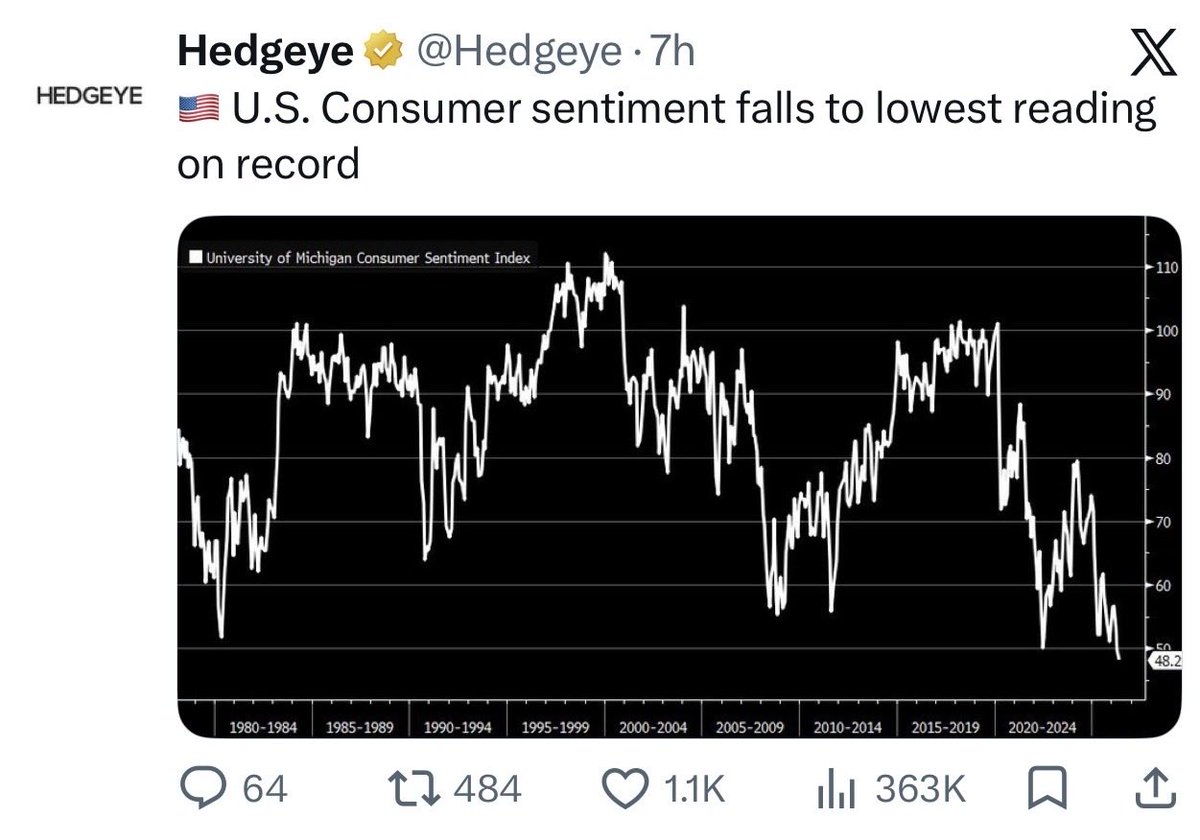
Parallel dazu: US-Konsumvertrauen auf dem niedrigsten Wert auf Rekord. Der S&P 500 +$10 Trillion Market Cap in 29 Handelstagen, erstmals über 7.400. Diese zwei Realitäten passen nicht zusammen, und Märkte schließen solche Lücken historisch immer in dieselbe Richtung.
Wenn die Muster der Geschichte halten, wird die Blase platzen. Wenn sie nicht halten, leben wir tatsächlich in einem “neuen Paradigma”. Wir wären nicht überrascht, wenn sich auch dieses am Ende verhält wie alle vorherigen „Paradigmen”.
Die Landung wird hart, deutlich schmerzhafter als die meisten gerade vorhersehen können. Wir bleiben überwiegend in Cash, akkumulieren weiter Spot Bitcoin.