New paper out in @CurrentBiology with @OsbornLab@sonkelab@katiethomas10 and others about ultra-black deep sea fishes! Turns out some deep-sea fish are among the blackest animals on the planet and they use this blackness as camouflage.
Paper link: https://t.co/IpjFIaYdLt
Are we only studying half of color signals? Come to my #SICB2024 talk on Thursday at 10:45 am in Arch Building 607, to look at how backgrounds affect the perception of color signals.
All are very welcome to create their own PhD project in my Duke Biology lab in in vision/signaling/camouflage/biophotonics/navigation. Stipend ($38,500 USD) is guaranteed for six years via TA/RA/fellowship. Current one-bedroom rent is ~$1600. DM me if interested. #scitwitter
🤯THIS JUST IN🤯
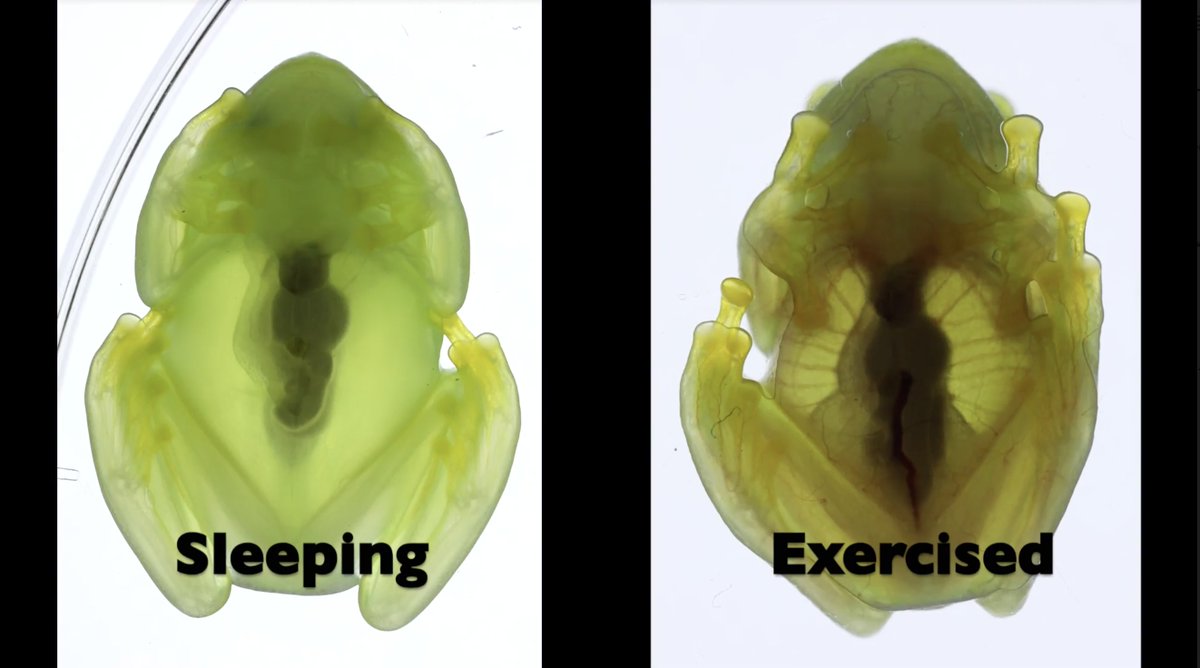
When asleep, glass frogs HIDE THEIR RED BLOOD CELLS INSIDE THEIR LIVERS, which are covered in GUANINE-CRYSTAL DISCO MIRRORS that scatter light & make the frogs 2-3 TIMES MORE SEE-THROUGH.
🪩🪩🩸🩸🩸🐸🩸🩸🩸🪩🪩
Study in @ScienceMagazine https://t.co/Jew9w6YgT0
So rewarding to see years of work led by Carlos Taboada and Jesse Delia in three labs (mine, @yaojj02, Lauren O’Connell) finally come to fruition. Short version: glassfrogs maintain transparency by hiding their red blood cells in their mirrored livers.
https://t.co/H7LLn0i3Hv
my first story with @DiscoverMag is live!
new research from @NOCnews shows that deep-sea oil and gas pipelines are biodiverse trash collectors. https://t.co/LlfIOvtGIu
Colour signals and high-contrast backgrounds: a new #ProcB article investigates the influence of visual background on discrimination of signal-relevant colours in zebra finches https://t.co/Euy8JP1JYY
@AlexLDavis_@MatthewZipple@DanaeM_Diaz @SteveNowickiDU @sonkelab
@WildlifeMcCoy@CoralReefFish I’d be curious to know if these guys use the same trick! I think there is one reported example of a similar structure to the deep-sea fish skin in a reef fish, but I would have to dig it up.
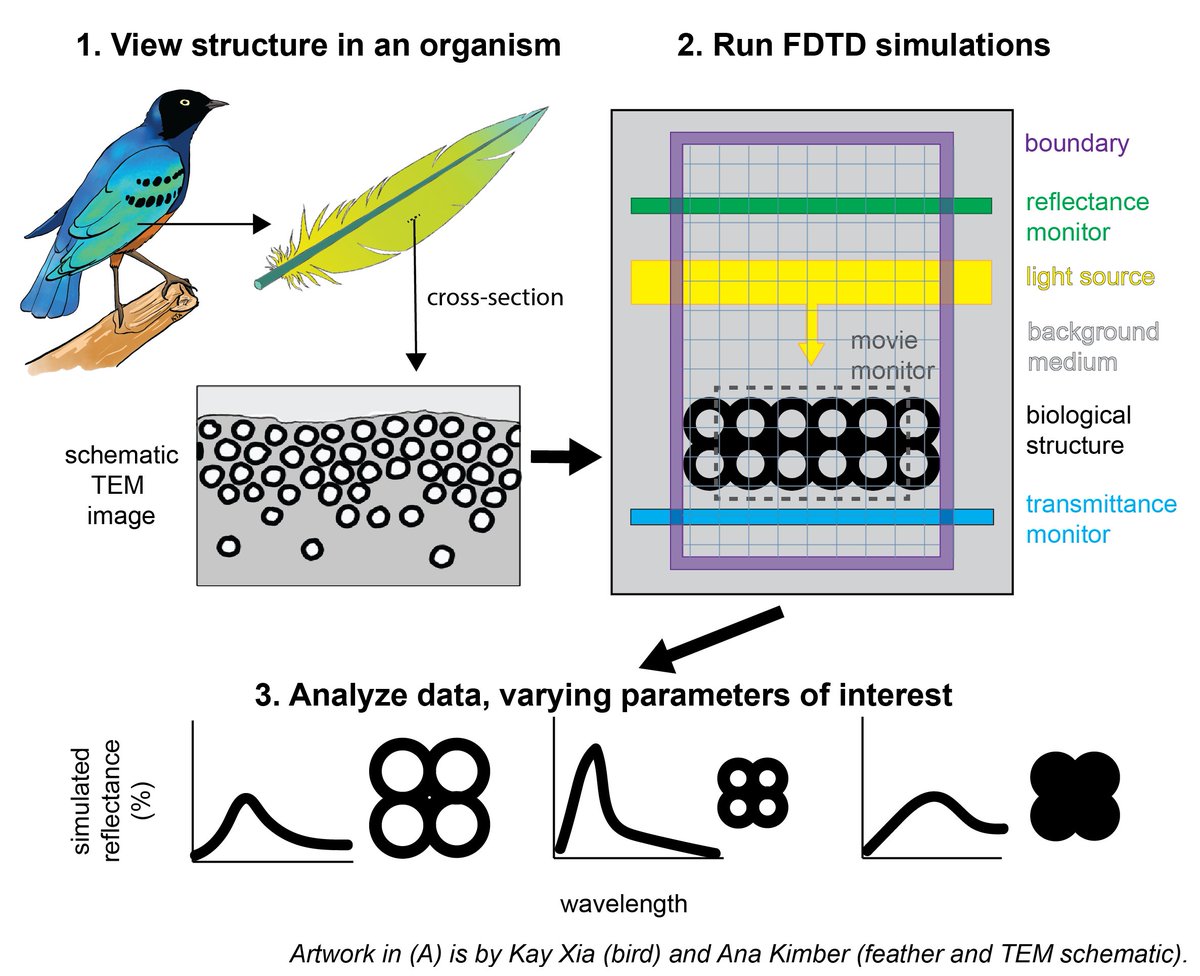
New methods paper out, on finite-difference time-domain (FDTD) optical simulations for biologists!! Colorful signals, evolution, bioinspired technology, and more! With Anna Shneidman, @AlexLDavis_ , & Joanna Aizenberg in Micron (@ElsevierPhysics). https://t.co/z3jhJycS5B
Congrats to @AlexLDavis_, who led a paper on ultrablack coloration in deep-sea fish coauthored by me, @OsbornLab, @katiethomas10, @freyaGoetz, and Bruce Robison. Just selected as the best paper in 2020 by the deep sea biology society (@DSBSoc)!
https://t.co/QCqjNKyWyy
#16DSBS
Interested in animal vision, optics, biophotonics, signaling, camouflage, bioluminescence, deep-sea, or navigation? Consider doing a PhD in our lab starting Fall 2022! Write me at [email protected] if interested.
https://t.co/j7xesBUgmJ
#scitwitter
A third of all genetics papers published in Nature over a decade (and 20% across all journals) had errors due to the fact that many gene have names like SEPT2 (the official name of Septin 2), which were automatically coded as dates by Microsoft Excel. https://t.co/2K5E4wZ3Hb