Assistant Professor of Economics @winthropu | Economics Ph.D. from @WestVirginiaU | Interested in urban and transportation econ, with a dash of health econ
Did a fun in-class exercise yesterday.
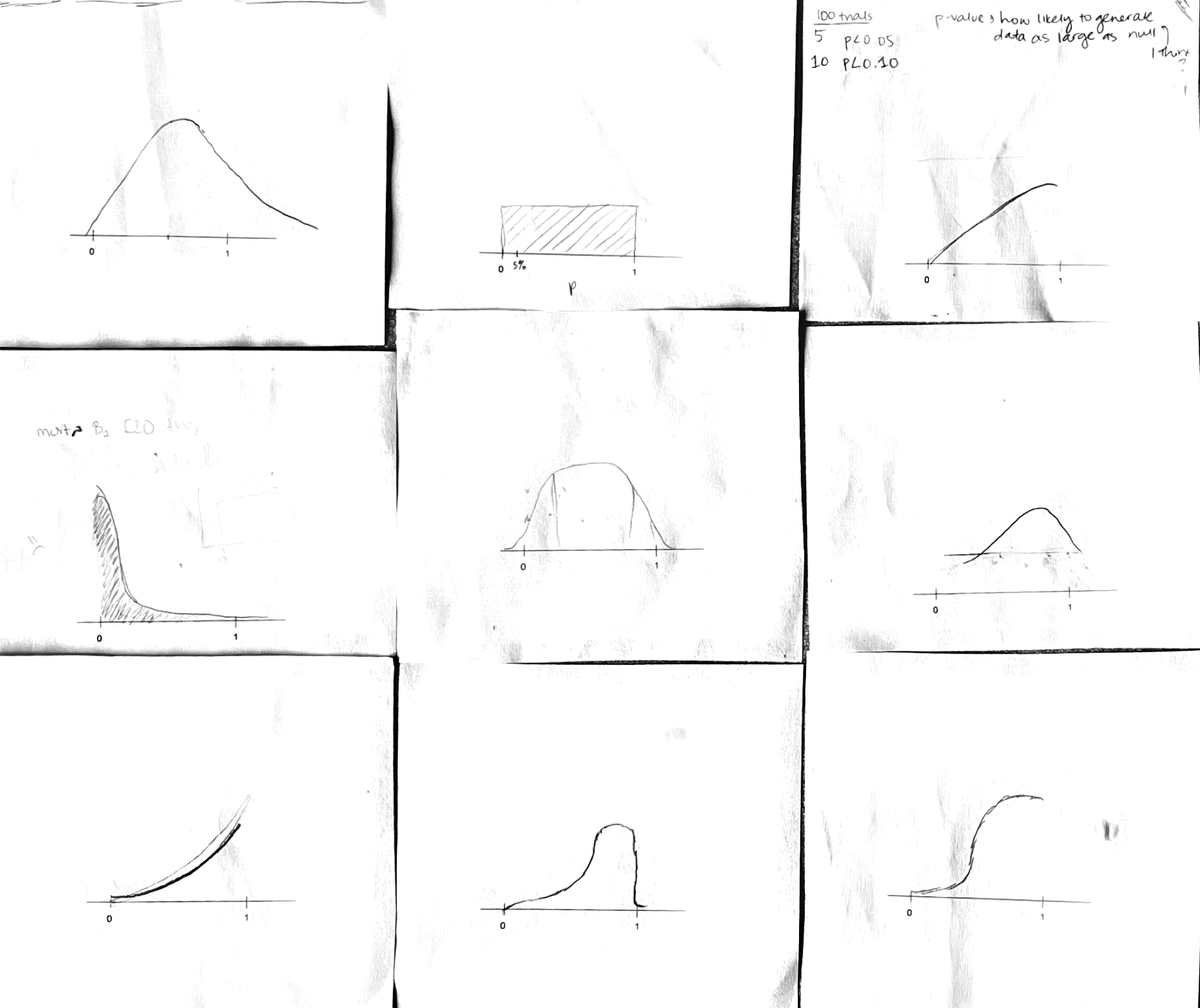
Take a regression Y = b0 + b1 * X, where both X and Y are random noise. Do this 10,000 times.
I asked the students to draw the resulting histogram of p-values for b1.
12 years ago yesterday, there was an explosion at the finish line of the 2013 Boston Marathon, changing the race forever. We (@zach_et_al) studied how directly experiencing this terrorist attack affected future competitive performance.
https://t.co/4otrK68pl2
I also wonder if we don’t see replications done en masse. It wouldn’t surprise me if halfway through a seminar, an audience member raises their hand and says they find different things after running Claude code from the moment the speaker began
A cancer diagnosis increases the likelihood of criminal behavior, representing a previously overlooked negative externality on society, say researchers at @nationalbanken, @UCPH_Research, and @TilburgU#Chart https://t.co/IWwZ0kKpTs
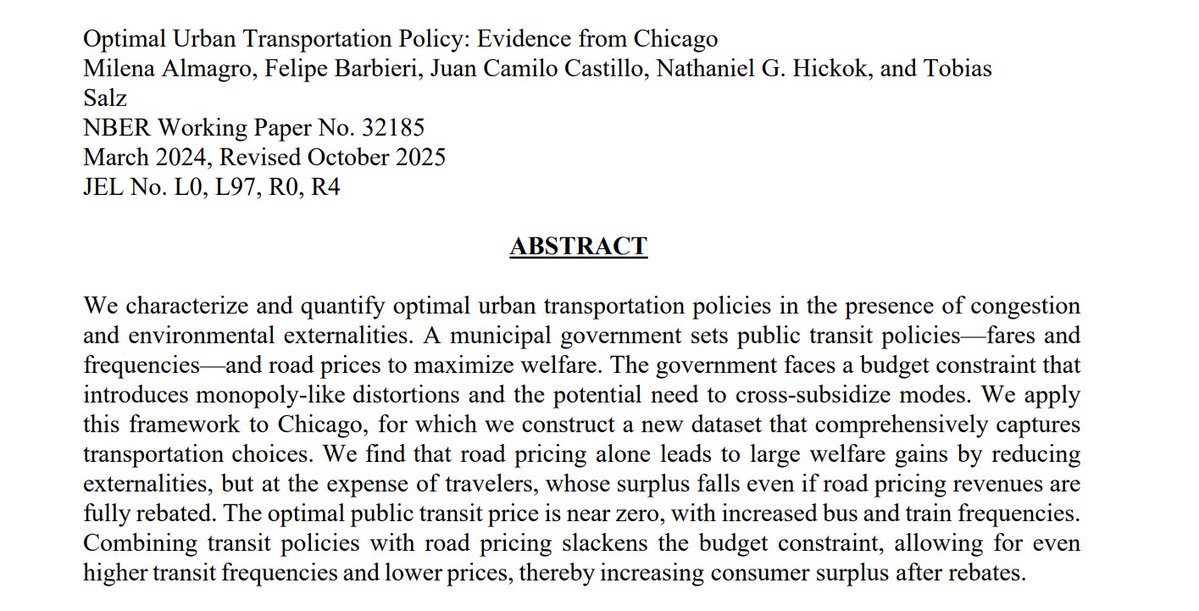
This paper is an absolutely monumental piece of work. Given incredibly detailed data on how people travel in Chicago, can one calculate the optimal prices of vehicles, roads, and public transport? It turns out -- free buses are correct! And we need massive taxes on vehicles. 1/
👀👀
Very very interesting — data on disability accommodations in college, at last!
Many of us have suspected that high-income students are benefiting the most from disability accommodations. Some answers!
🧵 as I read 1/
🚨1/N Really excited to announce a new working paper, “Interviews” 🚨
We demonstrate that interviews allow workers to screen firms and preview whether the job is a good match for them—using ~500k Glassdoor reports + a randomized field experiment. 🧵
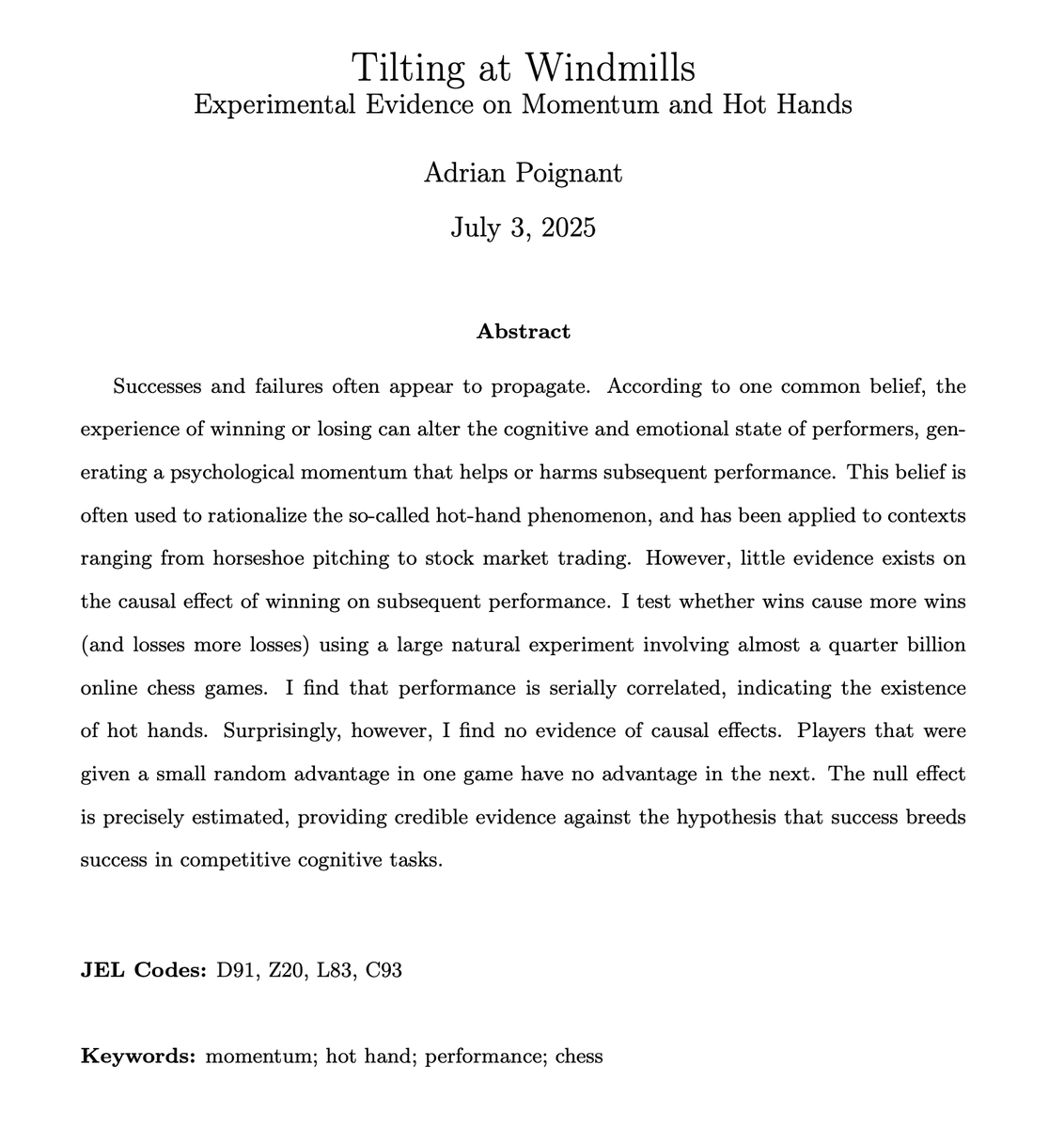
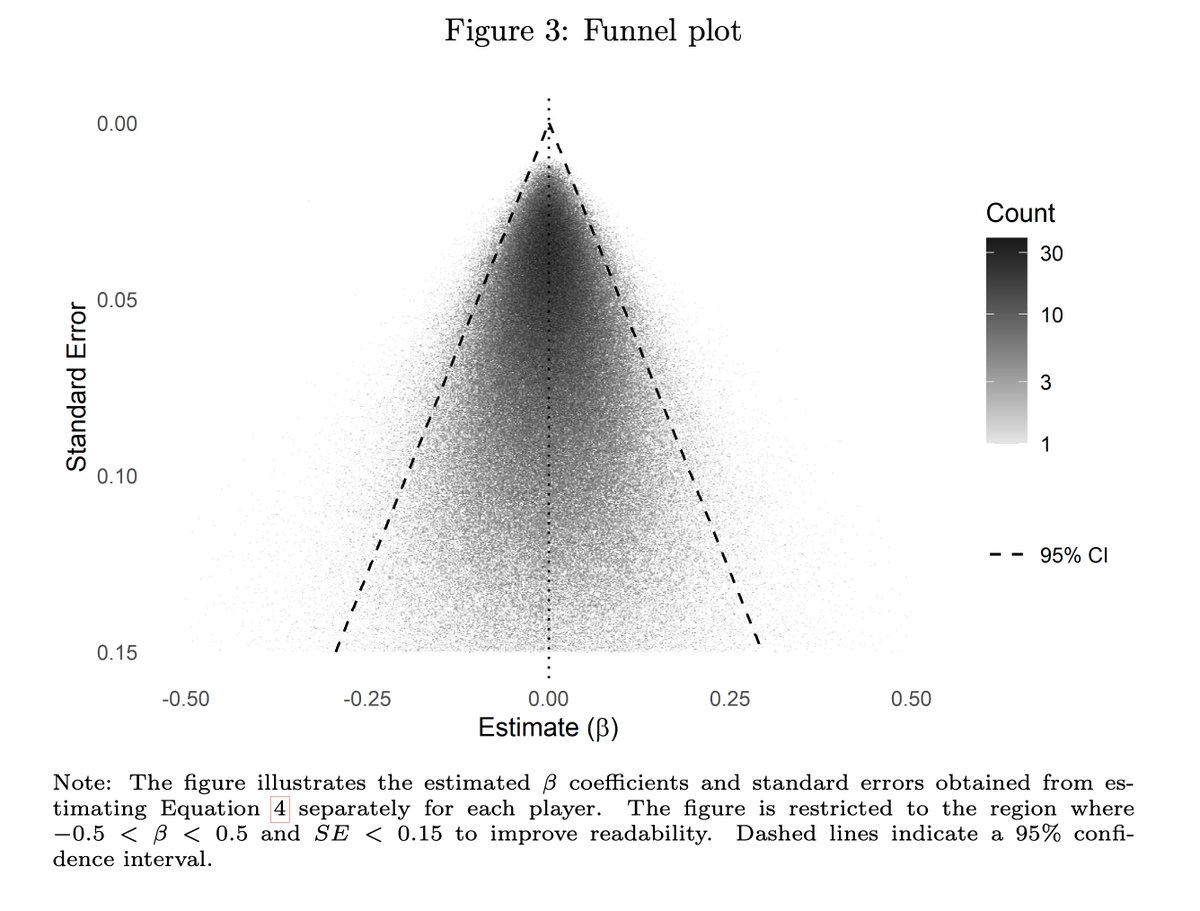
An economist in Sweden just got a hold of the data from a quarter of a billion online chess games held on @chesscom to test a classic question:
Does winning one game make you more likely to win the next?
In other words: do “hot hands” or “psychological momentum” exist in demanding cognitive competitions, like chess?
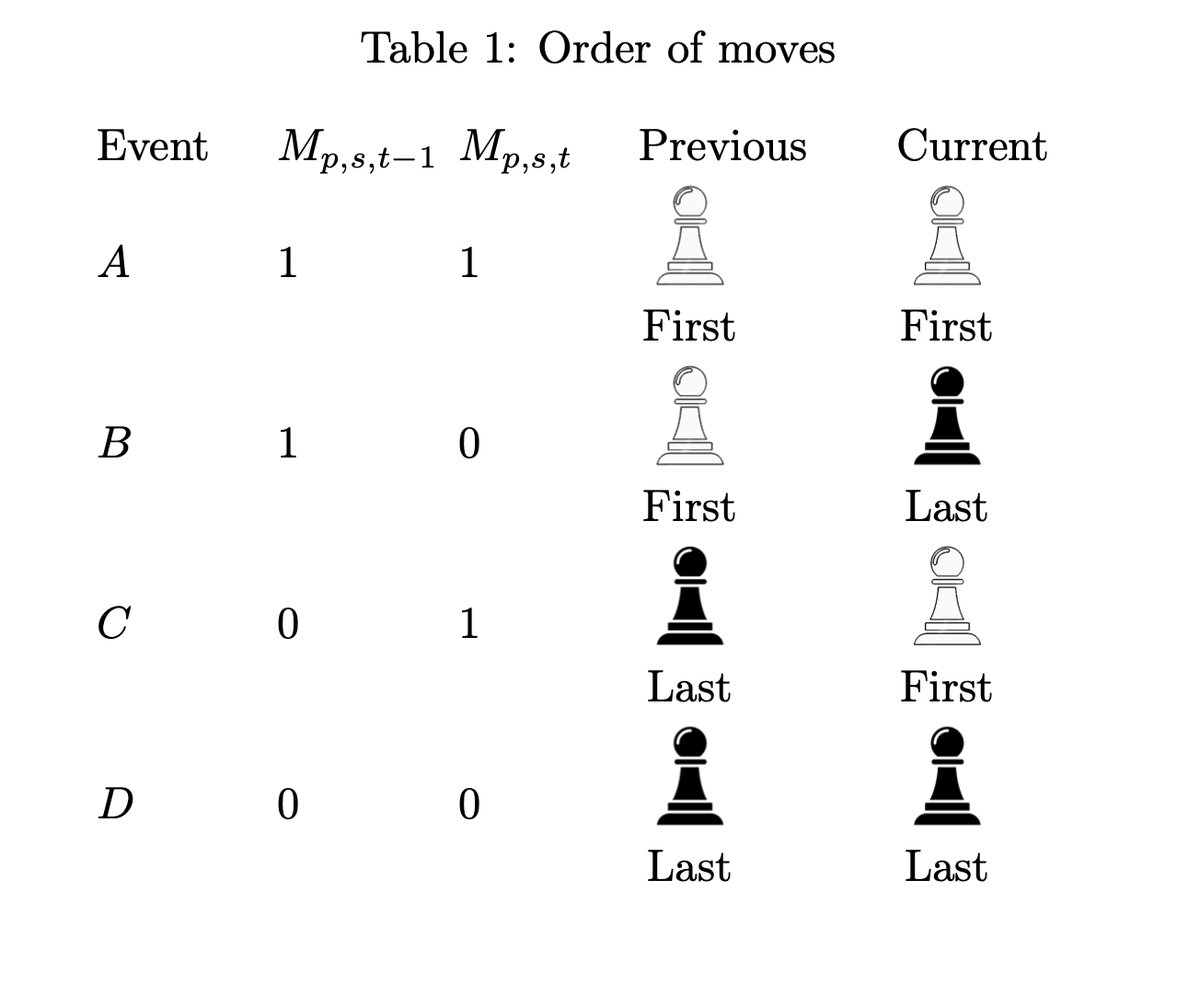
Using a natural experiment (randomly assigned color of pieces one uses which convey a first mover advantage), he found that...
✅ Serial correlation exists (winners are more likely to win again)
❌ But there's no causal effect; winning doesn’t cause future wins.
This null result holds across player skill levels and winning streak lengths.
So, in short, in the world of online chess, success doesn't necessarily breed success. Correlations arise from fluctuations: not momentum.
The mere suspicion of cheating changes fairness views considerably and leads to a strong polarization. In the May issue, by Stefania Bortolotti (@Borty_ste), Ivan Soraperra, Matthias Sutter (@MattSutter_MPI), and Claudia Zoller (@claudia_zoller). https://t.co/ADvNqsJNe1
Forthcoming in the JEL: "Difference-in-Differences Designs: A Practitioner’s Guide" by Andrew Baker, Brantly Callaway, Scott Cunningham, Andrew Goodman-Bacon, and Pedro H. C. Sant'Anna. https://t.co/usGVoaPfkx