I am a PhD student in Computer Sciences for neuroimaging, building platforms to connect experts and make their work better, faster and easier using @nextflowio.
Agile. XP. Scrum. Iterative development. We literally invented these ways of working because software isn't deterministic or predictable. Now suddenly the fact that AI isn't deterministic is the blocker?
Let's be honest about what software development actually looked like before agentic coding.
Requirements changed mid-project. Stakeholders moved the goalposts weekly. Teams rewrote features because the market shifted, a competitor launched, or someone in management had a new idea on a Tuesday. We built feedback loops, sprint reviews, and MVPs specifically because nobody could predict what the finished product would look like on day one.
That wasn't failure. That was the job.
And yet, a chorus of pundits now frames AI as uniquely unreliable because it doesn't produce identical output every time. As if human teams ever did. As if two developers given the same brief would write the same code. As if any project plan survived first contact with reality.
The "deterministic human vs. non-deterministic AI" argument isn't just wrong. It's intellectually dishonest. It cherry-picks one property of AI, strips away all context, and compares it to a version of human software development that never existed.
We can build reliable systems with non-deterministic components. We've been doing it for decades. Every test suite, every code review, every CI/CD pipeline exists because humans are unpredictable. We didn't eliminate the unpredictability. That would be impossible. Instead we built guardrails around it.
AI needs the same approach. Solid reliable processes. Automatic validation and verification. Guardrails! And we know how to build those.
So the next time someone tells you AI can't be trusted because it's non-deterministic, ask them one simple question:
When was software development ever deterministic in the first place?
Big updates for the Nextflow @code Extension! 🚀
🔍 Workflow view – Visualize logical structure of pipelines
⚙️ Process view – See all processes in one place
🌐 Seqera view – Manage connected CEs directly in the IDE
📚 Resources view – Quickly access Copilot, AI tools & training
🚀 @OHBM Time Machine is here! We’re uploading all past annual meeting recordings to the OHBM YouTube channel, thanks to the Program, Education, and Communications Committees. 2022 & 2023 are already up, with more coming soon, including #OHBM2024!
📺 https://t.co/cDr62v9lIQ
4/ 🧲Advanced MRI reveals how brain networks remodel after surgery for operculo-insular epilepsy. This study shows early connectivity reductions and compensatory enhancements, shedding light on recovery mechanisms. 💡⏩️ Check out: https://t.co/Uw7kTVck8E
🎶nextflow, nextflow, the king of workflow ! From HPC to laptop🎶 - AI country song about @nextflowio and @nf_core
https://t.co/4Qs2WpnL3u
Special thank to @FrancoisRheault for the masterful prompting
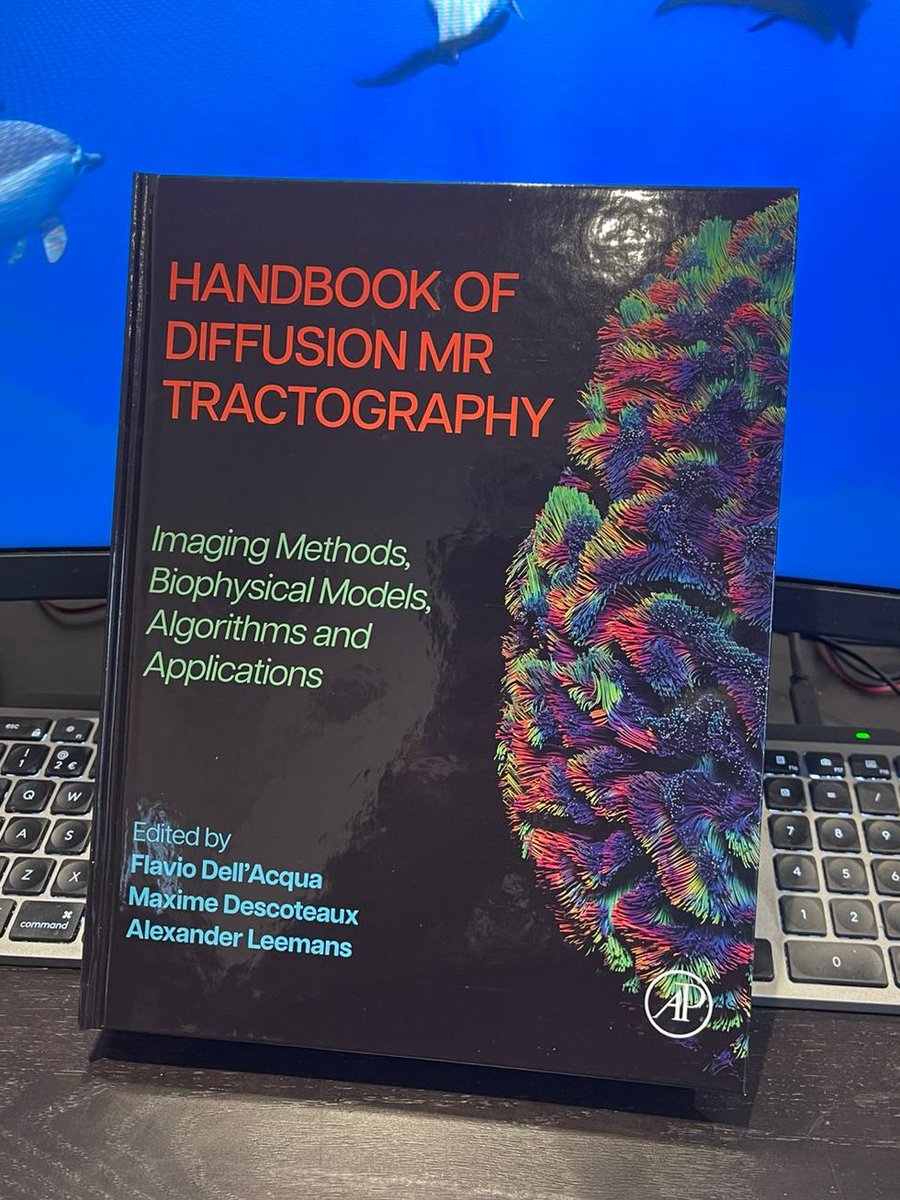
After many years in the making, the handbook of #tractography is now available with a multitude of exciting chapters to read written by experts in the field 🧠
Find this topic exciting? Consider a free membership here: https://t.co/M2TSMwjda6
I had the chance to participate in the annual #NextflowSummit 2024 in Boston and the opportunity to showcase our work. Thank you so much @SeqeraLabs@nextflowio@nf_core for an incredible week of awesome collaborations and enlightening discussions ! https://t.co/8cyCJ9IfrY
The @nf_core paper is out in @NatureBiotech ! 🍾 https://t.co/ZnPGuFDBd1 📖🤓 Read about how the @nf_core framework provides community-curated @nextflowio bioinformatics pipelines, ready for use across any institute or research facility ✨🧬🧫🖥️ (1/5)
3/4 🧵 @AlexVCaron shared the evolution of diffusion MRI processing with nf-scil, a Nextflow DSL2 repository. Their efforts are making dMRI research more reproducible and efficient, paving the way for better clinical translations. 🧠 #NextflowSummit#dMRI#MedicalImaging
Delve into the world of diffusion MRI processing with @AlexVCaron! 🧠 As a PhD Candidate at @USherbrooke, he's revolutionizing the field with his talk "Mining diamonds with wooden hammers: getting diffusion MRI processing into the age of steel." https://t.co/CYtqmDcMBx