🇺🇸 У Небрасці на тлі заходу сонця зафіксували суперкоміркову грозу — один із найрідкісніших і найпотужніших типів шторму.
Це природне явище часто стає причиною сильних торнадо, великого граду та шквального вітру.
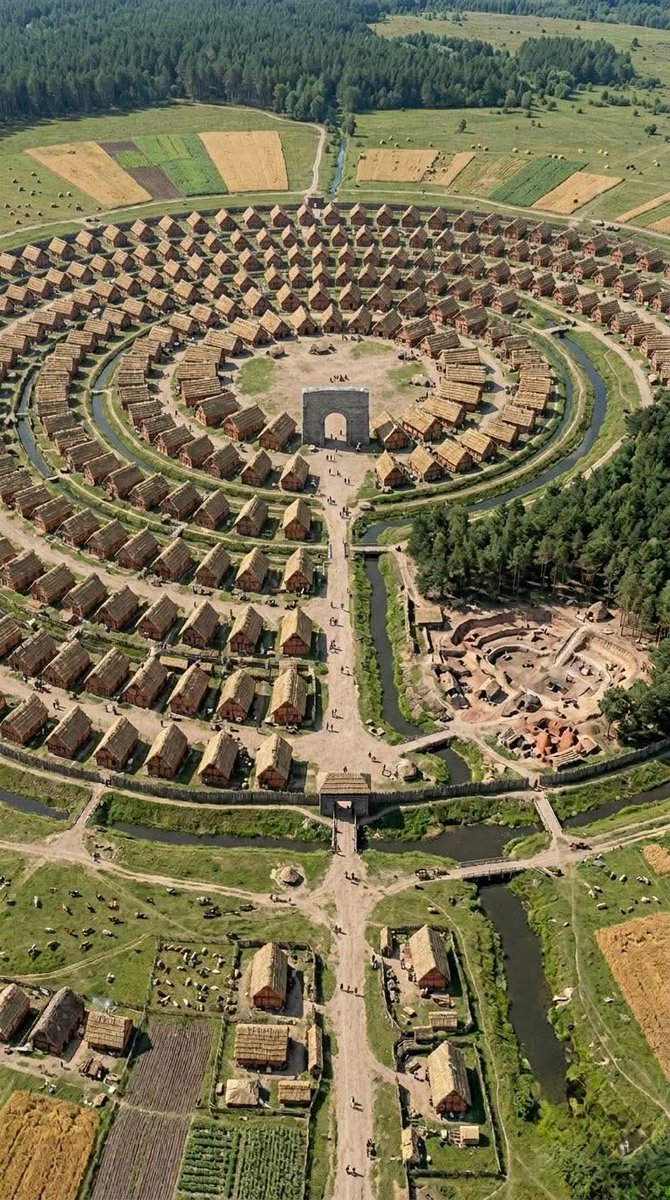
Про те як жили наші пращури ...
📌Цікаво про українське!
Чому трипільці «кидали все» і йшли геть?Розбираємо міф про «с/г неуків»
🖇️Нещодавно в коментарях виникло гаряче питання:як народ,що будував двоповерхові мегаполіси на десятки тисяч людей,міг бути настільки нелогічним, щоб
The Nobel Prize-winning discovery may need revising.
Since the late 1990s, observations of distant Type Ia supernovae—exploding stars used as "standard candles" due to their consistent peak brightness—have shown that the universe's expansion is accelerating, attributed to a mysterious component called dark energy. This finding, which built on earlier work and culminated in the 2011 Nobel Prize in Physics for Perlmutter, Schmidt, and Riess, has been a foundational pillar of the standard ΛCDM cosmological model (where Λ represents a constant dark energy density).
A recent study challenges this picture by identifying a significant systematic bias in supernova luminosity tied to the age of their progenitor stars and host galaxies. Researchers from Yonsei University analyzed a large sample of about 300 Type Ia supernova host galaxies with direct age measurements. They found that, even after standard luminosity corrections (e.g., light-curve shape and color), supernovae from younger stellar populations appear systematically fainter, while those from older populations appear brighter. This progenitor age effect correlates strongly with standardized supernova magnitude at over 5.5σ significance (equivalent to 99.999% confidence in the reported bias).
The commonly applied "mass-step" correction (which accounts for host galaxy mass) does not fully address this issue, as progenitor age and host mass evolve differently with redshift. After applying a redshift-dependent correction for this age bias, the supernova dataset no longer supports constant dark energy in the standard ΛCDM framework. Instead, the adjusted results align more closely with recent baryon acoustic oscillation (BAO) measurements from the Dark Energy Spectroscopic Instrument (DESI), which favor evolving dark energy models (such as w₀wₐCDM, where the dark energy equation-of-state parameter varies over time).
When combined with cosmic microwave background (CMB) data, the analysis indicates that the universe's expansion may have already transitioned into a decelerating phase in the present epoch, with dark energy evolving (and weakening) more rapidly than previously assumed. This could help address discrepancies like the Hubble tension (differing expansion rate measurements) but represents a potential paradigm shift if confirmed.
Future observations from the Vera C. Rubin Observatory, expected to identify thousands of new supernova host galaxies (over 20,000 in some projections), could provide a rigorous test of these findings.
[Son, J., Lee, Y.-W., Chung, C., Park, S., & Cho, H. (2025). "Strong progenitor age bias in supernova cosmology – II. Alignment with DESI BAO and signs of a non-accelerating universe." Monthly Notices of the Royal Astronomical Society, 544(1), 975–987. DOI: 10.1093/mnras/staf1685]













![Rainmaker1973's tweet photo. The Nobel Prize-winning discovery may need revising.
Since the late 1990s, observations of distant Type Ia supernovae—exploding stars used as "standard candles" due to their consistent peak brightness—have shown that the universe's expansion is accelerating, attributed to a mysterious component called dark energy. This finding, which built on earlier work and culminated in the 2011 Nobel Prize in Physics for Perlmutter, Schmidt, and Riess, has been a foundational pillar of the standard ΛCDM cosmological model (where Λ represents a constant dark energy density).
A recent study challenges this picture by identifying a significant systematic bias in supernova luminosity tied to the age of their progenitor stars and host galaxies. Researchers from Yonsei University analyzed a large sample of about 300 Type Ia supernova host galaxies with direct age measurements. They found that, even after standard luminosity corrections (e.g., light-curve shape and color), supernovae from younger stellar populations appear systematically fainter, while those from older populations appear brighter. This progenitor age effect correlates strongly with standardized supernova magnitude at over 5.5σ significance (equivalent to 99.999% confidence in the reported bias).
The commonly applied "mass-step" correction (which accounts for host galaxy mass) does not fully address this issue, as progenitor age and host mass evolve differently with redshift. After applying a redshift-dependent correction for this age bias, the supernova dataset no longer supports constant dark energy in the standard ΛCDM framework. Instead, the adjusted results align more closely with recent baryon acoustic oscillation (BAO) measurements from the Dark Energy Spectroscopic Instrument (DESI), which favor evolving dark energy models (such as w₀wₐCDM, where the dark energy equation-of-state parameter varies over time).
When combined with cosmic microwave background (CMB) data, the analysis indicates that the universe's expansion may have already transitioned into a decelerating phase in the present epoch, with dark energy evolving (and weakening) more rapidly than previously assumed. This could help address discrepancies like the Hubble tension (differing expansion rate measurements) but represents a potential paradigm shift if confirmed.
Future observations from the Vera C. Rubin Observatory, expected to identify thousands of new supernova host galaxies (over 20,000 in some projections), could provide a rigorous test of these findings.
[Son, J., Lee, Y.-W., Chung, C., Park, S., & Cho, H. (2025). "Strong progenitor age bias in supernova cosmology – II. Alignment with DESI BAO and signs of a non-accelerating universe." Monthly Notices of the Royal Astronomical Society, 544(1), 975–987. DOI: 10.1093/mnras/staf1685]](https://pbs.twimg.com/media/HBsnDVUXQAAwLAp.jpg)