Happy to share our latest work with Luke Maurits and Daniel Haun in Scientific Reports. https://t.co/4BhnJ6raXQ We explored whether chimps engaged in competitive altruism in a triadic UG where two proposers could send offers to a responder who could only accept one offer
Delighted to announce that @CCLABUCSD research on button trained dogs will be featured in the @netflix documentary INSIDE THE MIND OF A DOG premiering tomorrow!
Also, our first empirical paper on this project will appear on August 28th! @UC_Newsroom@UCSD
https://t.co/bj3mkvKLLo
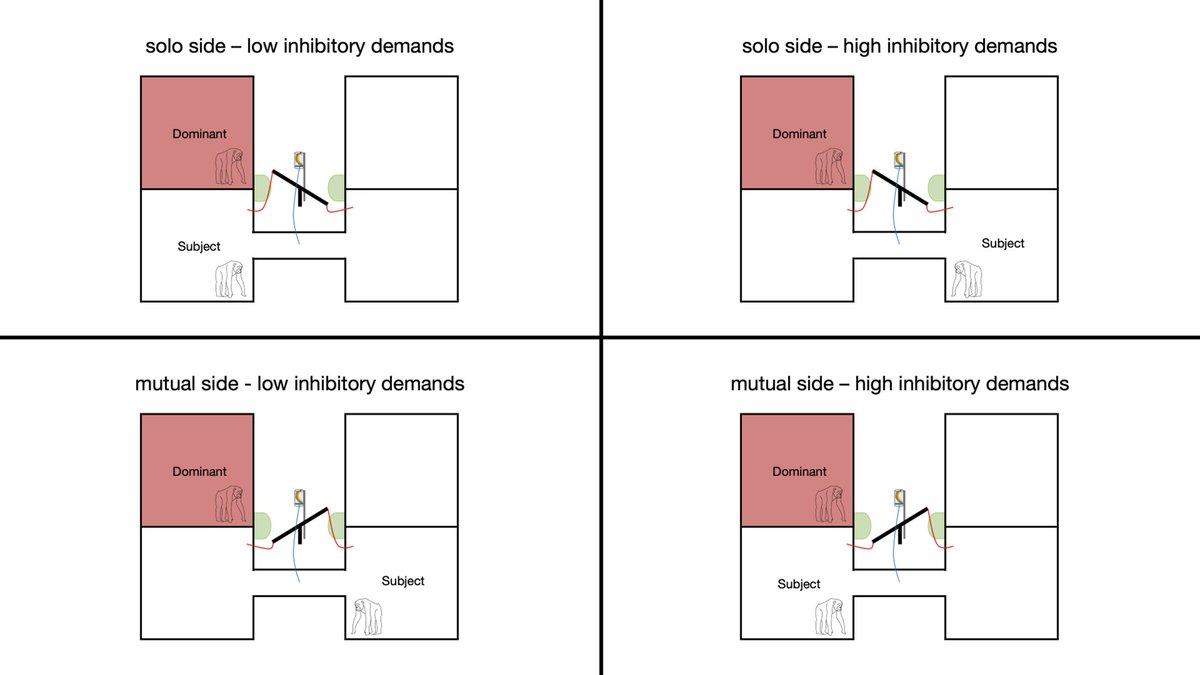
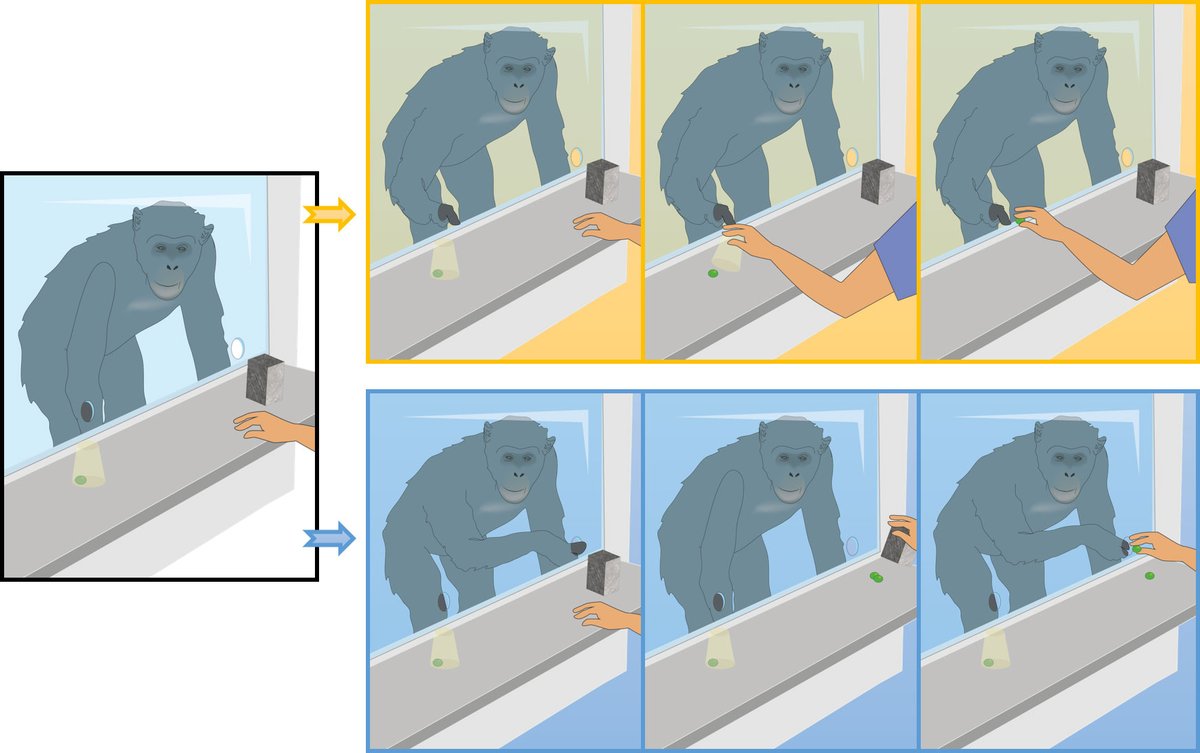
Humans modify their environment to grant or prevent others’ access to valuable resources (e.g., using locks). Here we show that chimpanzees can also strategically manipulate their environment to maximize their own and deny a conspecific access to food.
https://t.co/81ZlxzrNxm
Chimpanzees (Pan troglodytes)
strategically manipulate their
environment to deny conspecifics
access to food... See below the 2x2 design and here is the free link to the manuscript: https://t.co/81ZlxzrNxm
if you want to see the findings @CARTAUCSD @UCSD
We'r bringing back the ✨BRIDGING THE TECHNOLOGICAL GAP WORKSHOP✨!!!
Join us in Aug @MPI_EVA_Leipzig to learn about cutting-edge tech innovations like eye-tracking & motion-tracking to study human & animal minds.
More info and app here: https://t.co/55KXMYPGsp
A study led by #UofStirling's Dr Alejandro Sanchez Amaro has shed new light on the behaviour of the closest living relatives of humans – #chimpanzees. Read the full story 👉 https://t.co/jpLA02cfOk @MPI_EVA_Leipzig @StirlingScience @StirUni_Psych
@CaicoyaA Si, la idea de competitive altruism venía desde el principio por los estudios con adultos y niños, pero estoy de acuerdo contigo y de hecho, en el artículo, decimos que se puede interpretar como un "economic bargaining game". Me alegro que te haya gustado!
Happy to share our latest work with Luke Maurits and Daniel Haun in Scientific Reports. https://t.co/4BhnJ6raXQ We explored whether chimps engaged in competitive altruism in a triadic UG where two proposers could send offers to a responder who could only accept one offer
They did so by offering more than what was expected if they acted randomly or offered the smallest possible amount. We suggest that competitive altruism in chimps does not emerge just as a by-product of them trying to increase over previous losses.
The Taï chimpanzees have lost their greatest champion. Christophe Boesch, founder of the @TaiChimpProject and Wild Chimpanzee Foundation, has passed away, age 72. His dedication to the science and protection of chimpanzees is an inspiration to all of us. He will be hugely missed.
Usually, I have no announcements...but today is my first day as a Lecturer in Psychology (Animal Cognition @BERG_Stirling) at @StirUni! really happy to be here and very thankful to the @MPI_EVA_Leipzig for all the great moments!
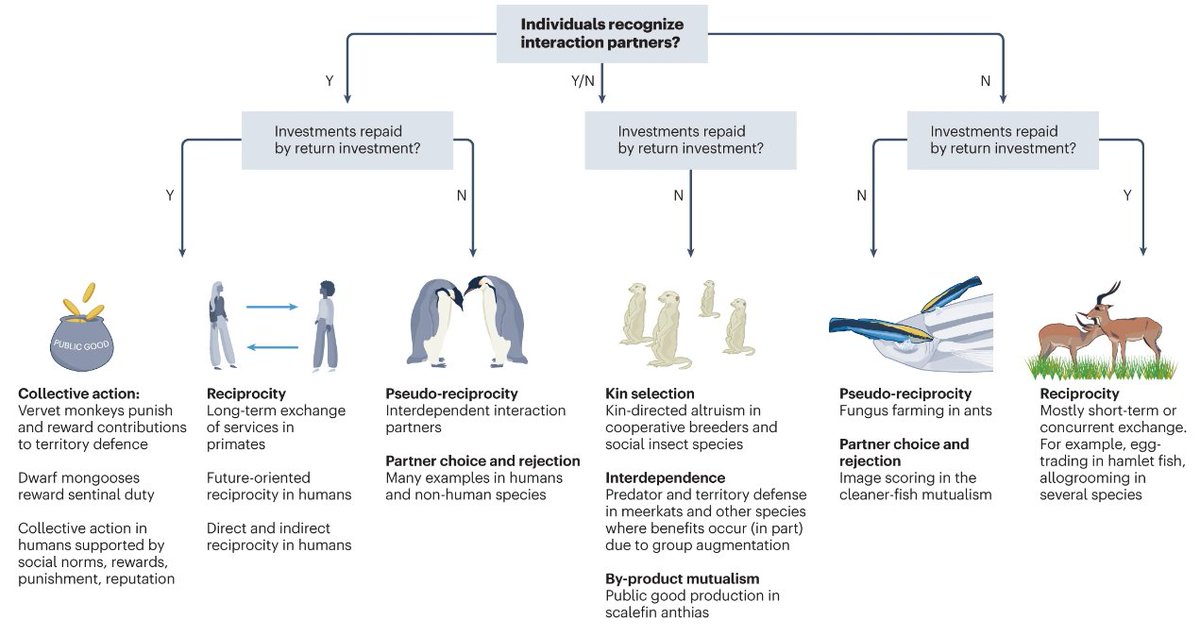
'The cognitive challenges of cooperation in humans and animals', a new Review by Alicia P. Melis & Nichola J. Raihani
Web: https://t.co/nqk9ppX4dz
PDF: https://t.co/iV2z6JLu72
More evidence that chimpanzees reason about different possibilities!
Using a new paradigm, we found that chimpanzees prepare for alternative possible outcomes. Paper out @royalsociety https://t.co/RoiZoVLlHk
Here is Okech protecting two possible targets from a competitor
1/5
🚨Please share widely🚨 We're looking to hire an enthusiastic PhD student working on the coordination of joint action in human children of two societies, as part of our @VolkswagenSt-funded project on communicative plasticity in🐵🦧🗣️ Deadline June 30th. https://t.co/hC2ialQApa
#Children are more #curious to explore the unknown than great #apes, but after a glimpse of the potential rewards, apes learn to investigate uncertain options. New study by @Alex_Primate & @RossanoFederico in @PLOSONE. More: https://t.co/BdnkcagJiD & https://t.co/jwSE9CQJk4