@endowment_eddie Not to mention if they have good managers then their PE/VC has probably been performing very well. Several top tier VC firms had excellent performance in 2025 for example.
@pavelprata@endowment_eddie Not all low DPI / high IRR funds are created equal. If a 2017-2018 fund has large positions in private mag 7 / trophy assets, then they are not in the zombie zone. @endowment_eddie correctly points out that the next 2 years will be judgement day.
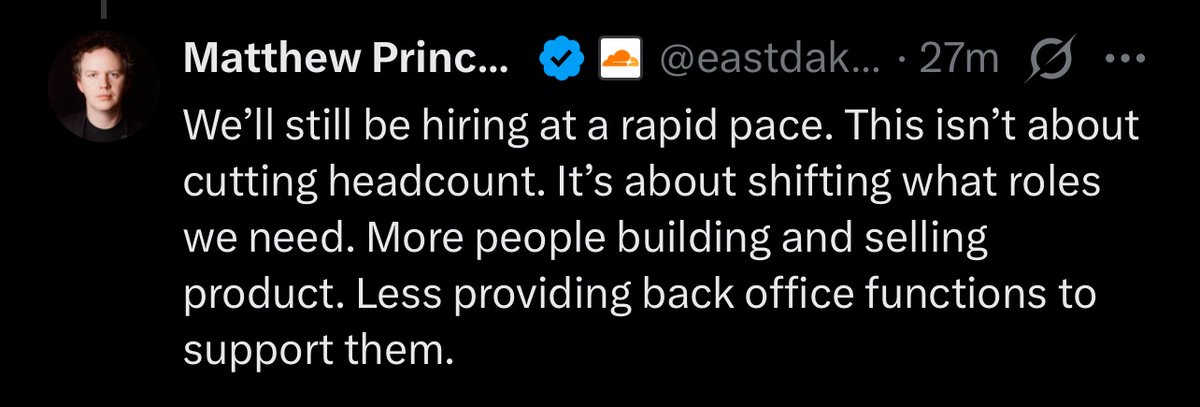
What’s actually happening is these businesses are stripping out the context carriers to hire more innovators and marketers. I wrote about what is happening here
https://t.co/WS2NLM67Mv
@pmarca is right.
When a company becomes more productive, it doesn't sit still. It goes after more customers, enters new markets, builds new products. Productivity gives you leverage, and leverage makes you want to do more, not less.
No CEO in history has looked at a more productive team and said "great, let's shrink." They hire more. That's what we're seeing in our data.
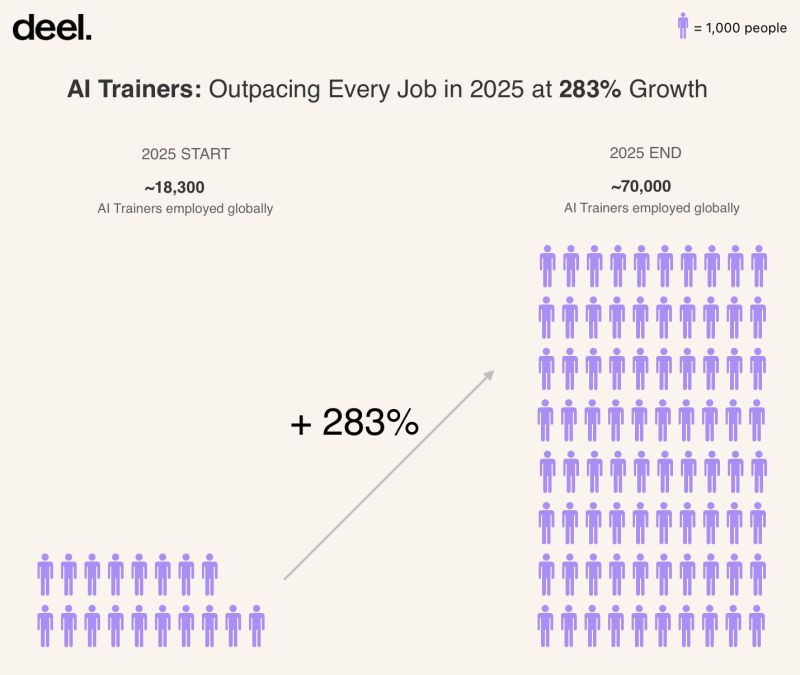
We also tend to forget that new tech creates new jobs and industries. A job title that didn't exist now demands 70k people (+283% YoY).
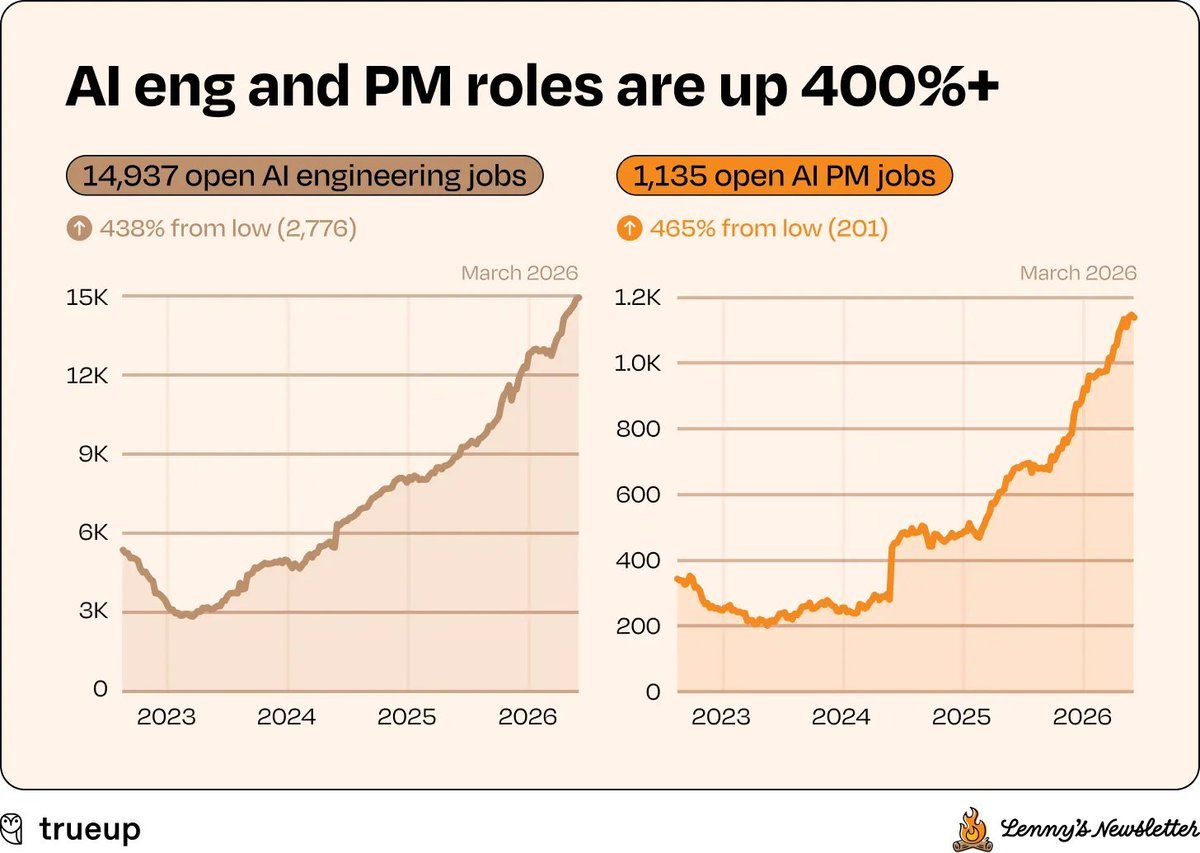
For jobs that directly experience the productivity gains, demand should surge as CEOs watch how productive these people are and how much more they could be doing.
(Images from @deel and @lennysan)
@NickTimiraos@BobEUnlimited Again I agree we’ve had a few good months of lower shelter inflation, but when I hear about “affordability” issues in the US (different issue than MOM or YOY CPI/PCE), housing IMO is the #1 secular driver of that problem, followed by healthcare and higher education.
@NickTimiraos@BobEUnlimited That’s fair and I agree. Housing and healthcare costs are the big elephants in the room that need to be addressed. To me that’s a bigger issue than tariff inflation.
@BobEUnlimited@dampedspring Bottom line is financial advisors waded into a space that they had no business investing in due to lack of knowledge, experience, expertise. Wanted to offer clients a shiny new toy and got burned. So predictable. Illiquid assets belong in traditional 10+ year drawdown vehicles
@endowment_eddie Agreed. In past lives, allocators would hand wring over 1-3% o/w and u/w various mkt segments (i.e. should we be o/w or u/w China, India, small caps, etc). $NVDA is bigger ACWI weight than every country except US and Japan (and bigger than R2K) and no one has that discussion
“The Market” is just a guy staring a two screens. One has Truth Social. The other is Anthropic's blog
In front of him are 5 buttons that say: Software, Semis, European Defense, Energy, and Gold.
Trump or Anthropic post and he hits a button to make those stocks move +5% or -5%
@awealthofcs Advisors who put clients into these products demonstrated that they do not have the knowledge nor expertise to invest in private markets (or even worse, they did have the knowledge but chose to put clients in anyways b/c good for business)
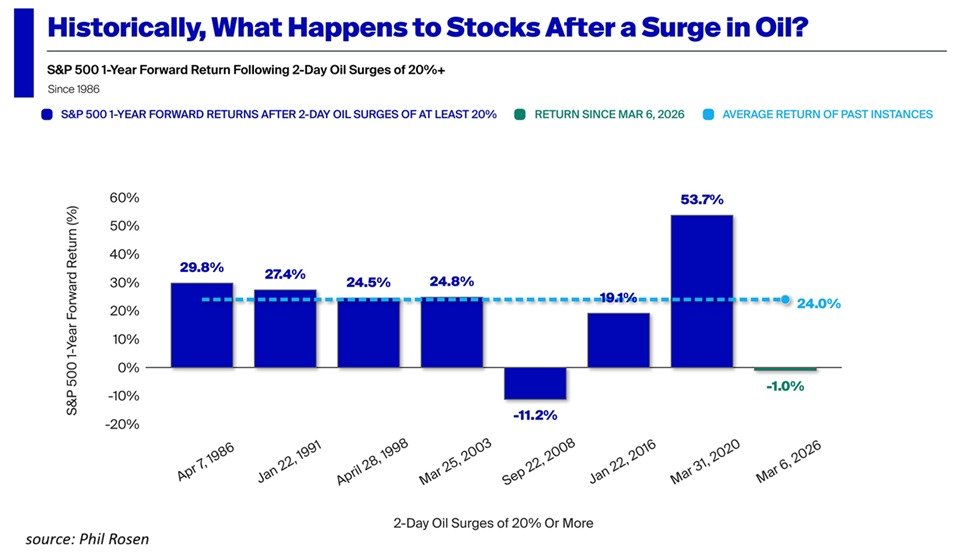
History suggests oil shocks are buying opportunties:
Over the last 40 years, the S&P 500's 12-month return following a 2-day oil spike of +20% has been +24%.
In 6 out of 7 instances since 1986, the S&P 500 has been higher 1 year after such an oil spike.
The strongest recovery was +54% following the 2020 pandemic crash, driven by a massive stimulus response from central banks and governments.
The only negative outcome was -11% during the 2008 Financial Crisis.
Put differently, every oil shock over the last 40 years that did not lead to a prolonged recession was followed by a strong rally.
Oil shocks are historically brief and provide long-term buying opportunities.
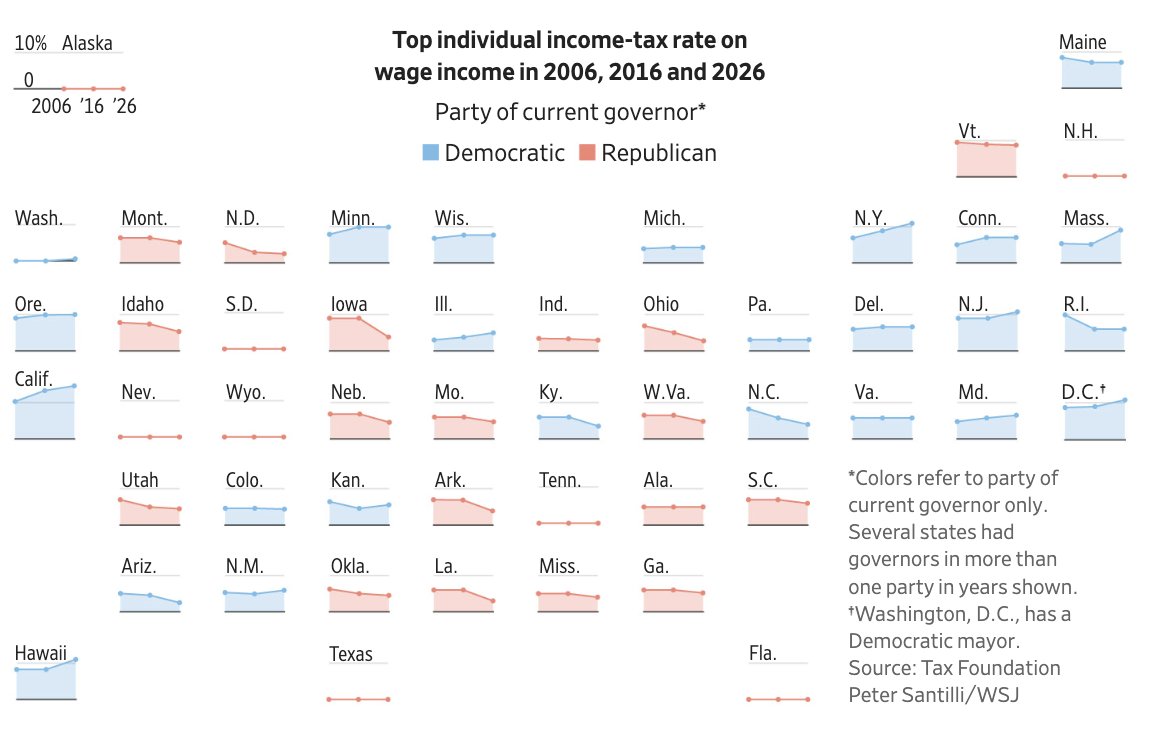
Blue state playbook: create a supply problem, throw subsidies at the symptoms, then raise taxes to pay for it all.
Because you increased demand instead of supply everything gets more expensive. See: housing, energy, healthcare, childcare in CA vs TX.
Eventually, people leave (or don't come), including many wealthy folks in the tax base (the top 1% pay 45% of taxes in CA)… but you keep spending, so taxes have to keep going up.
Washington, New York, California are all moving to increase taxes, meanwhile, red states are moving in the opposite direction, competing for the same wealthy residents that blue states are pushing away, and they are attracting them, and many of them are bringing jobs with them… and people can live there because it’s cheap.
I spent some time in Texas this year and it’s easy to see why their model works- it’s the real abundance state… They just let people build and don’t get in their way. Often ugly, but it is cheap to live there, and that makes a huge difference.
They have TONS of immigrants for this reason. They have jobs and it's cheap to live there- pretty simple. Despite all the subsidies for immigrants in California, and lack of them in Texas, immigrants choose Texas over California... Cheap housing does more for quality of life than any government program.
Same pattern with solar. California subsidizes demand while making it painfully slow to permit and install, while Texas just makes it easy to build. Texas generates more solar power than California and is adding new capacity at 7x the rate.
Why don't I move? SF has network effects in tech and is the most beautiful state in the US. I just wish it were better governed!
a16z's @bhorowitz says the California wealth tax is the "best strategy" to dismantle Silicon Valley that he's ever seen.
"It's been so hard to break the Silicon Valley network effect, but this is the best strategy I've seen."
"Norway has an unrealized capital gains tax. Norway's got a lot of extremely smart people, great entrepreneurs, but they all left."
"When you talk to entrepreneurs in Norway, they're like, 'I literally can't pay the tax because the company got marked up, and I own a lot of it, and I can't get that money out.'"
"'It's a private company. I'm stuck. So, I have to leave the country.'"
"There are basically no tech entrepreneurs in Norway now."
From his January appearance on the show.
Palantir cofounder @JTLonsdale:
“You want infinite jobs? Ban farm tools. We’d all be poor and everything would be more expensive.”
“The only way we get wealthier is doing more with less.”
“It’s ironic we have this luddite fear— it’s the only way we solve our national debt crisis. It’s the only way the working and middle class can more easily afford healthcare, cost of living, nice homes.”
“A lot of young people now, especially in cities, can’t afford the cost of living at all, they can’t afford to have kids. It’s a mess.”
“You need to destroy some jobs for the country to do better.”
@danprimack Far less contradictory than “AI is a bubble and doesnt work that well” and at the same time “AI is going to destroy the labor market and is dangerous for humanity”
In short run, many coming "we are doing layoffs due to AI" PR will be correcting for sins of 2020 era of over hiring versus anything to do w AI
Many larger tech companies could slim down 50% w/o any AI changes
Most AI productivity impact is still around bend
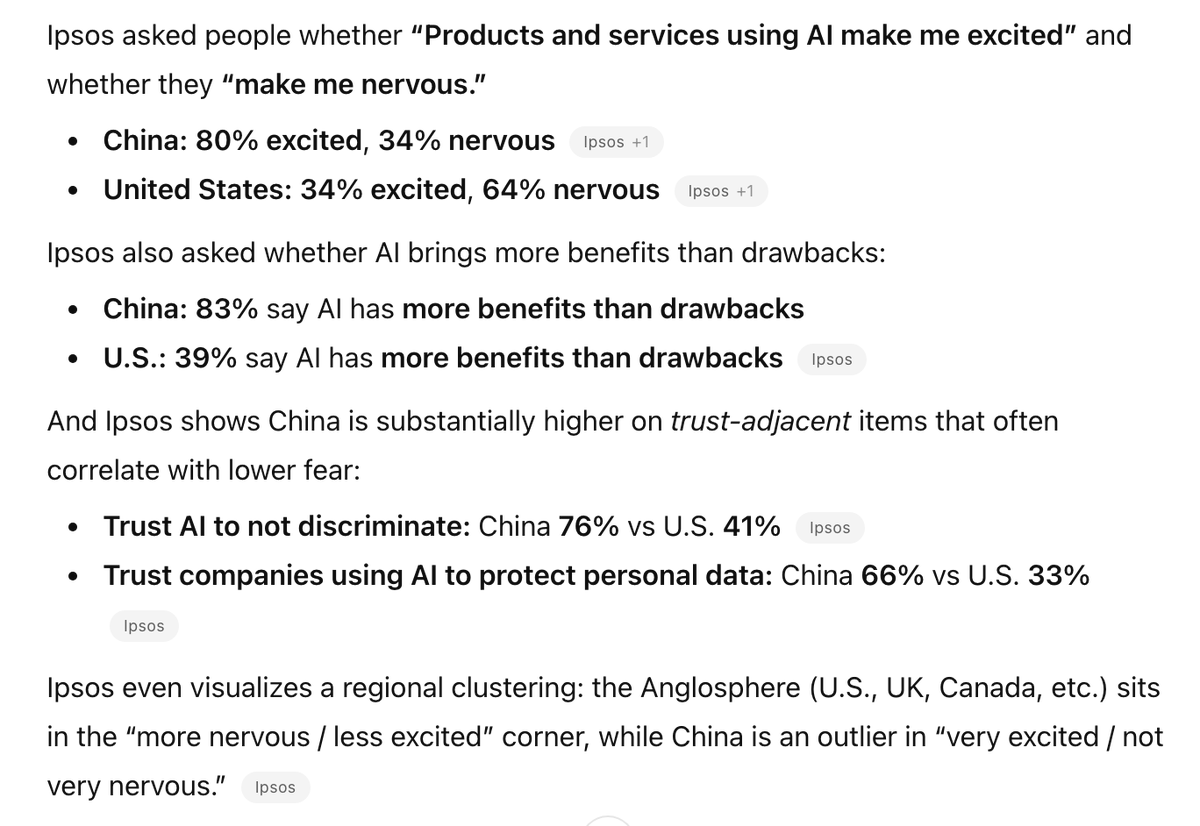
There is a real cost to intentionally spreading the "doomer" narrative over and over. Imagine being the early 1900s, and the USA polling as "anti-tractor" and some other country "pro-tractor." Its really no different.