SHIFT badge drop is live.
• Pre-register on https://t.co/HYzkdMqOV1.
• Complete the tasks.
• Reveal and share your badge.
This is where your points multiplier gets locked in.
🧵
It's your browser, but built for them.
Tracking you, profiling you, extracting from you with every move. It's fundamentally misaligned.
We're building one that isn't.
Say hello to Myne. The aligned browser.
Tell us what your browser gets wrong. We'll ship the fix.
Spent the day at #ShenzhenFairPlus robot expo.
Not as a spectator. As someone trying to figure out what's actually buildable right now, and what's still vaporware.
A few honest observations 👇
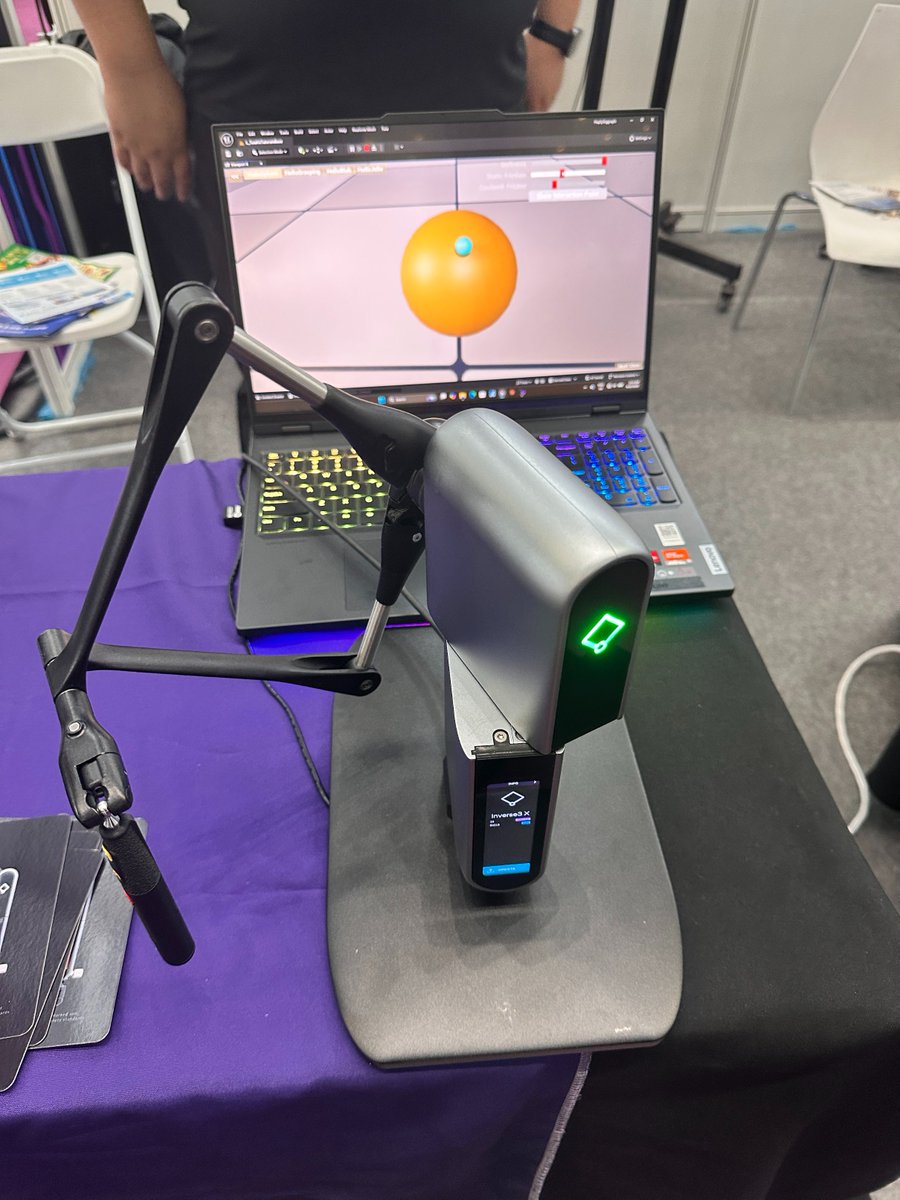
1/Haptic feedback hardware is further along than most people realize.
Saw the Haply Inverse3 X running a live demo — desktop device, lets you physically feel virtual objects through a robotic arm.
This is how robot teleoperation training data gets collected at scale. Quiet infrastructure, but important.🧵
How the fuck is CT grading this response on tone instead of product judgment?
Thinking the issue is that a warning appeared, that a user checked a box, or that the trade could technically be completed, is stupid.
The issue is that a leading interface in DeFi allowed a $50M order to move through a flow where catastrophic execution was an entirely predictable outcome. Once you know the order size, know the available liquidity, know the expected slippage, and know the probable output degradation, responsibility shifts to the system design itself.
At that point, hiding behind user consent is weak as fuck.
Consent inside a badly designed decision environment does not suddenly become good product architecture. Imagine using the same checkbox for acceptable slippage on a normal trade and on a trade that can lose $50M....
What they are doing, through lack of vision and lack of standards, is pushing liability downstream.
What makes this worse is that the solution is obvious.
Extreme order sizes should trigger a different class of interface behavior because they belong to a different class of risk.
Hard execution thresholds, delayed confirmations, forced acknowledgment of minimum output in large font, segmented execution paths, deeper routing logic, stronger friction as size detaches from liquidity, and escalation rules for absurd trades.
None of this requires a research breakthrough.
It requires teams to stop acting like legality at the transaction layer is enough to claim integrity at the product layer.
Aave has enough stature, enough resources, and enough industry visibility to know this.
So when one of the flagship names in crypto answers an event like this with “the warning was shown and the system worked as intended,” what it really communicates is something much uglier: the mindset of too many crypto founders is complacent as fuck, and that is exactly why the industry still struggles to earn the trust it keeps claiming it wants.
@kobixyzHQ Side note… Come to think of it, that’s why testnets are important. Projects should have tested for such cases and have guardrails in place. Cause this is not only bad for the guy who lost funds it also shows how the industry isn’t really ready for institutional funds.
@kobixyzHQ On the other hand, this is also a disaster at the platform level. As much as the AMM did exactly what it was designed to do, this type of loss is not supposed to be allowed even if it’s possible platforms should have multiple layers of checks to prevent this type of situations.