The sun is rising in New Orleans, on the first day of AHA 2025!
Tomorrow we show data from the DRAI MARTINI study that answers whether the superior sensitivity of DeepRhythmAI for arrhythmia detection leads to relevant diagnoses or just a mess of incidental findings?
Very proud on behalf of the whole study team that this abstract also won the Paul Dudley White Award for Norway.
Clinical Science Zone 2, 9.55 in the session "Harnessing AI: Innovations in Arrhythmia Detection and Management". Hope to see you there!
@SZDiederichsen@WFMMD@EmmaSvennberg@AlexanderPBenz #Medicalgorithmics #AHA2025
⚠️ New meta-analysis in @JAMANeuro shows high residual risk of stroke in AF patients—even with anticoagulation.
🧠 3.75%/yr risk of recurrence, 7.2% if stroke occurred despite OAC. HIGH
📉 1 in 6 have recurrent stroke at 5 yrs.
Urgent need for better prevention tools. #ESOC2025
Thrilled to share that the OCEANIC-STROKE trial (NCT05686070), led by @PHRIresearch & @BayerPharma, has successfully completed enrolment of over 12,300 participants with non-cardioembolic ischemic #stroke over a recruitment period of only 26-months!
🔗https://t.co/F8cLO1hAc2
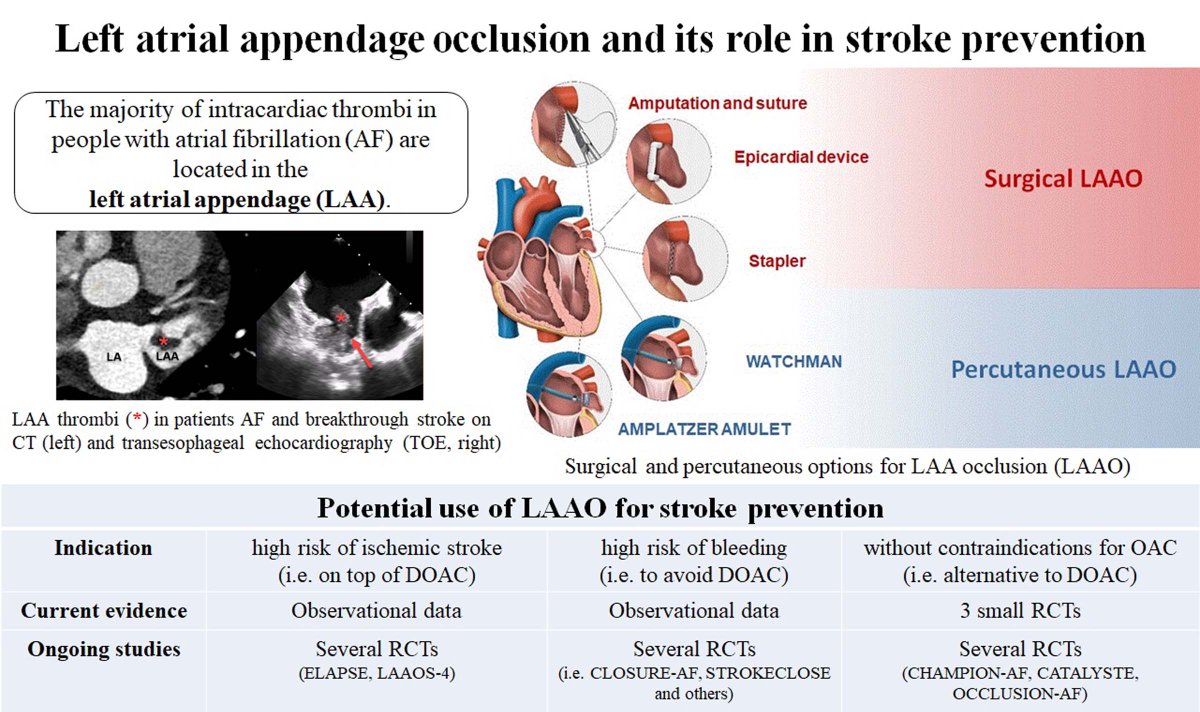
LAAO and stroke: We summarize current evidence & ongoing trials: promising option for AF patients to avoid OAC (i.e. after ICH, CAA) or if DOAC alone is not enough (i.e. after #breakthroughstroke) @AlexanderPBenz @ELAPSETrial @StrokeAHA_ASA https://t.co/E86tw0Cor2
Getting your real-time heart rhythm monitored for 10 days now requires an ECG technician to review and notify your doctor of a critical arrhythmia. A new study showed A.I. did better than technicians (98.6% vs 80.3%) for identifying these abnormalities
https://t.co/ztsiD5hluv @NatureMedicine
Everyone with an interest in AI, ECGs, or cardiology should read our paper out in Nature Medicine today! The DRAI MARTINI study tested the performance of DeepRhythmAI from #MEDICALgorithmics for direct-to-physician reporting of ambulatory ECGs. The results overwhelmingly favour the AI, with 14 times fewer missed diagnoses of critical arrhytmias.
Read it here: https://t.co/jhlIRSL4Qu
Here's the study in brief:
🏥 >200,000 days of ECGs from >14,000 patients
🩺 >50 experts provided 3-cardiologist beat-to-beat consensus panel annotations of >5,000 ECG events
🖥️ Innovative study design provides absolute rates of missed diagnoses of AF or SVT ≥30s, 3rd degree block, 3.5s asystole or >10s VT
Results:
🫀Missed diagnoses in 3.2/1000 patients by DeepRhythm and 44.3/1000 patients by techs
🫀Superior sensitivity (98.6% vs 80.3%)
🫀NPV >99.9% for DeepRhythmAI.
This study is the result of an awesome collaboration with true leaders in the field who not only gave their scientific expertise but also committed many hours of their own time doing beat-to-beat annotations of >5,300 ECG events, with consensus annotation on every single beat. This resulted in an impressive author list including @EmmaSvennberg@SZDiederichsen@DrJasonAndrade@WFMMD@AlexanderPBenz@EPjeff17@PlatonovPyotr@StavrosStavrak1@Cardiaficionado@Dominik_Linz@JuanBenezet@PhilippKrisai@SanjeevBhavnani@AlirezaOraii@ManningerMartin and many more!
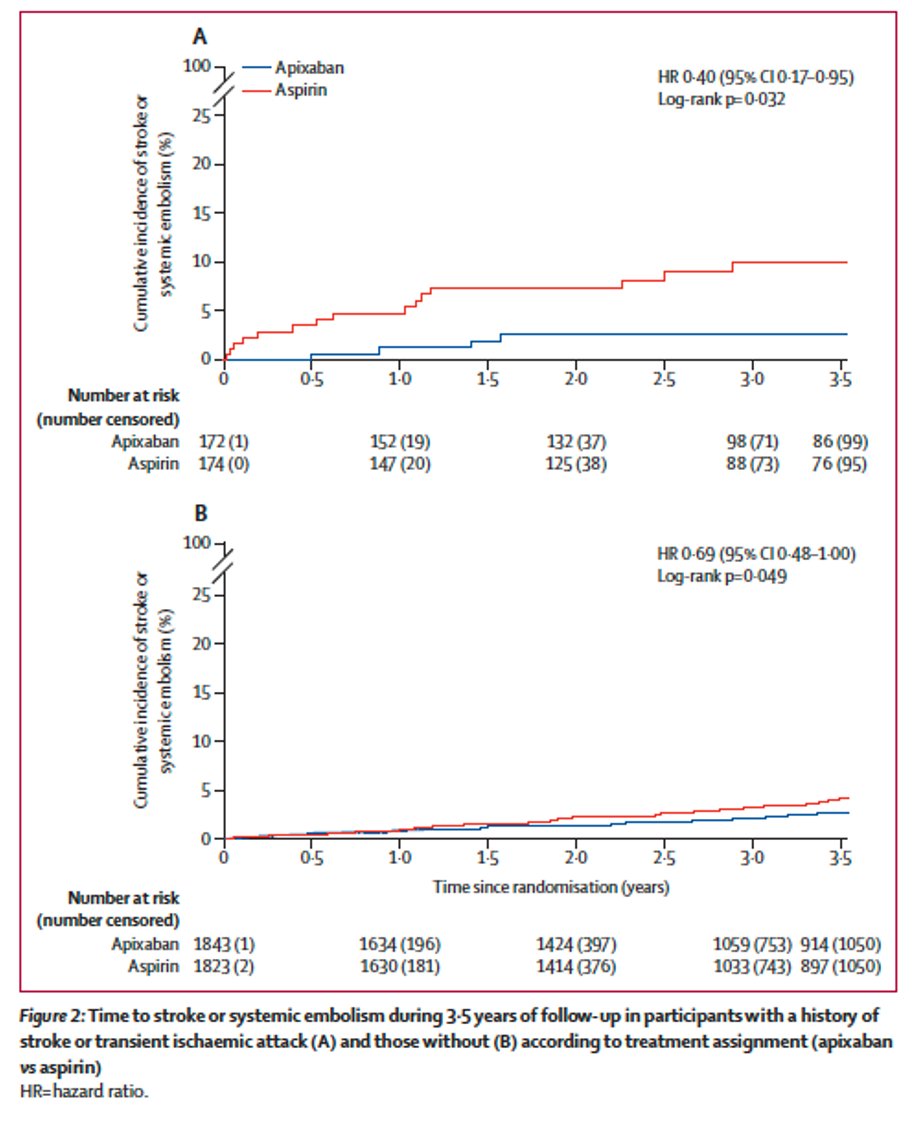
Should patients with #stroke and device-detected subclinical #AFib (SCAF) receive OAC?
Our subgroup analyses of the @Artesia_RCT published in @TheLancetNeuro provide novel insights indicating that they indeed should in the right setting.
https://t.co/lDwfDPaSsh
#CardioTwitter
Thrilled to announce that #EnrichAF completed enrolment of 948 patients in Q4 2024.
So grateful for the efforts of our global colleagues on reaching this milestone, despite the several challenges we've faced along the way.
Follow-up is due to complete in Q1 2026. Stay tuned!
@McmasterStroke Thanks very much for your support @McmasterStroke ! Cannot take credit for largest ICH RCT however. Only largest looking at this question But apparently size doesn’t matter ;)