@FranAltomare Con "I vestiti li puoi mettere comodamente tutti qua dentro" e "tutto questo a..." è soprattutto il concetto di tutto a trovarsi in ristrettezze non sanabili.
Scientists Have Been Quietly Studying Cats for Decades. The Results Are Unsettling.
Cats have been domesticated for roughly 10,000 years. In that time, they have changed almost nothing about themselves. Dogs were selectively bred into hundreds of shapes and temperaments to serve human needs. Cats, by most accounts, simply moved in, decided the arrangement suited them, and stayed largely the same animal they were in the wild. Biologists have a word for this: cats are functionally self-domesticated.
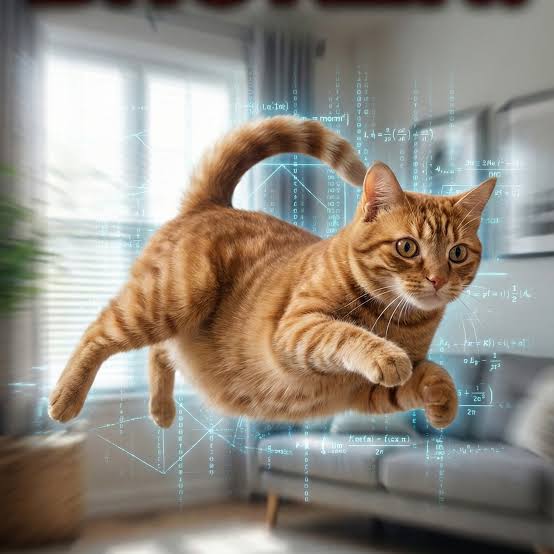
The engineering underneath that indifference is, by any measure, extraordinary. A cat’s inner ear contains a reflex system so precise that it can detect disorientation and begin correcting its body position in mid-air within 30 milliseconds, faster than the human eye can register movement. It is called the righting reflex, and it is why a cat dropped from height almost always lands on its feet. Biomechanics researchers at various institutions have spent years reverse-engineering it and still can’t fully replicate it mechanically.
Their purring turns out to not be purely emotional. The vibration frequency, between 25 and 150 Hz, sits within the range that stimulates bone density and promotes tissue regeneration. Some veterinary researchers believe this is why cats recover from orthopedic injuries at rates that consistently surprise clinicians. The cat, while appearing to simply sit on a couch, is running internal repair cycles.
The night vision advantage over humans, roughly six times greater sensitivity in low light, comes from a reflective layer behind the retina called the tapetum lucidum. It’s the same layer that makes cats’ eyes glow in the dark. Every feature that seems decorative has a function.
For 10,000 years, humans thought they adopted the cat. Current evidence suggests the cat evaluated the offer and accepted it on its own terms.
PREMIATI NEL MONDO. Condivido con voi questa soddisfazione. Il documentario “Federico Faggin, l’uomo che vide il futuro”, che ho ideato e diretto, ed è il frutto di uno splendido lavoro di squadra con il produttore Zeta Group, e altri collaboratori tra cui, in primis, Alessandro Visciano e Paolo Guerrieri, sta ottenendo notevoli riconoscimenti all’estero. In particolare:
-Ben cinque menzioni d’onore agli Indian Movie Awards per
Miglior documentario
Miglior regista al debutto (Marcello Foa);
Miglior produttoe (Massimo Belluzzo);
Miglior fotografia (Alen Bašič)
Miglior mixaggio del suono (Stefano Di Fiore).
-Premio per la miglior opera prima di un regista allo Sweden Film Festival.
-In finale al New Delhi Film Festival
-Selezionati al Film Festival di Barcellona
Noi tutti siamo davvero felici di poter dare visibilità mondiale a uno dei geni della nostra epoca, Federico Faggin, inventore di microchip, touchpad, touchscreen e che ora si dedica al rapporto tra spiritualità e fisica quantistica. Un genio italiano.
Vi propongo l’inizio del documentario che potete vedere integralmente su Rai Play
https://t.co/MhxbQ8AXAH.
@Agenzia_Ansa Se fosse unfit anche la metà di quel polsino, che esce così esageratamente dalla manica della giacca, i francesi sarebbero messi proprio male.
@AugustoMinzolin Mi perdoni, ma se ci fosse una base concreta e cogente per intervenire, o per ispirarsi, mi spiega xhè si è dovuto coniare il lezioso "volenterosi" che si attaglierebbe ad una scolaresca svogliata più che a rapporti di forza tra potenze belligeranti o costrette ad esserlo ?
@incel_aidigino Interessante tutto quest'intervento di Stefano Reali, autore di "Shakespeare aenigma", ma nel quale dal minuto 25' e 40" sentite cosa dice. https://t.co/1iBy0rf2Up