It's easy to be pacifist when someone else is protecting you
It's easy to be socialist when someone else is paying
It's easy to cry defund the police when you live in a privileged, safe neighborhood
It's easy to imagine an effortless, guilt-free utopia when you are unwilling to see the hard choices and tradeoffs which hold up civilisation
You can literally see Andrew Ross Sorkin sink in his chair as he realizes Palmer Luckey is going to dismantle everything his political party believes about Ukraine, Elon Musk and Donald Trump
insanity
a bunch of nerds build something that didn't exist a few years ago, and now thousands of employees are multimillionaires
and there are still people who genuinely believe that wealth is something you have to take from someone else
wealth is CREATED. that's the whole point of capitalism. what an incredible invention
🇮🇹 Riguardo alla discussione sulla #patrimoniale, mi limito a quanto segue. Il gettito da proprietà e trasferimenti patrimoniali in 🇨🇭 e 🇺🇸 è uguale o molto superiore all'🇮🇹 a seconda che lo si guardi come % del PIL o come % delle entrate fiscali totali. Il problema, però, è che le entrate totali in Italia sono molto maggiori della media OCSE e molto, molto più alte che in 🇨🇭 e 🇺🇸. Questo per dire che non credo che il problema sia la patrimoniale in quanto tale (ehi, c'è in 🇨🇭che ha la più alta concentrazione di milionari e miliardari del mondo!) ma il patto ormai rotto tra stato e contribuenti in Italia. Per come è impostata la discussione, la patrimoniale alle orecchie degli italiani suona come un'ennesima tassa il cui gettito non finirebbe a finanziare servizi migliori ma sprecato come sempre. E l'impressione, anzi lo dicono i numeri, è che lo stato italiano sia sempre famelico di risorse (le entrate totali sono al 48% del PIL, cosa necessaria perchè le uscite totali sono al 51%). Per questo, non credo che ne usciremo mai, a meno di non voler ribaltare lo stato, abbassare in modo significativo la pressione fiscale e riorganizzare il prelievo, possibilmente togliendo tasse dal lavoro e magari aumentandole un po' sul patrimonio, come ad esempio si fa in in 🇨🇭 e negli 🇺🇸.
Ma ovviamente, non avverrà nulla di questo e in Italia si continuerà a credere che la crescita economica passi dal tassare tutto.
La cosa più triste sono quelli che non entrano nel merito della correttezza o meno di un'imposta su un patrimonio già tassato alla fonte, ma la giustificano perché "tanto non riguarda me".
Sì, anime belle: per ora, solo per ora...
scrivere "Stati più generosi" dice tutto: sottende la convinzione che tutto sia proprietà dello Stato, e ciò che non viene tolto dall'imposizione fiscale sia una gentile concessione.
Non il contrario: sono soldi tuoi, di cui una parte viene messa in comune.
Un giorno in Italia, se ha un valore la memoria pubblica, ci saranno piazze e monumenti intitolati a Elsa Fornero per aver fatto una delle riforme più importanti in uno dei momenti più difficili della storia del paese.
Nel frattempo, per capire il motivo, basta guardare questo grafico. È l’andamento della spesa pensionistica dal 2010 in poi (la riforma Fornero è del 2011). Dal 2010 al 2022 in Francia - un paese che non ha fatto una vera riforma pensionistica e che ora è in una profonda crisi fiscale e politica - la spesa pensionistica è cresciuta in termini reali del 17,7%, mentre in Italia è cresciuta del 3,8% (quasi cinque volte meno).
Ma è importante capire anche il contesto: l’Italia ha attualmente una spesa pensionistica che è la più alta in Europa e nel mondo (15,5% del pil) e i contributi pensionistici più alti nell’area Ocse e quindi nel mondo (33%). Questo significa, semplicemente, che senza la legge Fornero l’Italia sarebbe stata schiacciata da un sistema previdenziale che ancora oggi, nonostante la riforma, fa fatica a sostenere.
Palantir CEO Karp: AI we use on the battlefield should be barred by law from domestic use. America has no choice but to build it, because its adversaries are.
Weakening the military to get more peace is a fantasy of people who are half idiots or who want war. 1/
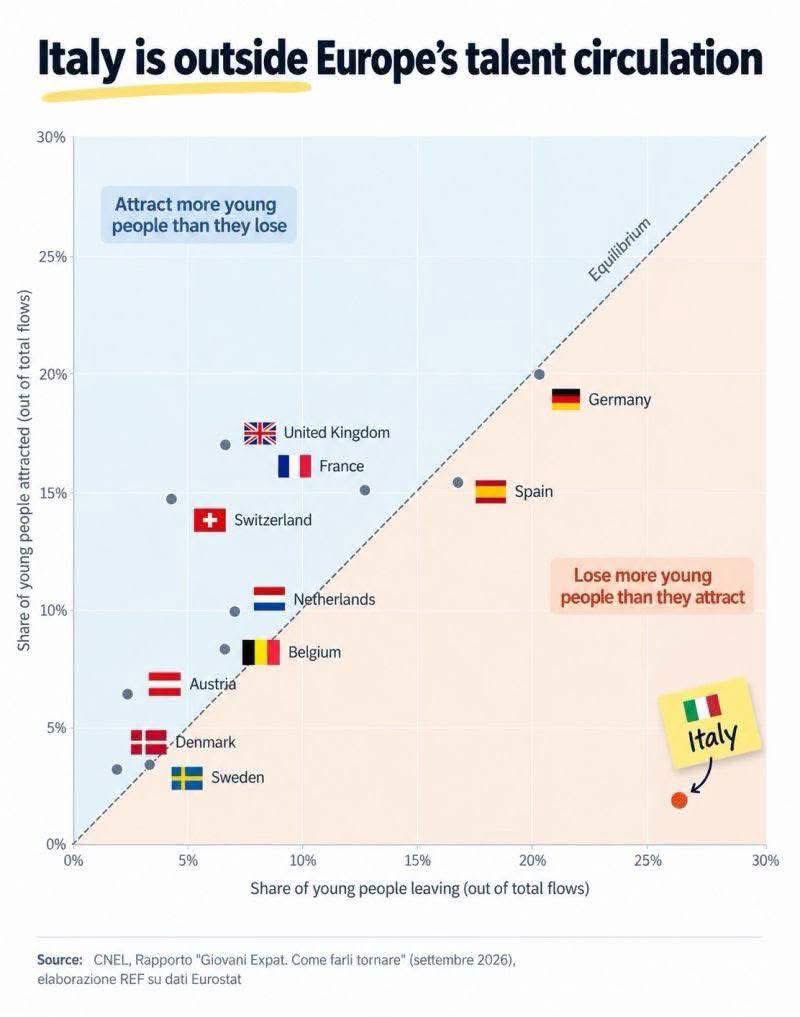
Mia figlia è una di questi ragazzi essendo neuroscienziata al Max Planck di Berlino. In Italia il talento non basta e il merito non è valorizzato. Li l'hanno scelta per le sue potenzialità e per quello che sa fare. Sono fiero di lei, ma è una sconfitta per il nostro Paese.
Things in Western Europe will improve when a few hard realities are understood:
1. Europe has no God-given right to be wealthy or stable. Things can & will decline and fall apart if not maintained and adapted to new realities. Things that worked in the 1970s may be counterproductive now.
2. Energy is the basis of the economy. Without it, nothing else matters. While efficiency will be important, any economy where energy is scarce will inevitably be one that struggles
3. Not all cultures are equal. Some create prosperity, some lead to misery, some are outright evil. If Europe doesn't accept this, the cultural basis of its previous success & prosperity will be destroyed forever
4. Have kids, or die out. In the long term, few things matter this much. You can't create a European future if there are no Europeans left for it, and as the experiences of the last few decades show, non-European immigration simply makes Europe culturally less European - and doesn't magically make these people culturally European.
5. The state can not - and should not - save every individual from him/herself from him/her bad choices or ineptitudes. The idea of a nanny state which can ensure that everyone always live comfortably with minimal effort & contributions 100% of time is not feasible. The socialist promises of 30 years of wealthy retirements for everyone and Europe being able to take on endless low skill immigration were lies.
6. If a society has no way for ambitious & creative people to get rich from working hard, everyone will get poorer because of it. The hard truth is that much of our economic future depends on businesses being built & transformed by ambitious & sometimes ruthless individuals. Not everyone is able or willing to do this, and without them, there is no one to employ others and no wealth & growth to tax. But if businesses & wealth are seen solely as an evil force to be taxed into oblivion, they will go elsewhere.
7. In some cases, the best way for society to deal with a criminal is to lock them up and throw away the key. A small percentage of humans are ticking time bombs - low IQs, high aggression potential, psychopathic traits, socialised into criminal structures or a culture of lawlessness. Society can't fix them. They go in and out of court rooms and across Europe states, NGOs & social workers waste billions of hours & Euros to try & fix the unfixable. Not least because of mass immigration from dysfunctional societies, our legal systems & high trust societies built on principles such as the benefit of the doubt & correction via socialisation are overwhelmed by the amount of aggressive young men with no interest to contribute to society.
All of this is fixable. But the first step is accepting reality.
Classical liberalism drove the Dutch Golden Age, Britain's industrial takeoff, and US rise to unmatched prosperity through property rights, markets, and limited government. Living standards soared.
Nazi racial collectivism ran 12 years, ended in genocide and total military defeat.
Marxist class experiments produced famines, purges, and 60-100+ million deaths in the USSR, Mao's China, and elsewhere. Gains came only after partial market reforms.