Responsibility is not a principle but a design choice. Systems must be built with accountability, localization, and user control at their core.”@AllanCheboi , Data & Digital Technology Lead, Build Up
Design choices determine whether technology empowers people or excludes them.
📣 Applications are now open!
Want to be part of the #GlobalFraudSummit 2026?
@UNODC and @INTERPOL_HQ are inviting private sector, civil society & academia to apply for the meeting taking place in Vienna in March 2026.
🗓️ Apply by 12 December
🔗 https://t.co/udEfNlhQ0X
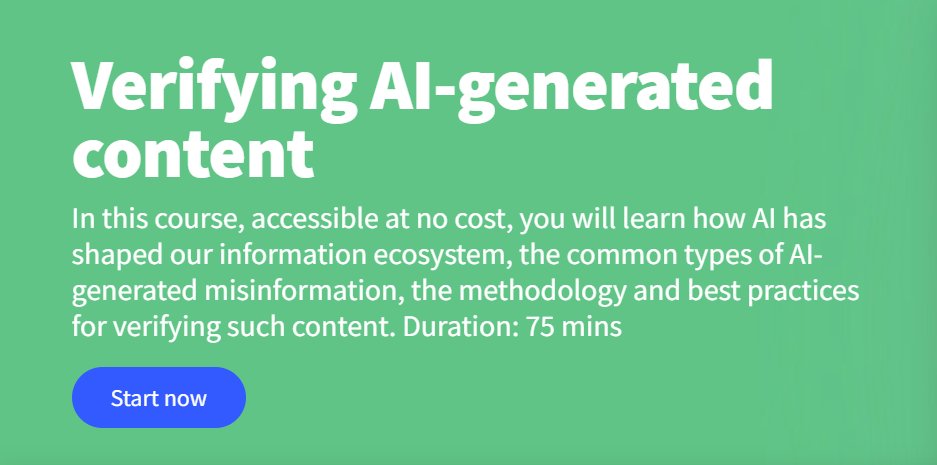
📢 Calling all journalists: if you want to learn how to identify and verify AI-generated content, @AFP has launched a new, open-access online course!
It takes about an hour and includes plenty of case studies and exercises.
Find it here: https://t.co/bzUS9yZSHH
🧠 New October report from @OpenAI : “Disrupting Malicious Uses of AI” is a fascinating look at how diverse threat actors, from cybercriminals, scam networks and state-linked FIMI networks, are integrating AI into their existing operations.
Key findings:
🇰🇵 Korean-language clusters, likely DPRK-linked, used the model for command-and-control development and phishing content targeting diplomats and crypto users.
🇨🇳 Chinese-language actors (UTA0388 / UNK_DROPPITCH) used LLMs to draft multilingual phishing emails and debug low-tier malware tied to espionage campaigns.
🇰🇭 Scam networks from Cambodia, Myanmar and Nigeria used AI to scale classic investment frauds.
🇷🇺 Russian-speaking operators used ChatGPT to prototype malware tooling refining loaders, credential stealers and remote access trojans.
🇨🇳 Individuals linked to PRC government entities explored AI for surveillance concepts (e.g. social media monitoring and profiling tools).
🇷🇺 Influence operations such as “Stop News” (Russia) and “Nine-emdash Line” (China) used AI to generate video scripts, social media posts, and propaganda content targeting regions such as Africa.
Key Takeaways:
1️⃣ Adversaries are integrating AI into old playbooks, not inventing new ones using LLMs to draft, refine and scale narratives.
2️⃣ AI boosts speed, volume, and adaptability in cyber attacks and disinformation campaigns.
3️⃣ Operators are learning to evade detection, even asking models to remove stylistic cues.
4️⃣ Collaboration and enforcement remain vital: where platforms need to work with researchers and other partners and stakeholders to make detection and distruption of such covert malicious activities more effective.
Defending against AI-driven influence ops isn’t just a technical challenge, it seems to be an ecosystem one.
What’s your take on the best ways to counter AI-enhanced disinformation?
Read more here 👉🏽 https://t.co/mtRas4SCtZ
We’re thrilled to share that @howtobuildpeace's open source social media analysis toolkit, Phoenix has been selected as part of the @UNDP AI Trust & Safety Re-Imagination Programme 🚀.
As part of a cohort of 17 innovative initiatives, we’ll be co-designing a portfolio of complementary solutions to address some of the world’s most pressing #AIharms and AI alignment challenges.
Through this collaboration, Phoenix will contribute its participatory social media analysis approach, enabling peacebuilders and other local organisation to better understand and respond to different types of digital harms, mis/disinformation, and digital-conflict related narratives through locally grounded contextualized design and processes.
Collectively, the cohort’s work spans over 190 countries, tackling issues such as #AIsafety in low-resource languages, AI-amplified gender-based violence and sextortion, and the monitoring of misinformation, disinformation, and deepfakes.
Learn more about the programme here:
🔗 https://t.co/d86jDAPino
#TrustandSafety #ResponsibleAI #AIsafety #AIalignment #AIassurance #AIdevelopment #UNDP #BuildUp #PeaceTech #DigitalPeacebuilding
Thank you for inviting us to demo how @howtobuildpeace’s open source toolkit, Phoenix, can support human rights organisations and peacebuilders in promoting safe, democratic, and inclusive digital spaces. In the session we discussed how Phoenix can enable ethical and participatory social media listening, offering a way to gather posts and comments from Facebook, TikTok, X and other social media platforms, identify and classify narratives, and visualise insights through interactive dashboards.
🔹 Phoenix combines methodologies ranging from basic keyword & author classifiers to more advanced AI integrations such as Perspective API and other Open source language models freely available on @huggingface, making it possible to detect and understand harmful narratives and other digital harms.
🔹 Designed as open source, its main goal is to equip grassroots organisations (who hold the deepest local knowledge yet are often sidelined by ‘parachute’ researchers 🪂) with the tools to track issues such as hate speech, online bullying, intimidation, gender-based digital violence, and coordinated disinformation etc. This enables on-ground practitioners to document harms and assess their scale in a practical, rights-respecting way.
#KenSafeSpace #DigitalRights #OnlineSafety #FreedomOfExpression #AIforPeace #SocialMediaAnalysis #DigitalRights
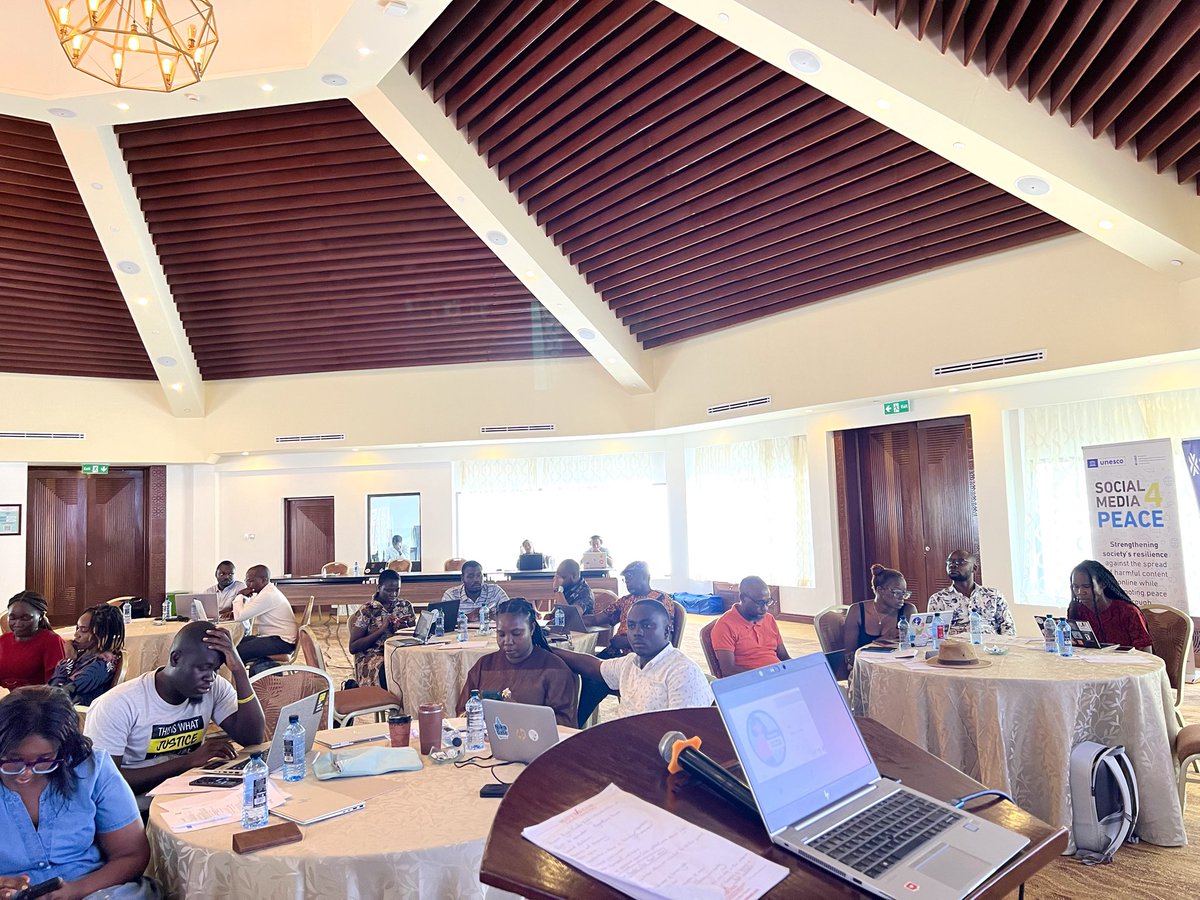
🗣️ @AllanCheboi at the #SM4Peace / #KenSafeSpace workshop showcased @BuildUp’s open-source toolkit Phoenix 🌐
Phoenix enables human rights orgs & peacebuilders to ethically track disinformation, hate speech, FIMI & TFGBV across platforms building safer digital spaces.
Starlink is currently in a network outage and we are actively implementing a solution. We appreciate your patience, we'll share an update once this issue is resolved.
@Allan_Cheboi and @CalGish showcasing Phoenix, @howtobuildpeace social media analysis tool. Great to see how technology can support safer digital spaces and evidence- based insights in Kenya
🇹🇼 RightsCon 2025! 🌍
Excited to be part of #RightsCon 2025 and looking forward to meaningful discussions on AI, peacebuilding, and ethical tech! If you're in Taipei, I’d love to invite you to my session on 📅 Tuesday, 25 February 2025, 🕘 9:00 – 10:00 AM, 📍 South Lobby. https://t.co/hP8Mf0r2DK
I’ll be doing a 🔥 live demo of Build Up ^’s open-source social media monitoring tool, Phoenix, which helps peacebuilders and human rights practitioners conduct ethical social media listening and build custom ML classifiers to address context gaps in LLMs for their countries.
Join me for an interactive session on leveraging AI for peacebuilding and see how the Automatic Classifiers for Peace (ACfP) community is working together to counter toxic and harmful online content. Expect engaging discussions, hands-on insights, and tech solutions for real-world challenges!
#RightsCon25 #AIforPeace #DigitalRights #Disinformation #SocialNetworkAnalysis
Honoured to have contributed to this incredible workshop in Helsinki, exploring how AI 🤖 can support peacemaking efforts in Yemen 🇾🇪 and around the globe 🌍. The sessions were both inspiring ✨ and energising 💡 highlighting a powerful example of how technology and innovation can drive meaningful change in conflict resolution 🙌. @cmioffice
#AIforPeace #Peacemaking #TechForPeace