Starting in early 2025, Elon Musk and the Trump administration began terminating USAID's programs and firing its staff — with Musk himself boasting about "feeding it into the woodchipper." One year ago today, USAID was officially dissolved, its remaining programs haphazardly folded into the State Department. Amid all the lies and misinformation that have followed, some facts about what has actually been lost:
• USAID saved more than 3 million lives a year at a cost of less than $10/month per American. That is what was destroyed. On purpose.
• According to Boston University's Global Impact Counter — which tracked deaths attributable to the cuts until it stopped operations in February 2026 — an estimated 781,000 people died preventable deaths in the first year, including 518,000 children.
• Global child mortality (the number of children who die before their fifth birthday) rose in 2025 for the first time in 35+ years — by 200,000 additional deaths.
• USAID's 50-country disease surveillance network — the system that cut outbreak response times from 2 weeks to 48 hours — is gone. We are now watching an unprecedented Ebola outbreak unfold in real time — with the highest first-month caseload and death rate in modern history.
• Programs reaching 93 million women and children were cut 92%. TB programs cut 56%. Water and sanitation cut 86%. Over 2,000 health facilities permanently closed.
• 25 million fewer people received humanitarian assistance in 2025. The overall humanitarian budget was slashed 74% — from $14.1 billion to $3.7 billion.
• 363 million people face acute hunger in 2026. The famine early-warning system that would have seen it coming went dark for five months.
• $1.7 billion in democracy and governance funding (election monitoring, anti-corruption work, support for independent media and civil society) was terminated.
• 360+ independent media outlets lost funding. Hundreds of legal clinics closed.
• Far from saving money, the Trump administration itself has already said the dismantlement will cost taxpayers at least $19.2 billion in cancellation fees, severance, and penalties. That's more than half of USAID's annual budget — spent on destruction and closeout, not support for vulnerable people.
• American farmers, universities, and businesses are among the casualties too. USAID partnered with more than 3,500 U.S. companies and maintained 17 university-based research labs. Its work with U.S.-based contractors and the private sector generated hundreds of thousands of American jobs and multiplied the return on every dollar spent. Those markets and partnerships are gone.
Our general surgery residents are embracing the humanistic side of medicine with the Good Surgeon program! Literature, art, and narrative medicine help trainees reflect on their experiences and reconnect with purpose.
Read more: https://t.co/zGenM4rhbG
#WashUSurgery
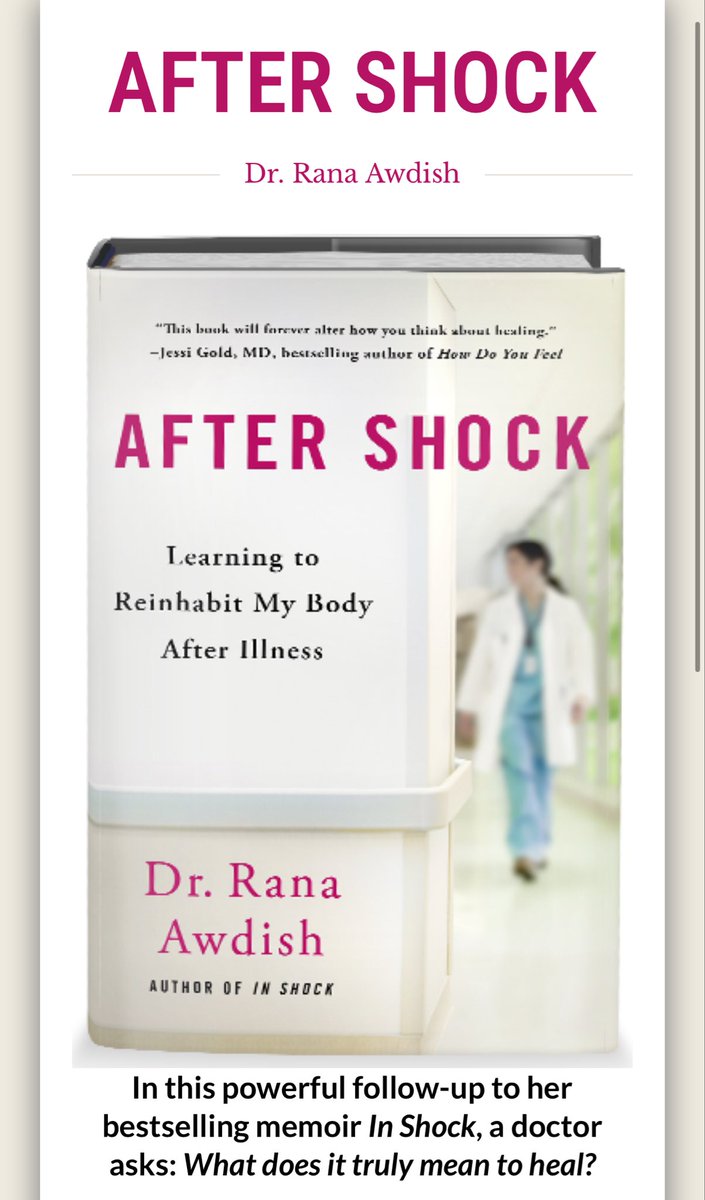
Some BIG news #MedTwitter
My new book, focused on healing that truly honors the body’s wisdom will be released in June. I went DEEP and it’s going to be beautiful with stunning art and Walt stories and so much joy.
Early reviews have been 🔥🔥🔥 Already available for presale 📚
🚨 From radical surgery to organ preservation: rectal cancer care is being redefined!
Essentials
📌 Cancer Treatment Reviews, Aug 2025
📌 Landmark review on advances in locally advanced rectal cancer (LARC)
Key highlights
💊 TNT → boosts local & distant control, but 🚨 toxicity needs balance
👀 Watch & Wait safe in selected cCR → organ preservation 🌿
🧬 dMMR/MSI-H: PD-1 blockade → “immune-ablation” 🛡️
📉 PROSPECT trial → chemo-only feasible in select pts
🔬 ctDNA, radiomics & Immunoscore = precision tools for tailored care
Takeaway
Rectal cancer care is shifting to a patient-centred era:
🎯 Cure remains the goal
💚 QoL preservation is equally vital
📖 Full review: https://t.co/x2Np6mywQv
#RectalCancer #OncoTwitter #ColorectalCancer #Immunotherapy #OrganPreservation
@myESMO@ASCO@myNCCN@TheLancetOncol @CancerTreatRev
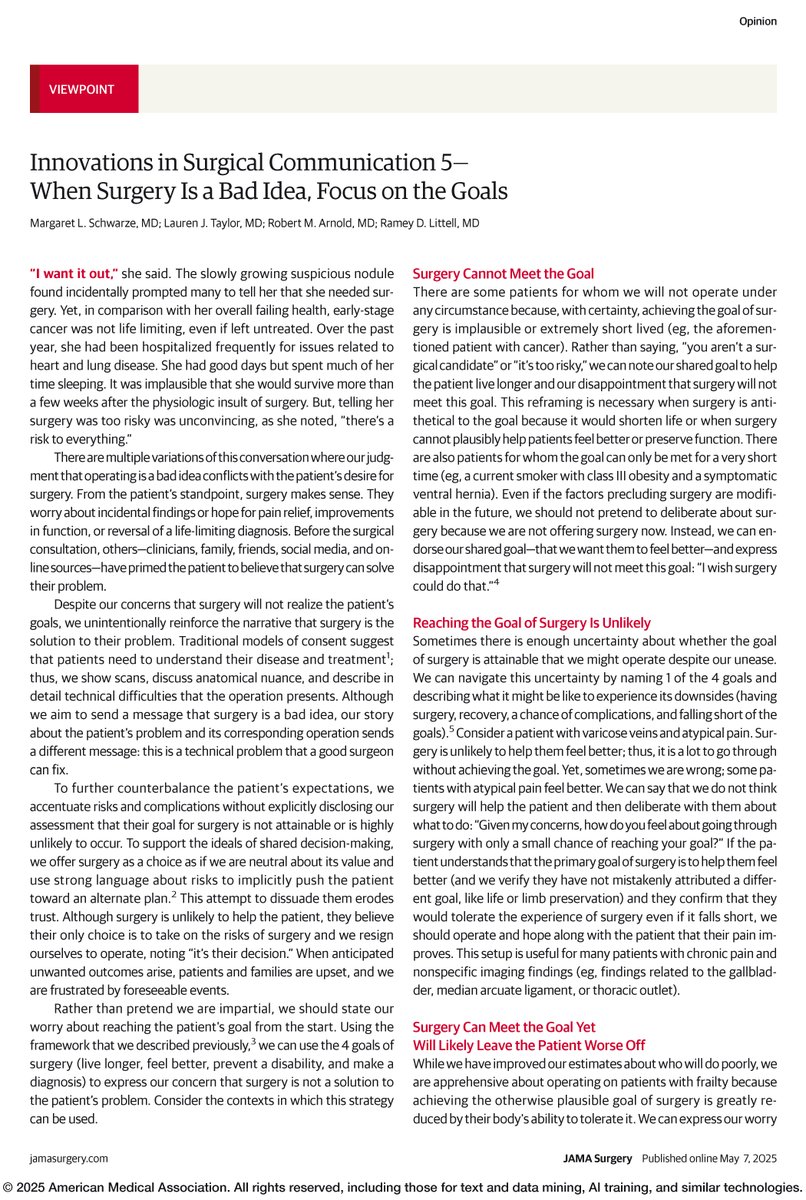
"Good decision-making does not entail hiding a professional opinion; it requires engaging in genuine deliberation with a patient." Read this Viewpoint about the complexities of surgical decision-making. https://t.co/jLbdh9iLQM
Elements that enhanced adoption and documentation of goals-of-care conversations included leadership’s establishment of this as a goal-aligned strategic priority linked to quality measures, as well as a specialized communication training program: https://t.co/op2hRRIYju
Yesterday, we were honored to hear from Dr. William Turner, who shared insights & stories about his journey from a Parkland resident to a distinguished general surgeon. His passion for medical education has impacted >450 residents throughout his career. Thank you Dr. Turner!
Congratulations to our team. Next chapter in Nonoperative Management of Mismatch Repair–Deficient Tumors | New England Journal of Medicine https://t.co/HSiWCtCiSz
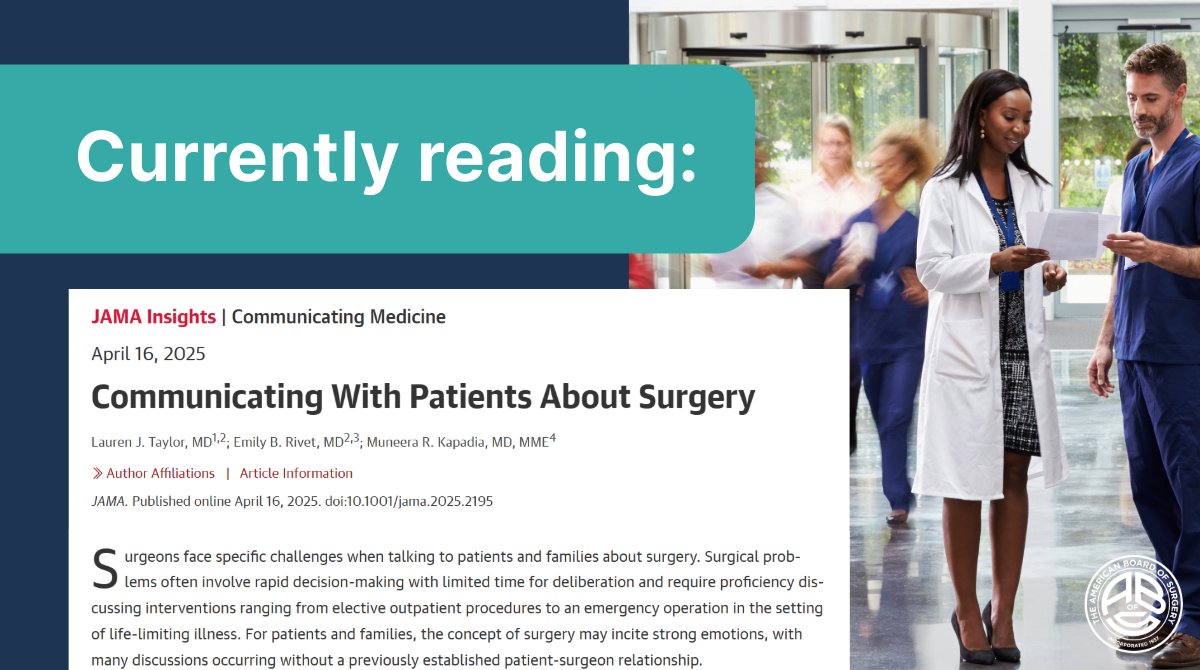
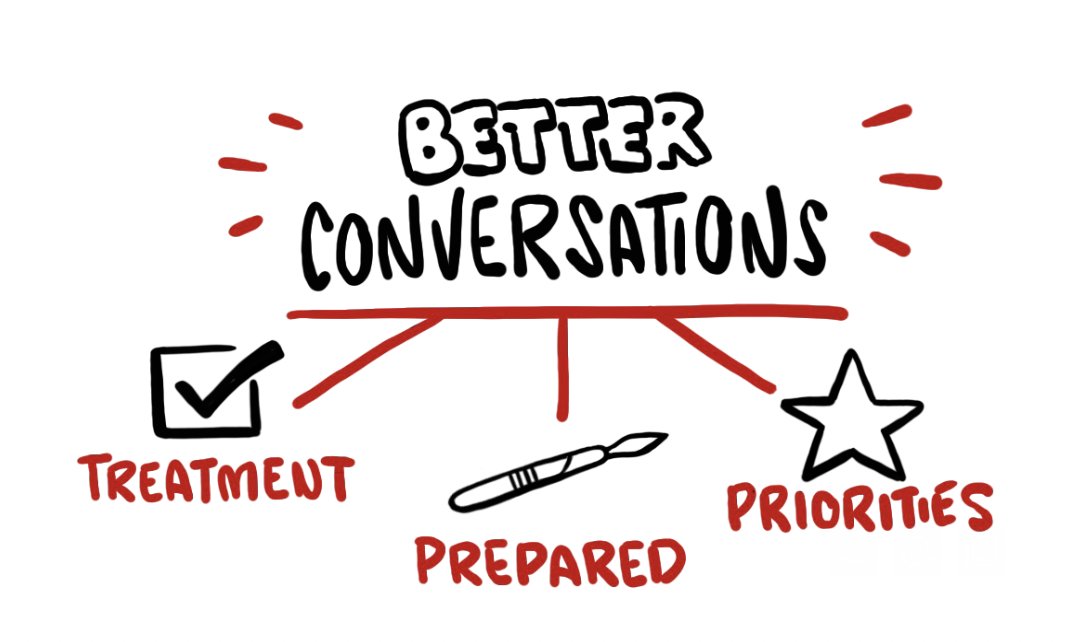
In this @JAMA_current article, authors discuss three advanced communication skills that can help guide conversations with patients and families when making decisions about surgery: https://t.co/OVwdPQUugO
Calling all researchers in surgical palliative care! 📞 Submit your abstract to contribute to improving patient care and outcomes! #SurgicalPalliativeCare#SurgPallCare
"Primary #PalliativeCare skills—like goal-setting, communication, and symptom management—can be practiced by any clinician,” says Dr Winston C. Wey. Learn how resources like @vitaltalk or @CAPCpalliative can help. https://t.co/9lcUoLSKZY #GeriatricMedicine
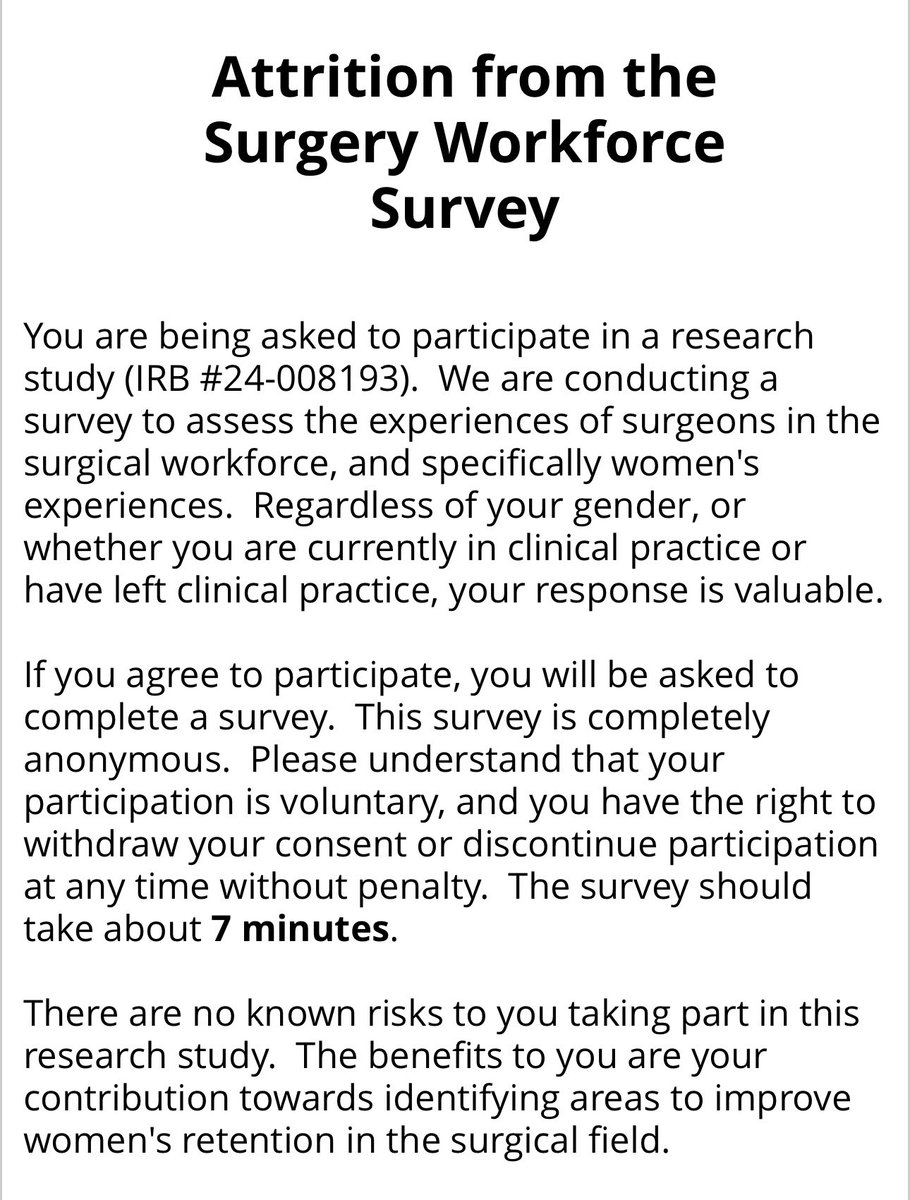
We would like to understand attrition of women in Surgery.Therefore, we would greatly appreciate it if you could fill out the following survey. It should not take more than 7min to fill out. Thank you in advance to all @WomenSurgeons@AMWADoctors@WomenAs1 https://t.co/9oTF54nuX9
🧑⚕️Our @JofSurgOnc paper shows patient portals can assist to elicit pre-op GOC➡️ongoing clinician-patient discussions needed to integrate values into care. Best time to elicit GOC? When patient is most informed: Post-treatment planning & pre-surgery. 🔗:https://t.co/oC07F5Dlq8
@PSpsychsarah@EM_RESUS When I broke my leg at 6, they cut off my favorite outfit. My grandmother sewed it back together for me. Full on trauma shear seams front and back. I’ll never forget it and thought about it everytime I had to decide whether the clothes needed to be cut off or not.
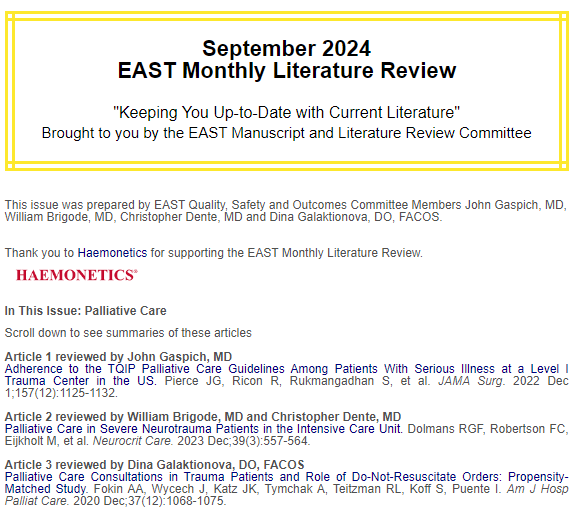
This month’s EAST Monthly Literature Review on Palliative Care is brought to you by John Gaspich, MD, William Brigode, MD, Christopher Dente, MD and Dina Galaktionova, DO, FACOS. Thank you to our sponsor @HaemoneticsCorp! Read the #EASTLitReview here and share your feedback: https://t.co/MAlOR8Y34L