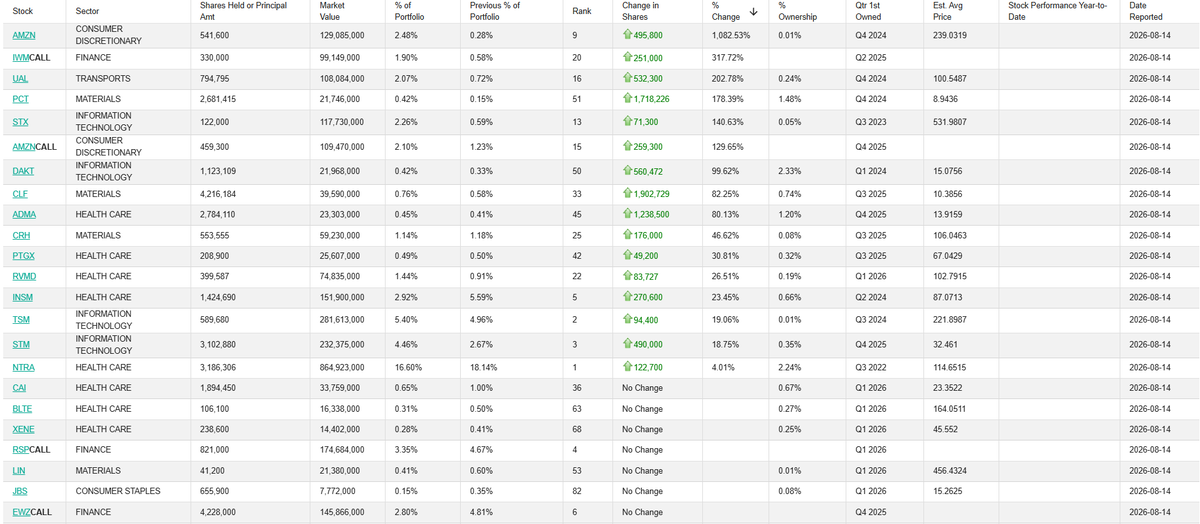
If Anthropic comes out at a $2.5T market cap, $AMZN's Anthropic stake will be 20% of its total market cap.
Extracting out that stake, $AMZN will be up only 10% in the last 5 years, despite AWS's ARR in 2021 being $64B while it is $169B today (+160%).
LEGENDARY INVESTOR STANLEY DRUCKENMILLER JUST WROTE AN OP-ED FOR THE WSJ ABOUT BOND YIELDS.
He is not happy with what the Treasury is doing, thinks that it’s effectively a gimmick, and wants the Bond Market to freely determine where yields should go.
His op-ed summarized below:
- The Treasury’s decision to double long-dated bond buybacks from $2B to at least $4B per operation looks less like liquidity management and more like an effort to push down long-term yields after the 30-year yield reached a 19-year high.
- There was no clear market dysfunction forcing intervention. Auctions were functioning, volatility was contained, and trading remained orderly. With inflation still above target, unemployment near full employment, deficits around 6% of GDP, and debt above $40T, higher yields can be viewed as the market pricing fiscal risk appropriately.
- Suppressing those yields risks weakening one of the few remaining forms of fiscal discipline on Washington. Lower borrowing costs reduce the pressure to deal with deficits, entitlement spending, and the broader debt trajectory.
- Buying long-duration Treasuries while funding the purchases with short-term bills effectively removes duration risk from the market, making it resemble a small form of quantitative easing conducted by Treasury rather than the Fed. The concern is that once markets believe officials are defending a certain yield level, they may keep testing that commitment.
- The better solution is to let the bond market set the price of government borrowing and address the underlying fiscal problem directly: reduce the primary deficit, reform entitlements gradually, and manage debt more responsibly. Liquidity tools can delay a fiscal problem, but they can’t solve it.
These yields are becoming an issue.
When someone like Drucks has to write an op-ed, you know he’s getting annoyed. Either we cut back on spending and get fiscal policy in order (no party will do that) or we end the Iran war to get yields down. If we don’t do either, this problem isn’t going away.
So meta is being sued for being "too addicting".
Question, what is the right amount of addicting?
If a good movie is 3 hours long, is that too much, should the government put a cap on movie length to 2 hours and 45 minutes? If you play a video game for 4 hours, should the government step in on that too for teens?
I'm just wondering where exactly Meta magically crossed the line in going from being an engaging and entertaining product people want to keep using to a "too" addicting product where the government decides to pull them back.
What is the legally accepted amount of 'addictiveness' in this case? Anyone care to explain where that arbitrary line should be drawn?
$META and $GOOGL just scored an early legal win in the social media addiction fight after a teen plaintiff dropped one of the first major test cases with no payment.
It was one of three bellwether trials chosen from 3,300+ lawsuits with two more still set for October.
Pershing Square $PS announced earnings this evening in advance of our call tomorrow at 9am ET and our Spaces on @X which will follow the call.
Please read our letter in advance of the call which explains the quarter and provides updates on the portfolio and six new positions in $NFLX, $V, $MA, $ICE, $ALC, and $SPGI
https://t.co/Bcb1FgjjgE
BURRY:
- I BOUGHT MORE PUTS ON $PLTR PALANTIR FOR MARCH 2027 $100 STRIKES
- I THINK THE COMPANY'S SHARES ARE WORTH UNDER $1 IN THE LONG RUN
i understand those Q2 earnings were so good that Burry probably couldn't sleep for a few days but doubling down might not be the right strategy
bro is shorting reality at this point 💀
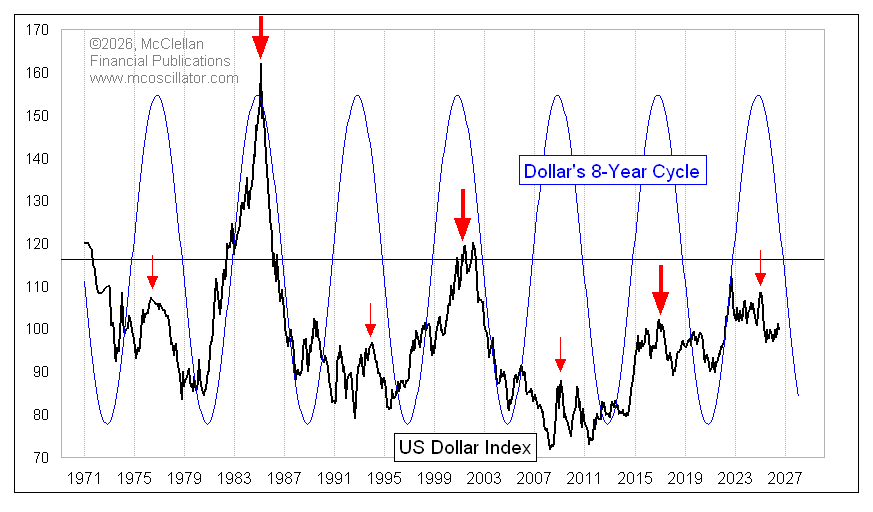
There is a dominant 8-year cycle in the movements of the Dollar Index (as well as in gold). And every other 8-year top tends to be more significant (fatter arrows).
So SemiAnalysis now thinks $SPCX will generate a $305B revenue run rate by the end of 2027
That’s almost 2x AWS’s run rate
How could SpaceX possibly build 8 GW in 2027 alone?
Even putting aside whether it’s physically possible to build and deploy that much capacity that fast, that’s roughly $400B in capex
SpaceX’s OCF run rate is around $10B, and it has roughly $60B in net cash
SpaceX would need massive vendor financing from NVIDIA, as well as very generous customer prepayments, to make that work
You have just 18 months to buy hyperscalers.
Then free cash flows will explode and they’ll be violently re-rated.
Time to accumulate.
$MSFT $AMZN $GOOG $ORCL
An internal version of our next major model produced 10 new results on long-standing open problems in mathematics and theoretical computer science, using roughly $2,000 worth of tokens at GPT-5.6 Sol API rates.
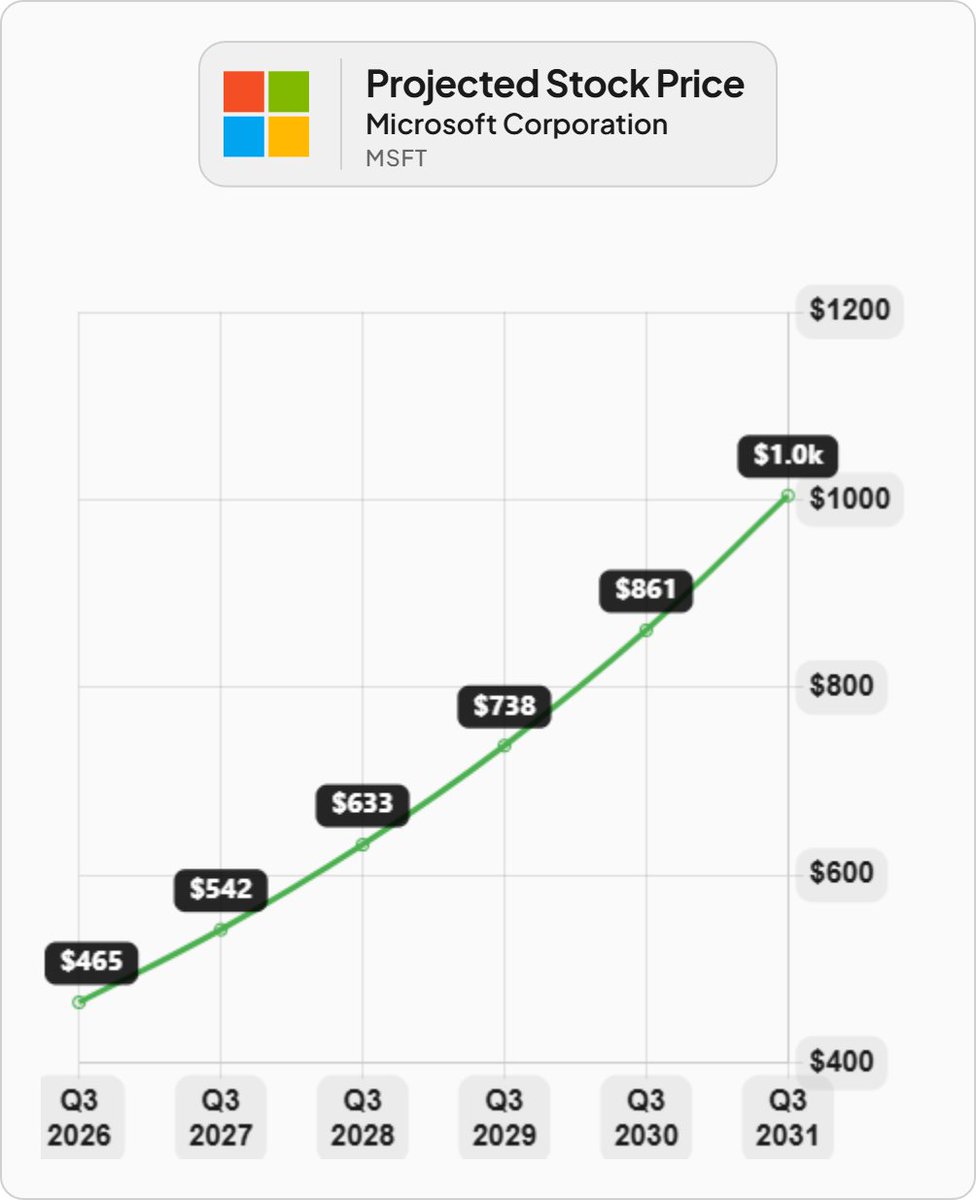
$MSFT is up almost $100 in 2 weeks...
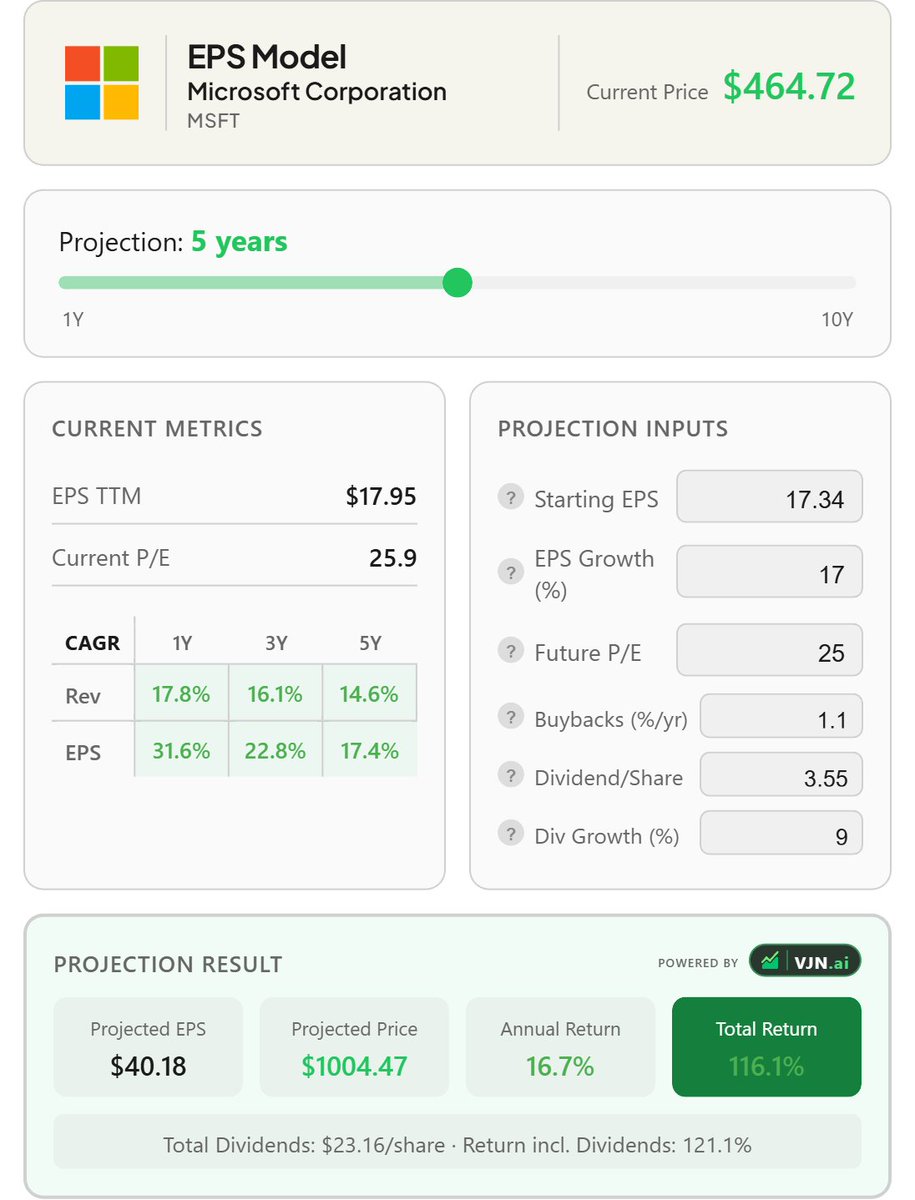
Is it still a good buy? Lets take a quick look:
Assumptions:
-> EPS growth 17%
-> P/E of 25x
-> 1.1% buybacks /yr
-> 9% dividend growth /yr
We get:
-> Stock price of $1004
-> Total return of 116% (16.7% annualized)
Including dividends adds 5% to the total return (17.2% annualized)
I would classify this as somewhere between a bear and base case given management guided for higher cloud growth next quarter + M365 accelerating into 2027
Still a buy imo