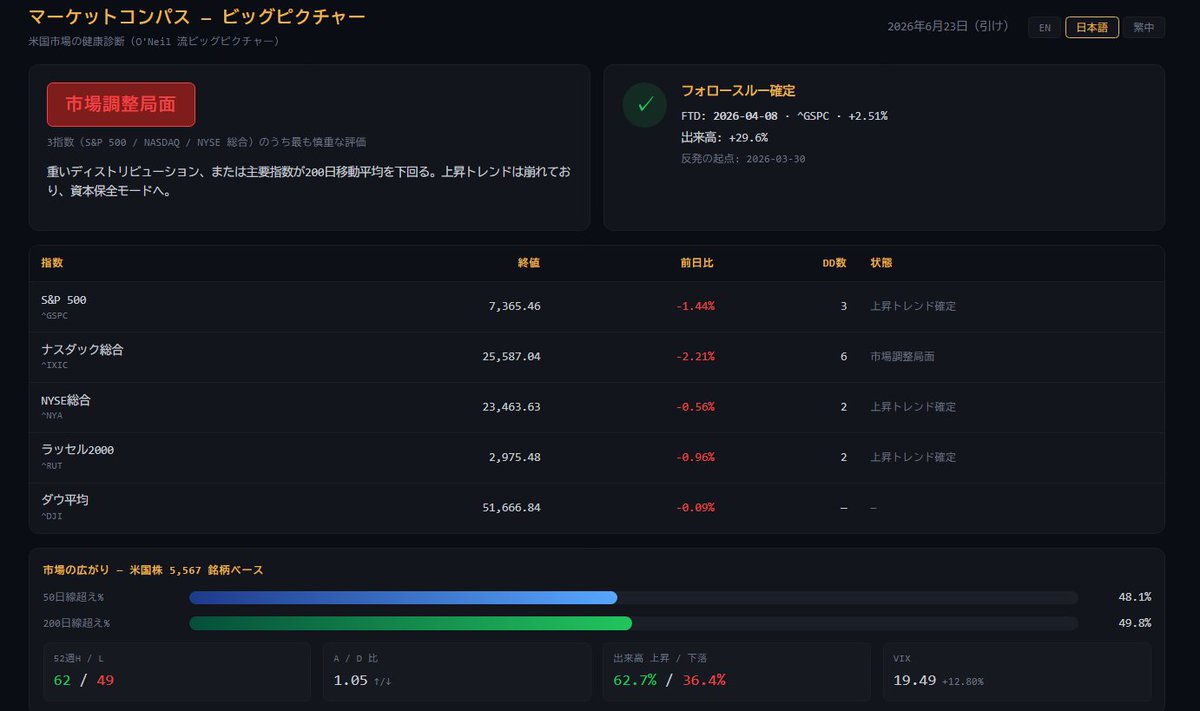
Yesterday's technology-led selloff did not occur in a vacuum. Several developing narratives are beginning to converge, creating the first meaningful challenge to AI leadership in months.
The selling pressure culminated in a decisive distribution day on the Nasdaq, as the technology-heavy index closed below its 50-day moving average for the first time since reclaiming it on April 8. Volume expanded from the prior session and finished above average, signaling meaningful institutional selling rather than routine profit-taking.
Market leadership narrowed noticeably as capital rotated toward more defensive sectors. Consumer Staples, Health Care, and Utilities attracted relative strength, while Technology stocks bore the brunt of the selling pressure.
Bull markets do not die because of of old age. The chart above shows that the 1998 case (dot plot in the far upper right corner), which has drawn a lot of comparisons to the current bull, lasted the longest and registered the highest return of any bull market since 1928. In total, five prior bull markets lasted longer than the current one and eight posted higher returns.
One similarity to the late 1990s is valuation. By most measures, stocks look overextended. The total stock market capitalization relative to GDI is at a record high, and very close to the reading reached at the 2000 peak.
Until the market shows signs of renewed strength, investors should remain selectively cautious. Protect capital, avoid lagging names, and reduce exposure in positions that violate stop levels or show clear signs of price violations. Extended stocks showing decent profits should be back-stopped to protect gains.
https://t.co/JXzFFTmMtn