Ethiopia: Landlocked by History, Portless By Choice
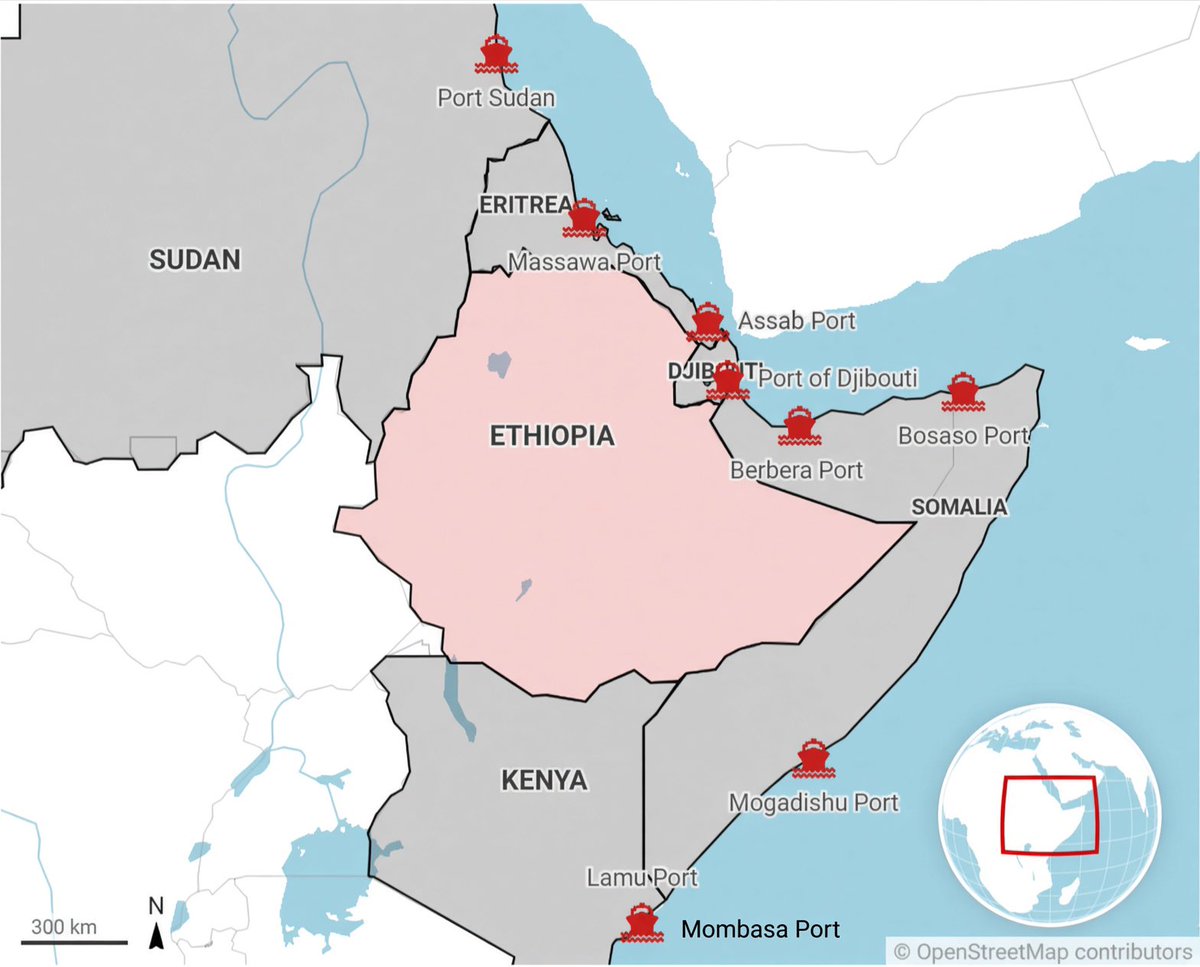
Ethiopia has five neighbors with eight ports, yet it still complains about ports.
The reason is not geography or logistics.
It is that Addis Ababa does not want to lease a port. It wants to own one. Or two.
The distinction is not semantic. A lease is a commercial arrangement. Ownership, or the functional equivalent of it—a land corridor under Ethiopian administration plus a port sized for its navy—is a territorial claim dressed up as a logistics problem.
That difference has driven the last several years of Ethiopian diplomacy and, more quietly, its choice of partners.
Here is how the demand for “sovereign sea access” has played out, port by port.
1. Port Sudan, Sudan
The internationally recognized government of Sudan controls Port Sudan. Ethiopia has instead positioned itself as a conduit for UAE arms shipments to the Rapid Support Forces, the main group trying to unseat that government.
Outcome: no deal.
2–3. Massawa and Assab, Eritrea
The 1993 Eritrea-Ethiopia port treaty gave Ethiopia preferential treatment precisely because, as the preamble stated, Ethiopia has “special needs as a landlocked state.”
The terms were already more favorable than a standard commercial lease. Ethiopia rejected them. What it has sought instead is a land corridor inside Eritrea under its own administration and a port large enough for its navy.
Outcome: no deal.
4–6. Doraleh, Tadjourah, Damerjog — Djibouti
Ethiopia already moves the overwhelming majority of its trade through Doraleh. When it asked for access to Tadjourah, Djibouti was prepared to negotiate until the actual requirement became clear: a land corridor under Ethiopian administration and a port sized for naval use.
Outcome: no deal.
7–8. Berbera and Bosaso, Somalia
On 1 January 2024 Ethiopia signed an agreement for the use of Berbera on terms it preferred.
But the arrangement was not binding: it was concluded with an entity that lacked the legal authority to enter into it.
Before the year ended, Ethiopia signed a second agreement acknowledging Somalia’s sovereignty and territorial integrity, effectively walking back the earlier one.
Outcome: reversed.
9–10. Mombasa and Lamu, Kenya
Lamu was meant to serve Ethiopia and South Sudan under the LAPSSET framework, complete with railways and the diversion of South Sudanese oil.
Cost realities have left the project barely built since 2012. Lamu is used, modestly, for southern Ethiopian industry—by road, not rail.
The Mombasa–Moyale route exists and is barely used.
Outcome: marginal.
The pattern is consistent. Where a commercial lease or transit arrangement is on offer, Ethiopia has either declined or redefined the request until the other party walks away.
Where a partner is willing to overlook sovereignty questions, the arrangement has not survived contact with international law or regional pressure.
The demand for “sovereign sea access” has not produced a port. It has produced a series of rejected or reversed arrangements and a region that has grown more wary of the ask.
Ethiopia has claimed it has a “natural” right to the Sea. Nations don’t have natural right.
Ethiopia has claimed that it has historical right to the Sea. But the net history of Ethiopia is that of a landlocked nation, except when the Cold War calcifications dictated it be given someone else’s Sea, reversed and internationally recognized.
Ethiopia has also claimed it had legal right to sovereign access to Sea. It hasn’t even tried to argue that coherently since it had signed multiple agreements recognizing its borders with Eritrea make her landlocked.
Ethiopia is historically landlocked but powerless by choice.
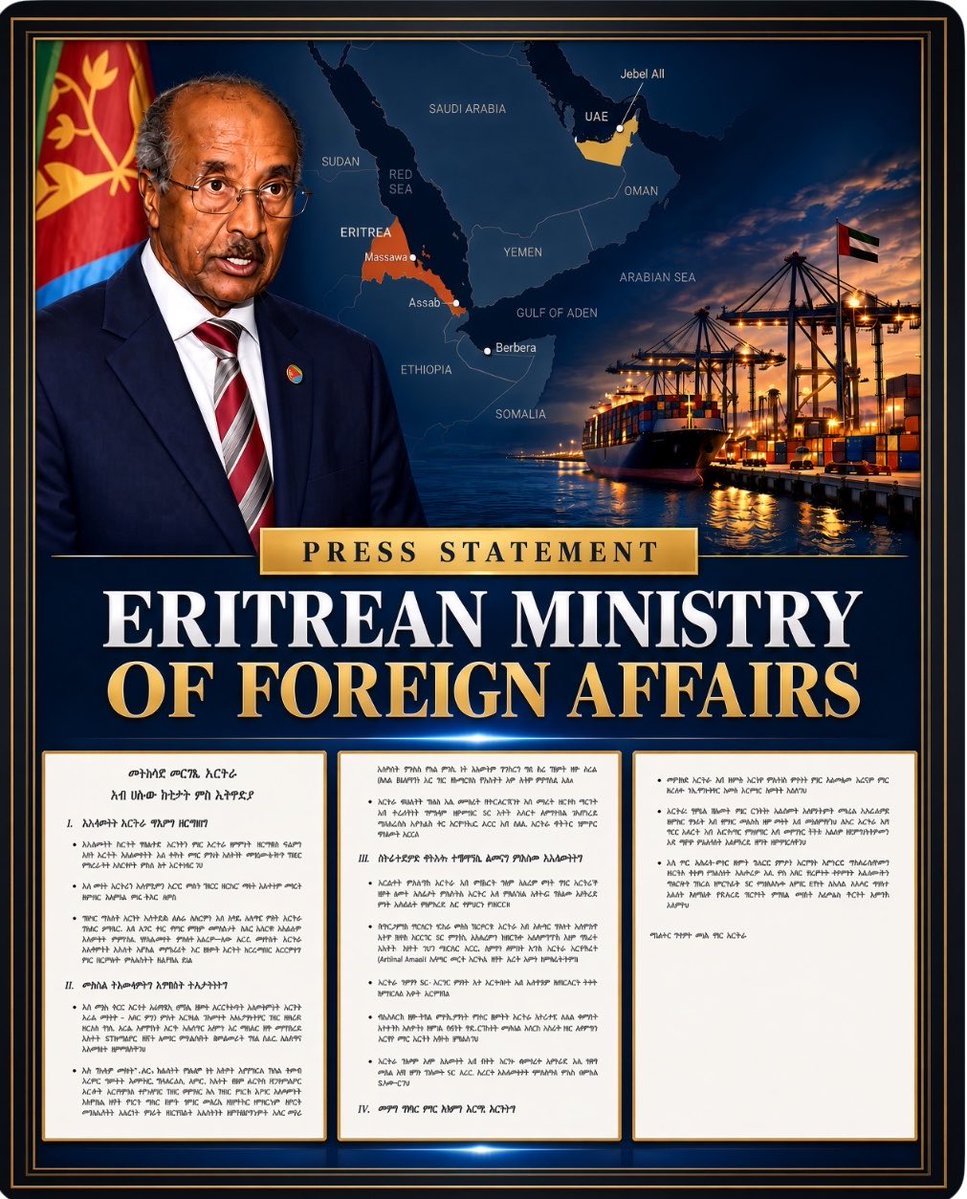
ترجمة بيان وزارة الشؤون الخارجية لدولة إريتريا
الموقف المبدئي لإريتريا بشأن الوضع الحالي
مع إثيوبيا
أولاً: سيادة إريتريا مطلقة وغير قابلة للانتهاك
سيادة واستقلال ووحدة أراضي دولة إريتريا مطلقة وغير قابلة للانتهاك. إريتريا لا تتفاوض بشأن سيادتها تحت أي ظرف، سواء بشروط مسبقة أو تهديدات أو ضغوط أو حوار.
لا يوجد بين إريتريا وإثيوبيا أي نزاع قانوني أو “نزاع مشروع” يعترف به الطرفان بعدالة.
إن انتهاك النظام الإثيوبي الصريح، ومحاولة حزب الازدهار (PP) اعتبار “العمل العادي” على الحدود السيادية لإريتريا “أهمية استراتيجية” لمجرد وجود ساحل لدولة واحدة، يضع حدود كل دولة أفريقية في خطر. وبينما تحافظ إريتريا على سيادتها، فإنها تدافع في النهاية عن المبادئ التي تقوم عليها وجود وأمن كل دولة أفريقية.
ثانياً: أصل التوترات وأهمية المساءلة
إن عدم الاستقرار والتوترات المتزايدة في جميع أنحاء القرن الأفريقي هي نتيجة للقوة الحاكمة في إثيوبيا، نظام الازدهار، التي مارست لسنوات عدوانًا جيوسياسيًا أحادي الجانب دون أي استفزاز. الوضع العسكري القائم، والعدوان الدبلوماسي، والابتزاز الاقتصادي، منسق ومدبر من قبل قيادة الحزب الحاكم (الازدهار).
الدعوة العامة العاجلة للمجتمع الدولي لـ”جميع الأطراف” أو “البلدين” لاحتواء الوضع تفتقر إلى الأساس القانوني، ولا تحقق أي نتيجة دبلوماسية. إنها مقياس معيب يساوي بين الدولة المعتدية التي تغذي العدوان الإقليمي والدولة التي تدافع عن سيادتها القانونية. مثل هذه البيانات تنقل مسؤولية الدول وتشجع الإفلات من العقاب. الطريق الصحيح الذي يمكن أن يؤدي إلى حل التوتر هو الضغط على القوة التي تلعب دورًا كبيرًا في تصعيد التوتر (حزب الازدهار) لوقف سياساتها القائمة على العدوان.
إن اتهام إريتريا بالعدوان مصطنع أساسًا. هذا الادعاء الذي لا أساس له كان يهدف إلى تضليل المجتمع الدولي من خلال هندسة معلومات حرب منسقة للهروب من المساءلة، وجعل العدوان غير المبرر على إريتريا يبدو عادلًا.
ثالثاً: ضبط النفس الاستراتيجي والوضع الدفاعي والحفاظ على السيادة
قوات الدفاع الإريترية موجودة داخل الحدود المعترف بها دوليًا لدولة إريتريا. وضع قوات الدفاع الإريترية دفاعي، ويحترم الحدود الدولية القائمة ويسترشد بالقانون الدولي.
بشكل متكرر، حتى بعد اتفاق بريتوريا، انتشرت معلومات مضللة تدعي دخول إريتريا إلى الأراضي السيادية الإثيوبية. هذه الاتهامات الكاذبة تشير حتى إلى الأراضي التي أصبحت جزءًا من الأراضي السيادية لإريتريا بموجب قرار لجنة الحدود الإريترية الإثيوبية (Arbitral Award) في 13 أبريل 2002.
إريتريا لا تشارك في أي مطالب تاريخية، وأكدت أنها لا تسعى إلى أراضٍ في إثيوبيا.
على عكس التصعيد المستمر والحملة المستمرة، اتبعت إريتريا استراتيجية ضبط النفس العالي. مثل هذا المبدأ من الاستقرار يمكن أن ينقذ القرن الأفريقي من حرب إقليمية مدمرة وخطيرة.
استعداد إريتريا للسلام قائم، وهي مستعدة تمامًا، بموجب الحق الممنوح لها بموجب القانون الدولي، للدفاع عن سيادتها ضد أي قوة عدوانية أو غازية.
رابعًا: أسس السلام الإقليمي الدائم والنظام القائم على القانون
حكومة إريتريا ليس لديها أي مصلحة في الانخراط في صراع مصطنع، أو عدم استقرار إقليمي، أو أزمة جيوسياسية عبثية لا نهاية لها.
إريتريا ملتزمة كما هو الحال دائمًا بعملية علاقات دولية تقوم على الروح القانونية والمسؤولة من أجل استقرار إقليمي طويل الأمد. رؤية إريتريا في القرن الأفريقي تقوم على الاحترام المتبادل، وعدم التدخل في الشؤون الداخلية للآخرين، والالتزام الصارم بالقانون الدولي.
لتحقيق سلام دائم وأمن عملي في القرن الأفريقي، يجب أن يكون هناك التزام مطلق بالقانون الدولي يدعمه المجتمع الدولي أيضًا. لضمان مطلقية السيادة والمساواة بين الدول، يجب التخلي عن ممارسات التوسع أو التخطيط للاستيلاء على الأراضي السيادية للآخرين بالقوة، أو ادعاءات إعادة رسم الحدود وما شابهها من أمور.
وزارة الشؤون الخارجية لدولة إريتريا
21 أكتوبر 2026
#شيرين_هلال
#عين_على_افريقيا 🌴
Eritrea's sovereignty is not a matter for negotiation. The EEBC ruling of 13 April 2002 is final and binding. International law protects recognized borders, not expansionist claims. Respect for sovereignty is the foundation of regional peace.
#Eritrea #InternationalLaw #EEBC #Sovereignty #HornOfAfrica
The UN Charter upholds the sovereign equality of states and prohibits threats against the territorial integrity of nations. Eritrea's position reflects these fundamental principles. Peace begins with respect for law, borders, and sovereignty.
#Eritrea #UNCharter #InternationalLaw #HornOfAfrica #Peace
No state can claim strategic rights over another state's territory because of geography. Such logic undermines the international legal order and threatens all African borders. Eritrea stands firmly for sovereignty, legality, and stability.
#Eritrea #Africa #SovereigntyMatters #RuleOfLaw #HornOfAfrica
False accusations cannot erase legal realities. Eritrea's borders are internationally recognized, and its position remains consistent: no territorial claims, no aggression, and full commitment to defending sovereign rights under international law.
#Eritrea #InternationalLaw #Peace #HornOfAfrica #Sovereignty
Lasting peace in the Horn of Africa requires adherence to international law, respect for existing borders, and rejection of territorial revisionism. The alternative is instability. Eritrea's position is grounded in law, not ambition.
#Eritrea #RulesBasedOrder #InternationalLaw #HornOfAfrica #PeaceAndSecurity
The 2002 EEBC decision was final and binding. Sovereign borders are not suggestions. They are legal realities. Eritrea seeks peace, but peace can only endure when international law is respected by all parties.
#Eritrea #EEBC #InternationalLaw #Sovereignty #HornOfAfricaStability
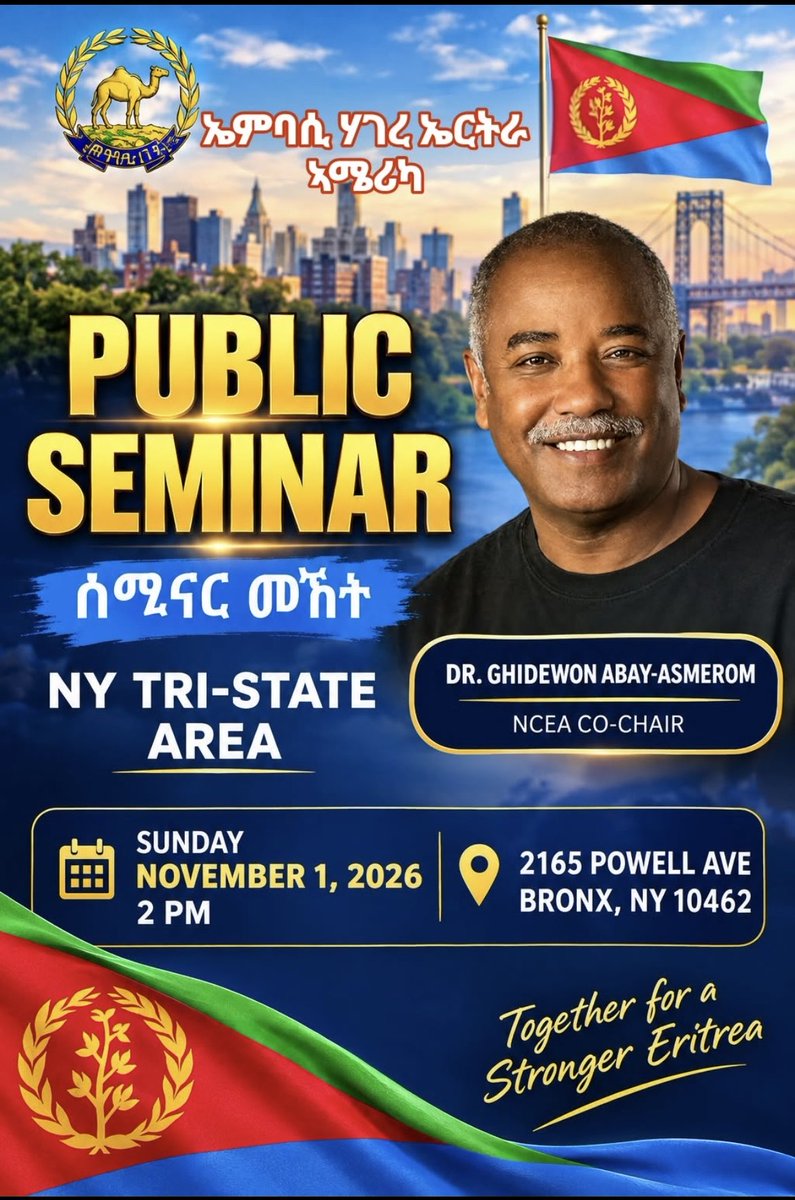
📢 PUBLIC SEMINAR
To All Eritreans Residing in the Tri-State Area.
All are cordially invited to attend a public seminar.
By Dr. Ghideon Abay Asmerom, NCEA Co-Chair, who will provide an update and discussion on the current situation in Eritrea and the broader Horn region.
Building Artificial Intelligence Capabilities for Eritrea’s Development: Reflections from UN Day 2026; by Mussie Efriem
"The high-level dialogue in Asmara offered an opportunity to examine Artificial Intelligence in relation to Eritrea’s development priorities, emphasizing the importance of capability-building, relevance to the local context and responsible engagement. Its central themes extended beyond the adoption of new technologies to include education, research, connectivity, data quality, institutional readiness and collaboration. These considerations are essential to determining where AI can make a meaningful contribution and how its potential can be explored without losing sight of the needs it is intended to serve".
https://t.co/Un6pfTVi9l
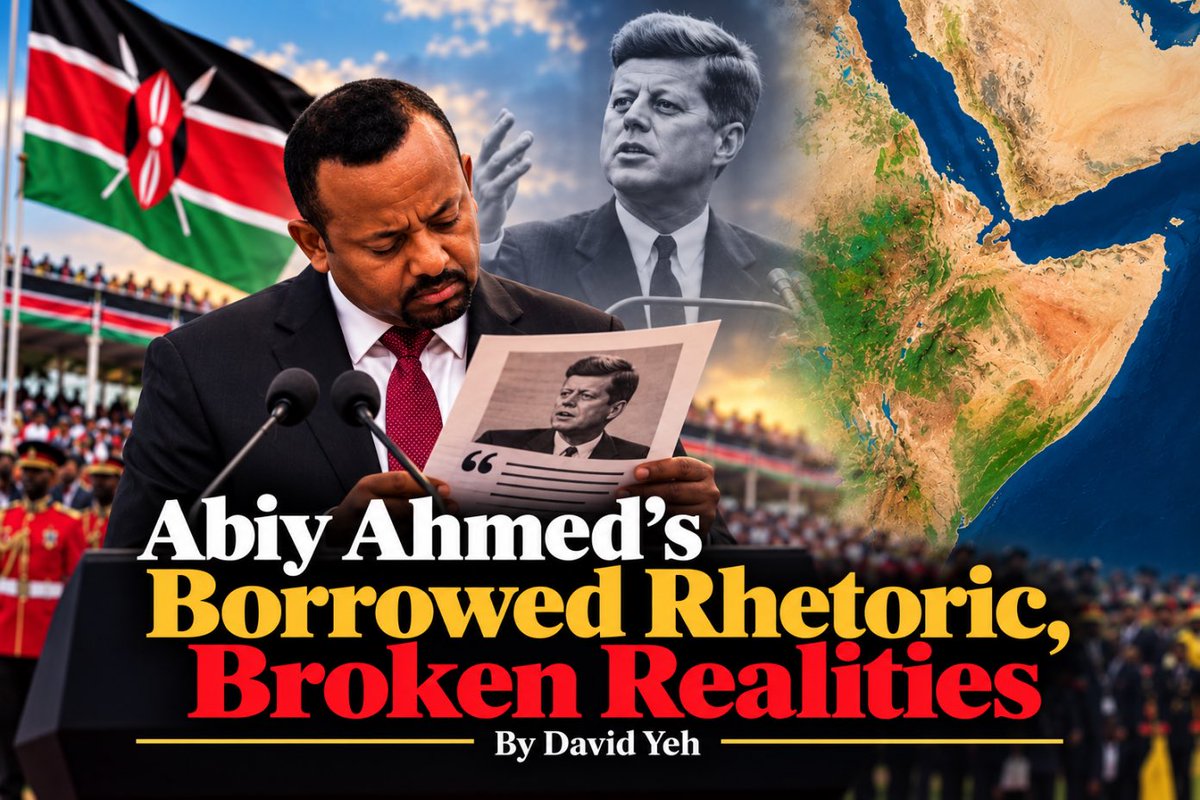
Abiy’s Borrowed Rhetoric and Broken Realities
October 23, 2026
By David Yeh
@RedSeaBeacon
An Affront to Heroes: Abiy Ahmed’s Mashujaa Day Address Rings Hollow
When Ethiopian Prime Minister Abiy Ahmed stood before Kenyans at the 2026 Mashujaa Day celebrations in Eldoret and declared, “Geography made us neighbours. History made us brothers. Our choices must make us partners in shared prosperity,” the sentence sounded polished, memorable, and statesmanlike. There was also something strikingly familiar about it.
More than sixty-five years earlier, on May 17, 1961, President John F. Kennedy stood before the Canadian Parliament in Ottawa and delivered one of the most memorable descriptions of relations between neighboring countries:
“Geography has made us neighbors. History has made us friends. Economics has made us partners. And necessity has made us allies.”
The resemblance is difficult to miss. Kennedy: “Geography has made us neighbors.” Abiy: “Geography made us neighbours.” Kennedy: “History has made us friends.” Abiy: “History made us brothers.” Kennedy: “Economics has made us partners.” Abiy: “Our choices must make us partners in shared prosperity.”
The structure is substantially the same: geography establishes proximity; history defines the relationship; partnership becomes the economic destination. The nouns change “friends” becomes “brothers,” “economics” gives way to “our choices,” and “partners” becomes “partners in shared prosperity” but the rhetorical architecture closely parallels Kennedy’s formulation. Whatever the explanation for that similarity, Abiy’s celebrated line was hardly an original rhetorical construction.
That matters because the words Kennedy delivered in Ottawa were rooted in the particular relationship he was describing. The United States and Canada were sovereign neighbors whose extensive economic ties, common defense arrangements, and established alliance gave concrete meaning to Kennedy’s progression from geography to history, economics, and partnership. His rhetoric summarized an existing relationship.
Abiy’s adaptation presents a different question: does the conduct behind the rhetoric support the promise?
ReadMore @RedSeaBeacon@UNSC_Reports@AfricaUnion@EU_Commission@shabait@hawelti@Ghidewon@ForeignPolicy@TheAtlantic@MFAEthiopia@CanadaFP@EliasAmare@GhideonMusa@Yehdavid@EmbassyEritrea@AmbStesfamariam@FT@FikreJesus@AlAhram@b_nick@Sharronyemane@moi_eritrea@ERiTV_Official@shabait@AmbassadorEstif@ytmn2@alazarabrah1991@biniamb@zerai_biniam@addisstandard@BBCWorld@nytimesworld@FT@MesobJournal@NewYorker@latimes@TheEconomist@washingtonpost@WashingtonTime@Eritrea_UN@NationsCouncil@AJEnglish@etisalatUAE@Sudan_tweet@tewerwari_1@tberhan0437898
https://t.co/tvaGWzQPJF
THE UAE’S BID FOR UN POWER
October 18, 2026
A STATE ACCUSED OF WAR CRIMES SHOULD NOT LEAD THE INSTITUTIONS MEANT TO STOP THEM
By David Yeh
@RedSeaBeacon
When states with controversial human rights records seek or obtain influential UN roles such as seats on the UN Human Rights Council (UNHRC) or the UN Security Council it frequently triggers intense international debate. International human rights organizations and diplomatic opponents argue that the United Arab Emirates (UAE) should not hold prominent United Nations positions due to allegations of war crimes, human rights violations, and actions that directly undermine the UN’s foundational mission.
The core arguments against the UAE holding these positions center on several key areas:
1. Alleged Complicity in War Crimes and Arming Militias
The Conflict in Sudan: UN experts and organizations like Human Rights Watch have found credible evidence that the UAE has supplied munitions and financial support to the Rapid Support Forces (RSF) through Ethiopia and Libya in Sudan, in violation of UN arms embargoes. Opponents argue that a country accused of fueling a conflict marked by mass atrocities and what the UN has described as having hallmarks of genocide should not influence UN bodies tasked with maintaining global peace or investigating human rights abuses.
Past Involvement in Yemen, Somalia, and Libya: the UAE’s history in the Saudi-led coalition in Yemen, its military interventions in Libya, and Somaliland intermingling. Proxy forces and airstrikes linked to the UAE have been implicated by international monitors in unlawful strikes, arbitrary detentions, and the torture of detainees.
2. Undermining the Credibility of UN Institutions
Contradicting the UN Mandate: Human rights advocates argue that electing states with severe domestic restrictions and external war allegations to bodies like the UNHRC makes a mockery of the institution. They contend it erodes the moral authority of the UN, allowing alleged abusers to shield themselves and their allies from international accountability and scrutiny.
The Issue of Clean Slate Elections: Organizations often criticize the UN voting process itself. When regional blocs put forward non-competitive, pre-arranged lists of candidates ensuring the UAE or similar states win a seat without opposition critics argue it bypasses the UN’s own standards, which dictate that member states should uphold the highest standards in the promotion and protection of human rights.
3. Severe Domestic Human Rights Violations
Critics also point to the UAE’s internal governance as a disqualifier for leading international human rights frameworks:
Suppression of Dissent: The UAE has faced extensive criticism from UN human rights experts for utilizing broad counter terrorism and cybercrime laws to carry out mass trials, arbitrarily detain political dissidents, and enforce enforced disappearances of activists and academics.
Lack of Civic Space: Freedom of expression, peaceful assembly, and independent political parties are virtually non-existent in the UAE, directly contradicting the civic freedoms the UN is meant to protect…
ReadMore @RedSeaBeacon@UNSC_Reports@AfricaUnion@EU_Commission@shabait@hawelti@Ghidewon@ForeignPolicy@TheAtlantic@MFAEthiopia@CanadaFP@EliasAmare@GhideonMusa@Yehdavid@EmbassyEritrea@AmbStesfamariam@FT@FikreJesus@AlAhram@b_nick@Sharronyemane@moi_eritrea@ERiTV_Official@shabait@AmbassadorEstif@ytmn2@alazarabrah1991@biniamb@zerai_biniam@addisstandard@BBCWorld@nytimesworld@FT@MesobJournal@NewYorker@latimes@TheEconomist@washingtonpost@WashingtonTime@Eritrea_UN@NationsCouncil@AJEnglish@etisalatUAE@Sudan_tweet@tewerwari_1@tberhan0437898
https://t.co/wDKzn9rLKa
Abiy Ahmed’s Expansionist Ambitions: A Threat to Peace in the Horn of Africa
October 18, 2026
By Ibrahim A. Ibrahim
@RedSeaBeacon
History repeatedly teaches us that leaders who prioritize personal ambition over peace, national unity, and respectful relations with their neighbors leave behind instability, destruction, and missed opportunities. Prime Minister Abiy Ahmed risks such a legacy and follows policies that deepen internal divisions and provoke regional confrontation.
When Abiy came to power in 2018, Eritrea extended a hand of peace and embraced historic reconciliation. Eritrea hoped the new Ethiopian leadership would usher in cooperation, mutual respect, and peaceful coexistence. Instead, early hopes have given way to renewed distrust and mounting tensions.
Abiy’s government has faced devastating conflicts involving Tigray, Amhara, Oromia, and other communities. Critics argue that its handling of dissent has aggravated divisions and prolonged suffering, while its confrontational posture has strained relations with Eritrea, Somalia, Sudan, and Egypt.
Most alarming is Ethiopia’s growing emphasis on securing Red Sea access through Assab, Eritrea’s sovereign port. Ethiopia’s landlocked status does not give it any legitimacy for it’seconomic concern to act reckless, and demands a right to another country’s territory. Any attempt to obtain Assab through threats, coercion, or military pressure would endanger both nations and risk wider conflict. Ethiopia’s maritime ambitions should therefore be pursued only through negotiated commercial agreements that explicitly respect Eritrea’s sovereignty and territorial integrity.
Relations with Somalia have likewise deteriorated following Ethiopia’s January 2024 memorandum of understanding with Somaliland, which Somalia’s federal government rejected as a violation of its sovereignty. Strategic maritime interests cannot be pursued legitimately without an agreed framework with Mogadishu. Any durable arrangement must be negotiated with Somalia and respect its territorial integrity.
Sudan presents another dangerous dimension. Reports alleging that Ethiopian territory has served as a conduit for external assistance to Sudan’s Rapid Support Forces, reportedly linked to the United Arab Emirates, require serious, independent investigation. If substantiated, such activity would raise grave questions about regional responsibility and the prolongation of Sudan’s war.
ReadMore @RedSeaBeacon@UNSC_Reports@AfricaUnion@EU_Commission@shabait@hawelti@Ghidewon@ForeignPolicy@TheAtlantic@MFAEthiopia@CanadaFP@EliasAmare@GhideonMusa@Yehdavid@EmbassyEritrea@AmbStesfamariam@FT@FikreJesus@AlAhram@b_nick@Sharronyemane@moi_eritrea@ERiTV_Official@shabait@AmbassadorEstif@ytmn2@alazarabrah1991@biniamb@zerai_biniam@addisstandard@BBCWorld@nytimesworld@FT@MesobJournal@NewYorker@latimes@TheEconomist@washingtonpost@WashingtonTime@Eritrea_UN@NationsCouncil@AJEnglish@etisalatUAE@Sudan_tweet@tewerwari_1@tberhan0437898
https://t.co/czcqekVCAX
Abiy’s Red Sea Ambitions Will Shatter Against Eritrean Resilience
October 22, 2026
By Mhretab Andebrhan
@RedSeaBeacon
For Eritrea, the warning signs are impossible to ignore: a peace agreement once celebrated as historic has given way to growing mistrust, increasingly assertive rhetoric about the Red Sea, and a pattern of regional disputes that threatens to destabilize the entire Horn of Africa.
Since 2023, Ethiopian Prime Minister Abiy Ahmed has repeatedly elevated access to the Red Sea to a matter of national survival. His government’s January 2024 agreement with Somaliland also triggered a major diplomatic dispute with Somalia over sovereignty and territorial integrity. Meanwhile, Sudan remains engulfed in a devastating war, and competing alliances and security concerns increasingly shape relations across the region. These developments demand scrutiny of Abiy’s regional policies and their consequences
The central question is whether Abiy Ahmed’s regional ambitions are strengthening peace or creating conditions for a wider crisis—and whether Eritrea is expected to pay the price for his political objectives.
From the Promise of Peace to the Pressure on Eritrea
On July 9, 2018, Abiy Ahmed and Eritrean President Isaias Afwerki signed the Joint Declaration of Peace and Friendship, committing their countries to ending the state of war and pursuing cooperation. The declaration offered a historic opportunity to replace decades of hostility with mutual respect.
Despite this, Abiy’s meddling in Regional issues, Somalia, Sudan, and the desire to annex Eritrean ports destabilize the region.
In November 2023, Abiy told Ethiopia’s parliament that the country’s existence was tied to the Red Sea and described maritime access as a matter of survival.
As a cover-up, he later publicly ruled out using war to obtain sea access. However, those assurances do not remove the legitimate concerns created when a neighboring country’s coastline becomes a recurring theme in domestic political rhetoric. While disavowing force on the international stage, he continues to tell internal audiences that living without Red Sea access is unthinkable, using the narrative of existential survival to galvanize his people.
For Eritreans, this reversal raises serious questions about the durability of Abiy’s commitment to reconciliation. The issue is not simply a disagreement over maritime policy. It is whether the political trust established in 2018 can survive a strategy that places Assab at the center of Ethiopia’s national ambitions
ReadMore @RedSeaBeacon@UNSC_Reports@AfricaUnion@EU_Commission@shabait@hawelti@Ghidewon@ForeignPolicy@TheAtlantic@MFAEthiopia@CanadaFP@EliasAmare@GhideonMusa@Yehdavid@EmbassyEritrea@AmbStesfamariam@FT@FikreJesus@AlAhram@b_nick@Sharronyemane@moi_eritrea@ERiTV_Official@shabait@AmbassadorEstif@ytmn2@alazarabrah1991@biniamb@zerai_biniam@addisstandard@BBCWorld@nytimesworld@FT@MesobJournal@NewYorker@latimes@TheEconomist@washingtonpost@WashingtonTime@Eritrea_UN@NationsCouncil@AJEnglish@etisalatUAE@Sudan_tweet@tewerwari_1@tberhan0437898
https://t.co/nPe0DH658a
Will the UN and AU Fail Eritrea Again?
October 22, 2026
By Alula Frezghi
@RedSeaBeacon
Eritrea’s history presents an enduring challenge to the credibility of the international order: what value do sovereignty, self-determination, and territorial integrity possess when the institutions established to protect them fail to act? From the troubled international handling of Eritrea’s decolonization to the prolonged non-implementation of the Eritrea–Ethiopia boundary ruling, the record reveals a consequential gap between international principles and their enforcement. Today, renewed tensions between Eritrea and Ethiopia place that gap under another test.
The question is no longer merely historical. It concerns whether the United Nations (UN), the African Union (AU), and their member states will defend the rules governing relations among sovereign nations before another regional confrontation escalates.
From Denied Self-Determination to Independence
Following the Second World War, Eritrea’s political future became entangled in the geopolitical calculations of the victorious powers. UN General Assembly Resolution 390 A(V), adopted in 1950, established a federal arrangement between Eritrea and Ethiopia, which entered into force in 1952. Rather than achieving independence, Eritrea was denied its legitimate right to decolonization and was force to enter a federation that was subsequently dismantled by Ethiopia’s imperial government, culminating in annexation in 1962.
The international system failed to prevent that outcome or restore Eritrea’s political rights. The consequences were devastating: three decades of armed liberation struggle, immense human sacrifice, and a prolonged conflict that ended with Eritrea’s independence in 1991.
The lesson is unmistakable. When international commitments yield to geopolitical expediency, the costs are borne by populations whose rights those commitments were intended to protect.
Africa’s own institutional record also demands scrutiny. The Organization of African Unity’s 1964 Cairo resolution affirmed the principle of respecting borders inherited at independence. Eritrea’s subsequent experience demonstrated the enduring difficulty of translating declared principles into consistent protection of national sovereignty.
The Boundary Decision and the Cost of Non-Implementation
The Eritrea–Ethiopia border war of 1998–2000 presented another defining test of the international system’s willingness to uphold agreements it had helped broker. The Algiers Agreement of December 2000 established a binding legal mechanism for resolving the dispute through international arbitration. On April 13, 2002, the Eritrea–Ethiopia Boundary Commission (EEBC) issued its unanimous delimitation decision, which both parties had expressly agreed in advance would be final and binding.
Yet the decision remained unimplemented on the ground for years because Ethiopia refused to honor its commitment to the Algiers Agreement and final and binding ruling of a neutral panel of international jurists. In November 2007, the UN Security Council called for its immediate implementation without preconditions. The Council’s own intervention underscored the troubling gulf between securing a binding legal determination and ensuring that the parties actually complied with it.
ReadMore @RedSeaBeacon@UNSC_Reports@AfricaUnion@EU_Commission@shabait@hawelti@Ghidewon@ForeignPolicy@TheAtlantic@MFAEthiopia@CanadaFP@EliasAmare@GhideonMusa@Yehdavid@EmbassyEritrea@AmbStesfamariam@FT@FikreJesus@AlAhram@b_nick@Sharronyemane@moi_eritrea@ERiTV_Official@shabait@AmbassadorEstif@ytmn2@alazarabrah1991@biniamb@zerai_biniam@addisstandard@BBCWorld@nytimesworld@FT@MesobJournal@NewYorker@latimes@TheEconomist@washingtonpost@WashingtonTime@Eritrea_UN@NationsCouncil@AJEnglish@etisalatUAE@Sudan_tweet@tewerwari_1@tberhan0437898
https://t.co/jFWtIz4Bqa
Ambassador Sofia Tesfamariam's message at the United Nations is anchored in a historical reality that cannot be ignored. Eritrea's sovereignty and territorial integrity were not granted as a favor; they were secured through a long anti-colonial struggle and affirmed through internationally recognized borders and a UN-supervised referendum. The Horn of Africa has repeatedly paid a heavy price whenever expansionist ambitions, territorial revisionism, or claims against established borders have been allowed to supersede international law. Today, Eritrea's concern is not the existence of a bilateral "crisis," but the persistent rhetoric, diplomatic hostility, and repeated threats directed against its sovereign territory under the pretext of securing access to the Red Sea. The lessons of history are clear: peace is preserved when borders are respected, sovereignty is upheld, and disputes are addressed through dialogue rather than coercion. The international community has a responsibility to act with clarity and consistency before dangerous narratives evolve into destabilizing actions that threaten the security of the entire region.
#Eritrea #HornOfAfrica #UnitedNations #SovereigntyMatters #TerritorialIntegrity #InternationalLaw #RedSea #RegionalSecurity #PeaceAndStability #RespectBorders #PreventConflict #AfricanDiplomacy #EritreanPerspective
Had constructive engagements with H.E. Mike Waltz, Permanent Representative of the United States to the United Nations, and Ambassador Jeffrey Bartos, U.S. Representative to the UN for Management and Reform.
Discussed recent developments in the #Horn of #Africa and presented #Eritrea’s perspective on the evolving regional situation. Reiterated that there is no "crisis" between #Eritrea and #Ethiopia, and underscored the need for the international community to pay closer attention to the worrisome developments within #Ethiopia. The most important issue is for #Ethiopia to respect #Eritrea's sovereign territories and stop diverting attention from its domestic issues.
Outlined #Ethiopia|s three-year-long campaign concerning the Red Sea and its continued threats against #Eritrea’s sovereignty and territorial integrity, including threats to annex sovereign #Eritrean territories. Urged those with leverage to use it responsibly and proactively, to prevent unnecessary wars in the region. To refrain from making statments that embolden #Ethiopia's leadership.
Also briefed them on #Ethiopia’s expulsion of #Eritrea’s representatives accredited to the @_AfricanUnion Union and the @UN Economic Commission for #Africa, as well as the breakdown of diplomatic relations initiated by #Ethiopia and reciprocated by #Eritrea.
#Eritrea’s sovereignty and territorial integrity must be respected. Preventing renewed conflict requires addressing the underlying threats, upholding international law, and acting before issues escalate...
The old proverb remains relevant: when the fox could not reach the grapes, it dismissed them as sour. Likewise, dismissing Eritrea's achievements does not diminish them. History records that Eritrea's industrial foundations were systematically dismantled long before independence, yet the nation rebuilt itself through sacrifice, resilience, and self-reliance. Since 1991, Eritrea has faced wars, sanctions, and external pressures that would have overwhelmed many states, but it has preserved its sovereignty, national unity, and developmental vision.
The true measure of a nation is not the volume of aid it receives, but its ability to stand on its own feet under adversity. Eritrea's journey is far from complete, but its history demonstrates endurance, not collapse; determination, not dependency. The future of the Horn of Africa will be secured not through threats, entitlement, or revisionist narratives, but through mutual respect for sovereignty, peaceful coexistence, and regional cooperation.
#Eritrea #HistoryMatters #SelfReliance #NationalSovereignty #HornOfAfrica #RegionalPeace #RedSeaRegion #EritreanResilience
Eritrea’s Economic Sovereignty: Beyond Abiy Ahmed’s Political Rhetoric
Prime Minister Abiy Ahmed’s characterization of Eritrea’s economy reveals more about the political narrative he seeks to advance than it establishes about Eritrea’s economic realities. Dismissing Eritrea’s development as stagnant while overlooking Ethiopia’s own deep-rooted structural challenges is not a serious measure of economic performance; it is political rhetoric.
For decades, Ethiopia has received substantial international assistance, concessional financing, debt relief, and humanitarian support. Yet poverty, food insecurity, unemployment, and economic vulnerability remain persistent challenges for millions of Ethiopians. External financing, in itself, is no guarantee of inclusive development, economic resilience, or national prosperity.
Eritrea has pursued a different path: self-reliance, national ownership, and the preservation of economic and political sovereignty. This course has unfolded amid war, external pressure, sanctions, and regional instability. Its constraints are real, but so is Eritrea’s determination to retain control over its national priorities rather than make its development trajectory dependent on foreign donors or international financial institutions.
Equally shortsighted are attempts to dismiss Eritrea’s long-term economic potential. Its strategic Red Sea coastline, the ports of Massawa and Assab, mineral resources, marine wealth, infrastructure, and human capital constitute important foundations for future development. Eritrea’s national cohesion and commitment to sovereignty are additional strategic assets in a region too often destabilized by political fragmentation, ethnic polarization, and competing geopolitical ambitions.
Development cannot be measured by foreign assistance alone, nor can a nation’s future be dismissed by political declaration. Meaningful progress rests on productive capacity, infrastructure, human development, economic resilience, and the ability to determine national priorities independently. Eritrea’s development challenges deserve serious analysis, not selective criticism designed to diminish its achievements or undermine its sovereign choices.
The Horn of Africa does not need political grandstanding, historical revisionism, or ambitions directed at another nation’s sovereign territory. It needs responsible leadership, respect for internationally recognized borders, mutually beneficial trade, and peaceful regional cooperation.
Eritrea’s sovereignty is not a bargaining chip, its coastline is not a prize, and its economic future is not for another government to define. Eritrea’s path belongs to the Eritrean people. The region’s future rests not on diminishing Eritrea, but on respecting its independence and building a framework for peace, cooperation, and shared prosperity.
#Eritrea #NationalSovereignty #SelfReliance #EconomicSovereignty #HornOfAfrica #RedSeaRegion #RegionalStability #EritreanPerspective #PeaceAndDevelopment #MutualRespect