🚨 MAX VERSTAPPEN DÉGOMME LA F1 ACTUELLE
« J’ai conduit des voitures pures et grandioses le week-end dernier à Nürburgring… et en revenant en F1, c’est confus, compliqué, artificiel.
Même si on nous donnait des voitures de location, on mettrait un show incroyable. Mais ce n’est pas ça le problème.
La F1 devrait être plus pure. Tout ce cirque sur les règles, les batteries, les dépassements… c’est tellement dommage . »
La Formule 1 est-elle devenue un cirque technologique au lieu d’une vraie course de pilotes ?
THIS IS HORRIFYING TO LISTEN TO
JUDGES MUST PAY FOR SOFT SENTENCING
>Two girls aged 14 and 15 were gang raped by 3 boys (no description given)
> They filmed it on their phones and posted it online
> The girls relived the horror, watching themselves be raped on video in court
> Judge Nicholas Rowland praised the boys behaviour in court and said she doesn't want to criminalise them
> She then gave them youth rehabilitation orders and they all walked free from court
Judge Nicholas Rowland should lose his job and never practice law again
This case must be retried
And if the boys are from migrant backgrounds, the public deserve to know.
YOUR IDENTITY IS ABOUT TO CHANGE FOREVER — DON'T LET YOUR SILENCE BE MISTAKEN FOR CONSENT!
The Department of Home Affairs has officially opened public comment on a massive overhaul of South Africa’s civic infrastructure: the draft Identification Regulations, 2026 (Government Gazette No. 54610).
Under the new "Home Affairs @ home" strategy, the state is introducing a smartphone-based "Digital Identity Credential" housed inside a new app called MyMzansi. This digital ID will carry the exact same legal weight as your physical Smart ID card.
While phasing out paperwork and cutting down administrative delays sounds like a win for convenience, the actual legal mechanics hidden within the draft text raise major questions about privacy, asset security, and digital exclusion.
If we don't speak out before the 6 June 2026 deadline, these rules will become law as they stand.
Here is what is actually on the table:
👉 Real-Time Corporate Data Loops: The state will record "Verified Relationships" between you and private entities like banks and telcos. If you update your address or phone number at your bank, it will synchronise across the state population register automatically in near real-time—permanently blurring the line between public civic data and private corporate infrastructure.
👉 The Stolen Phone Lockdown: Your digital ID is cryptographically "bound" to a single smartphone. In a country with high rates of mobile theft, losing your phone means your legal identity token is instantly frozen or revoked. The regulations are currently silent on a secure, remote path to restore your access, raising the threat of immediate financial and administrative paralysis.
👉 The 10-Year Physical Queue Trap: Your digital ID expires every 5 years. While remote renewal via a facial scan in the app is permitted, the draft rules state that if you go 10 consecutive years without a physical, in-person touchpoint at a Home Affairs branch or partner bank, your credential completely lapses. You will be forced to line up in person from scratch to re-prove your identity.
👉 Algorithmic Profiling (The 30-Day Rule): You will be legally required to report routine life updates (moving house, changing an email) within 30 days. If you fail to do so, the state will algorithmically drop your internal "Identity Assurance Level." A lowered score could mean sudden, frustrating transaction rejections when you try to use high-security online services.
👉 Foundations for Function Creep: Centralising dynamic biometric registries and cross-entity tracking pipelines creates a technical foundation that critics warn could easily be weaponised into an authoritarian behavioural tracking system, or act as a centralised economic kill-switch over your accounts.
🗣️ YOUR VOICE IS A LEGAL FORCE
Public participation is not a mere tick-box exercise—it is a binding constitutional right under the Promotion of Administrative Justice Act (PAJA). Every choice and comment submitted through the Dear South Africa portal forms a recognised legal submission delivered directly to the Chief Director: Legal Services, Adv A M Malakate.
We’ve cut through the legalese and structured the official questionnaire into clear, direct focal points so you can have your say in less than a minute.
👇 Click the link below to cast your vote and submit your formal comment now!
🔗 https://t.co/ZbAhiZ4WUt
Spread the word! Once you’ve participated, share this post to your local community groups, family chats, and colleagues. Our digital future must be shaped by active citizens, not unchecked bureaucracy.
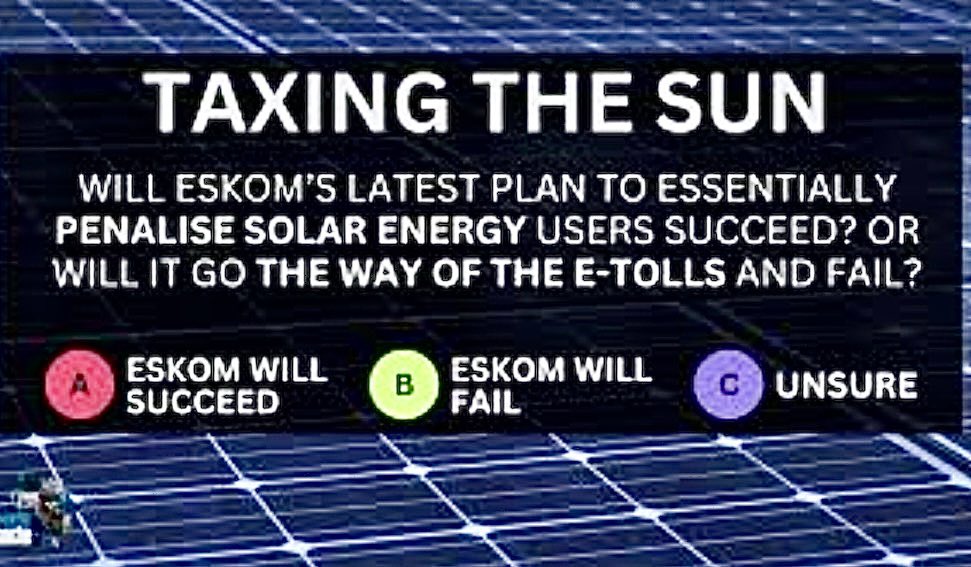
🚨ESKOM VS SOLAR South Africans Are Furious Over New Electricity Costs‼️
For years, South Africans were told to find alternative power solutions because of load-shedding, now that many households have invested in solar, batteries, gas appliances, and energy-saving methods, people feel like they’re being punished for using LESS electricity‼️
A new Gosolr report shows SA electricity prices have skyrocketed over 1,100% since 2007, making us one of the priciest in the G20🔥
The biggest shock, fixed connection fees have skyrocketed‼️
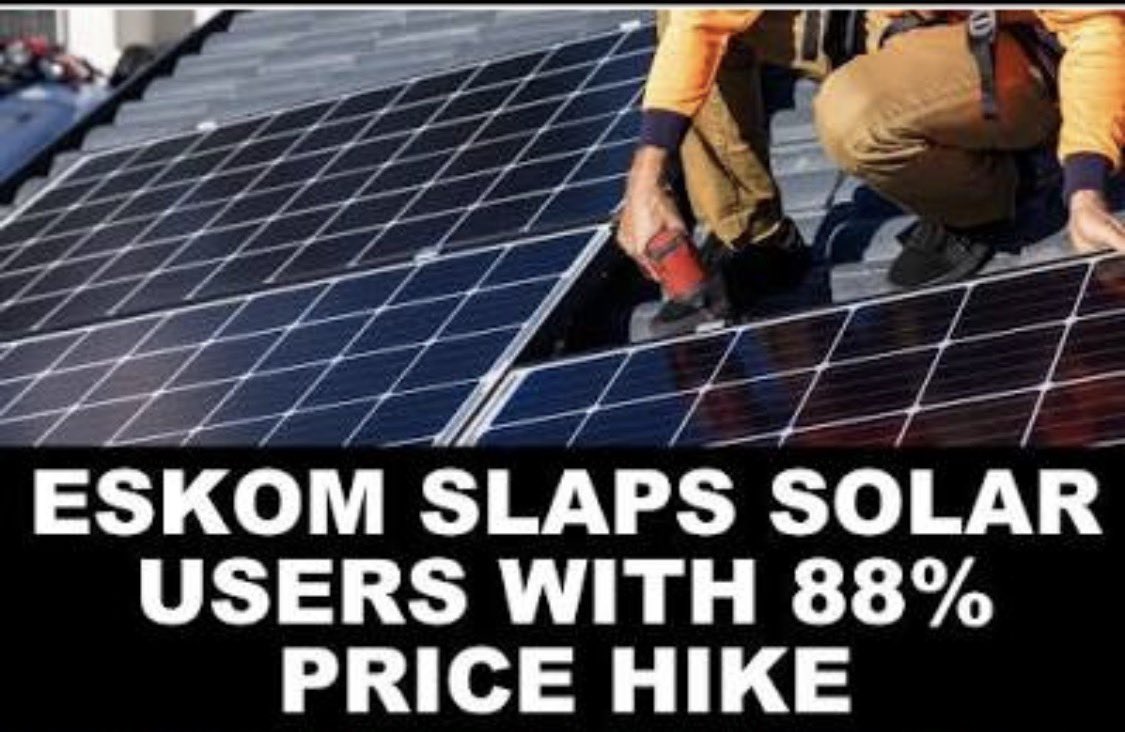
Homepower 4 customers jumped from R193 per month to R543 per month just to stay connected to the grid‼️ That's a 181% hike before you switch on a single light.
So even if your solar system is carrying you through the month, your bill isn’t dropping like it should because the fixed charges keep climbing.
This system is now: •Penalising low-usage households
•Discouraging solar adoption
•Hammering the middle class
•Squeezing small businesses
Experts warn of a classic death spiral: •higher prices •less consumption •Eskom revenue falls •prices rise again.
Other countries are mandating solar on new homes. Here we’re effectively taxing energy independence🔥
Why are we being charged more for trying to save electricity and become less reliant on Eskom⁉️
Fixed charges for grid backup make sense but skyrocketing ones that punish people who invested when the utility failed them, that feels deeply unfair‼️
The "far right" organizes a massive protest en London, and there is no violence to be seen. When the "moderate" left does the same everything burns. Do you see who is the real threat to democracy?
Photographer Phil Thurston shot a wave.
Slowed it down until those few seconds became 40.
Turns out the ocean is doing something extraordinary every single moment.
We're just moving too fast to notice.
"At 78 years old, I never imagined I would leave a courtroom with a criminal conviction for preaching the Christian gospel."
Retired pastor Clive Johnston reacting after being convicted for reading John 3:16 outside a hospital in Northern Ireland.
He says the case raises serious concerns about free speech and religious expression.
NASA just shared the most detailed view of Moon in its true & natural color and breaking the internet.
Just look at the detail here, this whole view is over 705 GB.
🇿🇦FARMERS WARN: “WE CAN’T AFFORD TO PLANT” – SOUTH AFRICA IS SLEEPING THROUGH A FOOD CRISIS IN THE MAKING ‼️
7 May 2026 - By Paul Hattingh
South Africa is moving toward a food crisis that many people still refuse to take seriously.
Not because there will suddenly be no food tomorrow morning.
Not because every farm is collapsing overnight.
But because the economic foundation that keeps food flowing through this country is being crushed from every direction at once.
And once a planting season is lost, you do not simply “recover” it next month.
You wait an entire year.
The warning signs are already everywhere.
🔴THE DIESEL SHOCK IS HISTORIC, AND FARMERS KNOW IT
Over the past two months, diesel prices in South Africa exploded by roughly R13.17 per litre, one of the most violent short-term fuel increases ever seen in the country.
This is not a small inconvenience.
Diesel is the bloodstream of commercial agriculture.
Every tractor.
Every planter.
Every harvester.
Every irrigation system.
Every truck transporting food across South Africa.
Grain farmers already operate on thin margins. Diesel alone can make up 10% to 18% of production costs depending on the crop and region. Now those costs are detonating in real time.
And while ordinary South Africans complain at the fuel pump, farmers are calculating whether planting even makes financial sense anymore.
🔴THE MIDDLE EAST WAR IS NOW INSIDE SOUTH AFRICA’S FOOD CHAIN
Most South Africans still think wars in the Middle East are “far away.”
They are not.
The Strait of Hormuz crisis is now directly embedded inside South Africa’s food system.
South Africa imports roughly 75% to 80% of its fertiliser, especially nitrogen-based products like urea and ammonia. Much of it comes from Russia and the Middle East. Large volumes move through Hormuz.
When the US-Israel-Iran conflict escalated and shipping routes became unstable, fertiliser prices surged globally.
The impact on South African farming was immediate.
According to Grain SA’s April 2026 monitoring data:
Urea prices surged over 58% month-on-month.
LAN fertiliser jumped over 52%.
Global fertiliser markets entered panic territory.
Diesel and fertiliser together now consume up to half of some grain farmers’ input costs.
This is not theoretical economics anymore.
This is what happens when geopolitics collides with agriculture.
🔴MANY FARMERS ARE NO LONGER ASKING “HOW MUCH PROFIT?” THEY ARE ASKING “WHY PLANT AT ALL?”
The public still does not understand how brutal the maths has become.
Landbouweekblad already warned earlier this year that wheat production costs could increase by roughly R1 800 per hectare, even before the latest diesel explosion.
For dryland wheat farmers averaging 3 to 4 tons per hectare, that means yields would need to rise dramatically simply to break even.
Not to prosper.
Not to grow.
Just to survive.
And farming does not pause like a corporate office.
A missed planting window is a lost season.
That reality is now driving serious fear through grain-producing regions.
🔴THE OFFICIAL DATA CONFIRMS THE DECLINE
This is no longer “social media panic.”
The National Crop Estimates Committee confirmed that winter wheat plantings for 2026/27 are expected to fall to 486 400 hectares, down 6% year-on-year and the lowest level in roughly 11 to 12 years.
That is real.
That is measurable.
That is official.
And while some farmers are diversifying into crops like canola, barley and oats, the broader signal is unmistakable:
Commercial grain farming is under severe pressure.
🔴FOOT-AND-MOUTH DISEASE HAS MADE THE ENTIRE AGRICULTURAL ENVIRONMENT EVEN MORE FRAGILE
As if fuel and fertiliser were not enough, South Africa’s agricultural sector is simultaneously battling one of the worst foot-and-mouth disease outbreaks in modern history.
The outbreak spread across all nine provinces and triggered a national disaster declaration earlier this year.
While FMD primarily affects livestock, not grain directly, the economic impact spreads across the entire agricultural ecosystem:
Higher veterinary and compliance costs
Export disruptions
Financial stress on mixed farming operations
Reduced liquidity across rural economies
South African agriculture is being squeezed from every angle at once.
🔴THE GOVERNMENT DID TRY TO SLOW THE DAMAGE, BUT IT IS NOWHERE NEAR ENOUGH
To be fair, the government did introduce temporary fuel levy relief.
Treasury reduced parts of the fuel levy structure in April and May 2026 to soften the diesel shock.
But this was damage control, not a solution.
You cannot offset a geopolitical energy shock of this magnitude with temporary tax adjustments while global shipping lanes are destabilising.
And farmers know it.
🔴THE MOST DANGEROUS PART IS THAT SOUTH AFRICA ALREADY HAS A HUNGER PROBLEM
This is where the conversation becomes serious.
Not sensational.
Not emotional.
Serious.
South Africa is not facing imminent nationwide famine.
Anyone claiming millions will suddenly starve tomorrow is exaggerating.
But South Africa already has a massive household food insecurity crisis.
Millions of people already skip meals.
Millions already depend on grants.
Millions already live one price increase away from hunger.
Now add:
Higher diesel costs
Higher transport costs
Higher bread prices
Higher meat prices
Higher fertiliser costs
Lower wheat plantings
Global instability
And suddenly the pressure on poor households becomes enormous.
This is how food insecurity spreads.
Not overnight collapse.
Slow suffocation.
🔴SOUTH AFRICA FEEDS FAR MORE THAN ITSELF
This is another reality many urban South Africans ignore completely.
South Africa is not just feeding South Africa.
South African maize production supplies roughly half the maize consumed across the SADC region.
A serious long-term decline in South African agricultural output would ripple far beyond our borders.
Mozambique.
Zimbabwe.
Zambia.
Botswana.
Namibia.
Lesotho.
Malawi.
The region depends heavily on South African commercial agriculture remaining functional.
And despite years of political attacks, regulatory hostility and endless economic pressure, it is still commercial farmers carrying much of that burden.
🔴THE REAL WARNING IS NOT “FAMINE.” IT IS SYSTEMIC EROSION.
That is the part people keep missing.
The danger is not one dramatic Hollywood-style collapse tomorrow morning.
The danger is cumulative erosion:
fewer hectares planted,
fewer profitable farms,
rising debt pressure,
shrinking margins,
declining confidence,
rising food inflation,
increasing dependence on imports,
worsening pressure on poor households.
That is how nations weaken.
Slowly.
Then suddenly.
🔴SOUTH AFRICA IS NOW PAYING THE PRICE FOR GLOBAL DEPENDENCY
This crisis has exposed something deeper and more uncomfortable.
South Africa is critically exposed to global supply chains it does not control:
imported fertiliser,
imported energy exposure,
unstable shipping routes,
weak logistics,
deteriorating rail systems,
vulnerable ports,
fragile agricultural margins.
The country has spent years pretending these vulnerabilities did not matter.
Now reality has arrived.
🔴THE FARMERS ARE NOT PANICKING. THEY ARE WARNING YOU.
That distinction matters.
Most commercial farmers are not emotional activists.
They are practical people.
They understand risk.
They adapt constantly.
Many will survive this season through diversification, scaling adjustments, tighter management and accumulated experience.
But when farmers begin publicly warning that planting itself is becoming financially irrational, the country should listen carefully.
Because food systems do not collapse in a single day.
They weaken season by season until the margin for error disappears.
And South Africa is moving dangerously close to that line.
This article is based on publicly available reporting, official agricultural data, Grain SA monitoring reports, National Crop Estimates Committee updates, Treasury fuel announcements, and publicly circulated farmer interviews and commentary as of 7 May 2026.
🔴FINAL WARNING: FOOD DOES NOT COME FROM SPEECHES
South Africans must understand this now: food security is not protected by political slogans, empty promises or government press briefings.
It is protected by farmers who still plant.
And when those farmers begin to say the numbers no longer work, the country is already in danger.
This is the warning.
Ignore the farmer, and you will meet the empty shelf.
Mock the producer, and you will pay at the till.
Attack commercial agriculture long enough, and one day the nation will discover that bread does not come from ideology. It comes from soil, diesel, fertiliser, labour, risk and debt.
South Africa is not yet starving.
But South Africa is being warned.
And if this government, this public and this region continue treating farmers as political enemies instead of the people standing between order and hunger, then the coming crisis will not be an accident.
It will be the predictable result of a country that heard the alarm, laughed at it, and kept walking toward the edge.
Pouca gente lembra que o Valentino Rossi por pouco não encerrou a carreira e a vida nesse dia.
Em 2020 acidente brutal entre Zarco e Morbidelli quase virou uma tragédia histórica porque a moto passou a centímetros da cabeça do Rossi a mais de 200km/h.
NEW: Golf legend Gary Player issues a stark warning to America’s youth, claiming a "silent war" is currently being waged against the U.S.:
"I say to the young people, just love this country because you don't realize what's going on around the world."
"There is a silent war taking place against America today, and what we've got to do is make these kids realize that freedom, exercise, and education start with reading some books."
"What you put in your body is so important. What a wonderful job [Trump] has done. And to all your Cabinet members, I say thank you for maintaining this great word—this cherished word: freedom."