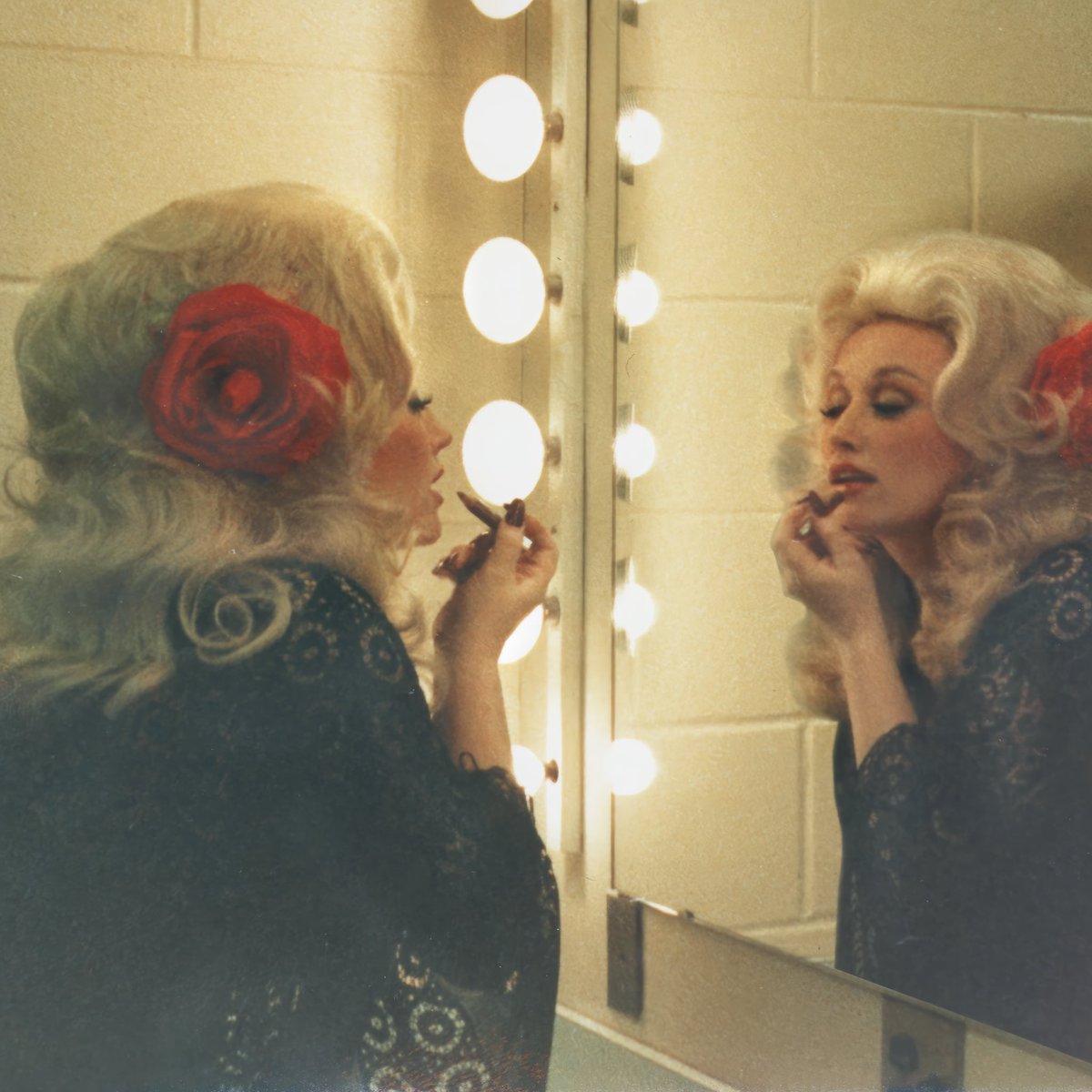
🔥DOLLY PARTON HAD TO PULL HER CAR OVER & ALMOST WEPT… the first time she heard “I Will Always Love You” by Whitney.
She made around $10 million off Whitney Houston’s version of “I Will Always Love You” in the 90s.
Most people would’ve bought a bigger house or a boat.
She bought a whole strip mall in a Black neighborhood in Nashville instead. Off the beaten path.
She said she did it because of Whitney… called it “the house that Whitney built.”
Same woman who built Dollywood and started the Imagination Library. That program has sent out over 325 million free books to kids so they grow up loving to read.
And when Hurricane Helene hit her people in East Tennessee… she put up $1 million of her own money and her companies matched it with another million.
Quiet class. No big speeches needed.
Dolly Parton casi chocó su automóvil la primera vez que escuchó a Whitney Houston cantar “I Will Always Love You”.
La canción había nacido casi 20 años antes, cuando Dolly decidió separarse profesionalmente de Porter Wagoner, el hombre que había impulsado su carrera.
Como él se negaba a dejarla marchar, ella escribió una despedida y se la cantó.
Porter terminó llorando.
Tiempo después, Elvis Presley quiso grabarla. Para Dolly era un sueño, hasta que su representante le exigió entregar la mitad de los derechos de autor. Aunque necesitaba el dinero, se negó.
Aquella decisión cambió su vida.
En 1992, Kevin Costner eligió la canción para “The Bodyguard” y Whitney Houston la convirtió en un fenómeno mundial. Dolly escuchó la versión por primera vez mientras conducía y tuvo que detenerse: estaba tan emocionada que temió sufrir un accidente.
“Tomó mi pequeña canción y la convirtió en algo enorme”, recordaría después.
La versión le generó cerca de 10 millones de dólares en regalías. Dolly invirtió parte de ese dinero en un complejo de oficinas situado en un barrio históricamente afroamericano de Nashville.
Lo llamó «la casa que Whitney construyó».
Dolly escribió la canción. Whitney la hizo volar. Y entre las dos crearon una despedida que el mundo nunca pudo olvidar.
Ahora las dos nos han dejado, pero juntas hicieron que una canción de despedida se volviera eterna.
Interesting history I read on fb. 👇
August 21, 1883. Just after six in the evening, the sky over Rochester, Minnesota turns the color of a bruise. Twenty minutes later, a third of the town is gone. Thirty seven people are dead. More than two hundred are bleeding in the streets.
Rochester had no hospital. Not one.
So a convent school on the edge of town emptied out. The nuns walked into the wreckage in full habits, and a woman named Mother Alfred Moes, an immigrant from Luxembourg who had come to America with almost nothing, sent word to the only doctor in town who could handle that many wounded.
His name was William Worrall Mayo. He was 64, an English country doctor, a hard skeptic on the subject of religion.
The sisters took over Rommel's dance hall and turned it into a hospital overnight. None of them had ever been trained in nursing. They learned it standing up, with Mayo giving orders and the injured laid out on the floorboards.
When the last patient was gone, Mother Alfred went to see him.
She told him Rochester needed a real hospital. A permanent one. She said she had seen it, a great hospital rising out of the cornfields on the west edge of town, and that she wanted him to run it.
Mayo told her the truth. A building like that would cost $40,000. Well over a million in today's money. He said no congregation of schoolteaching nuns could possibly raise it.
She did not argue with him. She simply told him that if he would take charge of the hospital, the sisters would take charge of paying for it.
Then she went out and did it.
For six years, her sisters taught school and handed over their wages. Every dollar. She bought nine acres of farmland. She hired the builders. She oversaw the plans herself, and when the money ran short, she found more.
Saint Marys Hospital opened on September 30, 1889. Twenty seven beds. Thirteen sisters, none of them nurses by training. Dr. Mayo, now 70, walked in as chief of staff with his two sons, Will and Charlie, beside him.
Those two boys built their surgical practice inside her building. Patients started arriving from Chicago, then from every state, then from overseas. The brothers formalized the partnership in 1919 and gave it their family name.
Mayo Clinic. Today it treats more than a million patients a year and is ranked the best hospital in the United States.
Mother Alfred Moes died on December 18, 1899, ten years after the doors opened. She never saw what it became.
The Mayo brothers always said it plainly. Their father did not want the hospital. The nun did. She built it, and then she handed them the keys.
Millions of Americans have made the drive to Rochester with someone they love in the passenger seat. Almost none of them know that the whole thing started with a 54-year-old woman standing in tornado wreckage, refusing to accept a no.
Pc: Dutch Valkema.
My father in law got the best treatment for colon cancer at the Mayo Clinic. Amazing hospital.
The nine-year-old boy next door lost his father in an industrial accident two springs ago.
Every evening after school, he threw a scuffed Rawlings baseball against his wooden fence. Thud. Thud. Thud. Hour after hour until dinner.
In my culture, one trains with the wooden sword in silence. But a wooden fence never throws the ball back.
I bought a twenty-dollar Wilson leather glove at Walmart.
The next afternoon, I stood on the asphalt twenty paces away, put on the stiff leather, and raised my hand without saying a word.
He stopped. He lowered his glove. He threw.
Snap.
I caught it. I threw it back to his chest.
We did not introduce ourselves. We did not speak about sorrow.
For seven months, from April to October, we played catch until the yellow streetlights hummed to life. Thirty minutes every evening. Just the dry pop of leather in the autumn dusk.
Last Saturday was his Little League regional championship.
I stood behind the chain-link fence by the right-field foul pole, alone, arms crossed.
Bottom of the sixth. Two outs, trailing by one. He drove a low fastball clean over the centerfield wall. The bleachers went wild.
While his teammates piled onto him at home plate, he wriggled out of the dogpile, ran past the dugout, and jogged all the way down the foul line to the fence where I was standing.
He didn't say a single word.
He pushed the red-stitched, scuffed leather ball through the diamond gap in the chain-link fence and pressed it firmly into my palm.
I took the ball, touched the brim of my cap, and nodded once.
He wiped his dusty forehead with his jersey, smiled, and ran back to his mother.
A boy does not need a philosophical lecture on resilience. He needs a man who never drops the return throw.
The partially eclipsed sun melts into the Mediterranean Sea.
I can’t get over this experience.
I captured thousands of photos- I’ll be sharing my favorite later tonight.
The obituary was small. Three lines. A retired Marine, seventy-eight, no surviving family. The service would be Thursday at 11 a.m. at a small cemetery in Alabama.
The funeral director had ordered eight chairs. He was not sure who would fill them.
He posted the obituary on Facebook on Monday, because that is what the funeral home does for men with no family. It is not a request. It is a courtesy. It is meant for the neighbor who might not have known.
By Tuesday morning the post had been shared forty thousand times.
By Wednesday morning the funeral director had received seventy calls from strangers asking if they could come.
By Thursday at 10 a.m., there were two thousand three hundred cars parked along the shoulder of a county road in Alabama, and men in old uniforms that no longer fit were walking, in silence, toward the cemetery.
They came from every state.
A man in a wheelchair had driven eleven hours from Ohio in a Ford Ranger with hand controls. A woman had flown in from Alaska. Four men from a VFW in Idaho had chartered a small plane. A biker club, sixty deep, escorted the hearse the last three miles because they had decided, in a parking lot the night before, that they would.
The eulogy was given by a man who had never met him. He wept twice.
The rifle salute was performed by seven Marines, each from a different decade of service. The oldest was ninety-one.
At the end, twelve hundred people stood, and none of them left until every last one had placed a hand on the coffin.
None of them knew him.
All of them knew him.
He had, in some way none of them could name, served with each of them.
His name is now on a small plaque at the entrance to the cemetery, paid for by donations from people who arrived without knowing they would donate. The plaque says only his name, his rank, and one line.
He was not alone.
He was never alone.
Twelve hundred strangers made sure of it.
Millions of Americans died alone. Kids fell behind in schools because of lockdowns. Small businesses were shattered. And all of it stems from Anthony Fauci and the NIH funding dangerous gain-of-function research at the Wuhan Institute of Virology.
The American people deserve to hear the truth from Dr. Fauci about what took place and why. All he has to do is stand up and tell the truth.
Put August 12 in your phone now. Genuinely.
Before sunrise, six planets spread across the sky. Afternoon, the eclipse. After dark, the Perseids Meteor shower.
Four events on one day, NASA says, and the new moon that same date keeps the sky dark enough to actually see the meteors.
You don't need a telescope for most of it. A field, a coat, and twenty minutes for your eyes to adjust.
@japan_nobunaga I love how your posts show us the America we know, an America familiar and essential, so solid we don’t even see it is there, like an engine steadily humming.
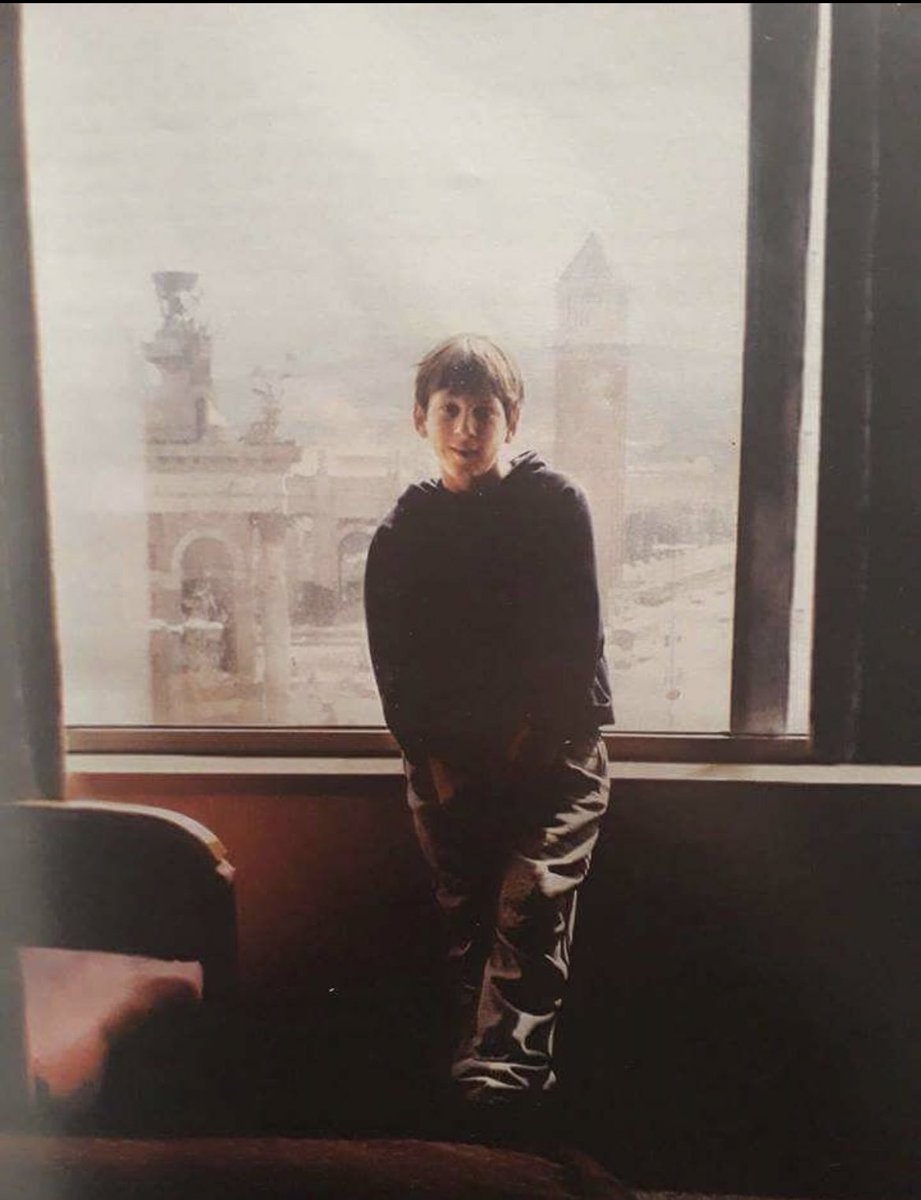
Trabajas en una fábrica de acero de 4 am a 7 pm. Tienes 4 hijos que mantener. Un día, el Barcelona de España le ofrece una prueba a uno de tus hijos. Tu hijo tiene tan solo 13 años. Puede pasar cualquier cosa, puede que se convierta en profesional, puede que no.
Con tu familia, tomas la decisión de dejarlo todo, de irte a Barcelona a vivir y de apostarle de pleno a la carrera de él. Lo que viene después es historia.
QEPD Jorge Messi, el papá de Lionel. El que primero apostó, el primero que creyó ❤️
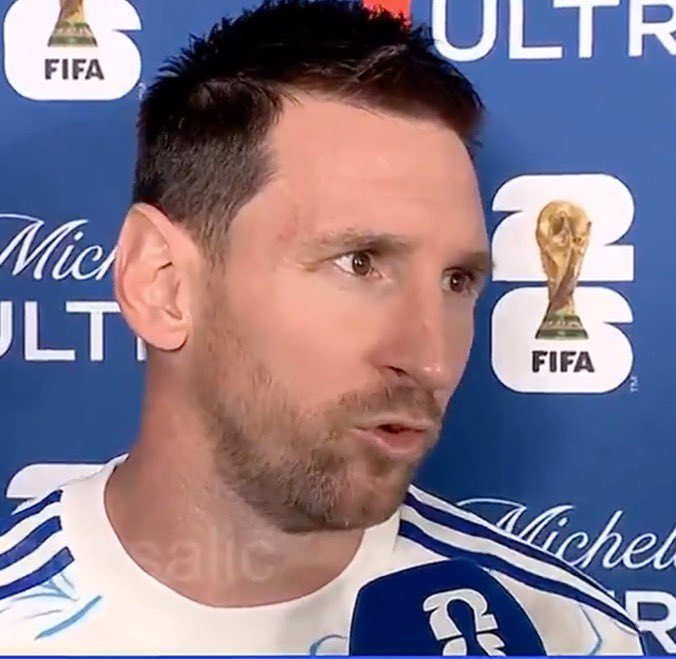
🚨🗣️New: Lionel Messi on why he started crying after receiving the silver medal despite the World Cup final defeat to Spain:
“I wasn’t just thinking about losing a final. I was thinking about everything that brought me here… every sacrifice, every difficult moment, every time people doubted us, and every time this shirt gave me the strength to continue.
“When I heard the Argentina fans chanting my name after the defeat, that was the moment that broke me. We had just lost the biggest game, but they didn’t turn their backs on us. They didn’t see a silver medal… they saw the journey. They saw the heart, the fight, and the pride we gave them.
“I looked into the stands and I saw families who travelled thousands of miles, people who dreamed with us, people who cried with us. That love is bigger than any trophy. Football gives you many victories, but moments like that remind you why you play.
“I cried because I felt the weight of the shirt, the love of my country, and the responsibility of wearing this badge. A medal can be silver, but the memories, the connection with the people, and the pride of representing Argentina… those things are priceless.
“Sometimes football gives you the perfect ending, and sometimes it gives you a painful chapter. But I learned that greatness is not only measured by lifting trophies. It is also measured by how you stand when your heart is broken.
“And hearing Argentina sing my name after losing a World Cup final… that was a victory of another kind. I will carry that moment with me forever.”
—🎙️Mixed Zone
SIMPLY... THANK YOU, LEO. 🇦🇷✨
Lionel Messi has played his final World Cup match. 💔🏆
It was a journey filled with records, goals, and glory. Your legacy and your 8 Ballons d'Or are eternal. 🌕
🔗 More about his golden career on https://t.co/qkKEZsNOIB!
#ballondor#worldcup #argentina #messi
The World Cup ends today. One game left. By tomorrow most of you visitors will be packing up, heading to the airport, going home.
So before you go, let me say the thing I actually want to say.
A few weeks ago I wrote a silly post about all the things you were discovering here. Free refills. Free water. Ice like civilized people. Chips and salsa before you even order. Air conditioning that is a fact and not a moral debate. Drive-throughs. Ranch by the gallon. The Germans standing in the HEB meat aisle in reverent silence, finally understanding why we do not have trains. Buc-ee’s, for which there are still no words.
It blew up, because it was true, and because you were so delightfully stunned by all of it.
Even the Wall Street Journal caught on. Their headline this week: how the US lost the World Cup and won over the world. We did not lift the trophy. But apparently we lifted something else.
We even learned a few things about ourselves along the way. Like the fact that Elon Musk, the single richest man on the planet, shops at HEB. Just rolls in and queues up for fresh tortillas with everybody else. The man could buy the tortilla company, the state it is in, and the moon it sits under, and instead he is standing in line at the hot-tortilla counter like the rest of us, because that is where the good ones are. Only in America is the wealthiest human alive elbow to elbow with a mom of four at the salsa bar. That is the whole country in one aisle.
And here is the part I want every one of you to hear on your way out the door.
None of it was a show.
We did not roll all this out because you were coming. The ice was always there. The refills were always free. The grocery stores were always the size of aircraft hangars at ten on a Tuesday. The stranger who adopted your whole section, the guy who gave you a ride, the waitress who remembered your order, the family that invited you to the cookout, that is not World Cup America. That is just America. That is Tuesday.
We are exactly like this when nobody is visiting. Loud, generous, ridiculous, overfed, and genuinely thrilled you came. We will still be exactly like this tomorrow when the stands are empty and the flags come down.
So thank you. To everyone who came, who sang in our streets, who cleaned our stadiums, who turned our cities orange and filled our bars and taught us your chants. You were wonderful guests, and you made a country that just turned 250 feel young and seen and loved.
And to everyone who could not make it this time, the door does not close today. We meant all of it. Come whenever. The porch light stays on, the fridge stays full, and there is always room for one more at the table.
You found out who we are these last few weeks.
Good news. We are like this all the time.
Safe travels home.
Y’all come back now, you hear. 🦋
In America a man pointed at the horizon and said, "That's my neighbor's place."
I looked. I saw a field. Then more field. Then, very far away, where the earth curves, a house the size of a grain of rice.
"How far is that," I asked.
"Oh, close. Fifteen, twenty minutes."
Twenty minutes. To the neighbor.
In my country the neighbor is the wall. You hear the neighbor cough. You know when the neighbor's rice is done. You apologize to the neighbor for existing loudly, and the neighbor apologizes back, and this exchange of apology is the entire foundation of our civilization.
Here the neighbor is a rumor on the horizon.
And yet he called him neighbor with warmth. With loyalty. As if the man of rice-grain size were his brother.
"You close with him?" I asked.
"Bill? Oh yeah. He'd give you the shirt off his back."
He had not seen Bill in three weeks. Bill was, geographically, an expedition. And yet if this man's truck broke down at 3 a.m. in a blizzard, Bill would come. Both men knew this without a treaty. Both men had never once discussed it.
In my country, closeness is measured in the thinness of the wall between you.
Here it is measured in whether the man would cross the dark for you.
By that measure the wall means nothing. Bill, at rice-grain distance, is closer to this man than the man I shared a wall with for nine years, whose name I never learned, whose cough I knew intimately, whose face I could not describe to a court.
The man saw me thinking.
"You want to meet him?"
We drove twenty minutes. Toward the grain of rice. It grew into a house.
Bill came out before we stopped. He did not know we were coming. He had seen the dust of the truck from a long way off, the way men here read the land, and he had put coffee on.
He had put coffee on for dust.
"Neighbor," Bill said, and shook my hand.
I had known him four seconds.
He meant it more than men who had known me forty years.
I understand now. Here, a neighbor is not the person near you.
A neighbor is the person who would come.
Distance was never the measurement.
I had the wrong ruler my whole life.