From Madrid to the Land of a Thousand Hills. 🇪🇸🇷🇼
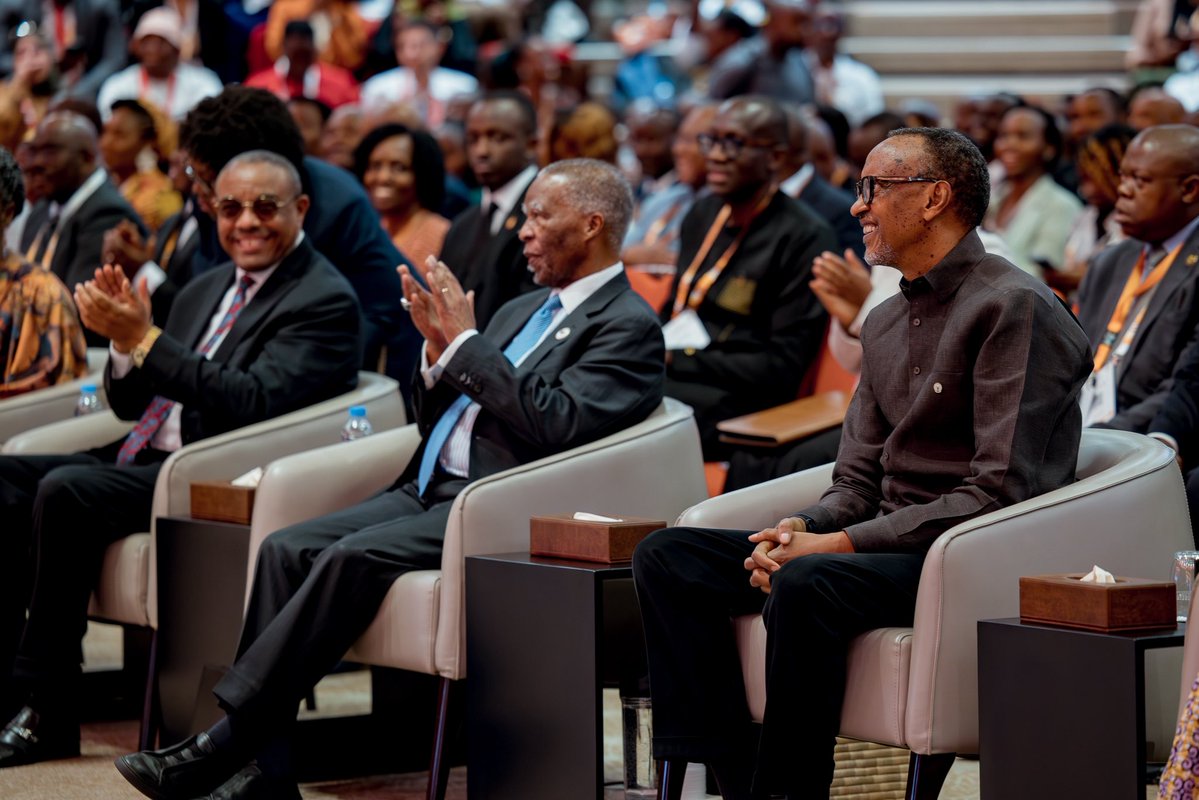
@visitrwanda_now partner @Atleti CEO and majority shareholder Miguel Ángel Gil Marín joins Rwanda in celebrating its growing mountain gorilla population as a Namer at the 21st #KwitaIzina. 🦍🌿
Miguel also sits on the UEFA Executive Committee.
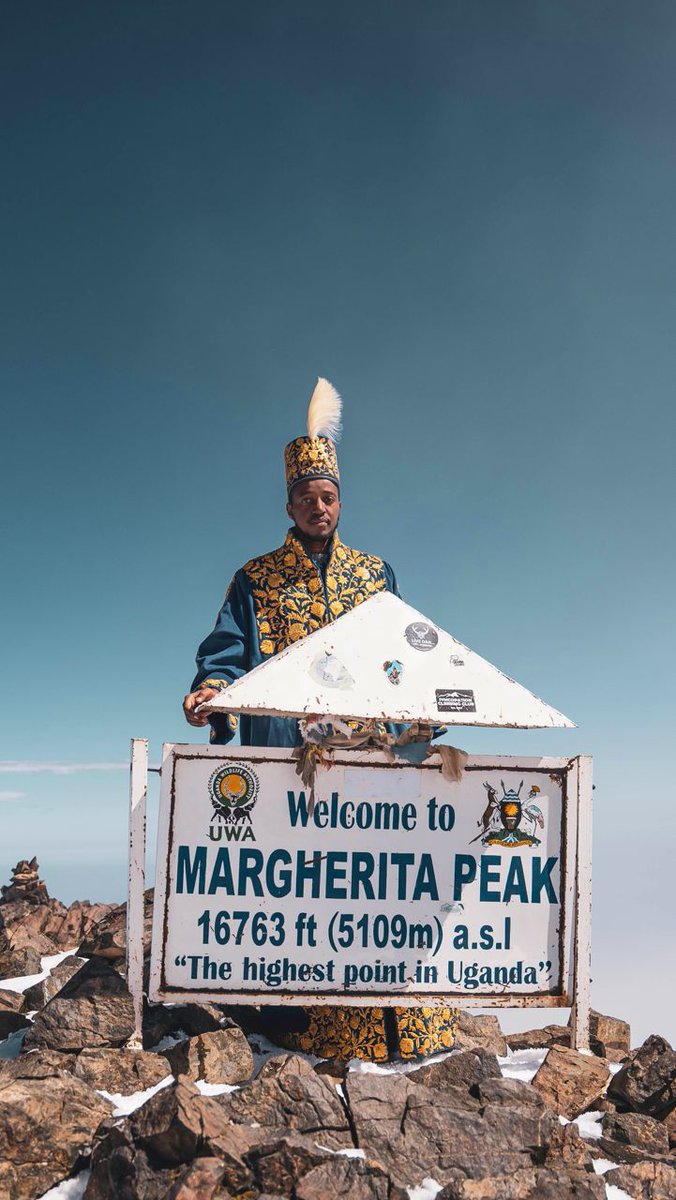
King Oyo, the Champion of Domestic Cultural Diplomacy!
Okaali Oyo Nyimba Kabamba Iguru Rukidi IV. May your soul rest in peace.
To understand why we call the departed Omukama Okaali, we must first understand Empaako; one of the most beautiful naming traditions of the Batooro.
Empaako is more than a nickname. It is a praise name, a name of endearment, respect, honour & identity. Among the Batooro and related communities, it is traditionally given alongside one's personal and family names.
Its roots reach deep into the history of Bunyoro-Kitara and the Biito/Luo tradition. Linguistically, Empaako is associated with pako, meaning praise. Over generations, these praise names were absorbed into Runyoro-Rutooro culture and became an important expression of who we are.
And Empaako is not simply chosen.
Traditionally, after a child is born, family members, particularly paternal aunts, examine the child, considering family connections and resemblances.
The clan head then plays the central role in formally declaring the child's Empaako. The ceremony is accompanied by food, gifts and other cultural observances, traditionally including the planting of a tree in the child's honour.
From that moment, the Empaako follows a person throughout life.
It is used in greeting, affection, respect, praise and reconciliation. It can soften anger and restore social bonds. In traditional Batooro society, deliberately failing to use someone's Empaako could itself be regarded as disrespectful.
There are twelve recognised Empaako: Amooti, Akiiki, Araali, Atwoki, Adyeri, Ateenyi, Acaali, Apuuli, Abbooki, Abwoli, Bbala and Okaali.
And this is where Okaali becomes exceptional.
Okaali is reserved for the Omukama - the King of Tooro. The reigning Omukama traditionally carries Amooti as his everyday royal Empaako, while Okaali is invoked in special traditional and sacred contexts.
So when we say “Okaali Oyo”, we are recognising the King in the fullness of the institution he embodied.
Diplomatic Legacy:
Beyond the throne, he became an important figure in Uganda's domestic cultural diplomacy, using relationships between traditional institutions not merely for ceremony, but to build bridges between communities
His relationship with Buganda was part of a much older bond between the two kingdoms, strengthened over generations and nurtured during Oyo's reign by members of both royal families, including the remarkable role of Princess Elizabeth Bagaya as a bridge between Tooro and the wider cultural and diplomatic world. Buganda and Tooro have consistently reaffirmed their historic ties, with their leadership working together in the interest of their peoples.
That is people-to-people diplomacy at its most powerful: relationships that travel beyond palaces and reach families, communities and ordinary citizens.
His engagement with other cultural institutions carried the same spirit.
The clearest testimony comes in our mourning: Busoga Kingdom has postponed the 12th coronation anniversary celebrations of Kyabazinga William Gabula Nadiope IV, originally scheduled for September 13, so that Ugandans can attend the burial of King Oyo. That gesture of respect speaks loudly about the bonds Oyo cultivated among Uganda's traditional institutions.
This is part of Oyo's greater legacy: culture as a bridge, tradition as diplomacy, and royal relationships as instruments of unity.
He inherited the throne at just three years old in 1995. He grew before the eyes of Uganda, from the world's youngest reigning monarch into a King who carried Tooro's identity into a new generation and helped give the Kingdom a voice far beyond its borders.
So today, when we say:
Okaali Oyo, Okaali!
We honour the man, the Omukama, the culture he carried, the relationships he strengthened and the unity his reign represented.
May the ancestors receive you with honour!
May the bridges you built between our people endure.
MHSRIP!
Okaali King!!
@qataharraymond
The Inaugural @ASG_Africa Africa Mindset Reset Forum – it happened, resonated across generations!
At the heart of the conversations at the Inaugural Africa Mindset Reset Forum was the paradox facing our generation (of Africans): we own the resources, the ideas and the human capital, but rarely the mechanism to execute, or the agency over our own ideas.
That gap is what the African School of Governance set out to work on with its third leg: after academics and research comes strategic convening and thought leadership. The school was designed to stand on all three, with the Mastercard Foundation coming in as founding partner on that understanding. The question we put to ourselves was a practical one. How do you bring Africans together to do more than talk, when 70% of the continent is under 35 and already holds the ideas?
We set a target of 1,000 young Africans in Kigali, in an intergenerational room where at least 80% of the participants would be under 35 and worked backwards from there.
We started with the thinking. In May we sat down with a co-creation workshop of a cross-generational continental experts group to work out how to drive a movement rather than stage a conference, because this was never meant to be a one-off. That produced the Forum's focus and the eventual intellectual knowledge product and its central case, that Africa must enter a new era – it quickly picked up its name as “Meta-Africanism”.
The central argument was: Pan-Africanism won us our independence and our solidarity. Meta-Africanism is about what we do with these. It moves unity from solidarity to productivity: home-grown solutions, sovereign stewardship of our own natural resources, dignified work for young Africans, and governments, business and young innovators building across borders instead of in parallel. Connectivity was not only a theme in the room. It was the condition for the room existing.
Then we had to make the convening irresistible to the people it was built for. In the run-up to, we ran pre-Forum webinars in English and French, made the visuals for young people's feeds rather than our own, and asked young Africans across the continent what mindset shift they thought was needed right now. The answer that stayed with us came from one of our MPA students, Ayebilla Avoka. Africans have been behaving like caretakers on their own farms, and must start behaving like owners. We also worked with 38 influencers from 16 countries who carried the Forum into rooms ASG does not reach. One tweet from KalyJay in Ghana brought in over 500 applications on its own.
We planned for 1,000. Registration closed at 6,630. We could seat 2,733 people from 80 countries, 78% of them under 35, and 98% of our speakers and invited guests turned up. Everyone else came online, where the streams peaked at 67,500 viewers in English, French, Portuguese, Swahili and Arabic, and volunteers ran watch parties in five African cities.
Most importantly, the Forum closed with commitments that have institutions behind them. Rwanda will review and reduce air transport fees and taxes so young entrepreneurs can afford to trade in the One African Market. The African Development Bank will set up an African Airplane Fleet Facility, letting African airlines lease aircraft without cash upfront. Kenya will host a Trust Summit in October. ASG will host the Centre on Africa Mindset and Home Grown Solutions, and launch the Sovereign Negotiators Credentialing Initiative with the Accra Reset.
As the first Forum of its kind, it highlighted the need for future editions to expand in-person and hybrid participation, include focused breakout sessions, and strengthen youth voice, audience engagement and cross-generational problem-solving.
I am exceedingly delighted to reconnect with colleagues and stakeholders from across government, civil society, academia, youth, the private sector, financial institutions and development partners at the 3rd Annual Africa Climate Finance Conference in Kampala.
The Conference comes at a particularly consequential moment for our continent. Africa continues to face some of the most severe consequences of the climate crisis, yet the scale, accessibility and predictability of climate finance flowing to the continent remain far below what is required.
The challenge before us, therefore, is no longer simply one of securing more commitments. It is about turning commitments into capital, and capital into tangible, bankable and inclusive climate action.
Over the next two days, the Conference will provide an important platform for interrogating how African countries can strengthen their capacity to design, negotiate, mobilise, access, deploy and absorb climate finance more effectively, while building the institutional, regulatory and investment architecture necessary to translate climate ambition into development outcomes.
This conversation resonates deeply with the work we are advancing through the Parliamentarians for Climate Finance Project, implemented by the United Nations Industrial Development Organization (UNIDO) and the Climate Parliament, with funding from the Green Climate Fund, across 15 sub-Saharan African countries, including Uganda.
At the heart of the PCF project is a recognition that mobilising climate finance is not merely a financing challenge; it is also a governance, legislative and investment-enabling challenge. Legislators have a critical role to play in strengthening legal, regulatory and institutional frameworks, improving national planning, addressing barriers to green investments and convening governments, investors, regulators and communities around actionable investment opportunities.
I am particularly privileged to serve as Conference Rapporteur, working alongside colleagues at the MUBS Climate Finance and Sustainability Centre to capture the depth of these conversations and, importantly, help ensure that the Conference translates dialogue into clear, actionable outcomes for Africa’s climate finance agenda.
There could hardly be a more fitting theme, “From Commitments to Capital: Operationalizing Africa’s Climate Finance Architecture”.
Looking forward to two days of learning, collaboration and action.
Kazi iendelee! ⚡️🍀🌍✊🏽
Miss Uganda styled with the layers cut trug during c/section... I loveeet so much...
this is more than beautiful... 🔥🔥🔥... let me celebrate every fashion surgeon out there...
The United Nations in Uganda joins the Royal Family and the people of Tooro in mourning the passing of His Majesty King Oyo Nyimba Kabamba Iguru Rukidi IV.
We honour his service to young people, culture, sustainable development, and his partnership with the UN family.
What an extraordinary year it has been!!!🇺🇬🌍🇬🇧✊🏽
Over the past year, I have had the humbling privilege of pursuing a Master of Laws (LL.M.) in Global Environment and Climate Change Law at the University of Edinburgh Law School (@uniofedinburgh) with the generous support of the prestigious Chevening Scholarship (@CheveningFCDO). The journey has been nothing short of transformational!
My studies have deepened my appreciation of the role of law, policy and institutions in responding to some of the defining challenges of our time; from environmental degradation and climate change to the global energy transition and the pursuit of climate justice.
Along the way, I have had the opportunity to engage deeply with International Environmental Law, International Climate Change Law, the Law of Carbon Management, Energy Transition and the International Economic Legal Order, Public Participation in Policy, and several other fascinating areas of study.
I am immensely grateful to the exceptional faculty who unreservedly shared their knowledge and whose support broadened my perspective and inspired me to think differently and critically, throughout this journey.
Beyond the lecture-room, I am equally grateful to the indomitable team at the Edinburgh Earth Initiative and the Edinburgh Climate Change Institute for the opportunity to contribute to the University of Edinburgh’s engagement with global environmental and climate processes, including meetings under @UNEP and the @UNFCCC.
To @CheveningFCDO; thank you for making possible a dream I had carried for years, to deepen my understanding of how law can contribute to environmental protection, climate justice and universal access to clean, affordable and sustainable energy.
The degree is important, but perhaps even more valuable are the perspectives gained, friendships formed, networks built through our global Chevening family and beyond, and the renewed conviction that meaningful change is possible.
Now, as I return home to Uganda 🇺🇬, I do so with gratitude, and with an even greater sense of responsibility.
I look forward to translating the knowledge, skills and networks gained in the UK into meaningful action for environmental protection, climate justice, climate finance and a just energy transition in Uganda, across Africa and beyond.
As this chapter closes, I am optimistic about the adventure and potential impact in the next…
EXCERPTS FROM OUR THINKPIECES:
Title: Media-State tensions & the future of media freedom in Uganda
For the full think piece: https://t.co/022bR5znLT
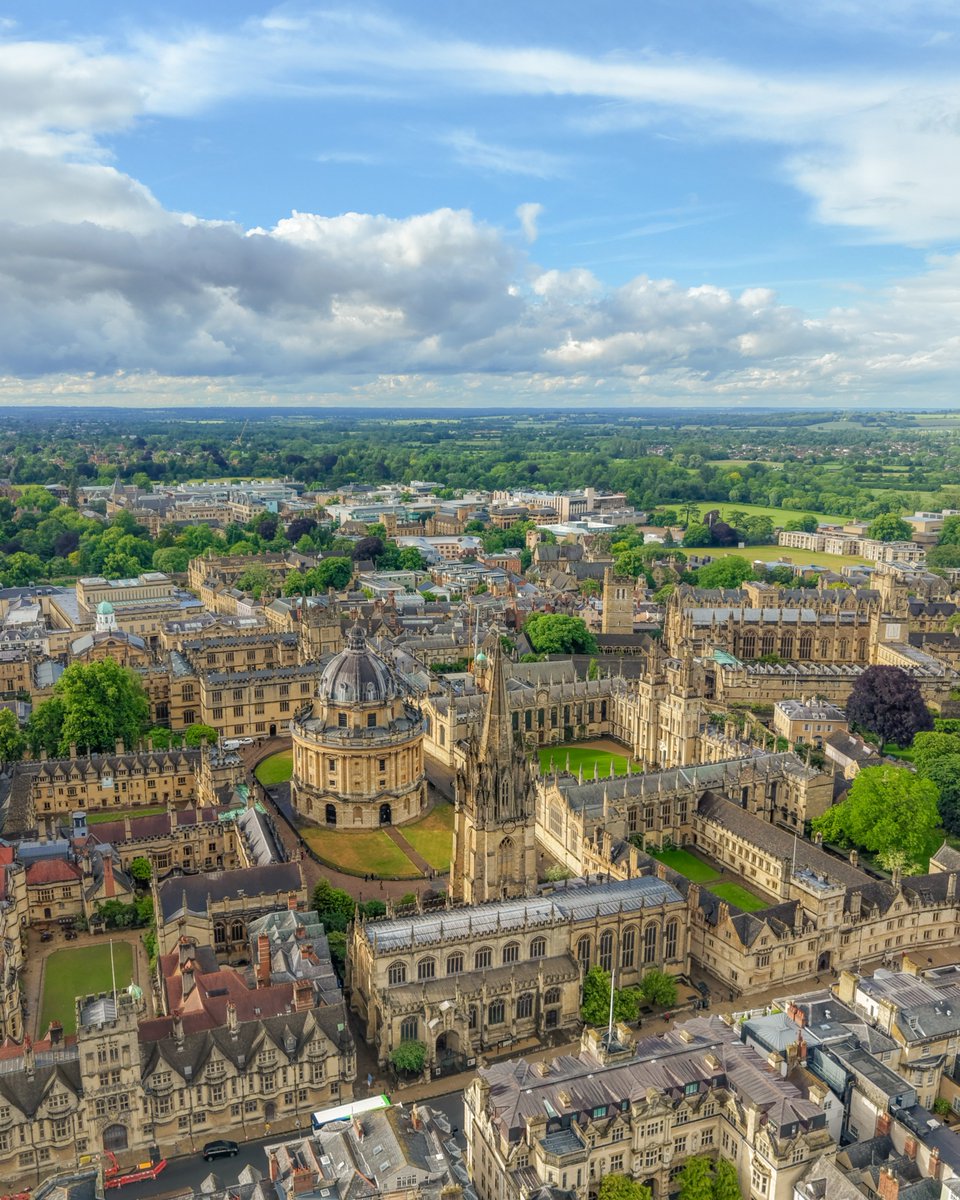
What’s a window from a 1930s exhibition doing in an Oxford college library? 🪟🌍
Created for the 1938 Glasgow Empire Exhibition, this striking world map now sits in Regent's Park College Library.
How (and why) it got there remains a mystery… 🔎
#OxfordHistory
Bamutakudde cleaning Day:
This week's community cleaning was special in #Bamutakudde.
We didn't just clean — we planted the future🌱. 2,000 trees: 🌸 1,000 cherry blossoms along our village highway. 1,000 fruit trees for homes & gardens 🥭
Grateful to @GoodForestsUg for partnering with us on this greening journey. Together, we are building the village we call home.