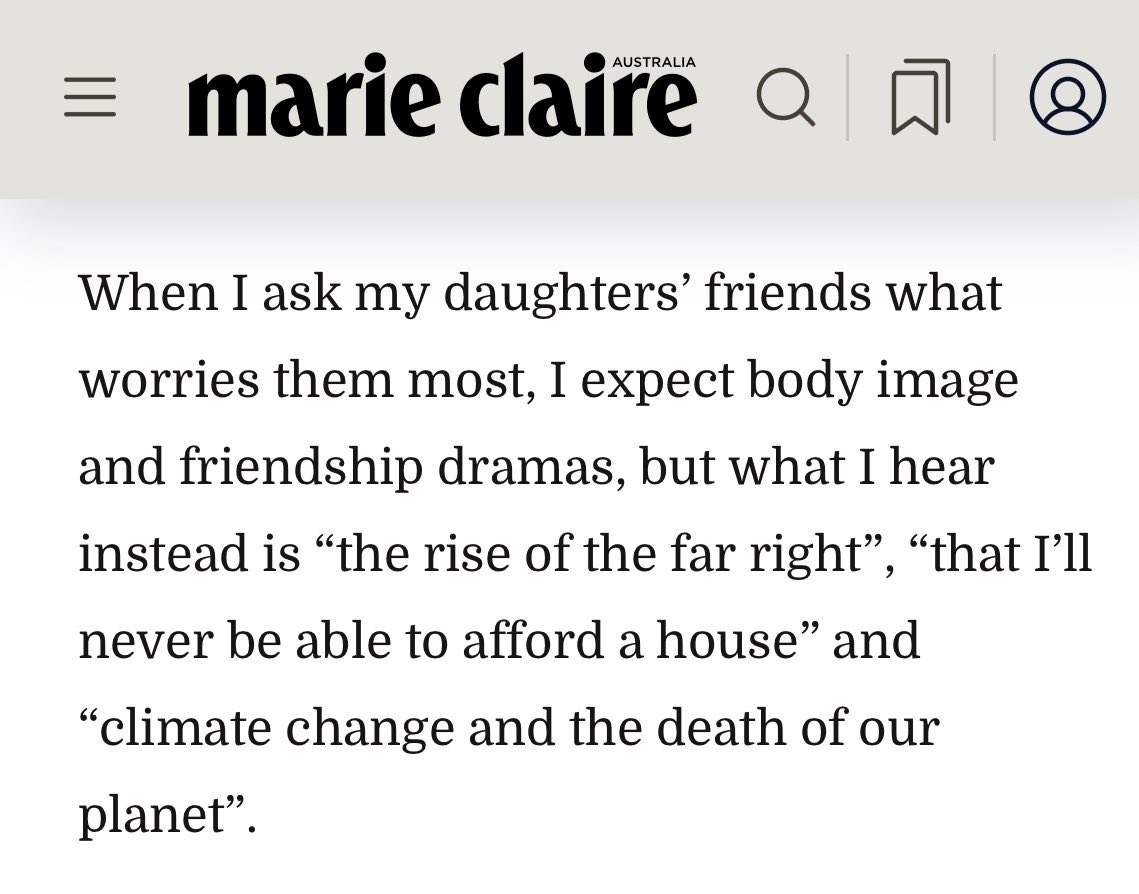
Apparently teenage girls are unhappy because of toxic masculinity and “the rise of the far-right”.
I’m pleased to be in Marie Claire but I’m so tired of this framing, especially as I’ve been called far-right for writing about divorce, about online p*rn, and about so much else hurting girls. And often the right are the only ones willing to take these issues seriously.
One thing we should never forget after today: Dignity in Dying are simply the Voluntary Euthanasia Society rebranded. Nobody should be in any doubt what the real end point is here. A civilised society which cares for the weak and vulnerable must resist this agenda.
I understand why people do this, and it may be the right tactic, but frankly I am tired of 'this bill at this time is wrong'. Assisted suicide is absolutely wrong in principle, it is destructive of the basic dignity and sanctity of God-given human life, and it can never be right
@moveincircles But it has with abortion. This was a close vote, even if it was a good one. The real problem is not coercion/hard cases but the lack of committment to the basic principle, 'you shall not deliberately kill the innocent'. Until our society regains that, this will be repeated.
In the Scottish vote on "assisted dying", it was striking to see how many MSPs moved from supporting to opposing specifically because they now recognised the real risk to vulnerable women in coercive relationships. It'll be interesting to see if the same happens at Westminster.
The Church should be playing a mediating role here, but it can’t, because it has failed to listen to the real, not at all racist anxieties of the working-classes and just repeats trite and sentimental professional-managerial middle-class nostrums.
@WalkerMarcus It was sold at our General Synod as being shared by the Orthodox and Roman Catholics... but it isn't. They share the concern for creation but the Orthodox have a Day of Prayer on 1 Sept and the RCs don't have this feast. Someone's telling porkies!
As a priest, I want to be like St Cuthbert, a mystic, missionary, and mediator. Draw near to Christ, draw others with me, and bring them together in His Holy Name.
Amnesty has nothing to do with the organisation for
Which the Secret Policeman's Ball raised money
It has been taken over by ne'erdowells
Please do not support them
MPs planning to vote for Lauren Edwards’ Terminally Ill Adults Bill, please listen.
The Bill’s supporters admit the plan is to not allow amendments to be made to the Terminally Ill Adults Bill.
The vote on Friday is not a vote for the principle. It is a vote for THIS BILL - with all its flaws, as outlined by numerous professional organisations - to become law.
Workmen repairing a church wall in Folkestone in 1885 found a hidden cavity in the chancel. Almost buried in rubble was an old lead casket. Inside were fragile human bones.
The parish immediately wondered if they had found St Eanswythe, Folkestone’s seventh-century patron saint. She was a Kentish royal woman who is believed to have founded one of England’s earliest religious communities for women around AD 660. Her relics were venerated in Folkestone for centuries and were brought to the present church in 1138. Then came the Reformation. Her shrine disappeared from the records and the remains were thought to have been destroyed.
For the next 135 years, the bones found in that wall were honoured as hers, but nobody could prove it. In January 2020, archaeologists and other specialists were finally allowed to examine them. The remains came from one person, probably female, and probably aged between 17 and 20. A tooth and a foot bone were sent to Queen’s University Belfast for radiocarbon dating.
The result landed in exactly the right period. The tests showed it was highly probable that this young woman died in the middle of the seventh century. Historical research pointed the same way. The team concluded that the remains were almost certainly those of Eanswythe, making them the earliest verified remains of an English saint.
Whatever happened when that lead casket was hidden, it survived. An unknown hand put the bones inside a church wall, and centuries later the parish still had them when so much other Christian heritage had been lost.
In November 2024, the story came full circle. Local schoolchildren told Eanswythe’s story before a packed congregation. Her relics were carried through the church in a new reliquary designed by Sophie Hacker and placed in their place of honour. Archaeology had answered the question. The parish marked the moment through Christian worship, procession and prayer.
That is why St Mary and St Eanswythe deserves to survive. Its walls hold nearly 1,400 years of Christian memory, but the building is still doing the work of a church. A Sung Eucharist is celebrated there every Sunday at 10.30, alongside school links and community life. The wall gave up Eanswythe’s bones after more than a century of uncertainty. The church around that wall is still alive with worship almost fourteen centuries after her community first prayed in Folkestone.
I’m in awe that Captain Ian Gardiner could laugh after leading X-Ray Company, 45 Commando, through one of the Falklands War’s hardest nights.
After helicopter lift was lost, his Marines yomped 56 miles across East Falkland. In June 1982 they attacked Two Sisters, where heavy machine-gun fire stopped the lead troop.
They hit the positions with Milan missiles and mortars. The next troop pushed through the darkness, was forced back by shellfire, then advanced again. By dawn, 45 Commando held the mountain and Britain was closer to liberating the islands.
Four British servicemen were killed. I feel fierce pride in their courage and heartbreak at the price. I’m amazed those men could still laugh under fire.
Which Falklands veteran should every Briton know?
I am **delighted** that BCA have set up a link for support donations - https://t.co/zPuT9iGIRL
Could you pls RT & share? Any amount will help them 💐