Some lessons I have learnt from the first few weeks of teaching in what has been a very different (understatement) academic year #LTHE#highered#teaching https://t.co/44f3fXAPzw via @AspProfHub
My British Friends have been asking me questions about the beautiful Ojude Oba cultural festival of Nigeria, so I’ve decided to explain it in the simplest way so I can always point them here without explaining too much again 😂
Ojude Oba in 60 Seconds
What is Ojude Oba?
“King’s Forecourt” in Yoruba 👑
It’s the day Ijebu people roll up to the Awujale’s palace like “Boss, we love you” 🔥
Who Does It?
Yoruba people → Ijebu subgroup, Ogun State 🇳🇬
If you’re Ijebu and you’re not there, are you even Ijebu? 😂
Since when?
132 years ago.
Started when Muslim Ijebus thanked the king for protecting them.
Now it’s the BIGGEST Yoruba flex day 📈
The Vibe/Essence:
3 things:
Loyalty to the king 🙇
Culture on steroids: Agbada worth cars, horses doing stunts 🐎💰
Homecoming party. Diaspora Ijebus MUST return. Nigeria shuts down for 3 days
When?
Every year. 3rd day after Sallah/Eid.
No fixed date.
Islam calendar runs the show.
Worth?
Conservatively $5M – $12M USD per edition 💵
Hotels booked out. Agbada designers eat.
Brands like MTN/Glo/FCMB/Goldberg etc throw cash.
D’banj dancing on horseback = free PR worth millions.
Moral:
Tradition + Clout = Money.
Ojude Oba is culture marketing masterclass.
Tag an Ijebu person 😂 #OjudeOba #IjebuDevotion #Yoruba
🎥 @theniyifagbemi 🖋️ @dadaostephen
A community college professor taught the same study skills lecture for 30 years, and the video quietly became one of the most watched educational recordings on the internet.
His name is Marty Lobdell. He spent his career as a psychology professor watching students fail not because they were lazy, but because nobody had ever taught them how their brain actually works under the pressure of learning something hard.
The lecture is called "Study Less Study Smart." Over 10 million views. Passed around in Reddit threads, Discord servers, and university study groups for over a decade. And the core insight buried inside it has been sitting in cognitive psychology research for years, waiting for someone to explain it in plain language.
Here is the framework that completely changed how I think about effort.
Your brain does not sustain focus the way you think it does. Studies tracking real students found that the average learner hits a wall somewhere between 25 and 30 minutes.
After that, efficiency doesn't just decline. It collapses. You're still sitting at your desk, still looking at the page, but almost nothing is going in.
Lobdell illustrated this with a student he knew personally. She set a goal of studying 6 hours a night, 5 nights a week, to pull herself out of academic probation. Thirty hours of studying per week. She failed every single class that quarter.
She wasn't failing because she lacked effort. She was failing because she had confused time spent near books with time spent actually learning. The 25-minute crash hit her at 6:30pm every night. She spent the next five and a half hours sitting in the wreckage of her own focus and calling it studying.
The fix sounds almost too simple. The moment you feel the slide, stop. Take five minutes. Do something that actually gives you a small reward. Then go back. That five-minute reset returns you to near full efficiency. Across a six-hour window, the difference is not marginal. It is the difference between thirty minutes of real learning and five and a half hours of it.
The second thing he taught destroyed something I had believed about how memory actually works.
Highlighting feels productive. Going back over your notes and recognizing everything feels like knowing. But recognition and recollection are two completely different cognitive processes, and your brain is very good at making you confuse them.
You can see something you've read before and feel completely certain you understand it, even when you couldn't reconstruct a single sentence from memory if the page were blank.
He proved this live in the room. He read 13 random letters to his audience. Almost nobody could recall them. Then he rearranged the same 13 letters into two words: Happy Thursday. The whole room got all 13 without effort.
Same letters. Same count. The only thing that changed was meaning.
The brain stores meaning. Not repetition. The moment new information connects to something you already understand, the retention changes entirely.
This is what the cognitive psychology literature calls elaborative encoding, and it is the mechanism underneath every effective study technique.
The third principle was the one that hit me hardest, and the one almost nobody applies.
Lobdell cited research showing that 80 percent of your study time should be spent in active recitation, not passive reading. Close the material. Say it back in your own words.
Teach it to someone else, or to an empty chair if no one is around. The struggle of retrieval is where the actual learning happens. Reading your notes again is watching someone else do the work.
His parting line has stayed with me longer than almost anything else I have read about learning.
He told the room that if what he shared didn't change their behavior, they hadn't actually learned it. It would just live in their heads as something they had heard once and felt good about.
He was right. And most people leave every lecture exactly like that.
The students who remember everything aren't putting in more hours.
They stopped confusing the feeling of studying with the fact of it.
AI is cool and all... but a new paper in @ScienceMagazine kind of figured out the origin of life?
The paper reports the discovery of a simple 45-nucleotide RNA molecule that can perfectly copy itself.
When change closes doors, we often shrink our sense of what’s still possible—without realizing it. On HBR IdeaCast, cognitive scientist Dr. Maya Shankar explains how expanding your “possible selves” (and even learning from other leaders) can help you reimagine your future and grow through change.
Listen to the full episode here: https://t.co/5vR1xpEeyR
3 Things You Need To Stop Doing From The Stoics
1. Stop following the mob (Chrysippus)
2. Stop avoiding discomfort (Seneca)
3. Stop taking things personally (Marcus Aurelius)
A run-in with some artefact-laden AI-generated analyses convinced Lei Zhu that machine learning wasn’t making his role irrelevant, but more important than ever
https://t.co/ytpUMUm7Lh
I'm curious 🤔
What stopped the 2.6k people who saw this post from reposting?
Not a gig, promo, ad, cruise or farming, simple humanity.
I'm taking honest feedbacks in the CS✍️🏾
Vaccines are not magic. None are perfect. Some work better than others. Some have serious and occasionally lethal side effects. We don’t understand the downsides of vaccines perfectly. Not everyone needs every vaccine. Some are pushed for profit. The regulatory system around them is flawed and sometimes corrupt. And still … VACCINES ARE ONE OF HUMANITIES GREATEST INVENTIONS.
Today, I turn 41.
As I pause to reflect on my journey thus far, I am reminded that it is an honor to serve. The greatest gift we can ever receive is discovering our purpose and finding joy in the mission that God has placed in our hands.
If you are reading this, I want to encourage you:
1. Stay focused on your purpose, even when distractions call your name.
2. Keep your family first, because leadership always begins at home.
3. Find peace with the person staring back at you in the mirror. Therapy helped me, and it can help you!
4. And when challenges come, and they will, let your mission be the compass that guides your steps.
We are all entrusted with a unique assignment. The joy is not only in fulfilling it, but in becoming who we were meant to be along the way.
Here’s to another year of living with intention, leading with love, and serving with gratitude.
Photo by: Alyson McClaran
Higher ed is at a crossroads.
Funding cuts. Politics. Disruption. The era of “one-trick ponies” is OVER.
If we’re not adapting + evolving, then we must step aside for those who can. Clinging to comfort zones costs more than relevance—it costs futures.
Bold leadership means: ✅ Asking hard questions ✅ Redesigning institutions ✅ Centering equity in innovation
Read my latest piece via @DiverseIssues: https://t.co/19RAXrxmDX
Pennsylvania public health officials are warning the public not to drink raw milk from Sunshine Dairy because of contamination with Listeria monocytogenes bacteria.
https://t.co/ObBTxqTFsg
Today marks the 175th birthday of Fanny Angelina Hesse - the woman behind the introduction of agar into microbiology! 🧫
Read about this pivotal moment in microbiology history, and how a new graphic novel is bringing it to a wider audience https://t.co/mhY9SZLrZl
@biawurbi This was beautiful, sad, and empowering all at the same time. You are a wonderful daughter to a wonderful father and what better legacy could your father ask for but to be remembered in this way. Thank you for sharing your story with your dad with us. Keep shining ❤️
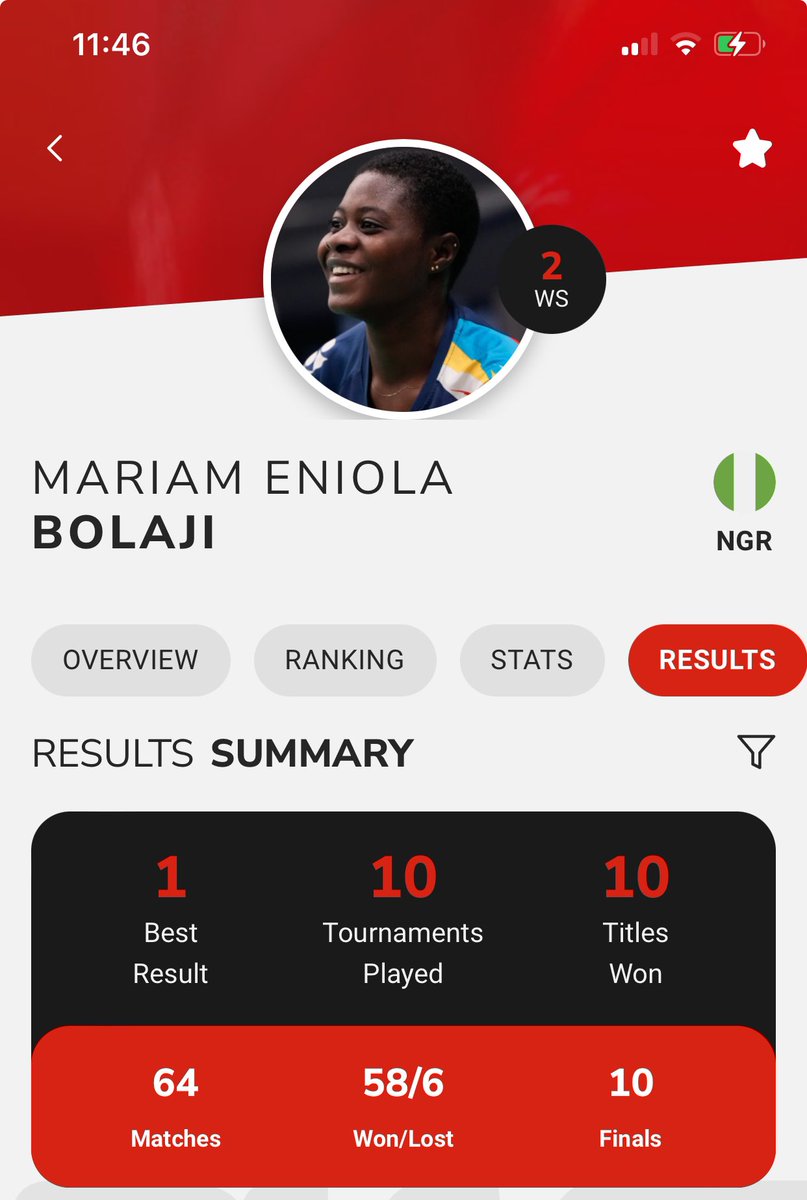
The country that brings out the best in me deserves even more in return…🇳🇬🕊️
Dear Nigerians, I am thrilled to share that I have just added to my winning record at the ongoing Egypt Para-Badminton International 2025 Tournament….🤍💨
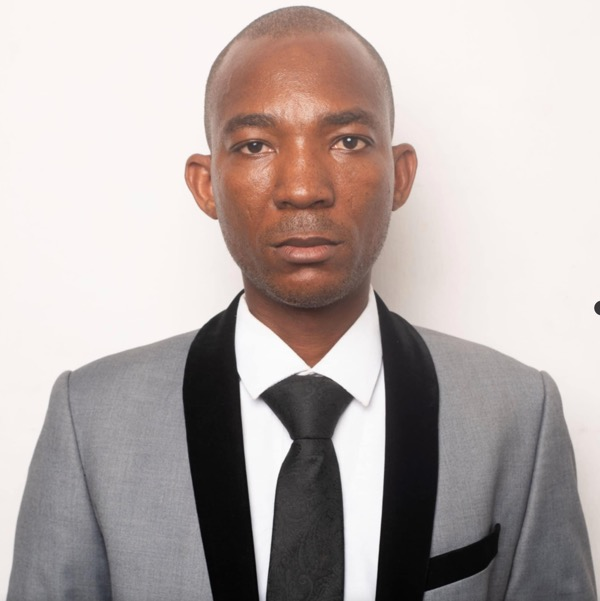
Kayode Adewale, a Maths & STEM teacher at Imagbon/Imaka Comprehensive High School, Ogun State, is a finalist for the $1m @TeacherPrize.
Integrates local languages into lessons, prioritizes videos & apps. Also a trainer of teachers, and founder of the Ogun517GoToSpace program.