🫀📈 One of the most controversial debates in critical care may be shifting again.
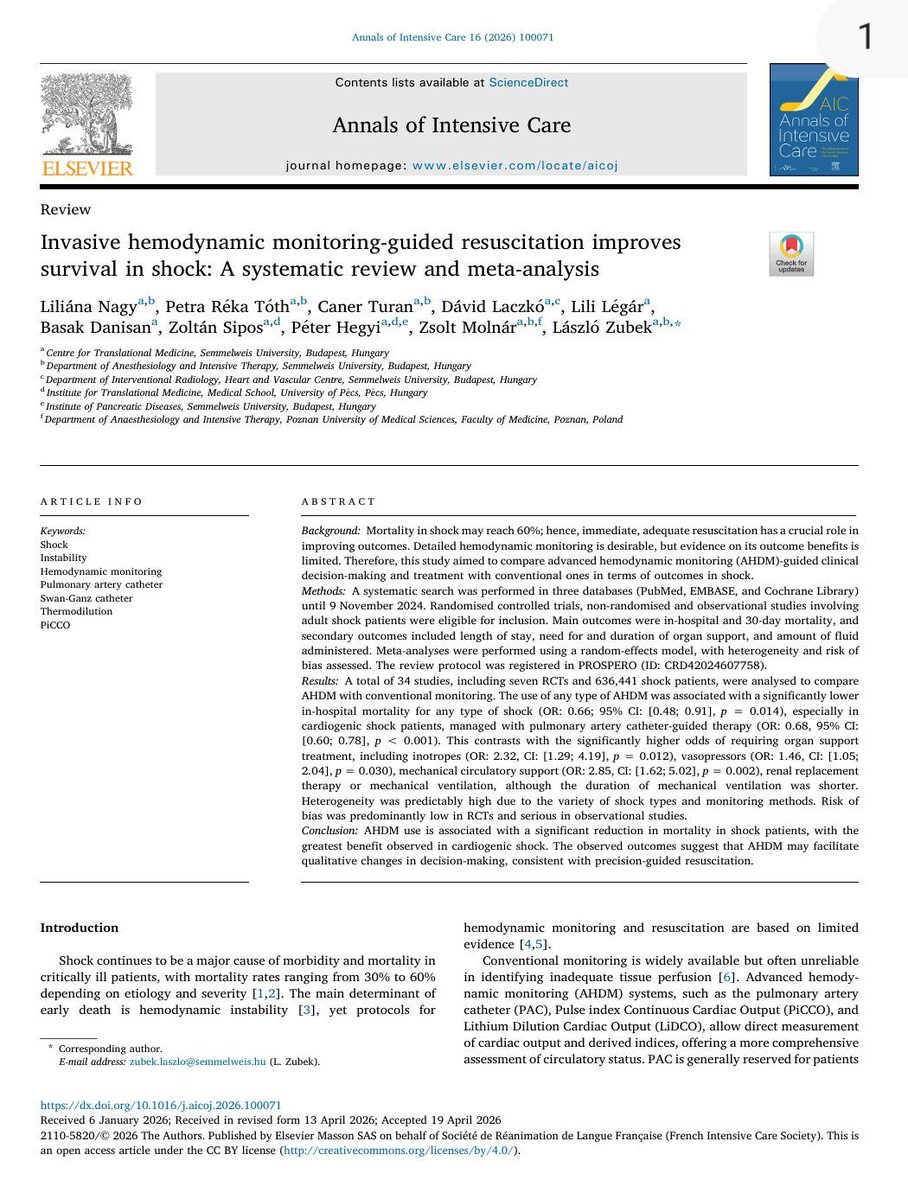
This new 2026 systematic review and meta analysis in Annals of Intensive Care challenges that narrative directly.
The study analyzed:
📊 34 studies
📊 636,441 shock patients
📊 PAC, PiCCO and advanced hemodynamic monitoring guided resuscitation strategies
Main finding: ✅ significant reduction in in hospital mortality with advanced hemodynamic monitoring guided management (OR 0.66)
The strongest signal appeared in:
⚠️ cardiogenic shock particularly with pulmonary artery catheter guided therapy.
One of the most interesting physiological observations:
Patients monitored with advanced hemodynamic systems received:
• more vasopressors
• more inotropes
• more mechanical circulatory support
• more RRT
Yet mortality was LOWER.
That is extremely important.
This suggests the benefit may not come from the device itself, but from:
🧠 earlier recognition of instability
🧠 physiology informed escalation
🧠 more precise therapeutic targeting
In other words: better decision making.
The paper strongly supports a concept many intensivists intuitively recognize at bedside:
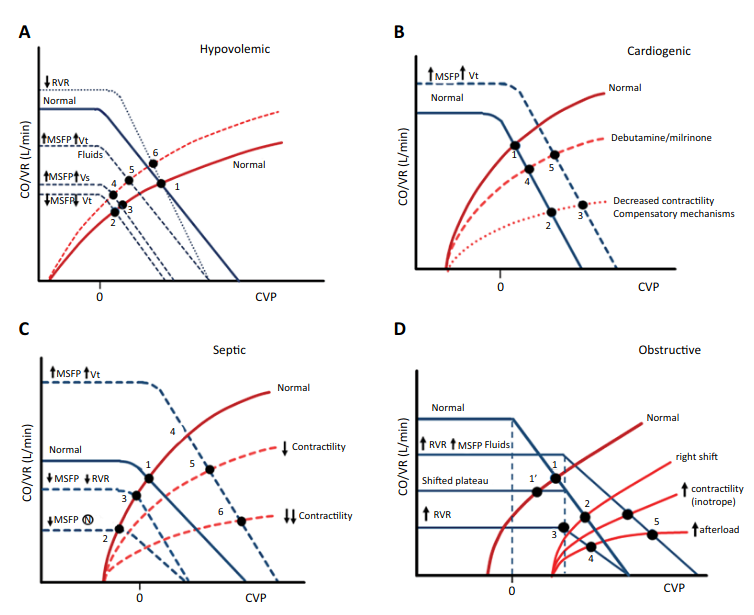
Not all shock is “vasoplegia plus fluids.”
Different hemodynamic phenotypes require:
• different vasoactive strategies
• different fluid approaches
• different escalation timing
• different mechanical support thresholds
Advanced monitoring may allow clinicians to move away from: “one size fits all resuscitation.”
Another important nuance:
The mortality benefit was strongest in cardiogenic shock.
The evidence in septic shock remains less definitive, although trends still favored advanced monitoring.
This may reflect an important reality: cardiogenic shock is fundamentally a hemodynamic disease.
One particularly valuable message from this paper:
The authors emphasize that modern AHDM is not simply “placing a Swan Ganz catheter.”
It is:
📌 integrating dynamic physiology
📌 interpreting perfusion targets
📌 understanding ventricular interactions
📌 identifying fluid responsiveness limitations
📌 tailoring escalation
Technology without physiology remains insufficient.
Interesting practical point:
The analysis did NOT show major increases in serious complications related to advanced monitoring devices.
That matters because procedural fear has been one of the strongest arguments against invasive monitoring.
My personal takeaway:
Critical care may be entering a new era where: precision hemodynamics returns to the center of shock resuscitation.
Not because catheters are fashionable again because modern shock management increasingly requires individualized physiology rather than protocolized averages.
📖 Reference
Nagy, L., Tóth, P. R., Turan, C., et al. (2026). Annals of Intensive Care, 16, 100071. https://t.co/z6ITSu4ubU
🫀 Septic shock is not just about pressure. It’s about coupling.
We often treat septic shock with a familiar mindset:
➡️ Fluids
➡️ Vasopressors
➡️ Maybe inotropes
But we rarely ask the deeper question:
👉 Is the heart actually working efficiently with the arterial system?
⚙️ Enter: Ventriculo-arterial coupling (LVAC)
LVAC = Ea / Ees
• Ea → arterial load
• Ees → ventricular contractility
➡️ This ratio reflects how efficiently energy is transferred from the heart to the circulation
🧠 Why this matters
The cardiovascular system is not just a pump.
It is an energy transmission system.
From the pressure-volume perspective:
• Stroke work = useful energy
• Potential energy = wasted energy
• Total energy (PVA) ∝ myocardial O₂ consumption
👉 Efficiency depends on coupling, not just output.
📊 Key physiological insights
✔️ Optimal mechanical efficiency
→ LVAC ≈ 0.5
✔️ Maximal stroke work
→ LVAC ≈ 1
✔️ Septic shock
→ Often LVAC > 1 (uncoupling)
🚨 What happens in septic shock?
A complex mix:
• Vasodilation → ↓ Ea (sometimes)
• Myocardial dysfunction → ↓ Ees
• Microcirculatory chaos
• Variable preload
➡️ Result:
👉 Frequent ventriculo-arterial uncoupling
And here’s the key:
❗ Normal MAP ≠ optimal coupling
❗ Improved BP ≠ improved flow
💉 Therapeutic implications
Same MAP, different physiology:
🔵 Patient A
→ NE increases Ees > Ea
→ ↓ LVAC → ↑ SV (responder)
🔴 Patient B
→ NE increases Ea > Ees
→ ↑ LVAC → no SV improvement (non-responder)
🧬 Clinical reality check
Even more provocative:
• LVAC-guided resuscitation → faster lactate clearance
• BUT → no mortality benefit yet
And importantly:
👉 Optimizing coupling does NOT guarantee microcirculatory perfusion
🔥 Take-home message
We should move from:
❌ Pressure-driven resuscitation
To:
✅ Efficiency-driven hemodynamics
Because:
👉 The goal is not just to push blood
👉 The goal is to transfer energy effectively to tissues
📚 Caicedo Ruiz JD. et al. (2026)
Journal of Critical Care
https://t.co/1ZNMHqwBl4
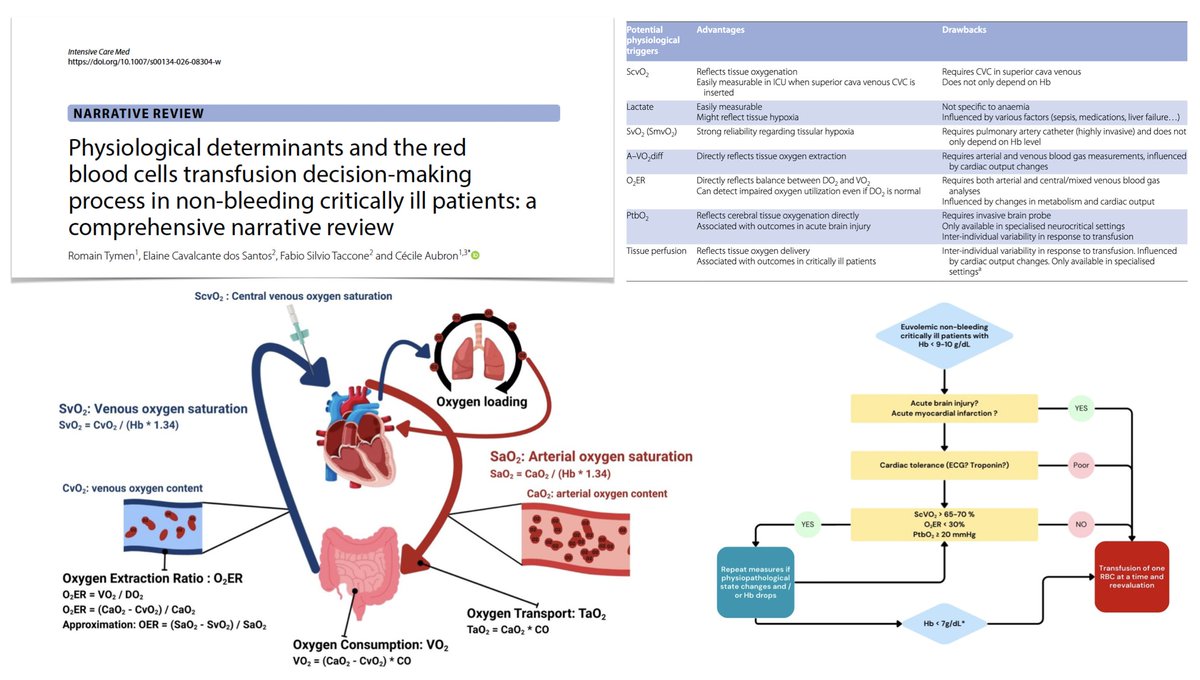
Physiological determinants and red blood cells transfusion decision making process in non bleeding critically ill patients, comprehensive narrative review
🩸 O2 transport/consumption, and adaptation mechanisms to a drop in Hb
🩸 why should RBC transfusion not be based only on Hb in critically ill patients?
🩺 clinical evidence supporting use of physiological triggers for RBC transfusion: ScvO2, artero–venous O2 difference, O2ER, arterial lactate, troponin, tissue perfusion, PbtO2
#FOAMcc
🔓 https://t.co/7thOoOc8Uv
⭐️ fellow and budding researcher lead this work to help us better understand the interaction of vasoactives and microcirculation, and opportunities for the field to grow in the future
Cardiogenic shock is associated with high early mortality. Prompt revascularization in infarct-related cardiogenic shock improves outcomes, and mechanical circulatory support may reduce mortality in specific groups.
Read the Review Article “Cardiogenic Shock” by Holger Thiele, MD (@thiele_holger), and Christian Hassager, MD, from Heart Center Leipzig at Leipzig University, Leipzig Heart Science, Rigshospitalet, and the University of Copenhagen (@koebenhavns_uni): https://t.co/V9IfEFDaYw
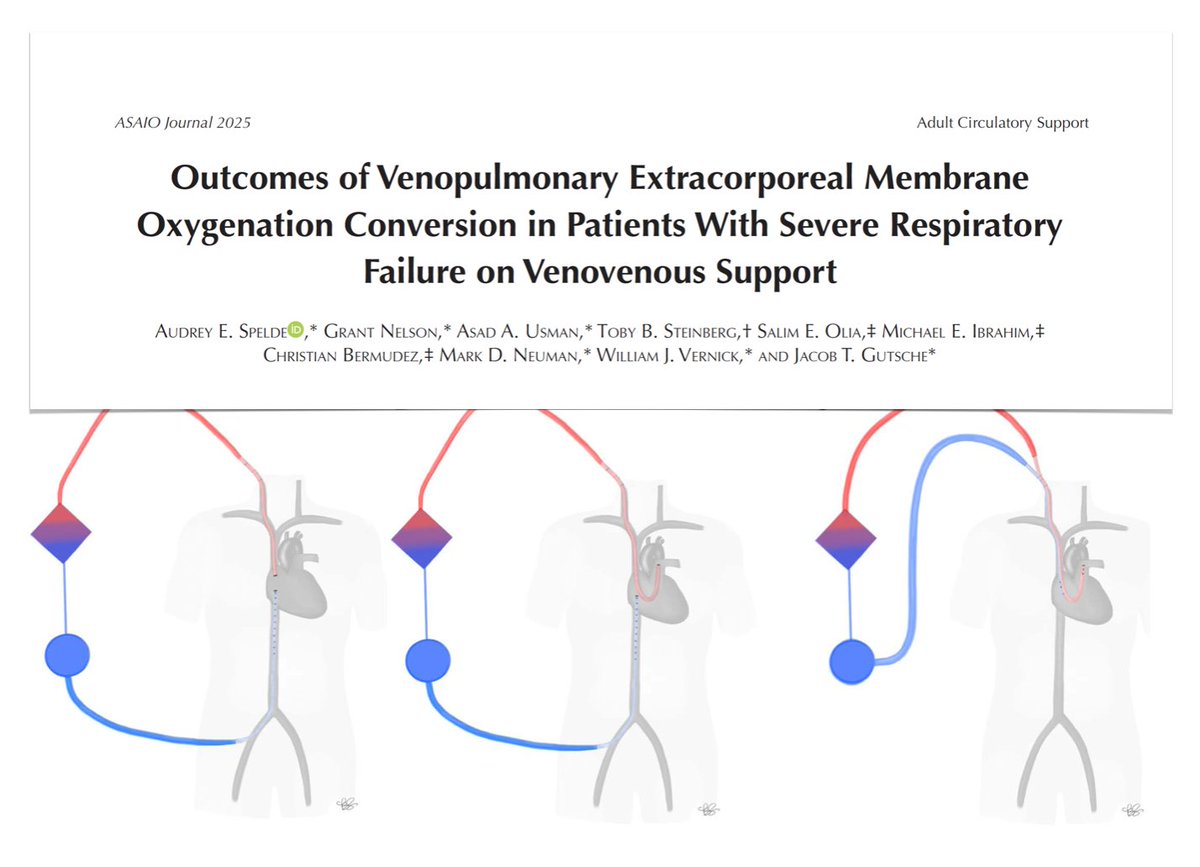
Conversion from VV of VP #ECMO in adults with severe respiratory failure complicated by refractory RV dysfunction associated with improved oxygenation, hemodynamic stability, end-organ function. Specifically, it:
🫘 facilitated #AKI resolution if pre-conversion AKI + was associated with increased liberation from CRRT
🩸 reduced pressor & ECMO flows requirements
💨 resulted in reduced SGF/FdO2 & FiO2
💉 facilitated sedation weaning, previously not tolerated due to desaturation events
@asaiojournal
🔗 https://t.co/Od4kyImux3
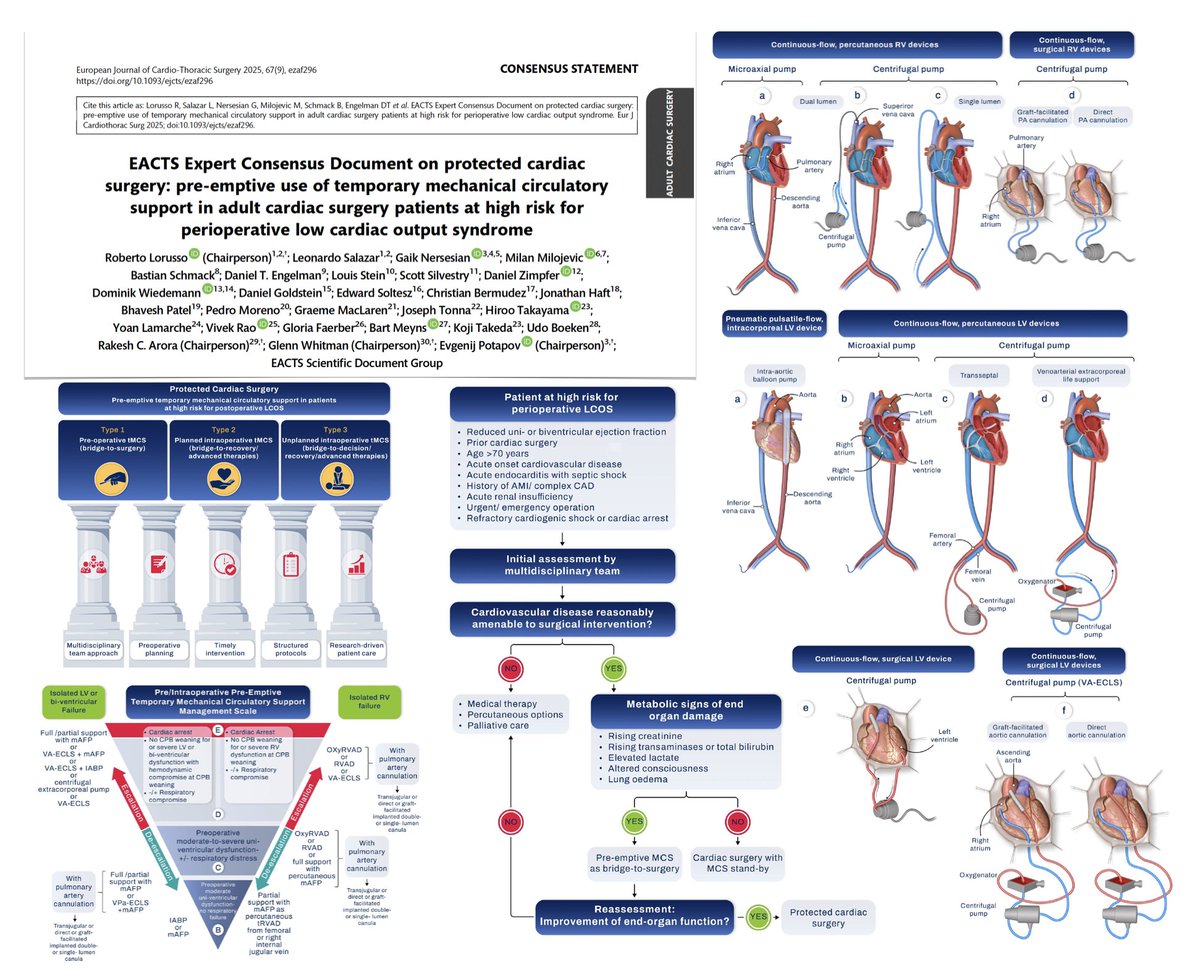
The @EACTS Consensus on protected cardiac surgery: pre-emptive temporary #MCS in adults
🔍 epidemiology & impact on outcomes
👥 interdisciplinary heart team & shared decision making
🚧 identification/classification of patients at high-risk for periop low CO syndrome
🪜 protected cardiac surgery classification
🫀 primary cardiovascular pathology & related strategy
🫀 perioperative hemodynamic management
🩺 management of prophylactic temporary MCS in #ICU
📦 device availability & selection: IABP, mAFP, VA #ECMO, #LVAD...
long-term outcome
🚧 protected cardiac surgery in special settings, in multimorbid patients, as advanced HF support
⚖️ ethics & informed consent
🔮 future directions & gaps in knowledge
Open access #FOAMcc @EACTS_Journals
🔓 https://t.co/7RCz8VqWJX
Great guidelines on management of ECMO circuit emergencies! Don’t also forget ECMO pump/motor thrombus and occlusive thrombus in cannulas/tubing as additional etiologies for loss of flow! https://t.co/HV6pJI7SXX
Right ventricle and venous system: bridging physiology and clinical practice. A narrative review
CCR Journal Watch - tracking the critical care literature daily
https://t.co/Sp06oA6IDG
🧵 "What really determines tissue perfusion?"
– and why most explanations get it wrong.
Let’s sort out MAP, CVP, CCP, autoregulation, vasopressors, and the flow that actually reaches your organs.
👇
CI, SvO2 & pCO2 in #ECMO for cardiogenic shock?
🔍 post-hoc analysis of ECMO-CS trial: immediate #ECLS initiation vs early conservative strategy in CS
The presence of any of following criteria:
🫀 low cardiac index
🫁 high PCO2 gap
🩸 low SvO2
may indicate poor prognosis with conservative therapy & substantial mortality benefit from mechanical circulatory support. Measurement of these parameters could improve CS management.
@Crit_Care #FOAMcc #FOAMecmo
🔓 https://t.co/3vecDl5l4u
Establishing high-volume CA center providing #ECPR may increase not only number of survivors, but also expands organ donors' availability in cases of unsuccessful treatment. Although primary goal is to rescue patients with refractory cardiac arrest, implementation of #ECMO into routine care for OHCA patients may positively impact on OD programs:
🔍 > 1.1K #OHCA patients referred to General University Hospital in Prague 🇨🇿, 2007-2020
🫀 in the conventional approach period, 11 donors referred, 7 accepted; procured organs = 18.
🩸in the ECPR period, 80 donors referred, 42 accepted; procured organs = 119
⚖️ excellent 1 & 5 years graft survival (99.2% & 95.9%), and function, comparable between recipients from ECPR vs non-ECPR donors
🖇️ https://t.co/VN9mQ0DXMH
#ECMO in pulmonary embolism:
🩺 rationale & current trends
📄 ECMO in PE treatment guidelines
⏱️ timing of ECMO: reactive vs proactive?
🩸 standalone, bridge to reperfusion, post-treatment support for organ recovery?
💉 concomitant systemic thrombolytics
☢️ concomitant catheter-guided thrombolytics
📚 thrombolysis followed by ECMO
🖇️ https://t.co/5MP0cNqoEQ
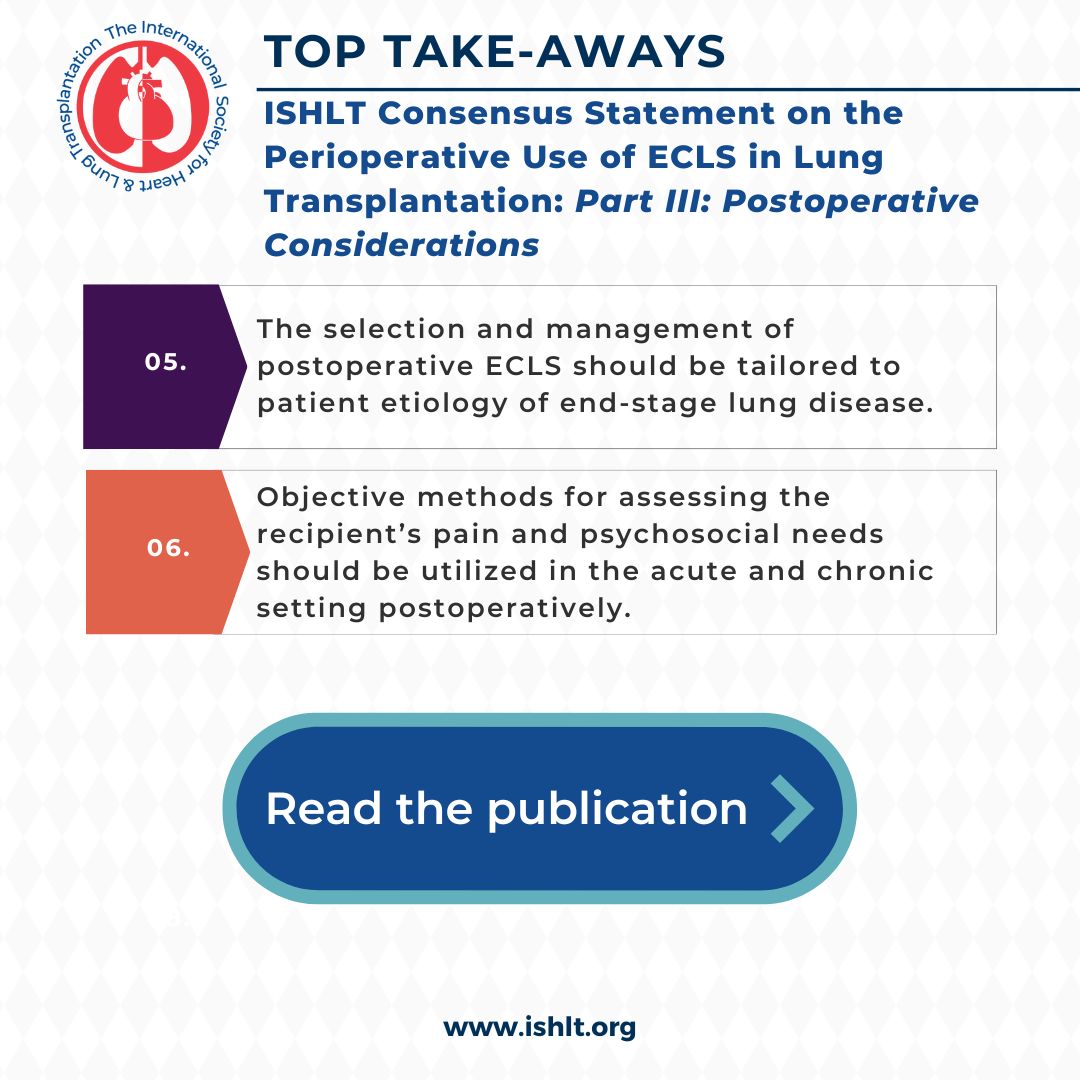
The @ISHLT Consensus Statement on periop use of #ECLS in lung #transplantation: III - Postoperative Considerations
🫁 planning: criteria for postoperative #ECLS
🫁 postoperative ECLS implementation
🫁 management
🫁 ECLS rescue outcomes, weaning criteria, novel multicenter registry expansion
#FOAMcc #FOAMecmo
🔓 https://t.co/TqPouuz24n
PS Part II Intraoperative Considerations available at
🔓 https://t.co/CpF1yVmpKO
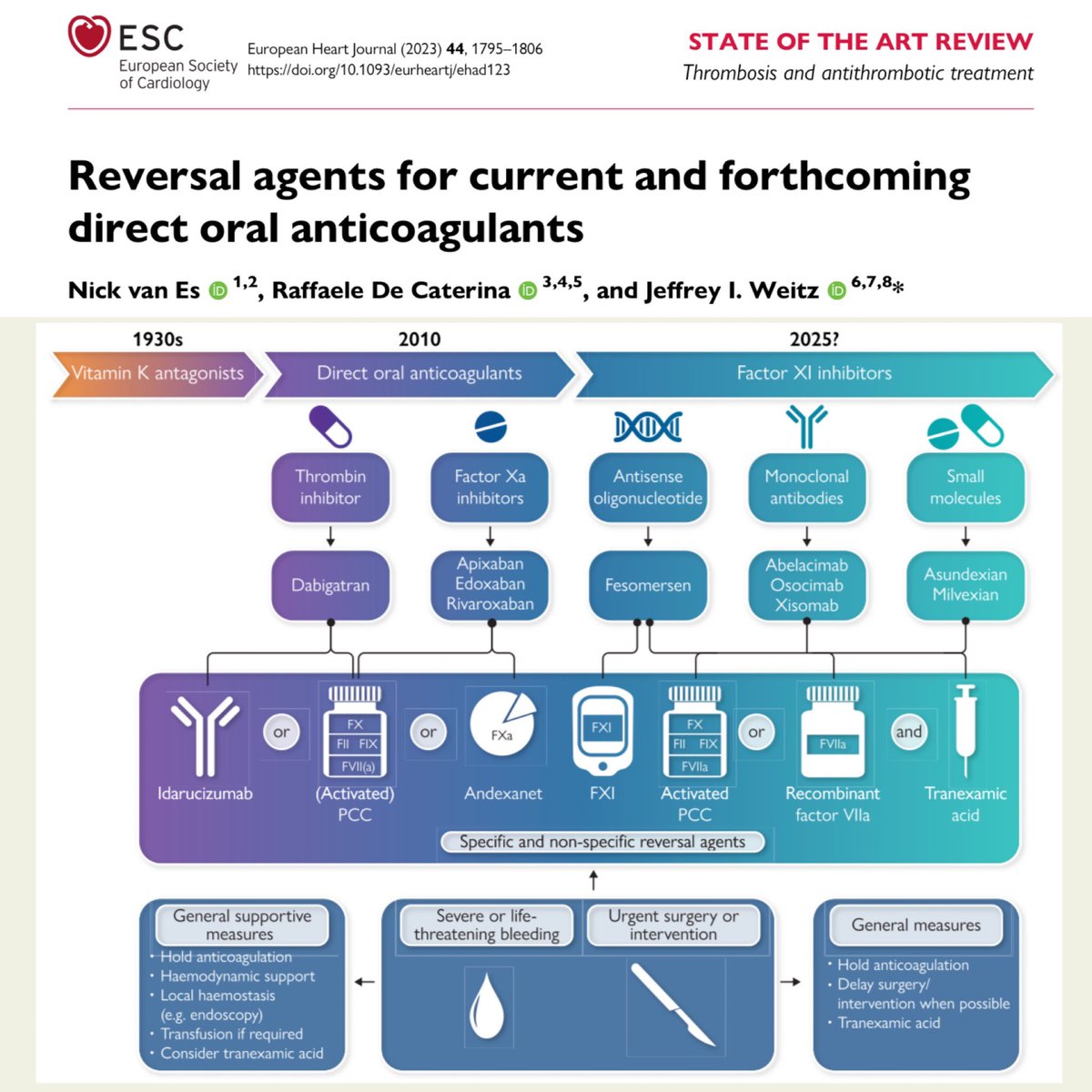
Do you need to emergently reverse the DOAC your patient recently taken due to a major bleed? Here are some strategies to do so and potentially save your patient from further harm. 🎩 tip to the authors.
https://t.co/Sfr6vCn6le