Ever wonder why prop firm rules cap your drawdown so tight? Retail volume is thin. Real forex liquidity sits with banks, not your broker. Stop hunting is structural, not personal. Trade the liquidity, not the noise.
One other announcement we made today, outside of Edge: DoubleZero now offers deduplicated Hyperliquid gossip feed via Block Proxy via our @HyperliquidX Peering Service.
This is a specialized product suitable for certain types of clients, and you can read more about it here https://t.co/7iAiHO2OaQ
> The year is 2011
> User buys 3 bitcoin for $6.14 each
> Then sold them for $6.20
> After fees, the total profit was “11 cents”
> The user was relieved and posted, “That was close…but thankfully I came out without a loss.”
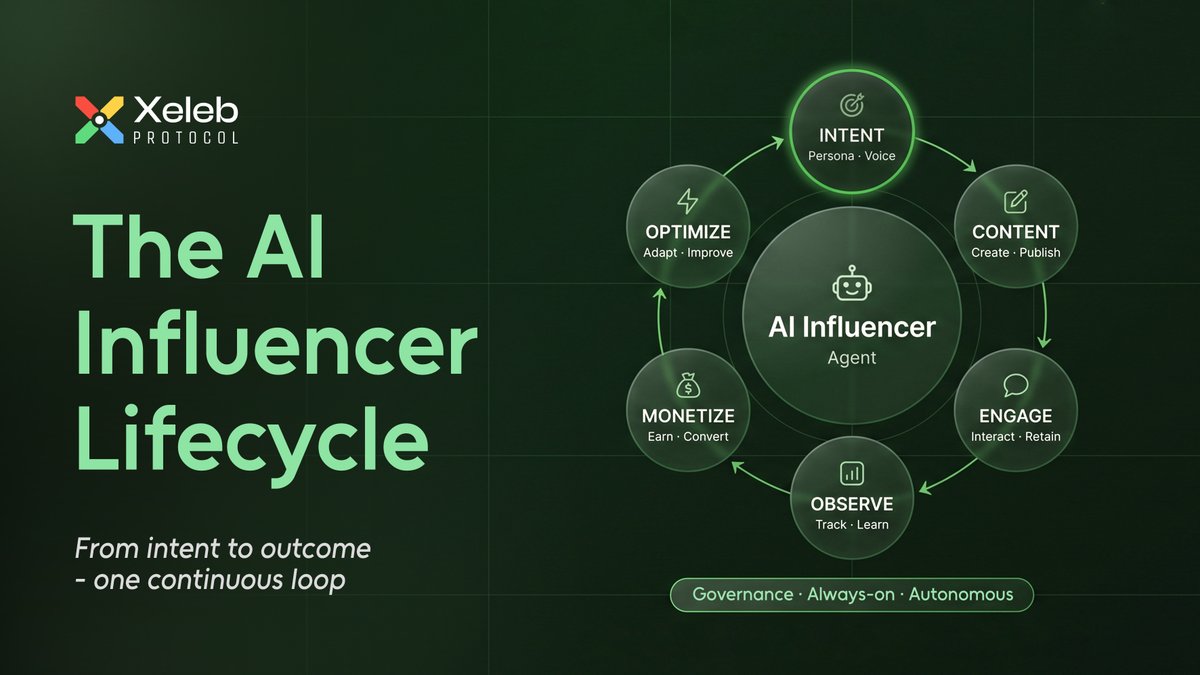
The next evolution of AI Influencers is removing friction across the entire influence lifecycle.
Right now, running an AI Influencer means operating disconnected steps in sequence: building a persona, generating content, managing audience interactions, tracking performance, optimizing engagement, monetizing attention. Each step is a handoff. Each handoff is a point where value leaks.
The shift happening in agentic AI changes that model entirely.
Intent-driven workflows replace manual execution. An AI Influencer Agent orients around a goal, decides how to act, executes across channels, observes what the audience responds to, and feeds that signal back into the next cycle continuously, without human input at every step.
The result is an influence system that does not run in campaigns. It runs in loops.
Persona. Content. Engagement. Optimization. Monetization. Governance. All connected. All adaptive. All operating as one continuous system rather than a sequence of isolated tasks.
The creator economy built the content layer. What it still needs is the operational layer that closes the loop between intent and outcome.
Most GameFi tokenomics charts are just exit liquidity blueprints.
Emissions outpace sink demand, so charts bleed quietly.
If your P2E model can't retain players past month two, no APY saves it.
AI Influencers are expanding where influence can create value.
Traditional influencer marketing is largely concentrated around the attention layer:
Create content → Reach an audience → Influence consideration.
AI-native influencers can extend that model because their role does not necessarily end with the post.
They can remain available to:
→ Answer questions
→ Provide recommendations
→ Personalize interactions
→ Support decisions
→ Connect audiences with relevant actions
This opens a broader opportunity within the customer journey:
From generating attention
to supporting decisions.
For brands, that distinction matters.
An AI Influencer can potentially create value not only through audience reach, but through the quality, continuity, and utility of its interactions.
This points toward a broader shift in influencer marketing:
From campaign-based exposure
to persistent, AI-enabled audience relationships.
And over time, that could change what brands value from impressions and reach to influence that contributes to measurable outcomes.
More AI Influencers does not mean more influence.
As the cost of creating AI-native personalities continues to fall, having an identity is becoming less differentiated.
The next question is what that identity can actually contribute.
An AI Influencer that only produces content competes for attention.
An AI Influencer with utility can become part of how an audience discovers, evaluates, and acts.
That creates a different value proposition:
Knowledge
Providing relevant information and recommendations.
Interaction
Maintaining context across ongoing audience relationships.
Execution
Turning conversations into actions, transactions, or other outcomes.
Economic participation
Creating measurable value within the ecosystems it operates in.
This marks an important evolution in the category:
From digital personality
→ to functional intelligence
→ to economic participant.
As AI Influencer supply expands, the market will become less concerned with how many personas can be created.
It will become more concerned with what they are capable of doing.
Influence creates attention.
Utility creates economic value.
There are two different jobs in trading:
Build capital when conditions favor your edge.
Protect capital when they don't.
Most traders spend all their time learning the first.
Long careers are built by mastering both.