Have you ever thought exploring real estate could be as simple as a click?
At STONEFORM, we're redefining how property opportunities are discovered. Our approach is centered around a modern digital ecosystem that organizes property listings, provides critical asset details, and guides you through a seamless investment journey.
Imagine having comprehensive information at your fingertips: location, valuation, investment terms, and more—all structured to help you make informed decisions. Our platform bridges the gap between property discovery and investment.
This shift is about creating an experience that's not only accessible but also enlightening. With STONEFORM, property investment isn't just about the transaction; it's about understanding your opportunities.
Interested in exploring the future of real estate investments? Follow us for more insights. #PropertyInvestment #STONEFORM #RWA
In the new version of Decentral, KYC and KYB become mandatory: KYC for individuals, KYB for funds, foundations and treasuries.
It brings in more institutional capital and keeps us within the legal framework platforms like ours need.
It's how we keep one of Web3's highest yields.
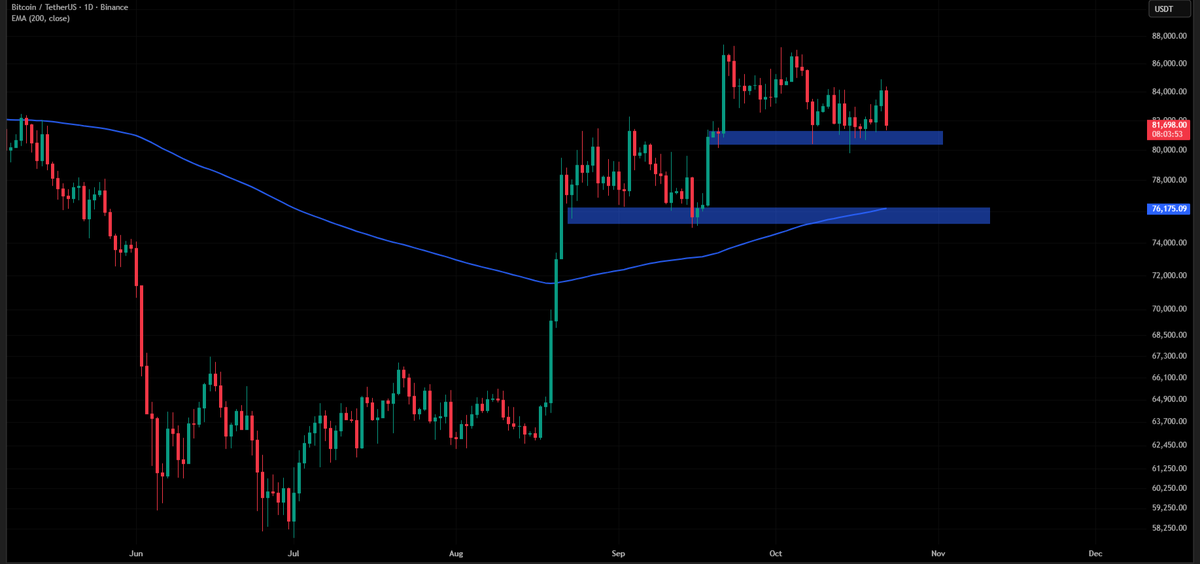
$BTC is testing the $80K–$81K demand zone, with stronger confluence around $75K–$76K near the 200 EMA.
Holding $80K keeps the structure intact. A breakdown could trigger a deeper retest of the 200 EMA.
US 10Y yield just dropped below 5% for the first time since Sep 23.
Not because of good news, but because money is running into bonds after a tech and AI sell-off.
Lower yields help risk assets. A risk-off equity tape does not.
Alts like $ETH and $SOL are the most exposed if the sell-off deepens.
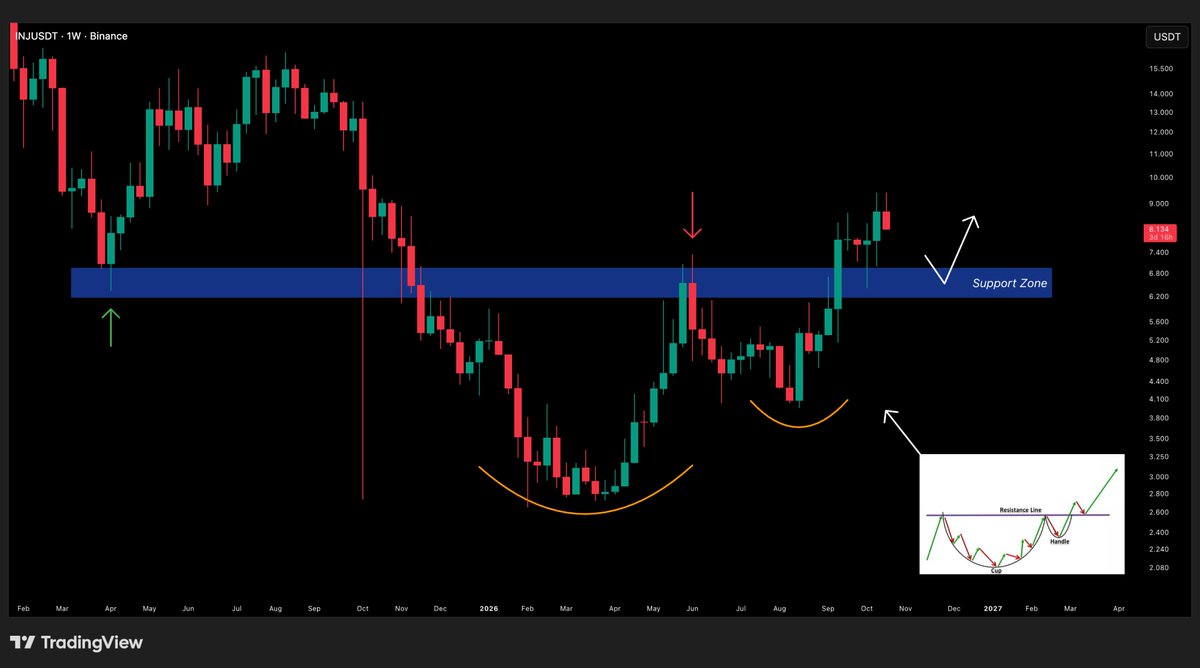
$INJ is printing a cup and handle pattern on the weekly chart.
This area has been tested as both support and resistance, forming two cups. After breaking out its looking for a retest.
If the retest holds, we're looking at the next leg up.
Here’s a brutal reality check for retail traders.
The data from $HYPE shows that across 400K retail traders, cumulative losses hit $280 million.
What’s even more interesting, more money was lost to app fees than to actual trading losses.
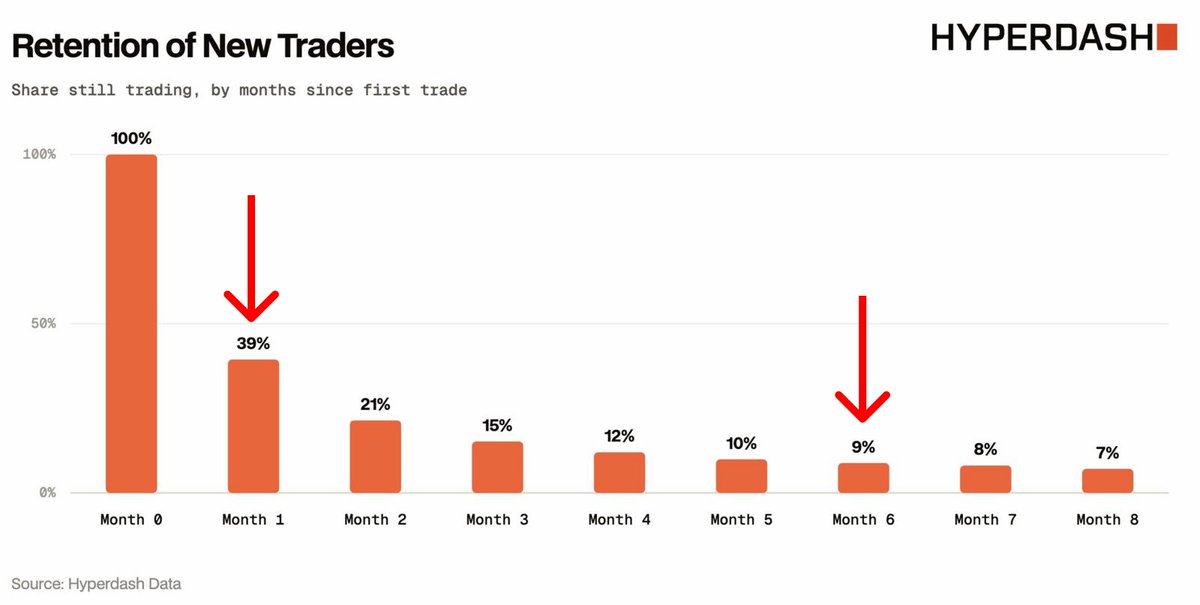
The retention numbers tell the full story. By month 1, only 39% of new traders are still active. By month 6, just 9%.
Most retail comes in, pays the fees, gets wiped, and leaves.
This is a reminder that trading carries real risk, and the reality is not many people actually profit from it.