From Portugal to Slavic countries, from Greece to Scandinavia, from Ireland to the Balkans... a virtual place to rediscover our pagan and animistic past.
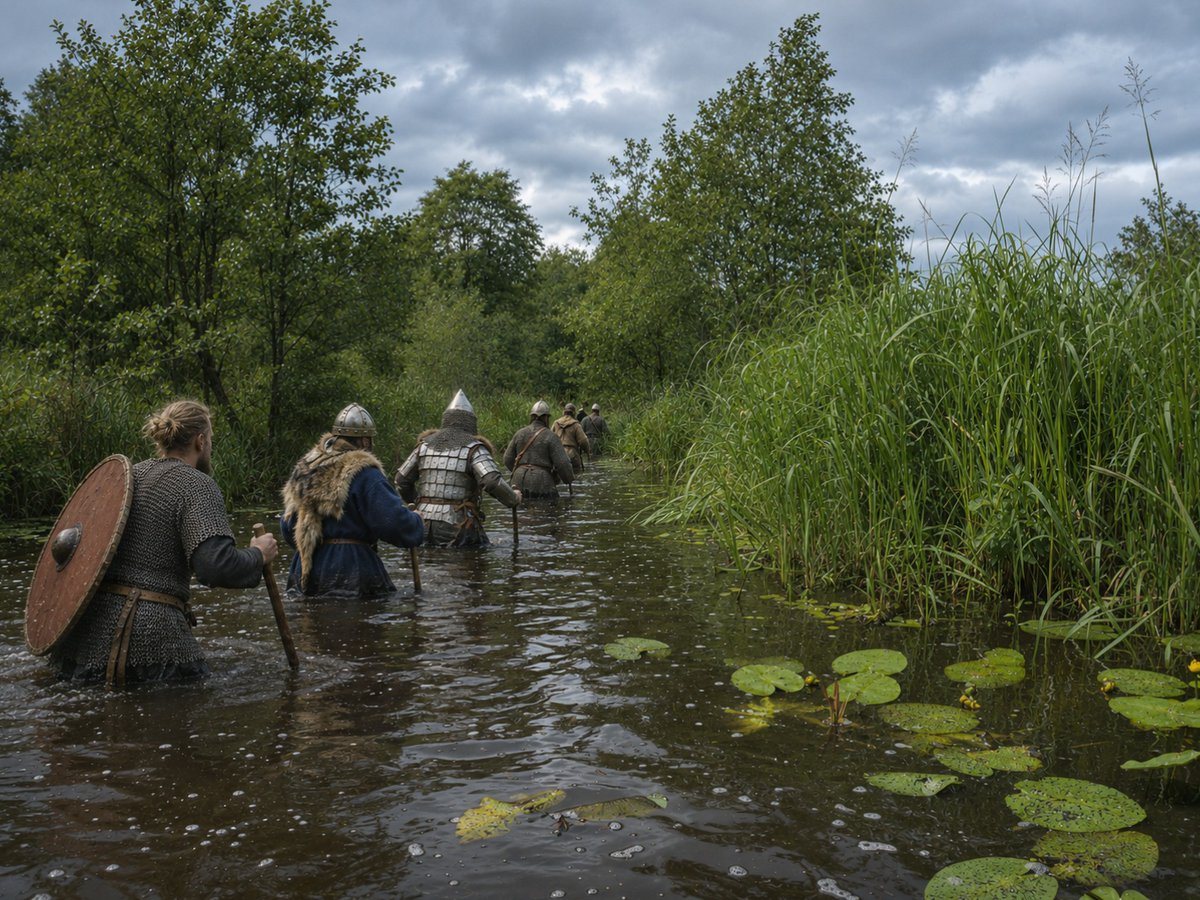
One of the more ingenious features of pagan Baltic defences against the Crusaders was the kūlgrinda, a secret road hidden beneath the water of a swamp.
These were stone-paved passages, sometimes wide enough for horses and carts, allowing local warriors to move between fortifications or escape advancing armies. To an outsider, the road was practically invisible. A wrong step could send a man into deep bog mud.
During the 13th and 14th centuries, such passages formed part of the defensive infrastructure of Lithuania and Samogitia. Several kūlgrindos have survived to this day, particularly in western Lithuania, although many others have been lost or remain undiscovered.
One of the best-known examples is the Sietuva kūlgrinda. In 1903, archaeologist Ludwik Krzywicki investigated it and noticed something peculiar: rather than taking the shortest route across the swamp, it deliberately twisted through low-lying ground. He concluded that the builders wanted to make the road difficult for enemies to follow.
Three surviving stretches at Sietuva measure 250, 180 and 150 metres. They are thought to have formed part of a secret route connecting the fortresses of Medvėgalis, Paršpilis and Šiuraičiai
"Raggiunto il centro si è arricchiti, la coscienza è più vasta e profonda, tutto è chiaro, significativo; ma la vita continua: altro labirinto, altri incontri, altre prove, a un livello diverso"
- La prova del Labirinto, Rocquet intervista M.Eliade
Foto: Duomo San Martino, Lucca
La spirale del gorgo acquatico come la spirale cosmica e il tema spirituale del ciclito eterno ritorno, attraverso il rito.
"L'istituzione dei riti è attribuita agli esseri mitici e immortali (...) che hanno eseguito, per primi, le cerimonie del rinnovamento del mondo" M. Eliade
The spiral is the geometry of water. Waves curl, whirlpools spin, the path to the ancient source is never a straight line. You will retvrn to the same inner themes, shadows and the same waters over and over but each time you will meet them with a deeper layer of your own power 🌀
@Kveldulvr Non lo sapevo...
A San Giovanni in Conca, Milano, si trova la tomba di Aldo, nipote della regina Teodolinda, figlio di una sua sorella e del duca di Trento (anche se nei pannelli esplicativi si parla di "Aldo, cognato di Teodolinda")
It reminds me of San Giovanni Battista in Bologna: built around the 8th century (circa 727–737 AD) at the behest of the Lombard king Liutprand.
#AncestralEurope
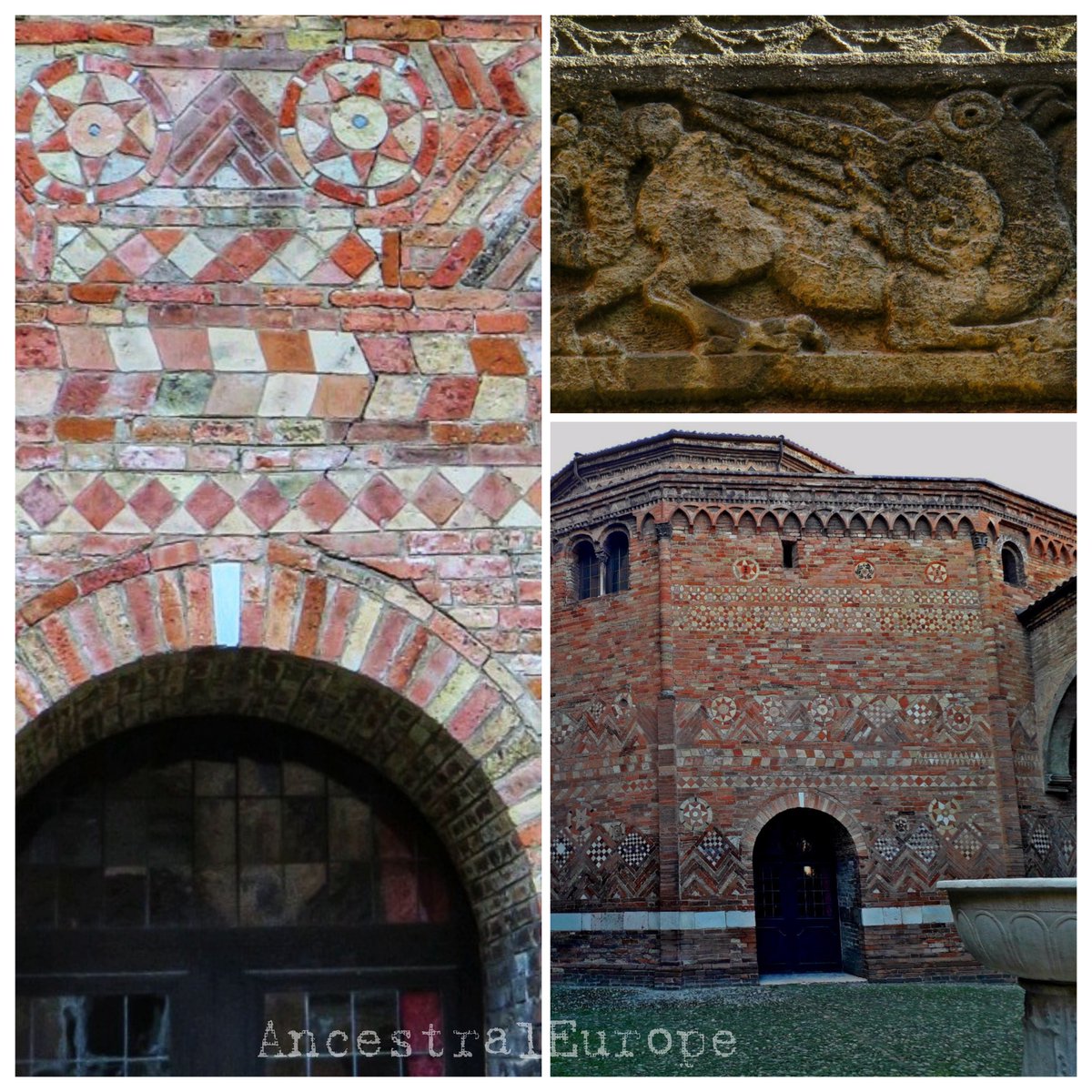
🇬🇧 Lomello, Pavia (Italy) – Lombard-era Baptistery (7th century).
A remarkable survival of Lombard architecture: the only baptistery of its period still standing.
Its octagonal plan recalls Sant’Ambrogio in Milan, while its hexagonal baptismal font echoes Aquileia. Traces of the original frescoes remain visible.
🇮🇹 Lomello, Pavia – Battistero di età longobarda (VII secolo).
Un edificio eccezionale: l’unico battistero di età longobarda giunto fino a noi conservando le strutture in alzato.
La pianta ottagonale richiama Sant’Ambrogio a Milano, mentre il fonte battesimale esagonale trova un parallelo ad Aquileia. Restano ancora tracce degli antichi affreschi.
#Lombards #Longobardi #Lomello #MedievalArchitecture #EarlyMiddleAges
Today is St. Martin's Day - Old Halloween! 🍂
Marking the end of harvest/ start of winter, it is a time for bonfires, lantern processions, feasts and wine.
Welsh folklore tells us it is a night of eerie ill omens: owls hoot, meteors fall & the Cŵn Annwn (spectral hounds) roam...
DOMSTEINANE – The Mysterious Stone Wheel of Norway
📍 Sola, Stavanger, Norway 🇳🇴
Domsteinane is one of Norway's most unusual prehistoric stone monuments, a remarkable example of a stone circle whose peculiar configuration is rarely encountered in the country.
The monument consists of 24 stones arranged in a wheel-like formation**, with eight symmetrical spokes radiating from a central rectangular stone setting, sometimes interpreted as an altar.
Located in Sola, southwest of Stavanger, this enigmatic structure has been interpreted by some archaeologists as a solar wheel, possibly associated with ritual practices and communication with gods and ancestors.
Local folklore connects Domsteinane with Erling Skjalgsson, the powerful Viking Age chieftain of Sola. However, the monument predates the Viking Age by many centuries, with its origins generally attributed to the Early Iron Age, although an earlier date has also been suggested.
A mysterious testimony to the sacred landscape of prehistoric Scandinavia, where stone, cosmic symbolism, and ancestral memory may have converged.
#Domsteinane #Norway #Stavanger #Sola #Archaeology #PrehistoricEurope #IronAge #StoneCircle #Megalithism #AncientScandinavia #NordicHeritage #SolarSymbolism #SacredLandscape #EuropeanHeritage #DieHerrschaft
"Plusieurs régions de France font état, outre de la présence dans leur cieux d'une telle Chasse Sauvage, des châtiments reçus par les humains trop curieux...”
(Y. Fourey, Petites histoires de fantômes et autres créatures de la Drôme et de l'Ardèche)
#ChasseSauvage#WildHunt
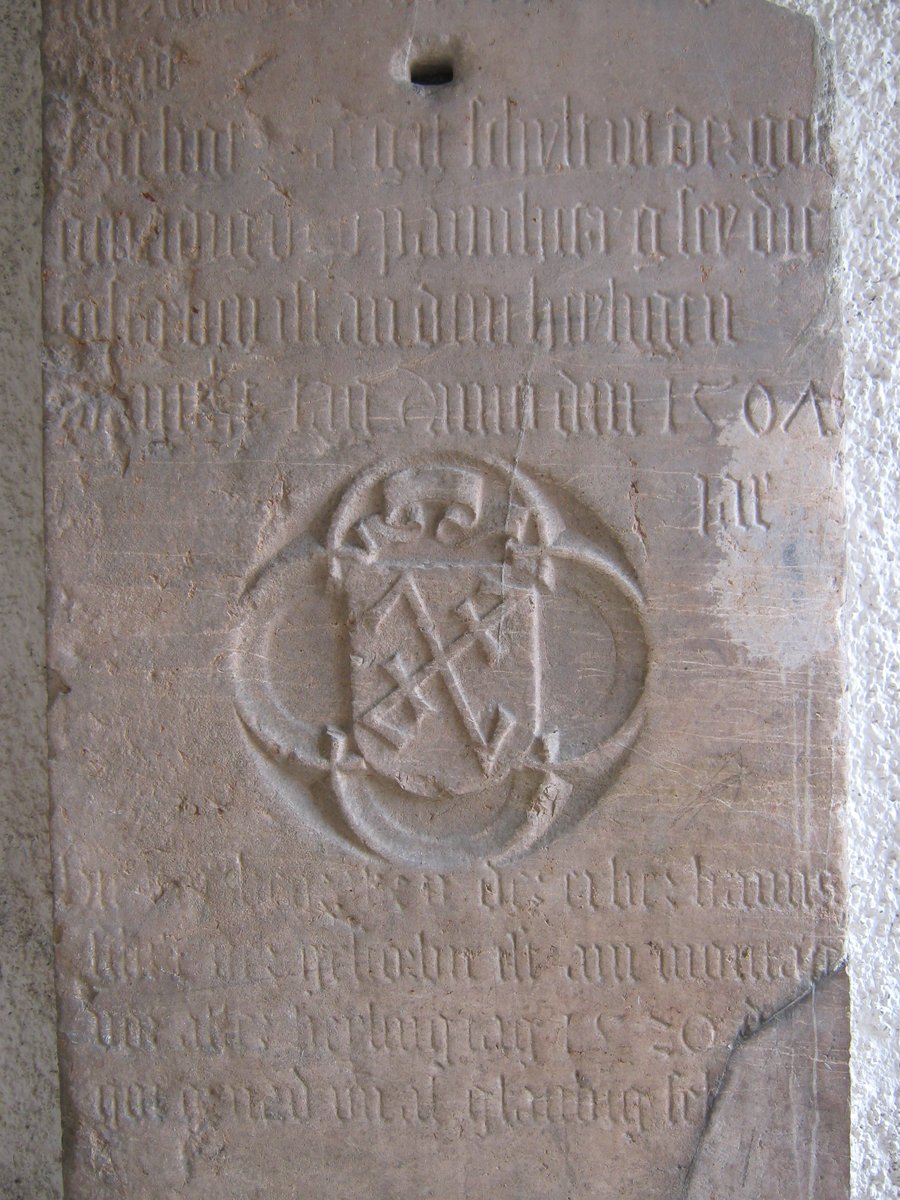
RUNIC SYMBOLISM AND MEDIEVAL HERALDRY
According to Guido von List, particularly in The Secret of the Runes, The Concealment of Wuotanism within Christianity, and The Origins and Symbolism of Freemasonry, certain runic and pre-Christian symbols survived, often concealed or transformed, within medieval heraldry and Christian iconography.
Whether such survivals were conscious and deliberate, or merely the result of an unconscious transmission of older symbolic traditions, is difficult to determine, let alone generalise.
In any case, I would like to draw attention to this remarkable Austrian gravestone in St. Peter's Cemetery, Salzburg, featuring a particularly intriguing heraldic device at its centre.
Could such heraldic compositions preserve echoes of a much older symbolic language?
#Runes #GermanicTradition #Heraldry #GuidoVonList #Symbolism #Salzburg #EuropeanHeritage
🧵
Moritz Spieß in "Aberglauben, Sitten und Gebräuche des sächsischen Obererzgebirges" (1862) records some interesting German folklore about owls.
He says that owls, regardless of species, had long been believed to be in an alliance with "dark forces"...
For anyone interested, I would highly recommend Carl Gustav Jung's 1936 essay, Wotan, in which he explores the reawakening of the ancient Germanic deity as a psychological, archetypal force within the collective unconscious of the German people and its manifestation in the rise of National Socialism.
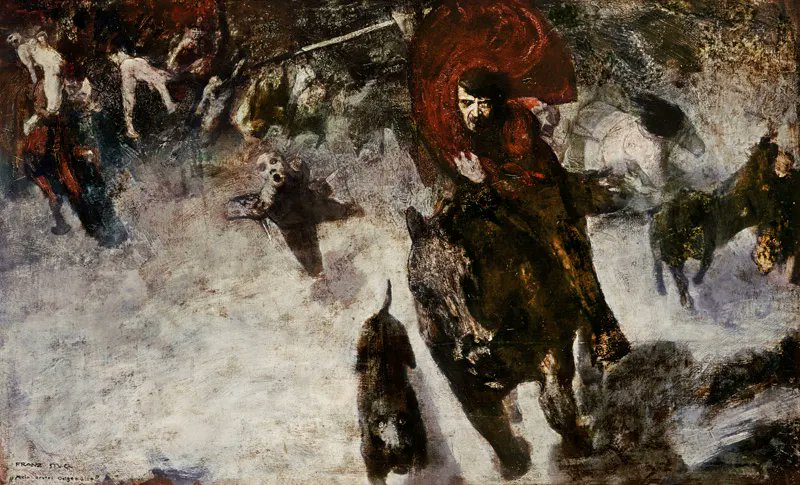
The Wild Hunt, by the German painter Franz von Stuck, is a dark, somber painting depicting the Germanic god Wotan, known to the Anglo-Saxons as Woden and to the Norse as Odin. As the chief of the Germanic gods, Wotan was a god of war and wisdom whose dominion extended into the mysteries of death, prophecy, and fate. He was both the giver of victory and the gatherer of the glorious slain, the Einherjar, those chosen warriors who dwelt in Valhalla, feasting and preparing to fight alongside him at Ragnarök, the final battle of the gods. A mysterious and formidable figure, Wotan embodied the duality of existence itself: its creative and destructive forces, through which life emerges and ultimately returns to death.
In the painting, Wotan rides on horseback, leading a spectral procession of the dead through the night, a haunting manifestation of the Germanic folkloric tradition known as the Wild Hunt. Anyone observing the figure of Wotan may immediately recognize his striking resemblance to Adolf Hitler. The fact that the painting was completed in 1889, the very year of Hitler's birth, has further fueled the theory that this work of art, in some mysterious way, prophesied his rise.
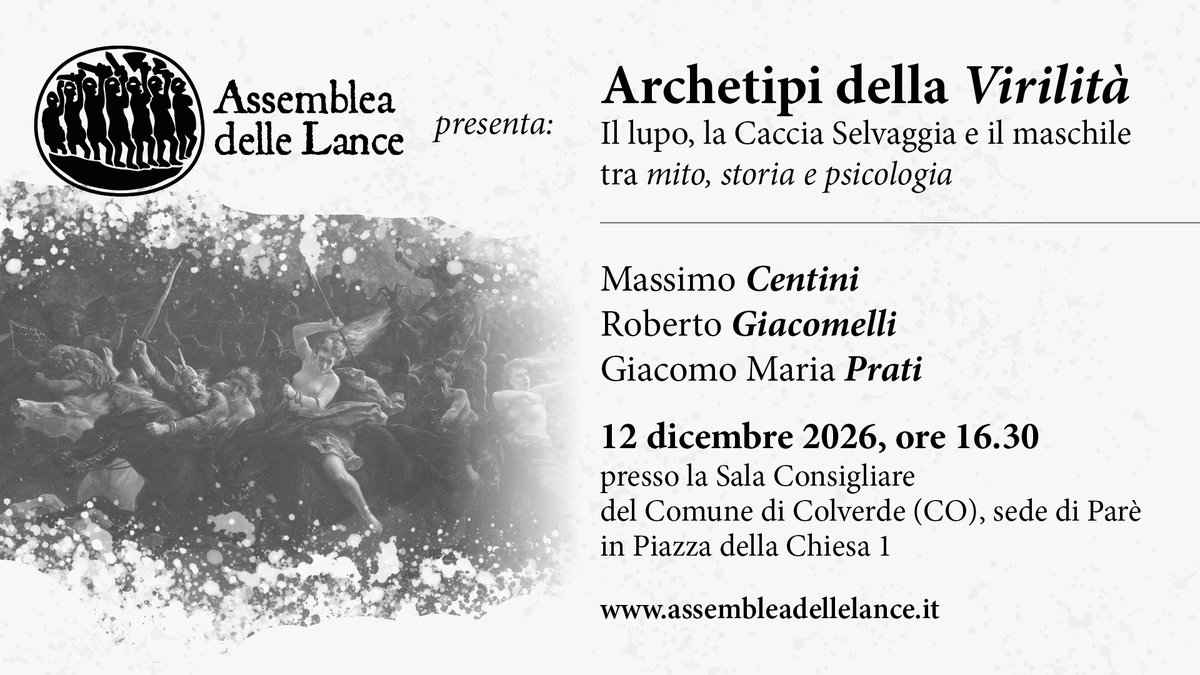
ARCHETYPES OF VIRILITY
The Wolf, the Wild Hunt, and Masculinity: Myth, History, and Psychology
Assemblea delle Lance is pleased to announce its Fourth Annual Conference, to be held on Saturday, December 12, 2026, at 4:30 PM, in Colverde (Como), Italy.
The conference will explore the archetypes of masculinity through the symbolic figures of the Wolf and the Wild Hunt, offering an interdisciplinary perspective that brings together mythology, history, anthropology, and psychology.
We are honoured to welcome three distinguished speakers:
• Prof. Massimo Centini – Anthropologist
• Roberto Giacomelli – Mental Coach
• Giacomo Maria Prati – Writer
📅 Saturday, December 12, 2026 | 4:30 PM
📍 Council Chamber, Municipality of Colverde, Parè, Piazza della Chiesa 1, Como, Italy.
Further information:
https://t.co/I0EMNnomp1
#AssembleaDelleLance #ArchetypesOfVirility #WildHunt #EuropeanMythology #Masculinity #Anthropology #EuropeanTraditions
This 5-6th Century Frisian bone amulet from Wijnaldum, Netherlands, bears the name “Inguz” spelled three times, some of the runes doubled up into bindrunes. Hail Ingvi-Freyr! ᛁᛜ︍ᚢᛉ
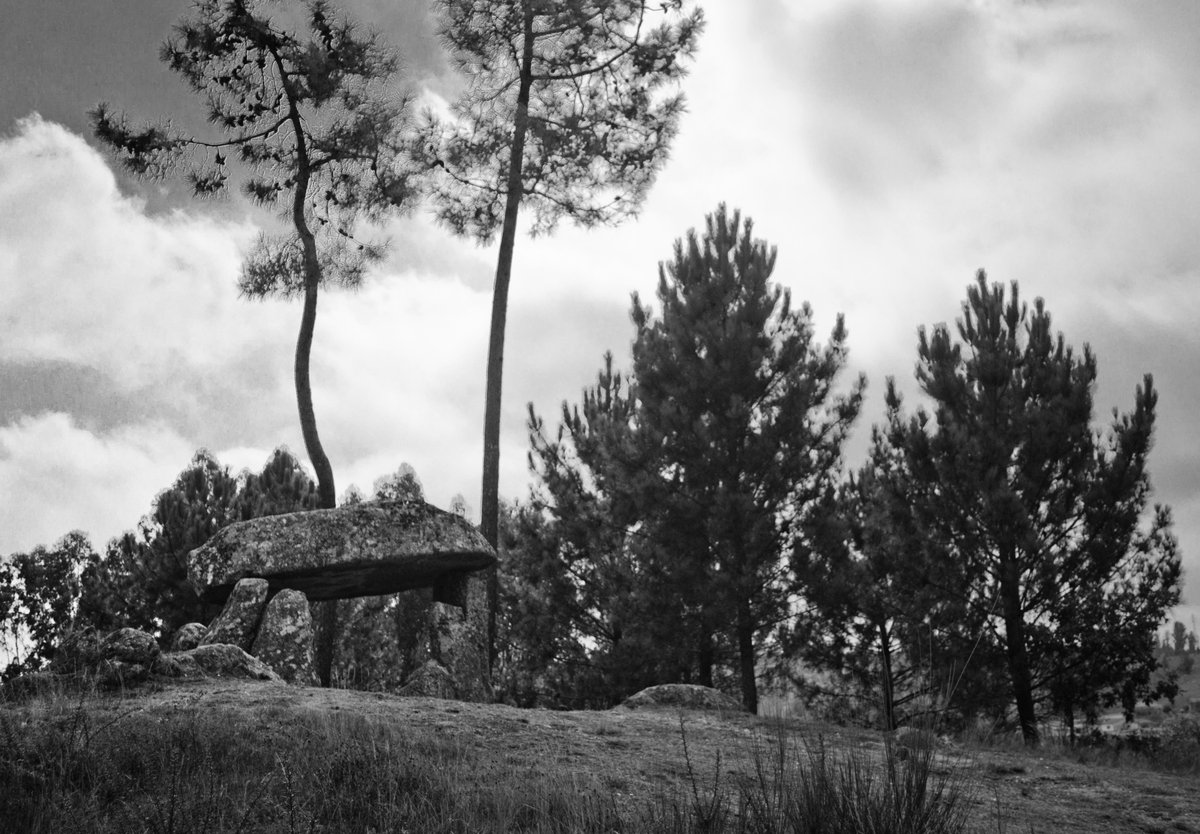
ANTA DE SANTA MARTA 🇵🇹
Dating back to the 3rd millennium BC, this remarkable Portuguese dolmen features a monumental burial chamber, traces of red paintings and an east-facing passage.
Another fascinating legacy of Atlantic Europe's megalithic culture.
#Megalithism#Dolmen